Macabre Victorian Halloween rituals that sound completely made up
In 2003, Judith Flanders published a room-by-room tour of the middle-class Victorian home, retitled in the US as Inside the Victorian Home. Halloween isn’t the point of the book, and it doesn’t need to be. The ordinary house was already hazardous: interior walls were primed with two coats of lead, and some wallpapers were dyed with arsenic at concentrations as high as 59 percent.
Flanders notes that a “change of air” often cured invalids because they left the poisoned room behind, then relapsed when they returned. Prussia, Bavaria, Sweden, and France had banned those papers long before Britain stopped using them in the late 1880s.
If a living room could poison you, the Victorians’ Halloween rituals shouldn’t surprise anyone. They sound invented, but they appeared in newspapers and handbooks, and most came from notes on Robert Burns’s poem “Halloween,” which was widely reprinted. Six follow. Most were about love, one was about death, and at least one got a woman rebuked in front of her congregation.

The wet sleeve vigil
A 1832 text calls it one of the “unhallowed” rites of All Hallows’ Eve. You wet a shirt sleeve, hang it by the fire to dry, and lie in bed watching it until midnight, when the apparition of your future partner comes in and turns the sleeve.
Burns specified the water: it should come from a burn where three lairds’ lands meet, or a well that brides and burials pass over. One writer overheard an old housekeeper seriously scolding a younger assistant who planned to hang up her “sark.” At least one Scottish woman was sentenced to a rebuke before the congregation for trying it.
“Hemp seed, I saw thee”
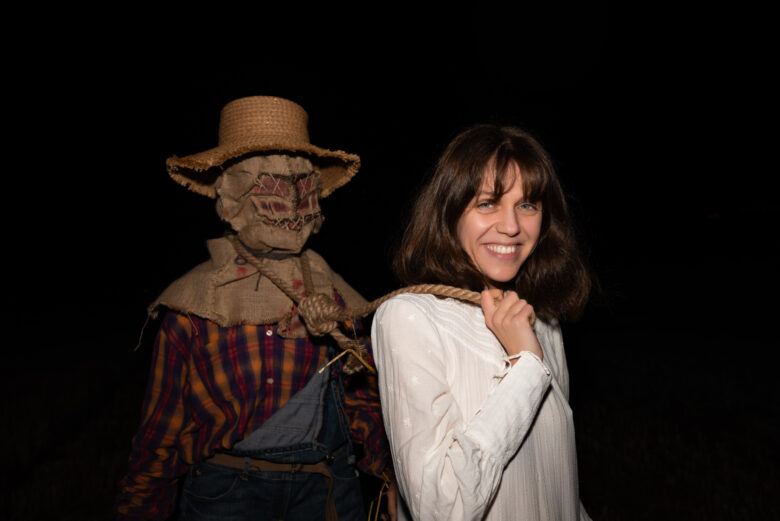
You sowed hemp seed across three furrows at night while reciting that line, then asked the person you hoped to marry to follow you. If you looked back over your shoulder, you might see your future wife gathering the hemp. Burns’s version had you harrow the seed in with anything conveniently drawn, then repeat a prayer.

Three bowls, blindfolded
A young woman was blindfolded and led to the hearthstone, where three bowls waited: Three Luggies, one with clear water, one with milky water, and one empty. Clear meant she’d marry a bachelor; milky, a widower; and empty, a life alone. The ceremony had to be done three times, with the hand dipped twice in the same bowl, “in order to make the prediction of any value.”
The game crossed the Atlantic. The 1895 American Girls’ Handy Book describes it.
Choose a plate; one means death
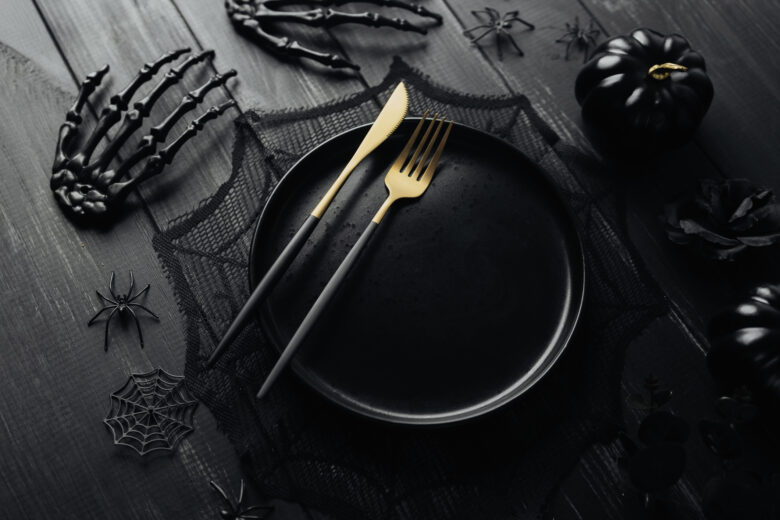
In another version, a blindfolded person was led to three plates holding earth, water, and meal. Touching the water meant a long life, and touching the earth meant death within the year, according to one folklore roundup. As belief in divination faded, the roundup adds, the forms stayed and the purpose shifted to party entertainment.
Twelve candles in a churchyard clod
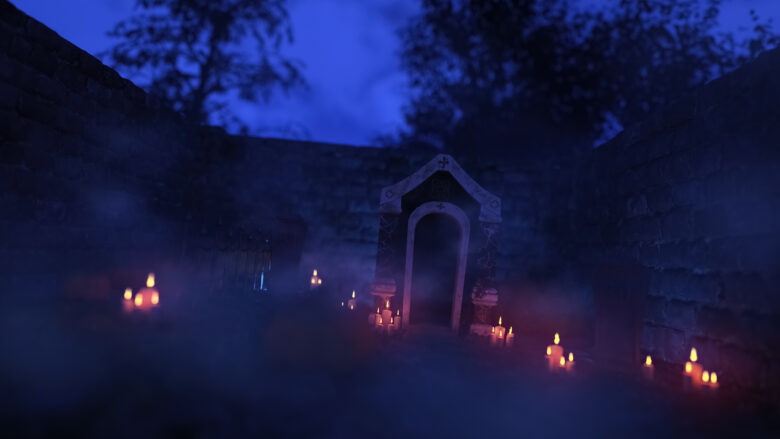
A party of twelve could learn their fortunes by gathering a clod of earth from a churchyard and setting twelve candles in it, one for each guest. Divination was so central to the holiday that the cover of Ruth Edna Kelley’s 1919 Book of Hallowe’en shows an owl on a jack-o’-lantern asking, “Who?”
Winnowing nothing
The 1832 text lists it among rites for invoking spirits: three wechts of nothing, meaning you repeated three times the action of exposing corn to the wind with an empty sieve.
The bottom line
The wallpaper was real, and so were the rituals. Only one of them could actually hurt you.
Ask us! What questions do you have about content, strategy, pop culture, lifestyle, wellness, history or more? We may use your question in an upcoming article!
Related:
- Your cozy (or spooky!) Halloween movie, according to your horoscope
- Historical “discoveries” that turned out to be elaborate hoaxes
Like MediaFeed’s content? Be sure to follow us.
This article was syndicated by MediaFeed.co.