Household items that were originally invented for a completely different purpose
A product’s original pitch and its actual claim to fame are sometimes two completely unrelated stories. Six items below started life solving a problem nobody associates with them today, before landing, almost by accident, in the exact role that made them famous.

Bubble Wrap started out as wallpaper, and a genuinely bad batch of it
Engineers Alfred Fielding and Marc Chavannes sealed two shower curtains together in 1957, trapping air bubbles between them, hoping to sell the textured result as a modern wall covering. Nobody wanted textured plastic wallpaper. The packaging industry did, and the rest is a lot of satisfying popping sounds.
A coal-soot cleaner
Kutol Products sold a soft, pliable putty through the 1930s designed to lift soot stains off wallpaper in homes heated by coal furnaces. Once gas and electric heating became standard through the 1950s, demand for wallpaper cleaner collapsed entirely. The company added bright color and scent, rebranded it, and created Play-Doh.
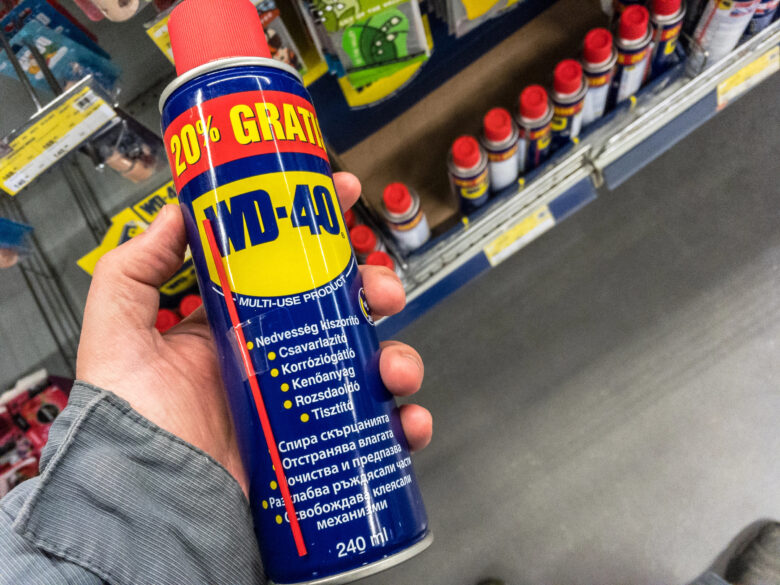
WD-40’s name literally spells out its original job: missile maintenance
The Rocket Chemical Company developed the formula in 1953 specifically to prevent corrosion on the outer skin of Atlas missiles. Water Displacement, 40th formula, took exactly 40 attempts to get the chemistry right, and it never made it to space. It made it to every garage in America instead.

Kleenex spent its early years filtering poison gas
Kimberly-Clark developed creped cellulose material during World War I as filtering material for gas masks and surgical dressings. Once the war ended, the company needed a new market for a material nobody wanted anymore, and it turned out women were already repurposing the material to remove cold cream. The company leaned into it.

A naval engineer dropped a spring off a shelf, and it just kept walking
Richard James was developing tension springs in 1943 meant to stabilize sensitive instruments aboard ships in rough seas. One prototype fell, and instead of landing flat, it stepped itself down a stack of books to the floor in a series of smooth arcs. His wife named it the Slinky two years later.

The adhesive that was supposed to be strong turned out to matter precisely because it wasn’t
3M chemist Spencer Silver was trying to invent an unusually powerful aerospace adhesive in 1968. What he actually produced barely stuck to anything, and the company sat on the failed formula for years before someone realized a weak, endlessly reusable adhesive was useful in its own right. Post-it Notes launched over a decade later.

The bottom line
None of these products succeeded at what they were actually built to do. Each found its real purpose almost by accident, usually after the original plan had already quietly failed.
Ask us! What questions do you have about content, strategy, pop culture, lifestyle, wellness, history or more? We may use your question in an upcoming article!
Related:
- Historical “discoveries” that turned out to be elaborate hoaxes
- Some of the most surprising record deals in music history
Like MediaFeed’s content? Be sure to follow us.
This article was syndicated by MediaFeed.co.