The best college mascots throughout the decades
College sports. There are loyal fans, stadium snacks, and a fierce rivalry between the home and away team. But college sports wouldn’t be complete without the school’s mascot to get the crowds going and entertain thousands of fans. From the 1920s to the 2020s, mascots play a pivotal role in college athletics. From a live tiger to a quirky tree, here are some of the best college mascots throughout the decades.
Handsome Dan, Yale University
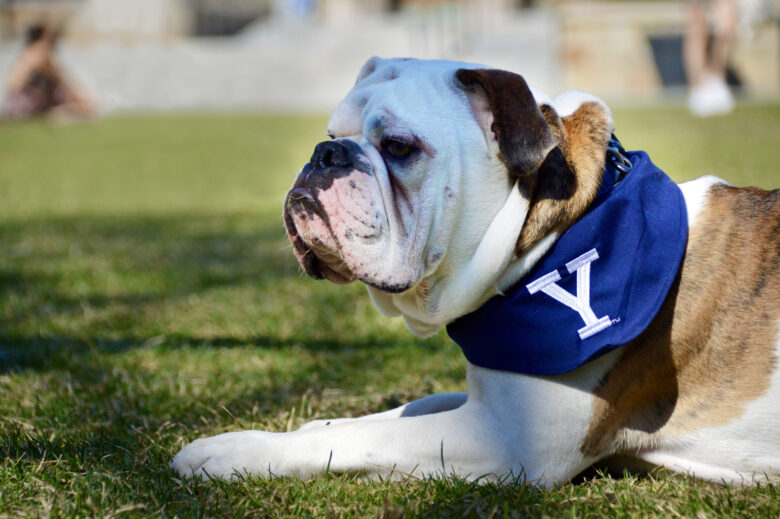
Known as the first-ever live mascot in college sports, Handsome Dan is an Olde English Bulldogge representing Yale University. Handsome Dan first came to be when a Yale undergraduate, Andrew B. Graves, saw the dog sitting in front of a store and purchased him for only $5. That same year, in 1889, Handsome Dan can be seen being led across the field before football and baseball games began. The tradition was meant to spark confidence and prosperity in the athletes before the game started.
Since then, Yale University has seen 19 bulldogs representing Yale, with a 35-year hiatus between Handsome Dan I and Handsome Dan II. Handsome Dan not only bestows good luck on athletes, but is a friendly face across campus, especially when greeting incoming students.
Mike the Tiger, Louisiana State University
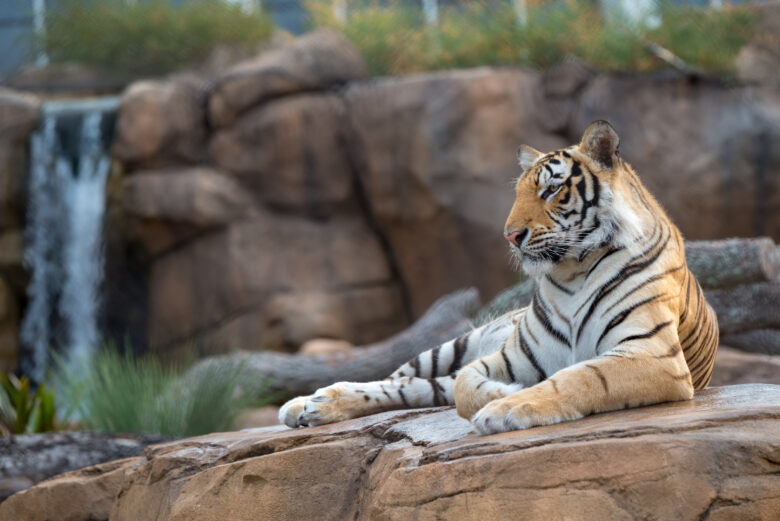
Maybe one of the most impressive mascots in college athletics is Louisiana State University’s Mike the Tiger. In 1935, Sheik the Bengal tiger was born after a $750 donation from students and staff. Purchased from Little Rock Zoo, Sheik’s name was changed to Mike to honor Chellis “Mike” Chambers, LSU’s then-athletic department trainer.
Since then, eight Mike the Tigers have represented LSU’s athletics. Folklore suggests that the football team would score a touchdown for every roar Mike let out, and one of the oldest traditions saw that, up until 2016, Mike’s trailer was parked next to the opponent’s locker room to intimidate opponents. Though LSU has faced controversy from animal rights advocates, a $3.7 million state-of-the-art habitat was built for Mike VI in 2005. Today, Mike VII sits in his habitat, where, though he no longer participates in LSU traditions, he still remains a fierce and fearless symbol for the school. Instead, a costumed Mike the Tiger is used in LSU’s athletic games.
Ralphie the Buffalo, University of Colorado Boulder
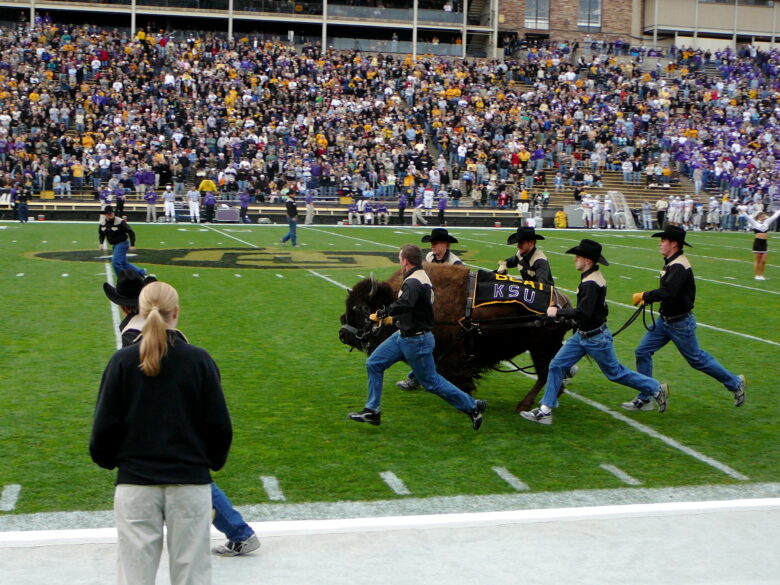
If there’s one way to intimidate your opponents, it’s with a charging bison. In 1934, the University of Colorado Boulder’s student newspaper held a national contest to determine what the school’s mascot would be. The winner was Boulder resident A.J. “Andy” Dickson, who decided the mascot would be a buffalo. However, it wasn’t until 1966 that the school’s Student Body Government decided the school needed a live mascot. That same year, Ralphie made her debut as Colorado’s mascot.
Today, Ralphie the Buffalo has become well-regarded around the country. One of the most popular traditions involves Ralphie running across the field at 25 miles per hour while being managed by student handlers. Fun fact: Ralphie the Buffalo isn’t a buffalo, but a female bison! Compared to buffaloes, female bison are smaller, yet faster than buffaloes.
Bevo, University of Texas at Austin
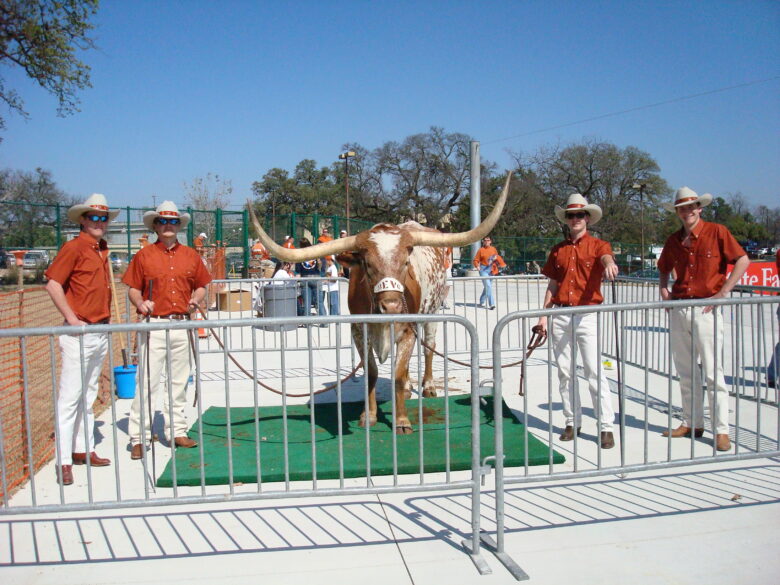
If you’ve been around Texas football, you certainly will have heard the phrase “Hook ‘em Horns.” The phrase, accompanied by a thumb and pinky hand gestures, can be traced back to the University of Texas at Austin’s mascot, Bevo.
At 2,000 pounds and horns measuring at 6 feet, Bevo the steer was first purchased by UT Austin alumnus Stephen Pinckney in 1916, when he gathered $124 from other alumni to purchase the animal. However, its original name was Bo. That changed after the 1916 Thanksgiving game, when Ben Dryer, who was an editor of a campus magazine, stated: “His name is Bevo, and long may he reign!” While there have been different theories of why Dryer declared Bevo as his school’s mascot’s name, the name still stands. Today, Bevo is not only a symbol for UT Austin, but also for Texas pride.
The Duck, University of Oregon
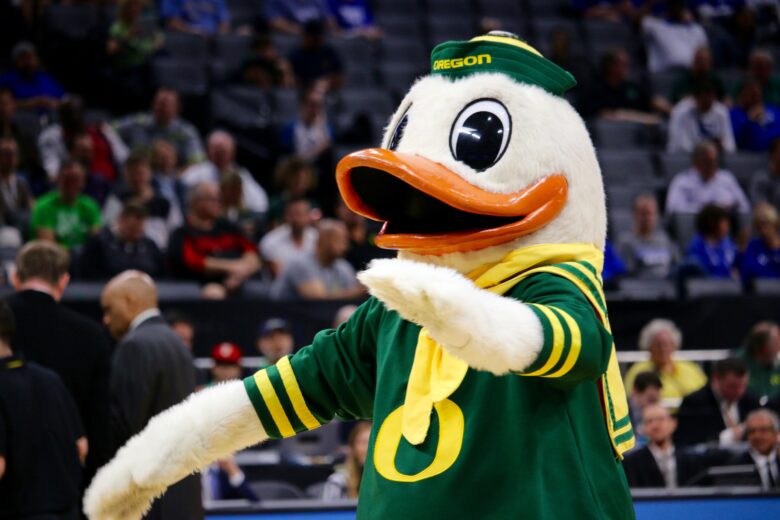
Known for its outrageous personality and edgy comedy, the University of Oregon’s mascot, The Duck, has been taking social media by storm for its viral antics. However, its origin story takes a more interesting turn.
Before The Duck, Oregon athletic teams were known as The Webfoots, which are a group of fishermen from Massachusetts who made their way to Oregon. In the ‘20s and ‘30s, ducks became associated with the school for its webbed feet, and the animal was used as a live mascot. However, by the 1940s, cartoon drawings of the duck mascot emerged and resembled Disney’s Donald the Duck. In 1947, Oregon athletic director Leo Harris used his friendship with Walt Disney to utilize Donald Duck as the mascot. From 1947 to 2010, Donald Duck was Oregon’s mascot. Since 2010, the school has renamed its mascot to simply The Duck and has become a memorable face among college mascots around the country.
Cosmo the Cougar, Brigham Young University
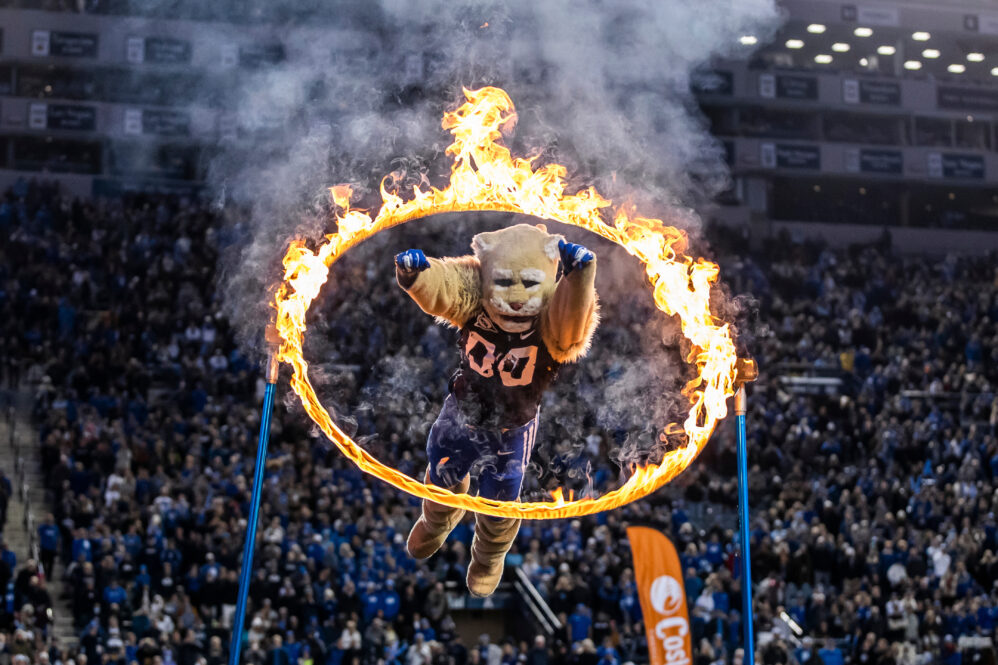
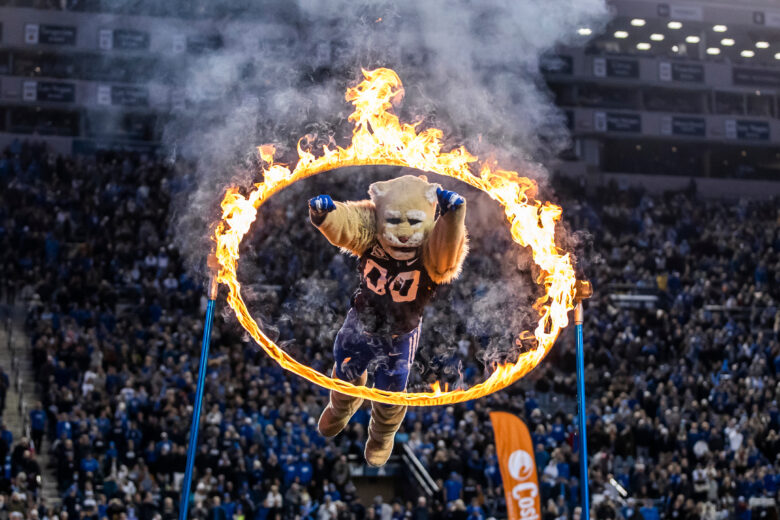
The most recent inductee of the Mascot Hall of Fame is Brigham Young University’s Cosmo the Cougar. Today, Cosmo is known for his viral acrobatic stunts and fierce personality. But back in the 20s, BYU used live cougars as their mascot before safety concerns arose. In 1953, Cosmo debuted for BYU. Created by BYU’s pep chairman Dwayne Stevenson, Cosmo kept it easy by cheering with the cheer squad. But by 1997, a redesign of the mascot allowed it to perform a wide variety of high-energy stunts, like backflips, dunks and walking on stilts.
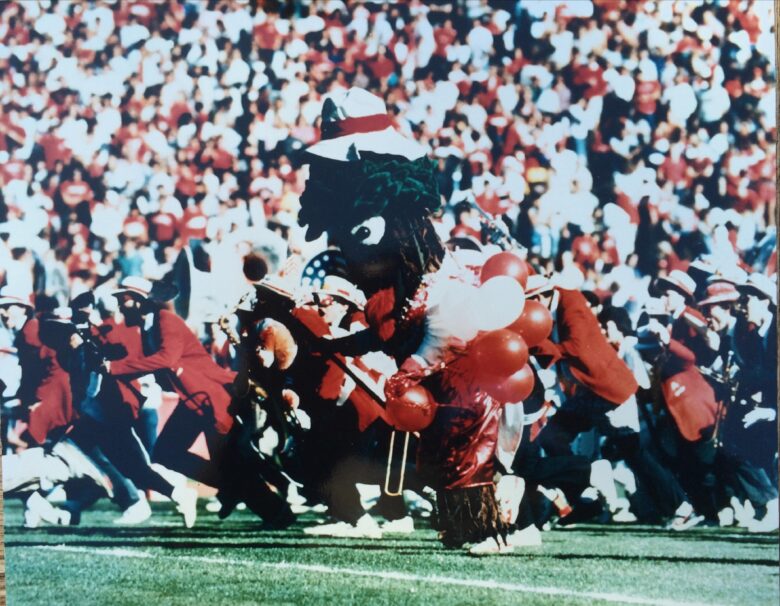
The Stanford Tree, Stanford University
Though not the official mascot of Stanford University, the Stanford Tree has found its loyal supporters in recent years for its more-than-unique take on college mascots. A mascot for the Leland Stanford Junior University Marching Band, the mascot made its debut during the rivalry game against the University of California, Berkeley in 1975. Created to poke fun at traditional college mascots, the Stanford Tree quickly became a fixture for the school for its eccentric and quirky designs. Since then, the Stanford Tree has been synonymous with the school, despite not even being the official mascot!
Wrap Up
While trophies come and go, one thing that remains in college athletics is mascots. In the past, mascots were simply used to gather support for the team before a game. Now, mascots are doing insane tricks and flexing skills to ramp up their fan base. If there’s any type of college game happening, be sure to look out for its mascot in the corner of your eye.
Related:
- Best student sections for college sports: Do you agree?
- 12 must-have essentials for your college dorm room in 2026
Ask us! What questions do you have about content, strategy, pop culture, lifestyle, wellness, history or more? We may use your question in an upcoming article!
Like MediaFeed’s content? Be sure to follow us.
This article was syndicated by MediaFeed.co.