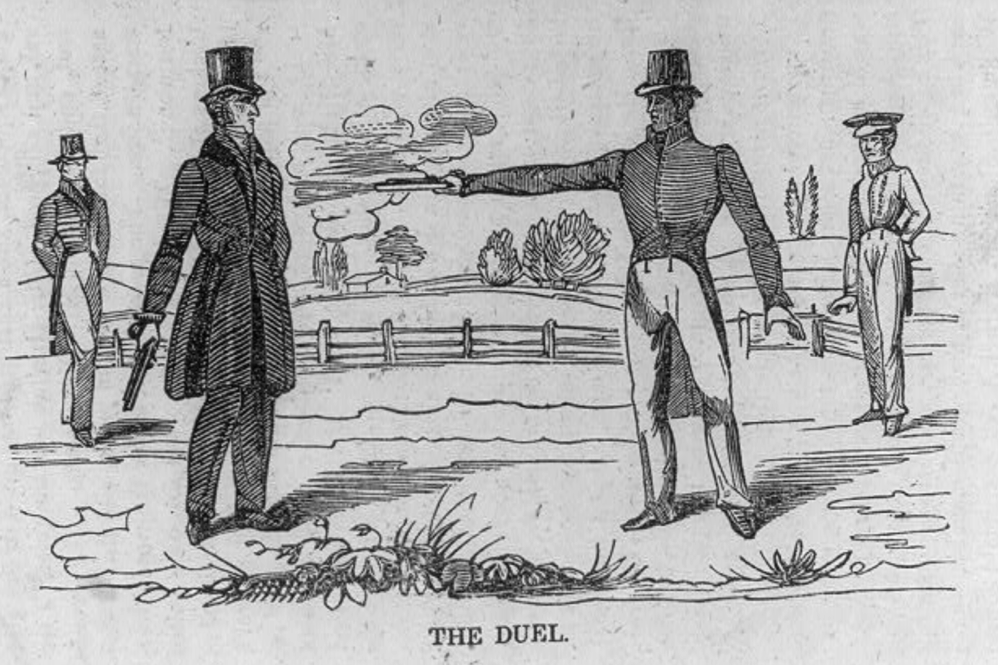
On May 30, 1806, long before he became the seventh President of the United States, Andrew Jackson stood on a dueling field in Logan County, Kentucky. Across from him was a man known as one of the best marksmen of his day, Charles Dickinson.
Jackson was known for having a high temper and was involved in many duels throughout his life, mostly to defend the honor of his wife, Rachel. Rachel had been trapped in an unhappy first marriage. Believing she was safely divorced, she married Jackson. However, the divorce had not been finalized, leading Jackson’s political enemies to cruel accusations of adultery and bigamy.
The tension between the two men started over a horse-racing bet that went wrong. It quickly escalated when Dickinson insulted Rachel and published a newspaper article calling Jackson a “worthless scoundrel” and a “coward.” as a result Jackson challenged him to a duel. Because dueling was illegal in Tennessee, they traveled across the state line to Kentucky.
Knowing Dickinson was an expert shot, Jackson made a brave and risky plan. He decided to let Dickinson shoot first. He hoped that if he survived the initial blow, he could take his time to aim a precise return shot. Later, Jackson said, “I should have hit him, if he had shot me through the brain.”
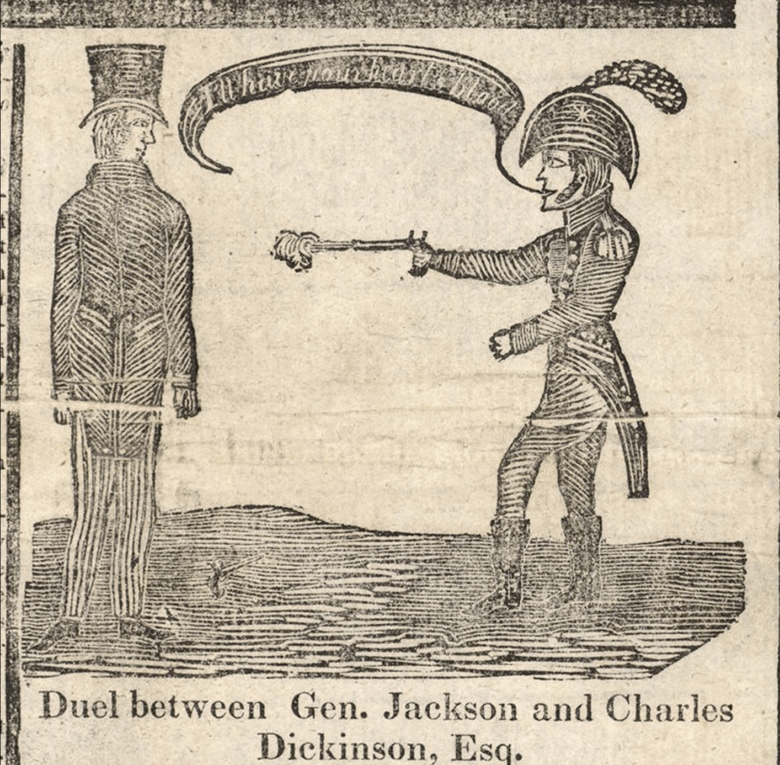
When the signal was given, Dickinson fired. Dust flew from Jackson’s coat, and Jackson briefly raised a hand to his chest. Unbelievably, Jackson remained standing. Stunned, Dickinson gasped, “Great God! Have I missed him?” By the strict rules of dueling, Dickinson had to return to his mark and stand completely still while Jackson took his turn. What happened next caused great controversy. Jackson pulled the trigger, but the gun failed to fire because it was only half-cocked. Instead of stepping away, Jackson re-cocked the pistol and fired again. This second shot hit Dickinson, who later died from the wound.
Many people argued that Jackson broke dueling etiquette. Usually, a misfire counted as a shot, and taking a second attempt was considered dishonorable. Though the witnesses certified that the duel was fair, Jackson’s reputation took a heavy hit.
Jackson was also hurt much worse than he let on. Dickinson’s bullet had broken several of his ribs and stayed close to his heart. It was too risky to remove, so the bullet remained in Jackson’s chest for the rest of his life, causing him chronic pain.
While the duel left permanent physical and emotional scars, Jackson’s political career survived. He went on to become a hero in the War of 1812 and eventually won the White House in 1828.
Ask us! What questions do you have about content, strategy, pop culture, lifestyle, wellness, history or more? We may use your question in an upcoming article!
Like MediaFeed’s content? Be sure to follow us.
This article was syndicated by MediaFeed.co