
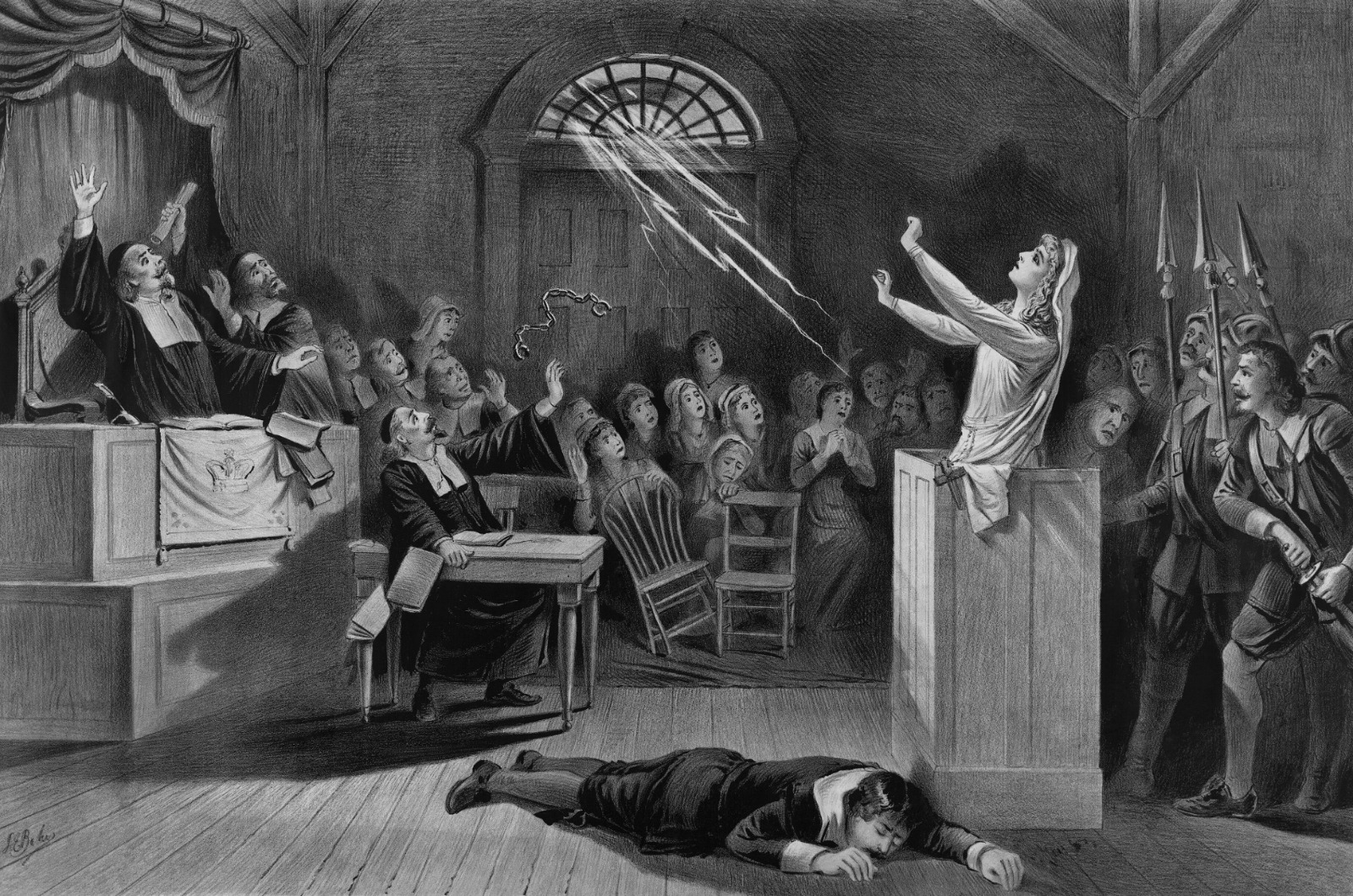
On March 1, 1692, a series of events began in Salem Village, Massachusetts, that would lead to one of the most famous and tragic periods in American history. On this day, three women, Sarah Goode, Sarah Osborne, and an enslaved woman named Tituba, were officially charged with practicing witchcraft.
The trouble actually began a month earlier in the home of Reverend Samuel Parris. His nine-year-old daughter, Elizabeth, and his eleven-year-old niece, Abigail Williams, started feeling sick. They suffered from mysterious illnesses that no one could explain. When a doctor examined them, he concluded that the girls were victims of witchcraft.
Instead of questioning the diagnosis, people believed it. With the support of adults, the young girls began naming people they claimed were responsible for their suffering. Soon, other residents joined in, claiming they were also harmed by neighbors who were secretly working with the devil.
When the first three women were questioned, Tituba confessed. While some believe she may have been forced or pressured into confessing, her words had a huge impact. She told the authorities that there were other witches in Salem. This encouraged them to look for more suspects. The hunt didn’t stop at middle-aged women. Soon, men and even a four-year-old child were accused. Over the next few months, more than 150 people from Salem and nearby towns were charged with Satanic practices.
In June 1692, a special court called the Court of Oyer and Terminer was set up to judge the accused. Most people were found guilty based on spectral evidence, the witnesses would have fits or hallucinations right in the courtroom, claiming the defendant’s spirit was attacking them.
The first person executed was Bridget Bishop, who was hanged on June 10. By the end of the summer, 13 more women and 4 men had been hanged. One man, Giles Corey, was even executed by being crushed with heavy stones.
By October 1692, the governor of Massachusetts realized things had gone too far. He stopped the special court and created a new one that did not allow the weird testimony used before. The executions finally stopped. Eventually, everyone still in jail was released, and those who had been sentenced to death were pardoned.
In the end, 19 innocent people lost their lives because of a wave of panic that started with a few unexplained illnesses. The Salem Witch Trials remain a powerful reminder of what can happen when fear and rumors take over a community.
Ask us! What questions do you have about content, strategy, pop culture, lifestyle, wellness, history or more? We may use your question in an upcoming article!
Like MediaFeed’s content? Be sure to follow us.
This article was produced and syndicated by MediaFeed.



