Before it became one of the most celebrated television series in American history, M*A*S*H was the deeply personal creation of a former Army surgeon with a sharp wit and a complicated relationship to fame.
A Closer Look
Richard Hooker—the pen name of surgeon-turned-novelist Richard Hornberger—co-authored the original 1968 novel M*A*S*H: A Novel About Three Army Doctors, drawing heavily from his experiences in a Mobile Army Surgical Hospital during the Korean War. Writing with journalist W.C. Heinz, Hornberger transformed battlefield memories into biting satire. The character of Captain Benjamin Franklin “Hawkeye” Pierce was, by his own admission, a semi-autobiographical figure. Even Hawkeye’s fictional hometown, Crabapple Cove, Maine, echoed Hornberger’s own Maine roots.
Hornberger’s novel walked a tonal tightrope: it was irreverent, sardonic, and at times wildly comic, yet rooted in the grim realities of war surgery. The book’s success led to the acclaimed 1970 film directed by Robert Altman, which starred Donald Sutherland as Hawkeye. The film’s countercultural edge resonated in a nation divided by the Vietnam War, even though its setting remained in Korea.
In 1972, the story made another leap—this time to television—with the CBS series M*A*S*H. And it was here that Hornberger’s vision collided most dramatically with interpretation.
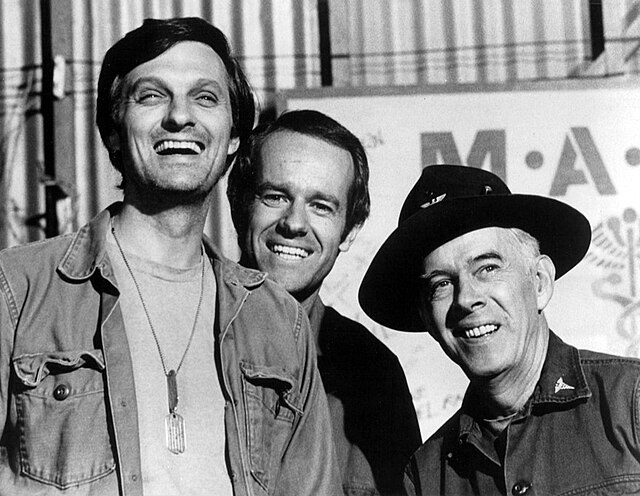
The series starred Alan Alda as Hawkeye, a performance that would become iconic and eventually synonymous with the character. Alda’s Hawkeye evolved into a deeply humane, openly anti-war voice—wry, compassionate, and frequently moralistic. Over the show’s 11-season run, Alda also became a writer and director, helping shape its increasingly pointed commentary on war, politics, and authority.
Hornberger, a self-described conservative Republican, was not pleased.
The Frustation
In interviews over the years, Hornberger expressed frustration with what he saw as the show’s overt liberal politics. While his novel had certainly mocked military bureaucracy and the absurdities of war, Hornberger maintained that he did not intend it as a sweeping anti-war manifesto. He felt the television series—particularly under Alda’s creative influence—pushed the material into territory that did not reflect his personal beliefs.
The irony was striking: a character born from Hornberger’s own experiences had taken on a life far beyond his control. Crabapple Cove’s fictional surgeon had become, for millions of viewers, a symbol of dissent and conscience during turbulent times.
The Big Picture
For better or worse, the character of Hawkeye Pierce ceased to belong to just one man. In that transformation lies the enduring—and complicated—legacy of M*A*S*H.
Ask us! What questions do you have about content, strategy, pop culture, lifestyle, wellness, history or more? We may use your question in an upcoming article!
Like MediaFeed’s content? Be sure to follow us.
This article originally appeared on NewsBreak.com and was syndicated by MediaFeed.org.