
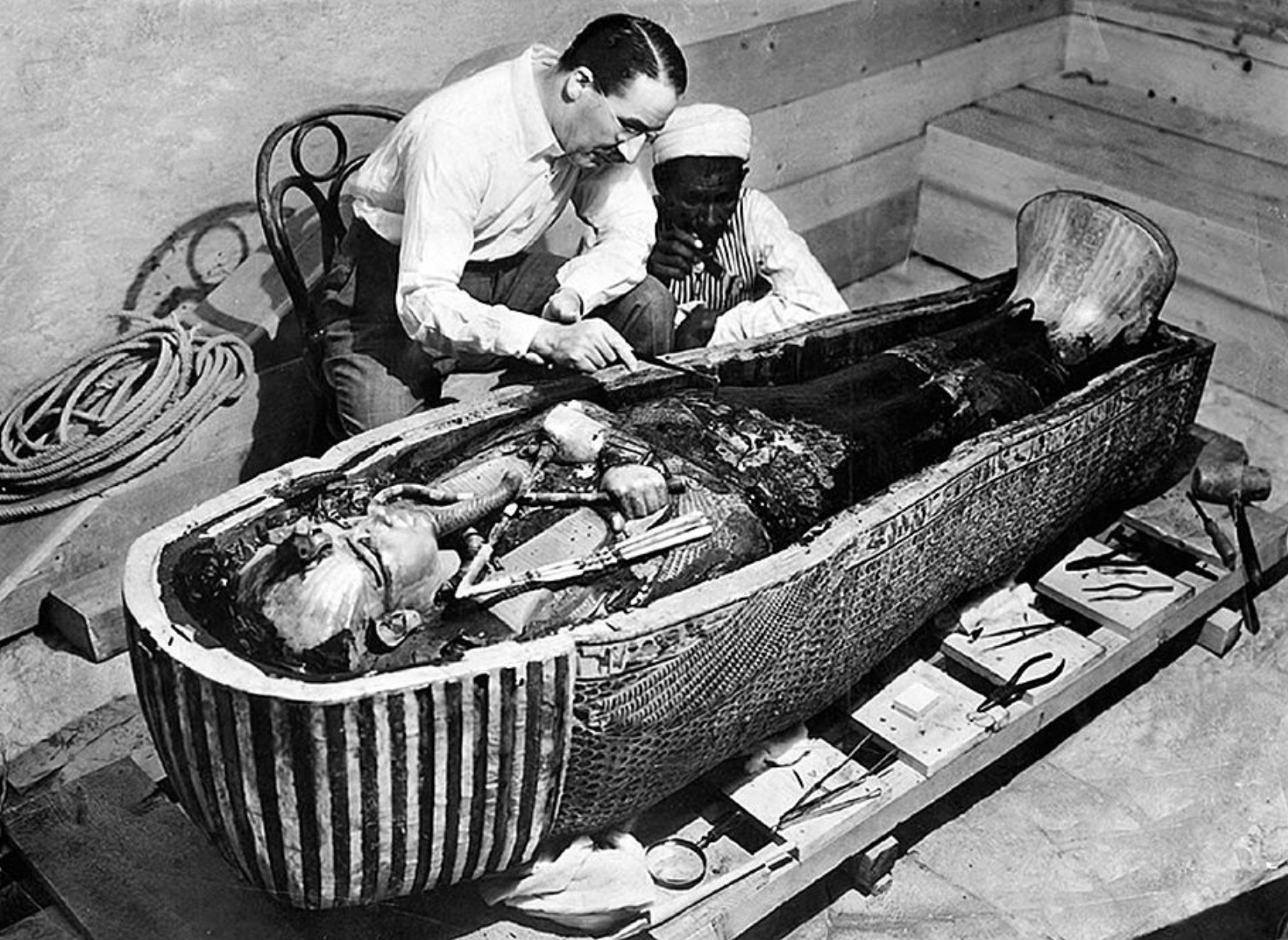
On February 16, 1923, one of the most significant moments in archaeological history unfolded in Thebes, Egypt, as the English archaeologist Howard Carter breached the sealed burial chamber of King Tutankhamun. While the tomb itself had been located months earlier, this specific date marked the first time in over 3,000 years that human eyes gazed upon the final resting place of the boy king.
The discovery was the culmination of a five-year search funded by Lord Carnarvon. By early 1922, Carnarvon was ready to abandon the project, but Carter persuaded him to support one final season. That call paid off in November 1922, when the team uncovered a hidden staircase near the entrance of another tomb, which all led to a sealed door bearing Tutankhamun’s name.
On November 26, Carter and Carnarvon entered the interior rooms, finding them intact, which is rare in the Valley of the Kings, where most tombs had been plundered by ancient robbers. However, it wasn’t until February 16 that Carter finally opened the last chamber, revealing the royal sarcophagus.
Inside the burial chamber, Carter discovered three coffins. The innermost, made of solid gold, held the mummified remains of the pharaoh. The tomb contained over 5,300 artifacts, including golden shrines, chariots, statues, weapons, and jewelry. The mummy itself was considered the most valuable find, as it was the first ever discovered in its original state.
While the discovery made Tutankhamun a global icon, his reign (c. 1333–1323 B.C.) was relatively short. Ascending the throne at age nine, he is best known for restoring the traditional Egyptian religious practices that his predecessor, Akhenaton, had abolished. He died at approximately age 18 or 19.
The opening of the chamber was quickly followed by reports of a mummy’s curse after Lord Carnarvon died of an infection shortly after the burial room was opened. Carter, however, remained dismissive of these rumors throughout his life.
It took Carter and his team a full decade to meticulously catalog and remove the treasures, which eventually found a permanent home at the Egyptian Museum in Cairo.
Today, thanks to extensive conservation work by the Getty Conservation Institute, the tomb remains a vital site for tourists and historians alike. A century later, the events of February 16 remain a testament to Carter’s dedication and the enduring mystery of ancient Egypt.



Ask us! What questions do you have about content, strategy, pop culture, lifestyle, wellness, history or more? We may use your question in an upcoming article!
Ask us a question
Like MediaFeed’s content? Be sure to follow us.
This article was syndicated by MediaFeed.org.