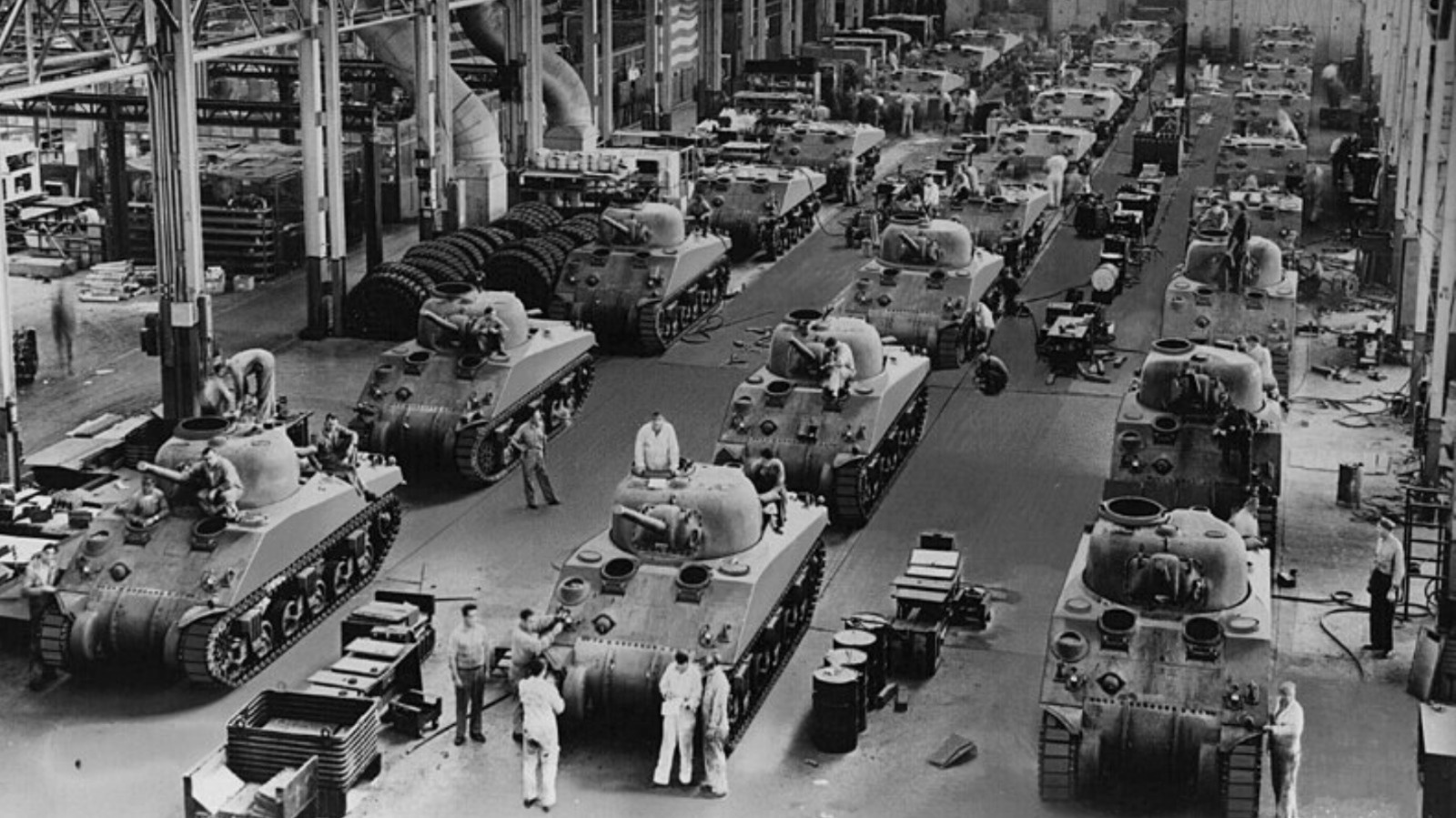
On February 7, 1942, for the first time in the United States’ history, the federal government ordered passenger car production stopped and converted to wartime purposes. Every assembly line in Detroit was suddenly needed for a much bigger mission, the World War II.
No cars, commercial trucks, or any auto parts were made from February 1942 to October 1945. The order to stop production didn’t happen overnight, it was part of a larger push by the War Production Board (WPB) to reorganize American industry.
President Franklin D. Roosevelt had created the WPB just weeks earlier to coordinate the manufacturing of war materials. By February, the government made it clear that all military demands took priority over civilian comfort.
Factories were upended almost instantly. Massive machines were jackhammered out of their foundations to make room for equipment that could build tanks, airplanes, and bombs. Conveyors were stripped and rebuilt, and half-finished car parts were sent to steel mills to be melted down for scrap.
All sales of new 1942 models stopped, and any existing stock was frozen. The government established a stockpile of about 520,000 vehicles, but these were reserved strictly for essential drivers, such as doctors or government agencies.
Because no new cars were being built, maintaining old ones became necessary and factories that stayed in business shifted their focus to repairs.
The end of car production was just the beginning of wartime restrictions. To save fuel and prevent tire wear, the Price Administration imposed rationing of gasoline and tires and set a national speed limit of 35 mph.
Auto companies stopped selling cars but kept advertising to keep their brands alive. In the last couple of years of the war, the companies used their advertisements to tell people that car and truck manufacturing will be back, such as Ford’s advertising “There’s a Ford in Your Future.”
The ban remained in place until the war ended in 1945. It was a period where the automotive industry proved it could do more than just build cars. It wasn’t until 1949 that civilian car production numbers finally returned to their pre-war levels.
Related:
Like MediaFeed’s content? Be sure to follow us.
This article was produced and syndicated by MediaFeed.us.