This article was reviewed by Felix Gussone, MD.
Key Takeaways:
- Your endocrine system regulates many bodily functions, from metabolism to reproduction and growth, ensuring everything operates in balance.
- Hormones are the key messengers of the endocrine system, traveling through your blood to specific target cells to initiate specific processes.
- Healthy lifestyle habits, including what you’re eating, how you’re sleeping, and the movement you enjoy, play an important role in healthy endocrine system function.
You may not think about your endocrine system much, but it’s a powerful conductor, coordinating a plethora of body functions. It’s involved in everything from keeping your mood balanced to controlling your growth.
The endocrine system is made up of a network of glands and messengers that are constantly relaying vital information, ensuring that everything is working in harmony.
While it’s a self-regulating system, it’s helpful to understand its moving parts, how they work together, possible issues that can arise, and how to best support your endocrine system function.
What Is the Endocrine System?
The endocrine system is one of the two major communication networks in your body (the other one is your nervous system, which includes your brain and spinal cord).
It operates through chemical messengers you’re likely familiar with: hormones. These hormones travel through your bloodstream to reach specific parts of the body, delivering signals that control everything from metabolism and growth to mood and sleep.
Unlike the lightning-fast message delivery of your nervous system, your endocrine system functions more like a sophisticated postal service — making sure precise letters get to their specific destinations, without getting lost along the way.
What Does the Endocrine System Do?
Hormones are the stars of the show, but the endocrine system extends far beyond just managing these messengers.
It’s made up of several important glands, each of which is specialized to create chemical signals and send them into your bloodstream.
They respond to triggers from your brain, other hormones, and even to a feedback system based on the levels of the substances they regulate.
The main goal of your endocrine system? Homeostasis — or an ongoing state of balance within your body and its messengers.
Key Endocrine Organs
Below, we’ve spotlighted each of the core components of the endocrine system, each of which has a unique — but interconnected — role in influencing your overall wellness.
The Hypothalamus: The Control Tower
Nestled deep within your brain, the hypothalamus isn’t technically a gland in the traditional sense, but it’s the grand central station that connects your nervous system to your endocrine system.
It senses your body’s internal state, including your temperature, hunger, and stress levels, and then tells the pituitary gland (aka, the “master gland”) what to do.
The hypothalamus makes several important hormones that keep your body in balance:
- Dopamine, which acts as both a hormone and neurotransmitter and helps regulate mood, motivation, and movement while also controlling the release of certain pituitary hormones.
- Oxytocin, sometimes called the “love hormone,” supports emotional bonding, childbirth, and milk letdown during breastfeeding.
- Releasing hormones, including thyrotropin-releasing hormone (TRH), corticotropin-releasing hormone (CRH), and gonadotropin-releasing hormone (GnRH), act like messengers to the pituitary gland, directing it to release thyroid, adrenal, and reproductive hormones in response to the body’s needs.
Together, these hormones allow the hypothalamus to monitor your internal environment and maintain homeostasis by coordinating with other glands throughout the endocrine system.
The Pituitary Gland: The Master Gland
Hanging just below the hypothalamus, no bigger than a pea, is the pituitary gland. It earns its title as the “master gland” because it produces hormones that control many other endocrine glands.
Think of it as the hypothalamus’s COO, relaying instructions to various departments. It releases hormones that stimulate growth, regulate metabolism, control blood pressure, and even trigger milk production in new moms.
The pituitary gland produces several key hormones, each with its own essential role:
- Growth hormone (GH) supports growth and cell repair, helping build muscle, maintain bone density, and regulate metabolism throughout life.
- Prolactin stimulates milk production after childbirth and also plays a role in reproductive health and immune function.
- Adrenocorticotropic hormone (ACTH) signals the adrenal glands to release cortisol, your primary stress hormone, which helps the body manage stress and maintain energy balance.
- Thyroid-stimulating hormone (TSH) tells the thyroid gland to produce thyroid hormones (T3 and T4), which regulate metabolism, energy use, and body temperature.
- Luteinizing hormone (LH) triggers ovulation in women and stimulates testosterone production in men.
- Follicle-stimulating hormone (FSH) works alongside LH to regulate reproductive processes, promoting egg development in the ovaries and sperm production in the testes.
It also releases antidiuretic hormone (ADH), which is produced in the hypothalamus and stored in the posterior pituitary, which tells your kidneys to hold onto or release water as needed.
The Thyroid Gland: Your Metabolic Engine
Located at the front base of your neck, best known to be shaped like a butterfly, the thyroid gland is your body’s metabolic engine.
It produces thyroid hormones that dictate how quickly your cells use energy, influencing everything from your heart rate and body temperature to your digestion and brain function.
The thyroid also produces calcitonin, a hormone that helps regulate calcium levels in the blood by preventing excessive calcium loss from bones.
The Parathyroid Glands: Calcium Regulators
Tucked behind the thyroid are four tiny parathyroid glands. They are solely focused on one critical task: maintaining the precise balance of calcium levels in your blood and bones.
Calcium isn’t just for strong bones; it’s vital for nerve function, muscle contraction, and blood clotting. The parathyroids ensure these levels are where they’re supposed to be by releasing parathyroid hormone (PTH).
The Adrenal Glands: Stress Responders
Perched atop each of your kidneys, kind of like tiny hats, are your adrenal glands. These are your body’s primary responders to stress.
They produce adrenaline (epinephrine) and cortisol, hormones that kick in during “fight or flight” stress response situations, boosting energy, increasing heart rate, and sharpening focus.
They also play a role in regulating blood pressure and metabolism with the hormone aldosterone, which helps manage sodium and potassium levels in your blood.
The Pancreas: Balancing Your Blood Sugar
Though also part of the digestive system, the pancreas has a crucial endocrine role. It’s responsible for making insulin and glucagon, two hormones that work in opposition to maintain stable blood sugar levels.
Insulin lowers blood sugar by helping cells absorb glucose, while glucagon raises it by prompting the liver to release stored glucose.
It also produces somatostatin, another hormone that helps regulate the release of insulin and glucagon. This prevents the pancreas from overproducing either one and maintains smooth communication between your digestive and endocrine systems.
The Gonads (Ovaries and Testes): Orchestrating Reproduction
These are your primary reproductive glands that make hormones.
In females, the ovaries produce estrogen and progesterone, vital for the menstrual cycle, pregnancy, and female secondary characteristics.
These ovarian hormones also play important roles beyond reproduction, influencing bone density, heart health, and even mood.
In males, the testes produce testosterone, essential for sperm production and male secondary characteristics. These hormones orchestrate reproduction and also influence mood, bone density, and muscle mass.
The Pineal Gland: The Sleep Regulator
Tucked deep within your brain, the pineal gland is a small, pinecone-shaped structure whose primary focus is your sleep-wake cycle.
It makes melatonin, the hormone that helps regulate your circadian rhythm — your body’s internal clock that tells you when it’s time to sleep and wake up.
Melatonin production increases in the evening as it gets dark, telling your body to wind down, and decreases as morning approaches.
Beyond sleep, the pineal gland may also influence mood and seasonal biological rhythms, linking it closely to your overall well-being and mental health.
What Hormones Are Produced by the Endocrine System?
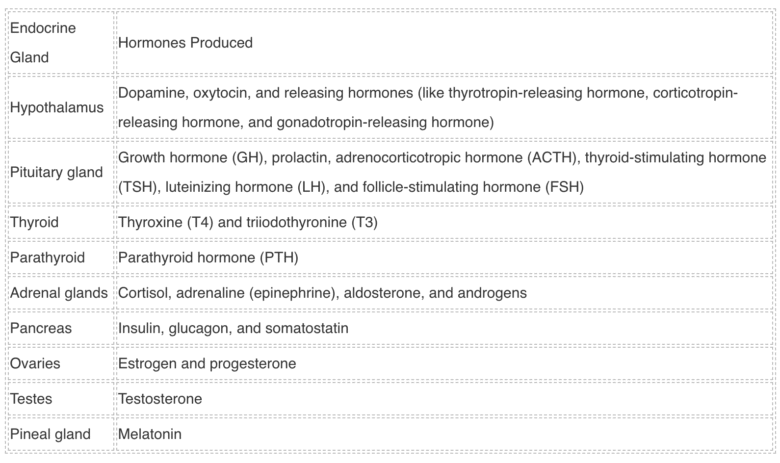
To recap, each of your endocrine glands is in charge of making specific hormones, which then work together to influence many, many different processes.
Here’s a quick reference to the primary endocrine system hormones and where they come from.
How Your Endocrine Glands Work Together
If your endocrine system is a symphony, your hormones are the chemical notes. Each one has a specific shape, like a unique key, and can only unlock specific target cells that have the matching “lock” (receptor).
Once a hormone binds to its receptor, it starts a cascade of events inside the cell, changing its behavior or function. This specificity ensures that hormones act precisely where they are needed, without causing widespread, unwanted effects in your body.
There are also feedback loops in place that help your endocrine system self-regulate. The most common are negative feedback loops, which work like a thermostat to keep things comfortable in your home.
If a hormone level gets too high, the system detects it and takes action to bring it back down. Conversely, if levels get too low, the system stimulates production.
This ongoing monitoring and adjustment keep hormone levels within a narrow, healthy range to maintain homeostasis.
Common Endocrine Disorders
Despite its remarkable self-regulating capabilities, the endocrine system can sometimes falter.
When glands produce too much or too little of a hormone, or when the body doesn’t respond correctly to them, issues can occur. Below are some of the more common endocrine-related disorders that many people experience.
Diabetes
Perhaps the most widely known endocrine disorder, diabetes mellitus occurs when the pancreas either doesn’t produce enough insulin (type 1 diabetes) or the body’s cells don’t respond effectively to the insulin it does produce (type 2 diabetes).
The result is chronically high blood sugar, which can lead to serious health complications over time if not managed properly.
Thyroid Disorders
Problems with the thyroid gland are common.
Hypothyroidism, or underactive thyroid, means too little thyroid hormone is produced, slowing down metabolism and leading to symptoms like fatigue, weight gain, and depression.
Hyperthyroidism, or overactive thyroid, produces too much hormone, accelerating metabolism and causing symptoms such as anxiety, weight loss, and a rapid heart rate.
Cushing’s Syndrome
While “adrenal fatigue” is not recognized as a medical diagnosis in endocrinology, chronic stress can affect adrenal gland function.
More definitively, Cushing’s syndrome results from prolonged exposure to high levels of cortisol (your primary stress hormone), which is often due to an overactive adrenal gland or certain medications (like corticosteroids). This can lead to symptoms like weight gain, skin thinning, and muscle weakness.
On the other hand, Addison’s disease involves too little cortisol and aldosterone, leading to severe fatigue and low blood pressure.
Growth Hormone Imbalances
Growth hormone, made by your pituitary gland, is vital for proper development.
If there’s not enough growth hormone during childhood, this can lead to short stature, while too much can result in gigantism. In adulthood, having excess growth hormone causes acromegaly, a condition that leads to enlarged hands, feet, and facial features.
Keeping Your Endocrine System Healthy
Because your endocrine system is a self-regulating machine, the most important thing you can do to support its healthy functioning is to take good care of yourself. Lifestyle choices we make every day can help or hinder all aspects of our well-being, including endocrine system function.
Some of the best ways to support endocrine health include:
- Eat a nutrient-dense diet made up of a variety of minimally processed foods, especially fruits, vegetables, whole grains, nuts, seeds, legumes, and other lean proteins.
- Engage in regular physical activity most days of the week, whether that’s a combination of swimming, playing rec sports with friends, lifting weights, jogging with your dog, or taking a yoga class.
- Get enough sleep, which is somewhere between seven to nine hours per night for adults.
- Have healthy stress-management practices in place to keep things calm, such as journaling, meditation, art, listening to music, or doing breathing exercises.
- Minimize exposure to potential endocrine-disrupting chemicals (EDCs) — for example, choose BPA-free containers.
- See your healthcare provider regularly, at least for an annual wellness exam. This can help identify potential imbalances and other health issues early, so they can be properly addressed.
The Endocrine System: The Bottom Line
The endocrine system is a testament to the intricate, interconnected marvel that your body is — truly. Understanding what it’s doing for you in the background can help you stay attuned to your body and care for it well.
FAQs
Here are some answers to frequently asked questions about the endocrine system.
What are the main glands of the endocrine system?
The primary endocrine glands include the hypothalamus, pituitary, thyroid, parathyroids, adrenals, pancreas, and gonads (ovaries for women, testes for men). Each gland plays a unique and important role in regulating your bodily functions.
How do hormones travel and affect the body?
Hormones are sent directly into your bloodstream, where they travel to specific target cells with matching receptors, to initiate specific responses.
What are common signs of an endocrine disorder?
Fatigue, unexplained weight changes, mood swings, irregular menstrual cycles, or changes in growth patterns may all signal hormonal imbalances. However, these can indicate other underlying issues, too, so it’s always important to communicate with your healthcare provider if something feels off.
Can lifestyle changes improve endocrine health?
Yes. Eating a nutrient-rich diet, exercising regularly, sleeping seven to nine hours per night, and managing stress all support healthy hormone balance.
When should I see a provider about hormone issues?
If you notice persistent symptoms like extreme fatigue, weight changes, or irregular cycles, or if you suspect a thyroid, adrenal, or blood sugar issue, it’s a good idea to get tested and talk to a healthcare provider, who may refer you to an endocrinology specialist.
Related:
- How Enclomiphene Works to Support Male Hormone Health
- Hims vs. Hone Health: What’s Best for Low Testosterone Treatments?
Like MediaFeed’s content? Be sure to follow us.
This article originally appeared on Hims.com and was syndicated by MediaFeed.org.