
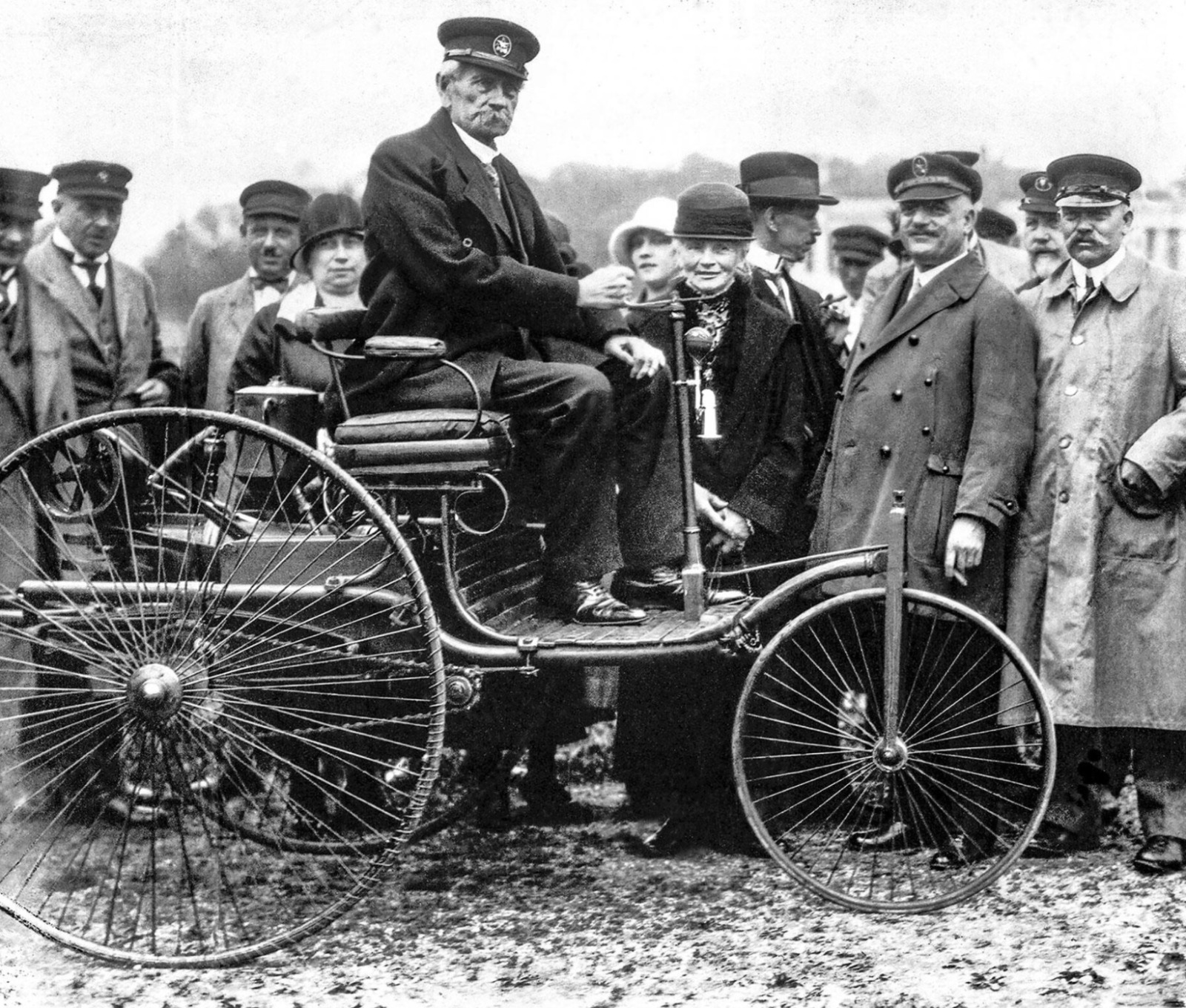
On January 29, 1886, a German engineer named Karl Benz changed the world forever. He filed a patent for his gas-engine-powered vehicle, which we now know as the Benz Patent-Motorwagen, and this was the day where the modern automobile officially started.
In July 1886 the newspapers reported on the first public outing of the three-wheeled Benz Patent Motor Car, model no. 1.
Although the original Benz car, a three-wheeled vehicle, the Motorwagen, first ran early in 1885, its design was not patented until January 29, 1886.
Karl Benz wanted to create something different, a vehicle where the engine and the frame were designed together as a single unit, and to be powered by an internal-combustion engine. He developed his car in three stages from a functional prototype to a motor vehicle suitable for everyday use.
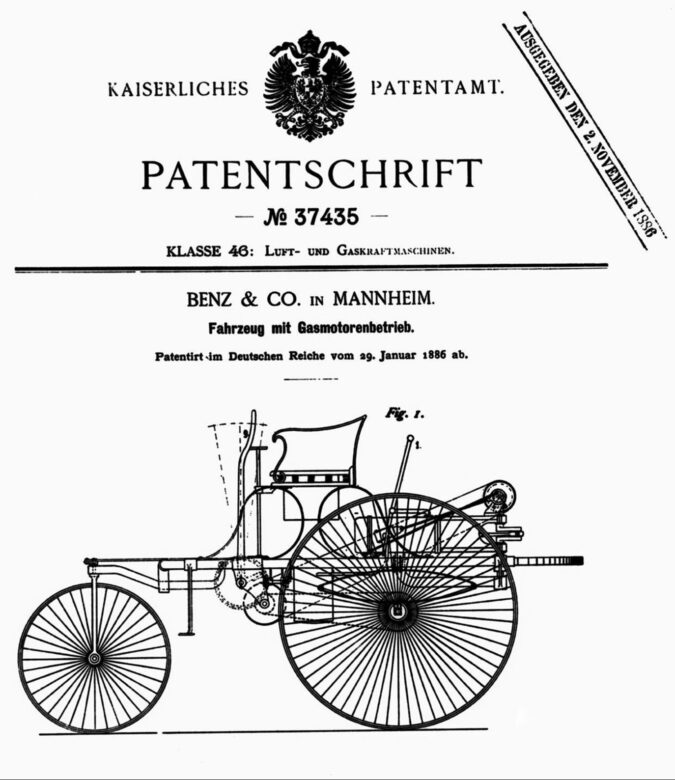
The Benz Patent-Motorwagen was a motor tricycle with a rear-mounted engine. The heart of his invention was a high-speed, one-cylinder four-stroke engine. It was mounted horizontally in the back of a three-wheeled vehicle, this internal combustion engine was small and practical enough to power a personal carriage, and its top speed was 16 km/h. The vehicle also featured a tubular steel frame, an automatic intake slide valve, and a large horizontal flywheel to help the engine run smoothly.
Two years after Karl Benz drove the car in public in July 1886, Benz’s wife Bertha and their two sons went on the first long-distance journey in automotive history in 1888, on a ride from Mannheim through Heidelberg, and Wiesloch, to her maternal hometown of Pforzheim
The Patent-Motorwagen was shown at an exhibition in Munich in 1888, and at the 1889 Paris Exposition.
Today, the original patent is part of the UNESCO Memory of the World Program.
Related:




Like MediaFeed’s content? Be sure to follow us.
This article was produced and syndicated by MediaFeed.us.