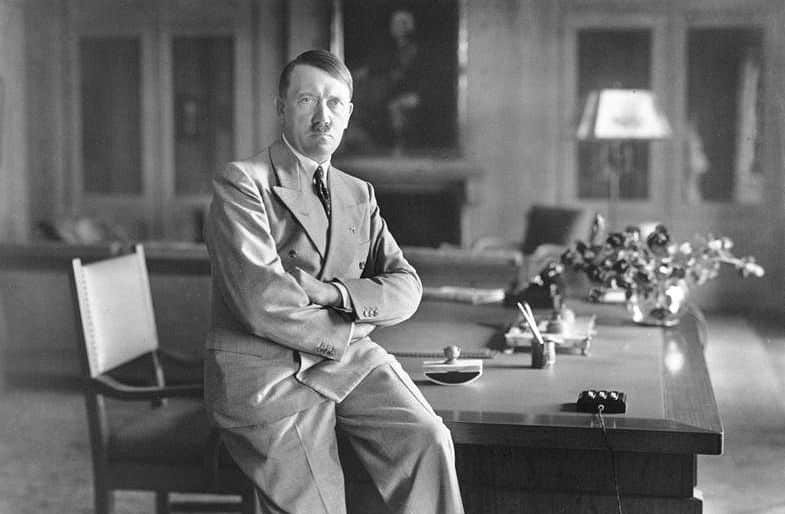
On January 30, 1933, Adolf Hitler was appointed Chancellor of Germany by President Paul von Hindenburg, a decision made entirely within the framework of Germany’s constitutional system. Though lawful on its surface, the appointment marked a decisive turning point in German and world history, setting in motion the rapid dismantling of democracy and the rise of a totalitarian Nazi state.
At the time, Germany was governed under the Weimar Republic, a fragile democracy weakened by economic collapse, political extremism, and public disillusionment following the Great Depression. Hitler’s Nazi Party had become the largest party in the Reichstag after the 1932 elections, but it lacked an outright majority. Conservative elites—including former chancellors Franz von Papen and Kurt von Schleicher—believed they could harness Hitler’s popular support while restraining his power through coalition politics.
These conservatives convinced President Hindenburg, who personally distrusted Hitler, that appointing him chancellor would stabilize the government. Hitler’s cabinet initially included only two other Nazis, reinforcing the belief that he could be controlled by traditional elites and institutions. This assumption proved disastrously wrong.
Once in office, Hitler moved quickly to consolidate power. Exploiting his position as chancellor, he called for new elections and used state authority to suppress political opponents, particularly communists and social democrats. The Reichstag fire on February 27, 1933—blamed on communist agitators—provided a pretext for the Reichstag Fire Decree, which suspended civil liberties such as freedom of speech, press, and assembly.
In March 1933, the Enabling Act granted Hitler the authority to pass laws without parliamentary approval, effectively neutralizing the Reichstag and transferring legislative power to the executive branch. With this act, Germany ceased to function as a democracy. Political parties were banned, trade unions were dissolved, and opponents were imprisoned or forced into exile. Within months, the Nazi Party had established a one-party state.
The conservatives who had facilitated Hitler’s rise were swiftly sidelined or eliminated from power. Their belief that Hitler could be used as a political tool reflected a profound misjudgment of both his ambitions and the Nazis’ ability to exploit legal mechanisms to destroy democratic institutions from within.
Hitler’s appointment as chancellor stands as a stark historical lesson: the collapse of democracy does not always begin with a violent coup. In Germany’s case, it began with a legal decision, made by elites who underestimated the danger of legitimizing extremism—an error with catastrophic consequences for Europe and the world.
Ask us! What questions do you have about content, strategy, pop culture, lifestyle, wellness, history or more? We may use your question in an upcoming article!
Like MediaFeed’s content? Be sure to follow us.
This article was syndicated by MediaFeed.org.