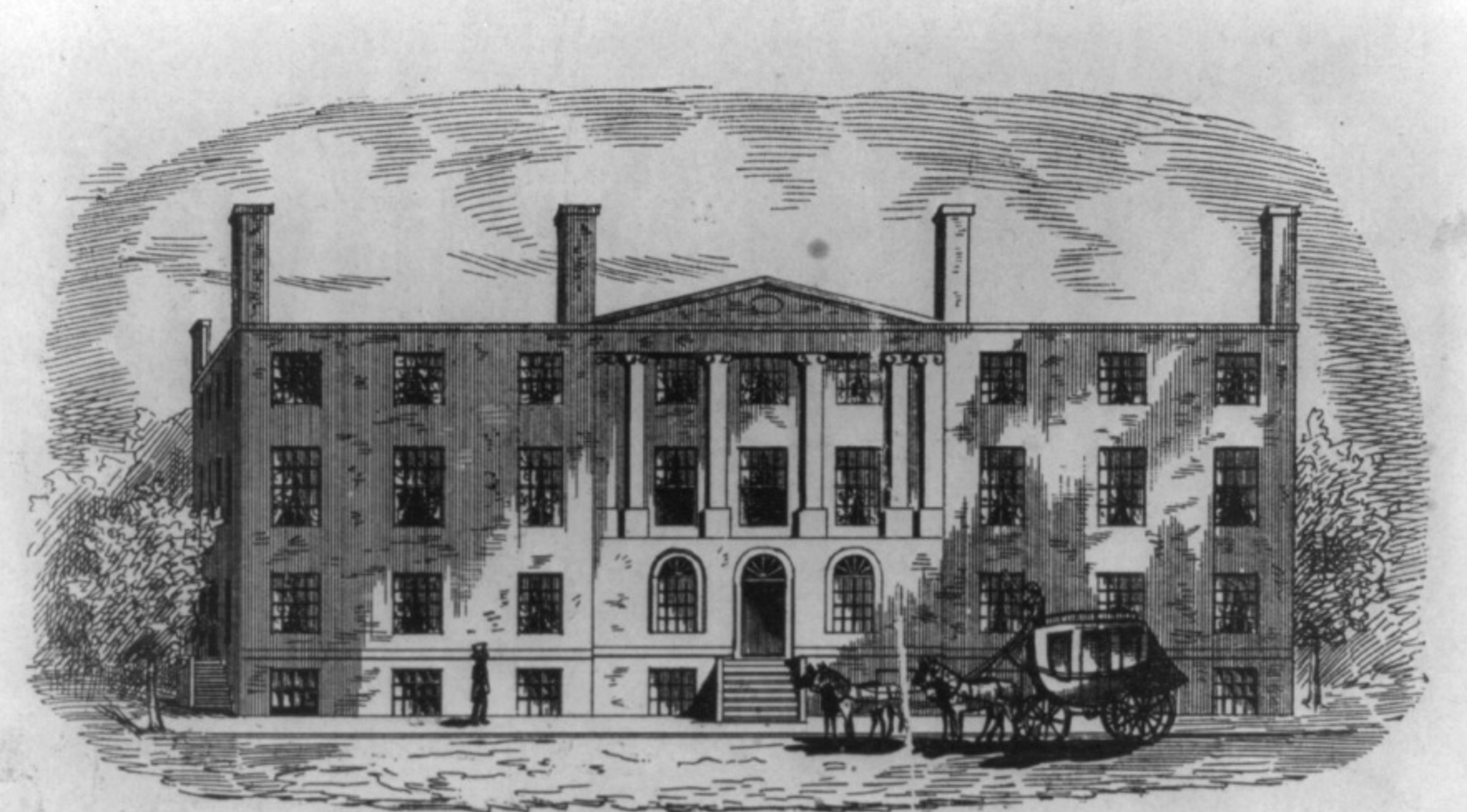
The Great Patent Office Fire of 1836
On the morning of December 15, 1836, the history of American innovation changed forever—or rather, it vanished. In a matter of hours, a catastrophic fire in Washington, D.C., wiped out the entire institutional memory of the United States’ industrial progress, incinerating every record of the nation’s first 46 years of invention.
A Recipe for Disaster
In 1836, the U.S. Patent Office was housed in Blodgett’s Hotel, a building it shared with the City Post Office. The building was widely known to be a fire trap; it lacked fireproofing and was filled with flammable paper and wooden models.
Ironically, the building actually housed a small fire department on its premises. However, when the alarm was raised, the department was rendered useless. Their leather hoses, long neglected, had cracked and decayed, failing instantly when connected to water.
The cause of the fire was ultimately attributed to carelessness. Post office employees had stored hot ashes from a stove inside a wooden box in the basement. This box was placed next to a supply of firewood, which smoldered and eventually ignited, sending flames roaring up through the building.
The Scope of the Loss
By the time the ashes cooled, the devastation was absolute. The fire had consumed:
- 9,957 Patents: Every single patent document issued by the U.S. government since the first one in 1790.
- 7,000 Patent Models: Unique miniature prototypes that inventors were required to submit alongside their paperwork.
- 9,000 Drawings: Detailed schematics of early American machinery.
The Ultimate Irony: Among the thousands of lost documents was the original patent for the fire hydrant. Because the record was destroyed, historians remain unsure exactly who invented it (though credit is usually given to Frederick Graff), as the proof burned up in a fire that hydrants were meant to extinguish.
The losses included documents for some of the most famous inventions in history, including Eli Whitney’s cotton gin, Robert Fulton’s steamboat, and Cyrus McCormick’s reaper.
The Resurrection: The “X-Patents”
The United States Congress acted quickly, passing the Patent Act of 1837 to attempt a recovery of the lost records. The government issued a call to action, asking inventors and clerks to return their personal certified copies of patents to Washington so they could be transcribed and re-recorded.
It was a monumental task, but only partially successful. Of the nearly 10,000 lost patents, only about 2,845 were ever recovered.
To distinguish these restored records from new patents issued after the fire (which restarted at #1), the Patent Office retroactively numbered the recovered documents with an “X” suffix.
- Patent X1: This designation was given to the very first U.S. patent, issued to Samuel Hopkins in 1790 for a method of making potash.
A Hole in History
Today, the Great Patent Office Fire serves as a sobering reminder of the fragility of physical records. While the X-Patents allow us a glimpse into the early days of American ingenuity, thousands of inventions—and the names of the ordinary citizens who created them—remain lost to the smoke of 1836, leaving a permanent gap in the narrative of American technology.
Like MediaFeed’s content? Be sure to follow us.
This article was syndicated by MediaFeed.org.