This article was reviewed by Julia Switzer, MD, FACOG.
Estrogen vs. Progesterone: Key Menopause Hormones Explained
Key Takeaways:
- Estrogen and progesterone are complementary reproductive hormones.
- Estrogen shapes everything from puberty to menstrual cycles to bone health, and progesterone is key to the second half of the menstrual cycle and pregnancy.
- These hormones naturally decline during perimenopause and menopause, driving symptoms like hot flashes, night sweats, and vaginal dryness.
- Hormone replacement therapy (HRT) with estrogen or progesterone can help restore hormonal balance.
Menopause brings a lot of change, and it’s normal to feel uncertain about what’s happening in your body. Two of the most important hormone players in this transition are estrogen and progesterone.
Understanding their roles can help you make sense of your symptoms and feel more empowered when considering treatment options like hormone replacement therapy (HRT).
Ahead, we’ll break down estrogen vs. progesterone, specifically in the context of menopause and HRT. We’ll explain how each hormone affects your body and how they work together to maintain balance.
Estrogen vs. Progesterone: The Basics
Estrogen and progesterone are two critical hormones in the female body, shaping everything from menstrual cycles to bone health and mood. You can think of estrogen as the main “builder,” supporting growth and renewal, and progesterone as the “balancer” or “stabilizer.”
During the reproductive years, estrogen takes the lead in the first half of the menstrual cycle. Progesterone rises in the second half and plays a key role in pregnancy.
During perimenopause and menopause, levels of both hormones naturally decline. This shift is what drives many of the symptoms people notice in midlife — from hot flashes and sleep changes to mood swings and vaginal dryness.
What Is Estrogen?
Often called the female hormone, estrogen is a steroid hormone that helps regulate reproductive health. Estrogen isn’t just one hormone, though — there are actually three main types:
- Estradiol. This is the most potent and common form of estrogen during a woman’s reproductive years. It plays a critical role in fertility, menstrual cycles, and reproductive organ health.
- Estriol. Estriol is predominantly produced during pregnancy. A sharp rise in this hormone signals the health of the pregnancy and fetal development.
- Estrone. This is the main estrogen found in women after menopause. It’s produced in smaller amounts by the ovaries and adrenal glands but primarily comes from fat tissue.
Beyond reproductive health, estrogen supports bone density, heart health, mood, skin elasticity, and more.
Lastly, estrogen (specifically estradiol) is a key player in hormone replacement therapy for menopause. It can relieve symptoms — like hot flashes, night sweats, and vaginal dryness — associated with the lower levels of estrogen that come with age.
What Is Progesterone?
Progesterone complements estrogen. While it’s sometimes called the “pregnancy hormone,” it has important roles outside of pregnancy. Particularly, it regulates the menstrual cycle and supports hormone replacement therapy for menopause symptoms.
The role of progesterone varies depending on what stage of life you’re in:
- Reproductive years. During the reproductive years, progesterone is produced in the ovaries after ovulation by a structure called the corpus luteum. Levels rise during the second half of the menstrual cycle to thicken the lining of the uterus, making it easier for a fertilized egg to attach and grow.
- Pregnancy. During pregnancy, progesterone helps maintain the uterine lining, which is essential for a healthy pregnancy. Once the placenta develops, it’s the main producer of progesterone, taking over from the corpus luteum.
- All life stages. Throughout life, the adrenal glands produce small amounts of progesterone in both genders.
Progesterone also appears to have calming effects and keeps estrogen levels in check. This might help prevent symptoms like heavy periods or mood swings.
Progesterone can be part of HRT, too. It’s often prescribed to protect the uterine lining from estrogen’s effects, lowering the risk of endometrial overgrowth or cancer in people who still have a uterus.
What’s the Difference Between Estrogen and Progesterone?
Estrogen and progesterone are two of the main hormones that shape your health through the reproductive years and into menopause.
Estrogen influences everything from menstrual cycles and fertility to bone, heart, skin, and brain health. Progesterone’s main jobs are to prepare and protect the uterine lining for pregnancy and support sleep and mood.
During menopause, both hormones naturally decline. This can lead to symptoms like hot flashes, sleep changes, mood swings, or vaginal dryness.
Estrogen vs. Progesterone HRT
In hormone replacement therapy, estrogen is often prescribed to relieve menopausal symptoms. Progesterone is sometimes added for balance and uterine protection for those who still have a uterus. Together, they work to restore comfort and quality of life during this transition.
Here’s a glance at the main jobs of estrogen vs. progesterone and how they both come into play during menopause and HRT treatment.
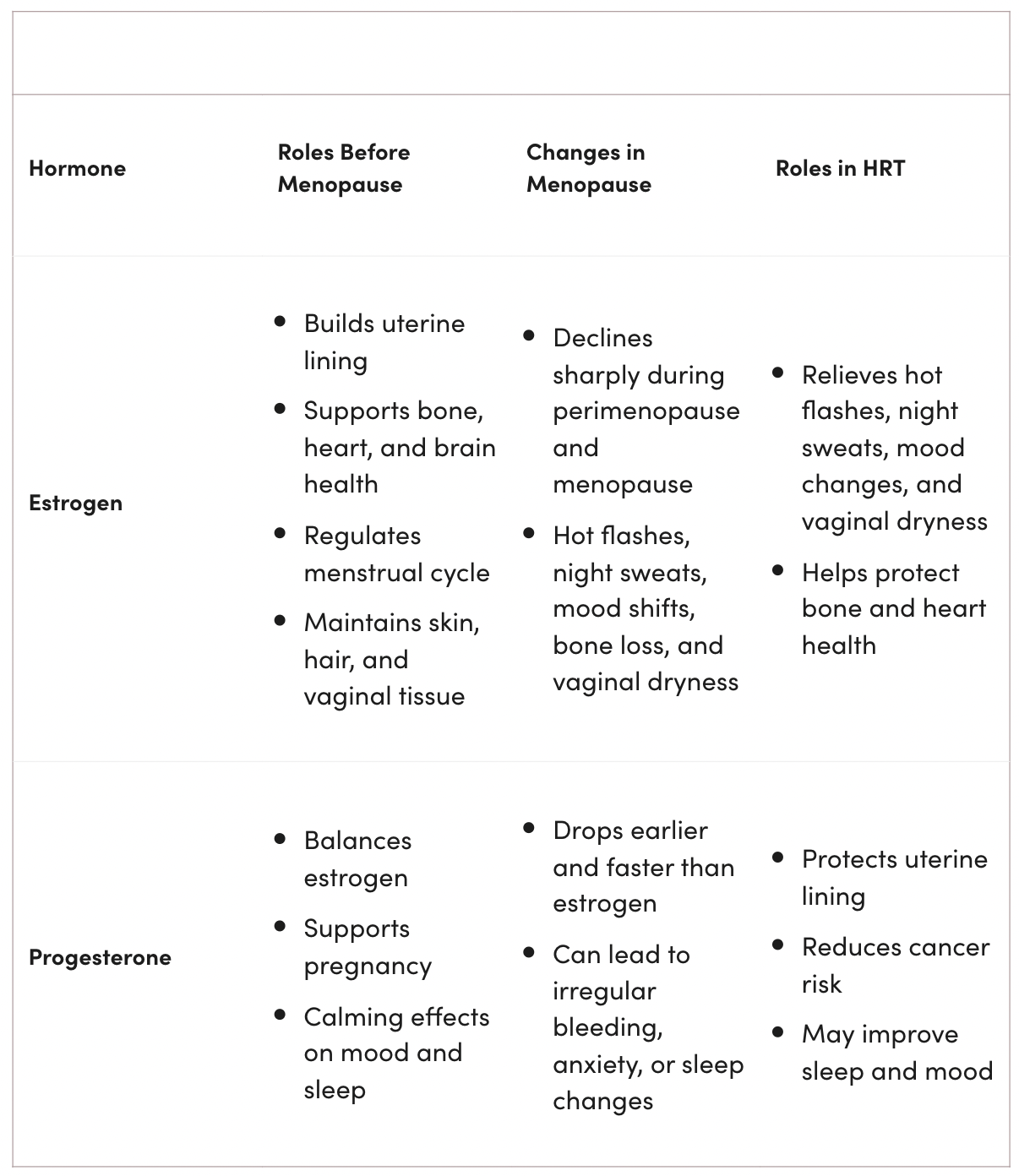
Estrogen vs. Progesterone During Perimenopause and Menopause
During perimenopause and menopause, hormone levels naturally shift.
Both estrogen and progesterone decline with age. These changes can cause symptoms that feel confusing, frustrating, or even overwhelming. Knowing which hormone does what can make the changes easier to understand.
Symptoms of Low Estrogen During Menopause
Estrogen plays a major role in regulating body temperature, supporting reproductive health, and maintaining bone strength. When levels drop, it can lead to:
- Hot flashes
- Night sweats
- Vaginal dryness
- Changes in drive (libido)
- Bone loss
- Mood changes or irritability
Symptoms of Low Progesterone During Menopause
Progesterone supports menstrual cycle balance and uterine health. It also has calming effects on the brain.
Low levels during perimenopause and menopause may contribute to:
- Irregular or heavy bleeding
- Sleep disturbances
- Anxiety
- Mood swings and irritability
- Breast tenderness
- Weight gain
- Worsening of conditions like endometriosis
Estrogen vs. Progesterone for Menopause HRT
HRT is one of the most effective ways to relieve the symptoms of perimenopause and menopause. It works by supplementing estrogen and, in many cases, progesterone.
Estrogen helps relieve symptoms like hot flashes, night sweats, and vaginal dryness. Meanwhile, progesterone’s main role is to protect the uterine lining from estrogen’s effects, lowering the risk of endometrial overgrowth or cancer.
Types of Hormone Replacement Therapy
There are different types of HRT. The right option for you depends on your symptoms and health needs.
HRT can be systemic, meaning the hormones circulate through your bloodstream to ease whole-body symptoms. Or it can be local. Local HRT delivers a lower dose of hormones directly to vaginal and urinary tissues for targeted relief.
HRT can also come in many forms, including pills, transdermal patches, gels, sprays, and suppositories.
The three common approaches are:
- Estrogen-only HRT
- Vaginal estrogen HRT
- Combined HRT
Let’s take a closer look at each.
Estrogen-Only HRT
Estrogen-only HRT is a systemic version of HRT. It’s often prescribed to women with full-body menopause symptoms who’ve had a hysterectomy (and therefore can’t get uterine cancer).
Estrogen-only HRT is also associated with a lower risk of breast cancer, but it’s generally not recommended for those who still have their uterus.
Vaginal Estrogen HRT
This local form of HRT delivers a low dose of estrogen to ease vaginal and urinary symptoms without significantly affecting the rest of the body.
Since the estrogen doesn’t travel throughout the body, it doesn’t treat full-body symptoms. But vaginal estrogen HRT also has fewer risks than combined HRT.
Bottom line: Vaginal estrogen HRT is great for those mainly dealing with vaginal or urinary symptoms.
Combined Estrogen-Progesterone HRT
This type of HRT is a combination of estrogen and progesterone. The hormones can match the hormones your body naturally produces or be in synthetic form (estradiol valerate and progestin).
Benefits, Risks, and Side Effects of Estrogen vs. Progesterone in HRT
Estrogen and progesterone each play unique roles in HRT.
Estrogen is often prescribed to ease menopause symptoms. Progesterone is usually added if you still have a uterus to protect against estrogen’s effects on the uterine lining.
Together, they can be a powerful tool for relief. But like any therapy, there are potential side effects and risks to consider.
Benefits of HRT
For many people, estrogen and progesterone in HRT provide meaningful relief and support, especially when menopause symptoms feel disruptive.
The benefits may help with:
- Hot flashes, night sweats, mood changes, vaginal dryness, and sleep problems
- Perimenopause-related fluctuations and irregular cycles
- Early menopause (before age 45) or primary ovarian insufficiency (before age 40)
- Low estrogen from surgical menopause or certain medical treatments (like chemo or radiation)
- Preventing bone loss or osteoporosis when other options haven’t worked
Possible Side Effects of HRT
While many people tolerate estrogen and progesterone HRT well, side effects can show up — particularly early on as your body adjusts.
Common side effects include:
- Headaches
- Breast tenderness
- Unexpected bleeding or spotting
- Nausea
- Mood changes
- Muscle cramps
- Digestive changes (like diarrhea)
These can vary by type of HRT, your health history, and even genetics.
Possible Risks of HRT
More serious risks of HRT are less common, but it’s important to be aware of them and discuss your risk factors with your provider. Risks can depend on age, health history, and the type of HRT you use. For example, transdermal patches may be safer than pills for those at higher risk of blood clots.
In general, some studies have linked HRT to a slightly higher risk of:
- Blood clots
- Gallbladder disease
- Stroke
- Breast cancer
- Heart disease
- Endometrial cancer (if estrogen is used alone and you still have a uterus)
This’s why combined HRT is standard for people with a uterus — progesterone helps protect the uterine lining from overgrowth.
Also, timing matters. Research suggests that starting HRT within 10 years of menopause or before age 60 provides the most benefit with the fewest risks.
Final Thoughts: Estrogen vs. Progesterone
Estrogen and progesterone play vital roles in reproductive health and overall well-being. Understanding how they work — and how their balance shifts during perimenopause and menopause — can help you make informed decisions about HRT.
Estrogen supports bone, heart, and reproductive health, while progesterone stabilizes hormones, supports sleep and mood, and prepares the uterus for pregnancy.
When both decline during menopause, symptoms like hot flashes, mood changes, and sleep issues can appear. HRT can help restore balance and relieve symptoms. Talk to your healthcare provider about what’s right for you.
FAQs
See answers to frequently asked questions about estrogen vs. progesterone.
Does progesterone lower estrogen?
Progesterone doesn’t directly “lower” estrogen, but it helps balance its effects in the body. In hormone replacement therapy for menopause, progesterone is primarily added to protect the uterine lining from estrogen’s stimulating effects, which could increase the risk of cancer if estrogen is used alone.
What happens when estrogen and progesterone levels are low?
When estrogen and progesterone levels drop, you may experience symptoms of hormonal imbalance. This can include irregular periods, mood swings, and unexplained weight gain or loss. Your provider can help determine if your symptoms are related to hormonal imbalances, perimenopause, menopause, or other underlying health conditions.
How are low estrogen and progesterone treated?
If you’re experiencing symptoms of low estrogen or low progesterone, your healthcare provider may suggest hormone replacement therapy. This is one of the best ways to relieve the symptoms of perimenopause and menopause. It works by supplementing estrogen and, in many cases, progesterone.
Antidepressants can also treat symptoms like hot flashes and mood instability, while medications like gabapentin or clonidine can be used for night sweats.
Do you have to take estrogen and progesterone together for hormone replacement therapy?
No, you don’t have to take estrogen and progesterone together for hormone replacement therapy. But it might be recommended in some cases. Progesterone is prescribed with estrogen to women who still have their uterus because it protects the uterine lining and reduces the risk of endometrial cancer. It may also support sleep and mood, thanks to its calming effects on the brain.
This article is for informational purposes only and does not constitute medical advice. The information contained herein is not a substitute for and should never be relied upon for professional medical advice. Always talk to your doctor about the risks and benefits of any treatment. Learn more about our editorial standards.
Related:
Like MediaFeed’s content? Be sure to follow us.
This article originally appeared on ForHers.com and was syndicated by MediaFeed.org.