December 10’s forgotten lift-off
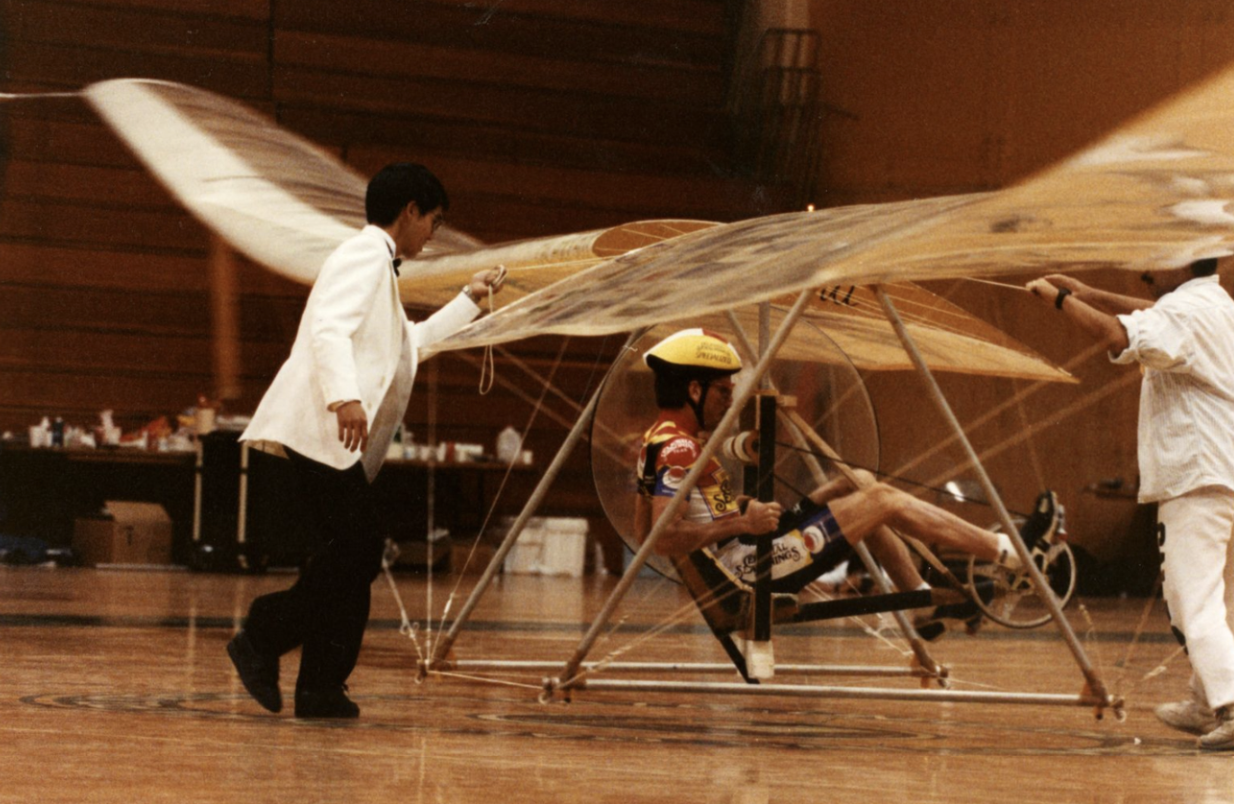
A quiet gymnasium floor, a fragile skeletal helicopter frame, a student pilot pedaling furiously, then a brief hover above the ground. In a world of jets, rockets, and roaring engines, a helicopter powered only by human muscle seemed impossible. On December 10, 1989, a small team made history with human muscle alone, proving even the wildest dreams of flight can take off if you’re bold enough to try.
The dream of human-powered flight
Human-powered flight ambitions dated back decades, with gliders and pedal planes. Vertical lift presented tough challenges compared to fixed-wing flight, needing lift, stability, balance, and massive power for little reward. The late nineteen-eighties brought advances in lightweight materials and renewed interest in environmentally conscious innovations, making human-powered helicopters seem remarkably possible for the first time.
Cal Poly students built Da Vinci III
Cal Poly aeronautical engineering students worked under Professor William Patterson’s guidance, motivated by ambition and curiosity. The ultra-light structure featured human pedal power driving rotors, careful design maximizing lift while minimizing weight. Challenges included rotor size, rotor speed, pilot power output, and structural limits. Safety testing and incremental progress led toward December tenth.
Seven seconds changed aviation history
The flight occurred in Mott Gym, lasting 6.8 seconds and reaching 20 centimeters. Pilot Greg McNeil, test director Kyle Naydo, and project manager Neal Saiki successfully hovered and performed a gentle landing. The moment represented a small victory, but proof of concept that human-powered vertical flight was possible. The flight earned formal acknowledgment from the American Helicopter Society’s Chairman’s Award.
Why headlines ignored this breakthrough
1989 marked the end of Cold War tensions and significant world events that dominated press coverage. Technical limitations mattered too: seven seconds and twenty centimeters seemed symbolic rather than practical, far from meaningful transportation. Human-powered flight remained niche as advancements shifted toward engine-based helicopters and jets, making the achievement a historical curiosity rather than a stepping stone to mainstream flight.
Legacy of determination over budget
Da Vinci III inspired future human-powered flight projects and experimental aviation. The testament to inventive spirit showed that big budgets weren’t necessary when determination, imagination, and fundamental physics combined. Human-powered flight isn’t practical yet, but symbolically, it highlights human creative power and the joy of minimal-tech innovation. The philosophical reminder endures beyond engineering specifications.
Small leaps deserve remembering
Not all crucial leaps are loud or globally transformative; some are quiet, experimental, and niche. History isn’t just wars, presidents, or disasters; sometimes it’s students pedaling in gyms dreaming of human flight. Remembering these small breakthroughs enriches views of human ingenuity: humble, imperfect, hopeful. December tenth deserves recognition for this daring leap.
Quiet flights matter most
On December 10, 1989, a handful of students turned dreams into reality, even if just for seconds and inches above the floor. The power of firsts matters deeply: human-powered flight, hopeful engineering, belief in possibility. History often remembers big names and events, but sometimes quiet flights deserve to be remembered the most. Those seven seconds proved that anything becomes possible with enough determination and imagination.
Related:
- Dec 8: On this day in history, a truck sinks a ferry
- The day Chevrolet proved its power in the postwar car boom
Like MediaFeed’s content? Be sure to follow us.
This article was syndicated by MediaFeed.org.