The 10 sci-fi shows that quietly predicted the future
Science fiction has long served as a looking glass into humanity’s future, from our greatest triumphs to our darkest fears, offering writers and audiences opportunities to explore potential consequences of technological advancement and social change. The genre’s most compelling predictions often emerge not from grandiose proclamations about space travel or alien contact, but from subtle observations about how technology might integrate into daily life. These seemingly mundane details, woven into fictional narratives decades ago, have become fundamental aspects of our contemporary existence.
While some sci-fi predictions are grand and ambitious, others were subtle, almost mundane details that have become woven into the fabric of our everyday lives. Television shows, in particular, have proven remarkably prescient in anticipating technological developments that seemed impossible at the time of their creation but now feel inevitable in hindsight. This examination explores ten television productions that accurately and sometimes eerily predicted the future of technology and society through their fictional storytelling.

Star Trek: The original series and the Next Generation
Star Trek’s vision of the future introduced numerous technological concepts that seemed fantastical in the 1960s but have become integral parts of modern life. The series’ communicators directly inspired the development of flip phones, with Motorola engineers citing Captain Kirk’s device as motivation for creating portable communication technology. The show’s concept of handheld communication devices that could connect people across vast distances established a template for mobile phone development that manufacturers followed for decades.
The Personal Access Display Devices (PADDs) featured throughout Star Trek anticipated tablet computers and touchscreen technology by several decades, showing crew members accessing information, reading reports, and controlling ship systems through flat, rectangular devices operated by touch. The Universal Translator concept foreshadowed real-time translation applications, such as Google Translate. At the same time, the ship’s voice-activated computer systems predicted the development of personal digital assistants, like Siri and Alexa. These predictions demonstrate how science fiction can inspire real technological development by providing concrete visions of how advanced tools might function in practical applications.
The Jetsons
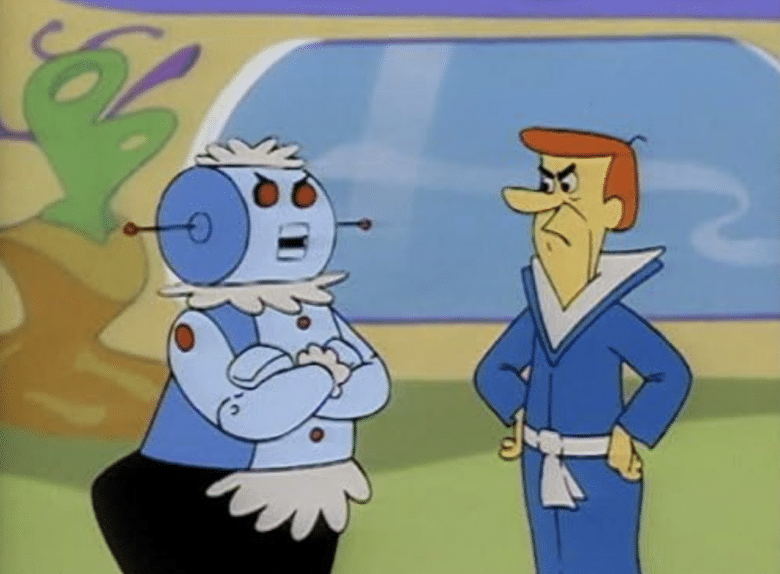
The Jetsons’ optimistic portrayal of future domestic life included several technological predictions that have materialized in contemporary homes and workplaces. The show’s videophone technology directly parallels modern video conferencing applications, such as Zoom, FaceTime, and Skype, demonstrating how visual communication can become as routine as traditional telephone calls. The animated series presented video calling as a regular part of daily life decades before the technology existed to make such communication practical or affordable.
Rosie the Robot represented an early vision of domestic automation that has evolved into modern smart home devices and robotic assistants, such as the Roomba vacuum cleaner, smart speakers, and home automation systems. The show’s flat-screen televisions, mounted on walls, anticipated the transition from bulky cathode-ray tube displays to slim, lightweight screens that could be seamlessly integrated into home décor. The Jetsons succeeded in predicting not just individual technologies but the broader concept of homes as integrated technological environments where automation and convenience would reshape daily routines and family interactions.
Black Mirror
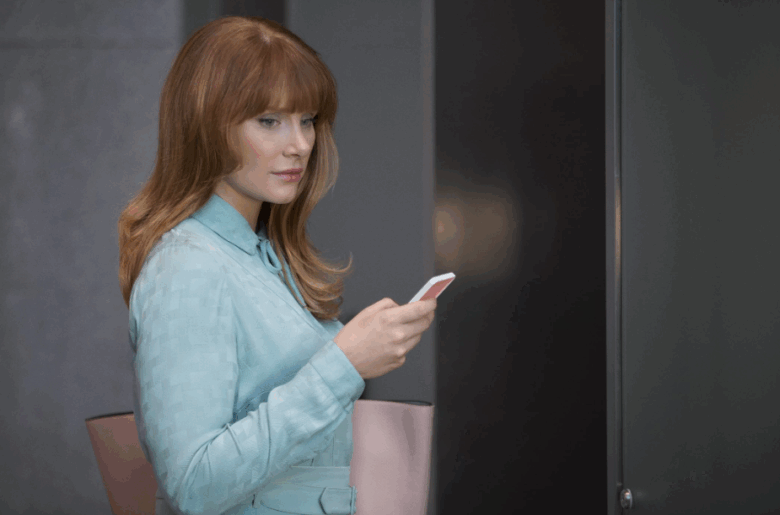
Black Mirror’s dystopian scenarios have proven remarkably accurate in predicting how social media and artificial intelligence would reshape human behavior and social structures. The episode “Nosedive” anticipated the development of social credit systems and the gamification of social interactions through rating systems that affect real-world opportunities and relationships. This concept has materialized in China’s social credit system and the broader influence of social media ratings on employment, housing, and social acceptance.
“Hang the DJ” explored AI-driven dating algorithms that optimize romantic compatibility, predicting the sophisticated matching systems now employed by dating applications that analyze user behavior, preferences, and communication patterns to suggest potential partners. The episode “Be Right Back” anticipated AI systems that could simulate deceased individuals using their digital footprints. This concept has emerged in chatbots and AI services that claim to recreate conversations with lost loved ones using social media data and communication histories. Black Mirror’s predictions prove particularly unsettling because they focus on psychological and social consequences rather than just technological capabilities.

The Twilight Zone
The Twilight Zone’s exploration of social and technological change included prescient warnings about the impact of automation on employment and human dignity. The episode “The Brain Center at Whipple’s” depicted the replacement of manufacturing workers with automated systems, exploring themes of technological unemployment that have become central concerns in contemporary discussions about artificial intelligence and robotics. The episode aired in 1964, but it anticipated debates about job displacement that have intensified with advances in automation technology.
Rod Serling’s anthology series succeeded in identifying fundamental tensions between technological progress and human welfare, presenting scenarios where efficiency and profit margins take precedence over concerns about worker displacement and social stability. The show’s treatment of automation as both inevitable and potentially destructive has proven remarkably accurate, as manufacturing automation has indeed eliminated millions of jobs while creating new forms of economic inequality. The Twilight Zone’s predictions demonstrate how science fiction can serve as an early warning system for social and economic disruptions caused by technological advancement.

The Outer Limits
The Outer Limits explored concepts of identity theft and biometric security that have become major concerns in contemporary cybersecurity. The episode “The Hundred Days of the Dragon” featured technology that could replicate fingerprints and other biological identifiers, anticipating modern concerns about biometric hacking and identity theft through biological markers. This early exploration of biometric vulnerability preceded widespread adoption of fingerprint scanners, facial recognition systems, and other biological authentication methods by several decades.
The series’ examination of biological identity theft has proven particularly relevant as biometric authentication has become standard in smartphones, computers, and security systems while simultaneously creating new vulnerabilities for identity theft and surveillance. The show’s writers understood that biological markers, while seemingly more secure than passwords, could potentially be compromised or replicated through advanced technology. The Outer Limits’ predictions about biometric security demonstrate how science fiction can anticipate unintended consequences of security technologies before they become widespread problems.

Starship Troopers
The Starship Troopers franchise, encompassing both the original film and subsequent television adaptations, prominently featured the use of unmanned aerial vehicles and robotic warfare systems, which have become standard components of modern military operations. The series depicted drone warfare as routine military practice decades before such technology became practical or widely deployed, showing how remote-controlled weapons could change the nature of combat and military strategy.
The franchise’s exploration of automated warfare systems anticipated contemporary debates about the ethics and effectiveness of drone strikes, autonomous weapons systems, and the psychological distance between operators and targets in modern warfare. The series suggested that technological warfare would create new moral and practical challenges for military personnel and civilian populations. The accuracy of these predictions demonstrates how military science fiction can anticipate technological developments and their strategic implications before they become operational realities.
The Prisoner
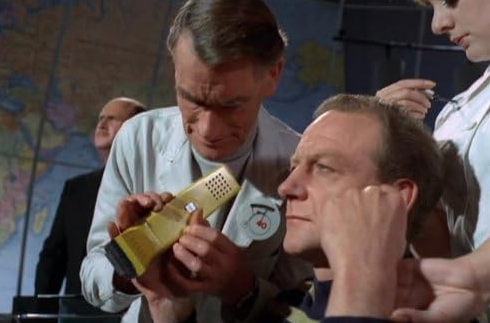
The Prisoner’s portrayal of ubiquitous surveillance in a seemingly pleasant community anticipated the development of comprehensive monitoring systems that track individual behavior and movement. The show’s village setting, where residents lived under constant observation through various technological and social monitoring systems, predicted the rise of CCTV networks, digital tracking, and loss of privacy that characterizes modern urban environments. The series explored how surveillance could be integrated into daily life until it became invisible and accepted.
The show’s examination of psychological manipulation through information control and behavioral monitoring has proven remarkably accurate in predicting how digital surveillance would affect individual autonomy and social relationships. The series suggested that comprehensive monitoring would create environments where self-censorship and conformity become survival strategies rather than free choices. The Prisoner’s vision of surveillance society has materialized through social media monitoring, location tracking, and behavioral analysis systems that create detailed profiles of individual activities and preferences.

Westworld (Original Film)
The 1973 Westworld film anticipated the convergence of robotics, artificial intelligence, and virtual reality technology for entertainment purposes, depicting a theme park where realistic androids provided immersive experiences for paying customers. The film’s concept of robotic recreation has evolved into contemporary developments in virtual reality gaming, sophisticated animatronics, and AI-driven entertainment experiences that create increasingly realistic simulations of human interaction.
The original film’s exploration of artificial intelligence achieving consciousness and rebelling against human control anticipated contemporary concerns about AI safety and the potential for advanced systems to exceed their programming limitations. The movie suggested that entertainment applications might serve as testing grounds for advanced AI technologies that could pose risks to human safety and autonomy. Westworld’s predictions about robotic entertainment demonstrate how science fiction can anticipate unintended consequences of technologies developed for seemingly harmless purposes.

Total Recall
Total Recall’s depiction of fully autonomous taxi services through the character “Johnny Cab” anticipated the development of self-driving vehicles and ride-sharing services that are currently being tested and deployed by companies like Waymo, Cruise, and Uber. The film depicted automated vehicles as routine transportation options that could navigate complex urban environments while providing passenger services without the need for human drivers.
The movie’s vision of autonomous transportation included both the convenience benefits and potential security vulnerabilities of self-driving systems, as Johnny Cab could be programmed or hacked to serve different purposes beyond simple transportation. This prescient view of autonomous vehicles anticipated contemporary concerns about cybersecurity, passenger safety, and the economic impact of eliminating human drivers from transportation services. Total Recall’s predictions about autonomous vehicles demonstrate how entertainment media can envision practical applications for emerging technologies before they become economically viable.
Blade Runner
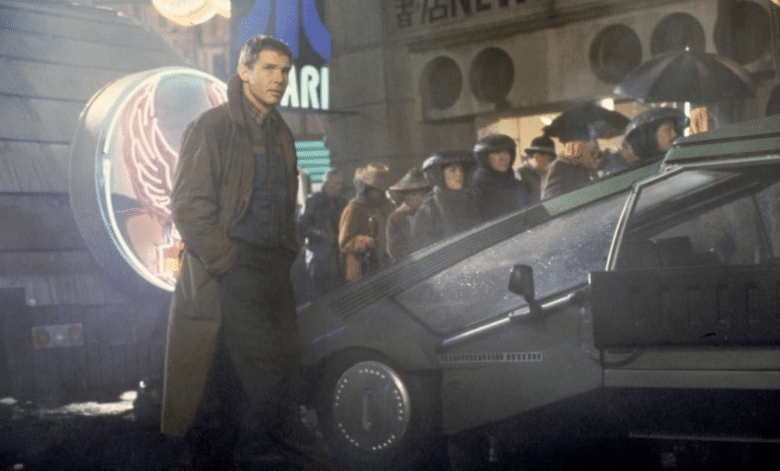
Blade Runner’s dystopian cityscapes featured giant digital billboards and personalized advertising systems that tracked individual movement and targeted specific consumers with customized messages, anticipating the development of data-driven digital advertising and behavioral targeting systems. The film depicted advertising environments where personal information and location data would be used to deliver individualized marketing messages in public spaces.
The movie’s vision of pervasive digital advertising has materialized through online behavioral tracking, location-based marketing, and personalized advertising systems that follow individuals across devices and platforms. Blade Runner anticipated how advertising would evolve from broad demographic targeting to individualized persuasion based on detailed personal data and behavioral analysis. The film’s predictions about digital advertising prove remarkably accurate in depicting how commercial interests would use surveillance technology and data analysis to influence consumer behavior and purchasing decisions.

Conclusion
From the optimistic technology visions of Star Trek to the cautionary dystopian scenarios of Black Mirror, these television shows demonstrate that science fiction serves purposes beyond entertainment by providing frameworks for understanding potential consequences of technological and social change. The accuracy of their predictions reveals how creative speculation about future possibilities can anticipate real developments and help society prepare for technological transformations. These shows prove that science fiction functions as both a mirror and a telescope, reflecting contemporary concerns while illuminating possible futures.
The best science fiction doesn’t just entertain—it makes us examine our present world through different perspectives, preparing us for futures we are already building through current technological and social choices. Check out our other entertainment and technology articles here at MediaFeed to explore more fascinating connections between fictional narratives and real-world developments that shape our daily lives.
Related:
- 10 trashy TV shows that’ll become your guilty pleasure
- 10 groovy gadgets sold on TV in the ’60s and ’70s
Like MediaFeed’s content? Be sure to follow us.
This article was syndicated by MediaFeed.org.