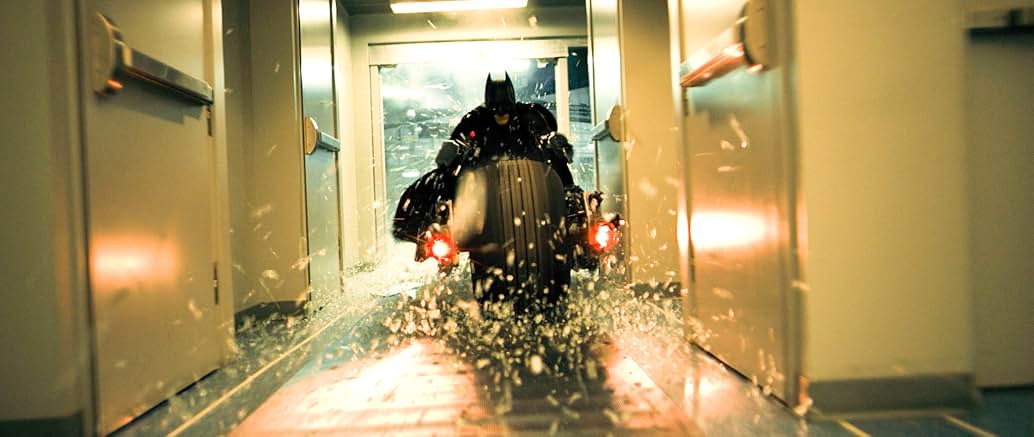
Movie stunts with wild backstories
For only a few minutes of action-packed shots in the movies, hours of work and coordination are required. Fight coordinators, technicians, and actors themselves put themselves in awe-inspiring situations to bring magic to the silver screen.
Some of the stunts in your favorite movies have backstories that are even more fascinating than the films themselves, whether because of their real-life consequences, their detailed planning, or their novelty. These examples serve as a reminder of the long days of work both cast and crew put into the films you know and love.
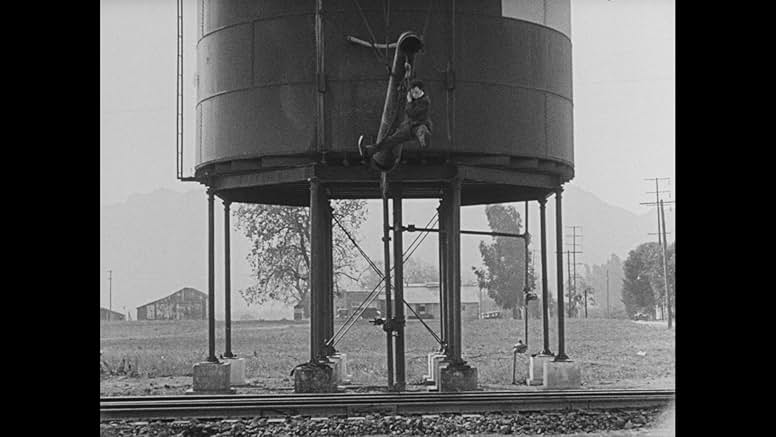
Buster Keaton’s moving train trick in “Sherlock Jr.” (1924)
Filmmaker and comedian Buster Keaton used himself as the prop in his movies. He’s best known for pioneering the genre of “slapstick” humor through physical comedy, exaggerated movement, and lighthearted scenes of violence.
The real-life consequences of his Sherlock Jr. train stunt, however, were anything but lighthearted. In one scene, Keaton’s character is on top of a moving train, when he grabs the spout of a large water tank nearby. Unexpectedly, the water crashed down much harder than expected. Keaton was thrown to the tracks, and the back of his neck struck a steel rail.
Keaton fell temporarily unconscious, and quit shooting early that day. For the next few weeks, he was afflicted with “blinding headaches.” However, he continued working, maintaining his reputation as a man with an exceptional pain tolerance. It wasn’t until nine years later, during a routine X-Ray, that Keaton was informed that he had broken one of his vertebrae. By that point, it had already healed.
Out of this injury, and multiple others he experienced during his stunts, none were fatal. Ultimately, he died in 1966 due to lung cancer.
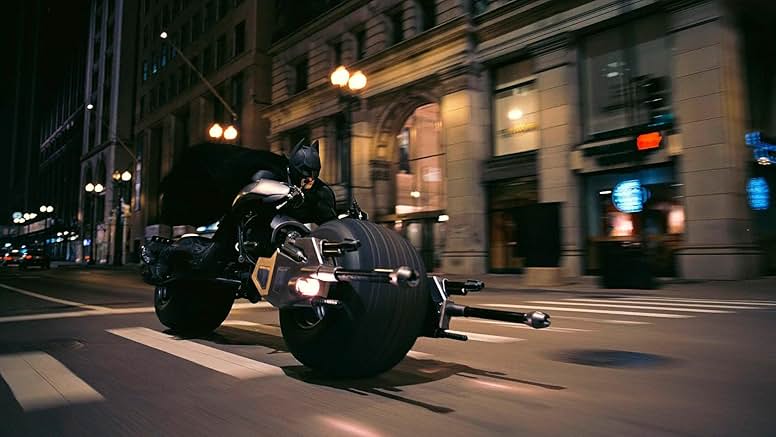
The truck flip in “The Dark Knight” (2008)
By the time Christopher Nolan directed “The Dark Knight,” CGI was well-utilized in Hollywood action movies. CGI makes lofty feats, like explosions and car crashes, easier to execute. Nolan, however, often chooses to take the harder route in his movies and opt for practical effects.
In “The Dark Knight,” Batman, played by Christian Bale, attaches cables to the Joker’s semi-truck, flipping the 18-wheeler over. To execute this, the special effects team used a piston with TNT under the semi’s trailer. As the TNT went off, the piston hit the ground with enough force to flip the vehicle. The truck itself had to be modified since a stunt driver, Jim Wilkey, was steering the truck. It was reinforced to ensure that he would be safe during the crash.
To make the stunt even more precarious, the scene was filmed in the middle of Chicago’s banking district on La Salle street. They practiced the stunt multiple times in an empty space before executing it near commercial buildings. Stunt coordinator Paul Jennings said that, “If it gets halfway up and falls to the side, it would’ve gone through a bank’s window.”
The street itself, in addition to the buildings, also presented a complicating factor. Sewer lines and bank vaults underneath the street meant that the TNT could only go off at specific points on the street without causing extensive damage. Wilkey was in charge of detonating it at the correct point, and managed to do it flawlessly, giving moviegoers one of the most iconic chase sequences in movie history.
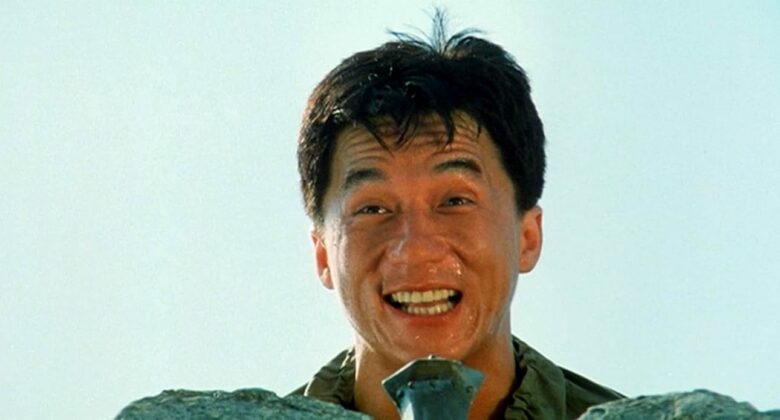
Jackie Chan in “Armour of God” (1986)
Throughout his career, stuntman and actor Jackie Chan sustained multiple injuries on film sets — fractures, brain hemorrhages, dislocated joints, and more. On the set of “Armour of God” in Yugoslavia, however, he sustained the most intense injury of his career.
The original plan for the stunt was to jump from a wall onto a tree branch. In reality, the branch didn’t support his weight, and he plummeted up to 40 feet, landing on a rock. The impact fractured his skull, forcing part of the skull into his brain. Immediately, he heard a “pop” and fluid began to leak out of his ear. Immediately, he was rushed to the emergency room, where the bone was removed from his brain.
Despite the severity of the injury, Chan resumed filming after a few weeks. However, to this day, Chan suffers from partial hearing loss in his right here. He’s also still left with a plastic plug filling a hole in his skull. This defining moment in Chan’s career highlights the perils stuntmen had to endure before safety precautions were enforced in the film industry.
The “Mission: Impossible – Fallout” (2018) helicopter chase
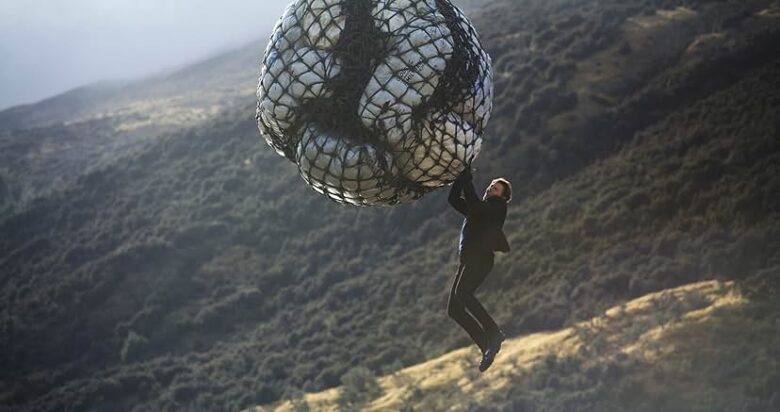
Learning to fly a helicopter is no small feat, but Tom Cruise managed to do it for the sixth film in the Mission: Impossible series. Cruise is known for doing his own stunts, even breaking an ankle on the set of “Fallout” during one, but mastering helicopter tricks took hours of preparation. He spent 12 pursuing his pilot’s license, and trained for about a year and a half.
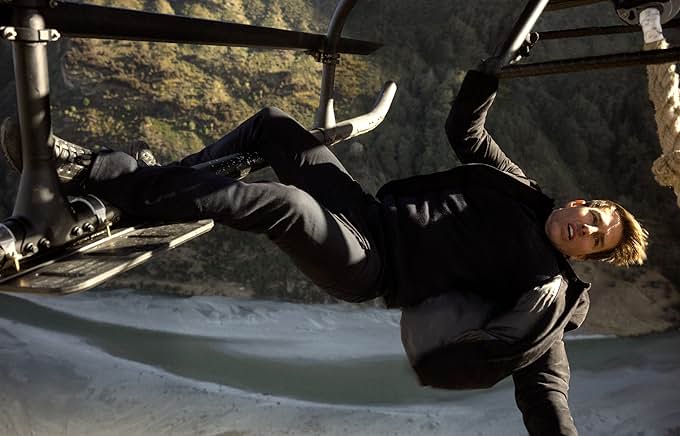
Cruise had to handle the most difficult aerial trick of the movie: a 360-degree corkscrew dive, with the helicopter flying in a tight New Zealand canyon. This maneuver is already difficult for experienced pilots, much less a novice pilot. There were 13 helicopters in total in the scene, most of which were used to ensure Cruise’s safety.
In order to make it clear that Cruise himself was actually piloting the helicopter, special cameras were installed. These cameras were operated by Cruise, giving him another role to manage during the sequence.
In another stunt during the same helicopter choreography, Cruise climbs up a rope connected to the helicopter, then falls, catching a large, suspended bag hanging from the aircraft. There was only one problem: some cast and crew members weren’t told that he would fall. They expected the climb to be the extent of the stunt. His co-star Rebecca Ferugson let out a genuine scream. One crew member reported, “We just lost Tom!” into the radio. In reality, Cruise was perfectly fine, and was able to continue the successful Mission: Impossible movie franchise.

Katharine Hepburn in “Summertime” (1955)
Leading lady Katharine Hepburn witnessed firsthand the frustrations of stunts. “Summertime,” directed by David Lean, was a romantic comedy in which Hepburn plays Jane, a lonely spinster who falls in love in Italy.
In one scene, Jane clumsily steps back, falling into a canal. Hepburn was originally opposed to doing the stunt herself, but Lean insisted that a stunt double would be too obvious, and she was ultimately convinced. Lean tried to fill the water with disinfectant, likely aware that Venice’s canals at the time were heavily contaminated.
By that night, her eyes started watering and itching. Hepburn had developed pink eye, and it troubled her until her death in 2003. The disaster became a lasting reminder that even the most glamorous roles and actresses have their own surprising challenges.
Margaret Hamilton in “The Wizard of Oz” (1939)
“The Wizard of Oz” is a timeless classic, known for its upbeat songs and feel-good ending. The set itself, on the other hand, was far from pleasant. Actors endured awful workplace conditions. The original tin man was replaced after a negative reaction to inhaling the aluminum dust used in his makeup. The studio was over 100 degrees Fahrenheit due to lights needed for Technicolor. Judy Garland faced cruel working conditions and physical abuse at the hands of the director.
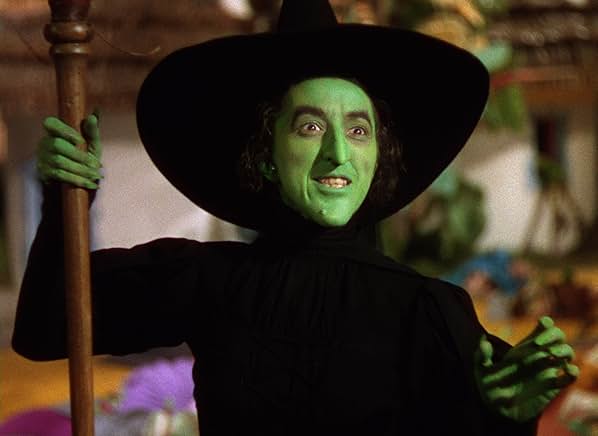
The Wicked Witch, played by Margaret Hamilton, fell victim to one of the most troublesome accidents on set. As the Wicked Witch exits Munchkinland, smoke and fire conceal her exit, adding mystery. As they filmed the second take, the fire arrived too early. Hamilton’s accident was exacerbated by the copper in her face paint, and she was left with second- and third-degree burns on her hands and face.
After three months, she resumed filming. Her makeup was originally removed with acetone, but later had to be removed with alcohol to avoid infection.
Despite the injury she experienced on set, Hamilton responded lightheartedly, saying “I will return to work on one condition — no more fireworks!”
Conclusion
From the silent era of film to the modern days of CGI, Hollywood stunts are full of high stakes, as actors and stuntmen put themselves in dangerous positions like high roofs or speeding trucks. Sometimes, actors and crew endure intense preparation to execute them, whether by learning new skills or creating new camera setups. When stunts go wrong, however, the results can be devastating, causing lifelong physical and psychological harm to actors.
At their best, though, stunts can be one of the biggest joys of watching a film. Audiences widen their eyes and hold their breath at actors in precarious positions or when larger-than-life destruction happens right before their eyes. As movies age, it is their best and boldest stunts that allow them to withstand the test of time, and remain legendary in the eyes of viewers.
Like MediaFeed’s content? Be sure to follow us.
This article was syndicated by MediaFeed.org.