An increase of 114 points in a single month.
That’s the fastest credit score jump that Nathalie Noisette has seen in working with hundreds of credit-weary clients.
If you’re looking for a speedy credit recovery, you might be wondering, say, how to raise your credit score up to 200 points and how long that might take. Here’s what you need to know.
Image Credit: DepositPhotos.com.
1. Review your credit report
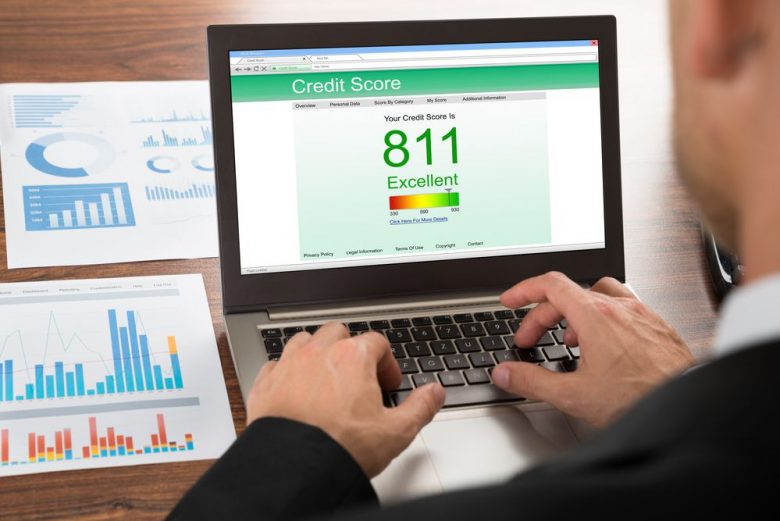
You might already be familiar with your three-digit credit score, but reviewing your credit report is more critical. A cleaned-up report often leads to a better score.
Kelly recommended accessing your report at least twice a year so that you can correct any mistakes as soon as possible. You can obtain one free copy of your report per year from the three major bureaus — Experian, TransUnion and Equifax — via AnnualCreditReport.com.
To avoid identity theft, consider freezing your report, limiting who can see or use it without your say-so. Note that you might need to unfreeze it, perhaps at a nominal cost, whenever applying for new credit.
Image Credit: DepositPhotos.com.
2. Find & fix any errors

Noisette’s 114-point success story was made possible, in part, by disputing errors on her client’s credit report.
“During an investigation, credit bureaus must validate that the debt is actually a consumer’s debt,” said Noisette, who started her company after improving her once “beyond poor” credit.
“Errors on credit reports happen all the time, identity theft is a real thing and credit bureaus are legally obligated to prove you owe [what] is reported you owe. If the burden of proof isn’t met, the negative item affecting your score must come off,” she said.
To remove errors from your report, you’ll need to write a dispute letter and include supporting evidence of the mistake. The Federal Trade Commission provides a template letter to serve as a foundation.
Image Credit: depositphotos.com.
3. Don’t miss any more payments

You might find yourself pining for an increase to your credit score because you fell behind on payments to creditors or lenders in the past. You can make perhaps the largest leap to that improved score by getting back on track.
That shouldn’t come as a surprise, as payment history accounts for more than a third of your FICO score, the most common of credit scores.
Once you get up to speed, ensure you stay there: A new late payment on your report can drop your score by as much as 75 points, Kelly said.
Image Credit: DepositPhotos.com.
4. Pay down your debt

The second biggest lever you can pull to improve your credit involves FICO’s “amounts owed” category, also known as credit utilization, on revolving credit like credit cards.
Even if you can’t zero your balances, you would be better off minimizing them. Noisette’s client, for example, repaid his balances until he hit the 29% mark of each credit card’s total available credit.
“Each trade line you have begins to be affected [adversely] if you use more than 30% of the available credit,” she said. “We choose 29% to stay below the threshold.”
Say you have a $10,000 credit limit on your favorite piece of plastic. If you’ve charged $5,000, you have a 50% utilization. By repaying $2,100 — thereby reducing your usage to $2,900 or 29% — you could improve your score significantly.
Another strategy to nudge your credit utilization in the right direction is to increase your credit limit. Just don’t increase your amount owed, too.
If you have enough cash to pay off a credit card completely, don’t rush to cut it up and close your account. After all, another 15% of your score’s makeup goes to the length of your credit history. By canceling that card you’ve had since college, you could significantly shorten your average history length.
Image Credit: DepositPhotos.com.
5. Diversify your credit

Steps 3 and 4 might not have applied to you if you have a short credit history and few accounts. The simple strategy for beginners is to start using a credit card on routine expenses you know you can afford. Then repay it all each month to zero out the balance, and avoid interest charges and any dings to your burgeoning credit score.
Although there are ways to build credit without taking on debt, you might also consider taking on another form of credit, such as a credit builder loan, to speed up the process.
Adding an installment loan to your report would address the “new credit” (10%) and “credit mix” (10%) categories of your FICO score. Six to 12 months of prompt payments on a loan for as little as $100 could potentially increase your score from 15 to 100 points, according to the Credit Builders Alliance.
Image Credit: Anchiy.
Cleaning up your credit takes time — it also takes effort

A top-notch credit score is a real money-saver. The next time you explore student loan refinancing, a home mortgage or another form of borrowing, you’ll find that an improved score will net you a lower interest rate.
More good news: You have the tools at your disposal to DIY your credit cleanup.
“The strategies to getting your credit improved are pretty straightforward,” Noisette said. “Consumers would benefit from educating themselves about how credit works, then leveraging all they know about credit to improve [and then] maintain their score. Knowledge is power.”
This article originally appeared on StudentLoanHero.com and was syndicated by MediaFeed.org.
Image Credit: Marcin Wiklik / iStock.