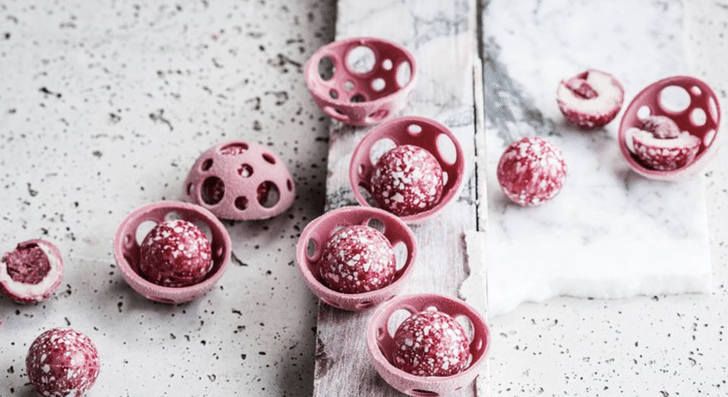
You may have first noticed it on the “Great British Bake Off,” a pink substance called ruby chocolate that indeed blushes with a demure hue compared to its more experienced chocolate counterparts. It has also made appearances on Netflix’s “School of Chocolate,” as well as the recently re-booted “Iron Chef: Quest for an Iron Legend,” a key ingredient in a chocolate-themed episode.
Whether or not you’ve yet encountered ruby chocolate personally in bar or confection form, one thing we know for sure: ruby chocolate evidently has star power.
Ruby chocolate is much more than just camera-ready, however, though it is undeniably a knockout, and it’s definitely not as simple as just pink chocolate. Here we get to know the ins and outs of this new, “4th chocolate,” aided by Chef Martin Diez, Director of Chef Services for Barry Callebaut Americas.
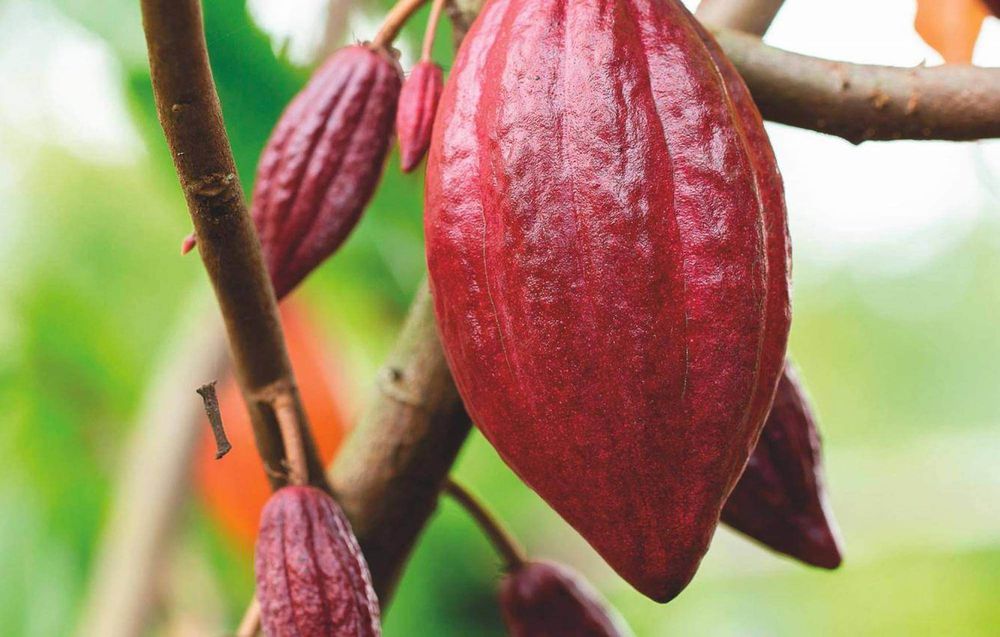
WHAT IS RUBY CHOCOLATE?
First introduced in 2017, ruby chocolate is a pink-hued chocolate crafted by Switzerland’s Barry Callebaut, the leading chocolate manufacturer worldwide, whom we recently profiled after their rollout of “second generation chocolate.” Following dark, milk, and white chocolate, it is being promoted as the world’s 4th unique chocolate type.
Its pink hue comes from selected cocoa beans with a specific processing technique applied, through research that Barry Callebaut took a number of years to complete. Though the company is being (rightfully) vague about the details of its proprietary production, it offers the following statement on ruby chocolate’s development: “The ruby cocoa beans, which are sourced from different regions of the world, have a specific set of attributes that Barry Callebaut managed to unlock through an innovative process.” (Basically, if you’re a chocolatier looking to harvest and process ruby chocolate on your own, you’re going to have to start from scratch with your own years-long research.)
The rose-colored hue occurs naturally from the selected beans and the subsequent processing, but otherwise results in a chocolate that behaves similarly to other chocolates. “The texture and viscosity of ruby chocolate are the same as any others,” says Diez. “Ruby chocolate melts perfectly and I usually temper it around 30°C, close to the temperature curve of a milk chocolate.”
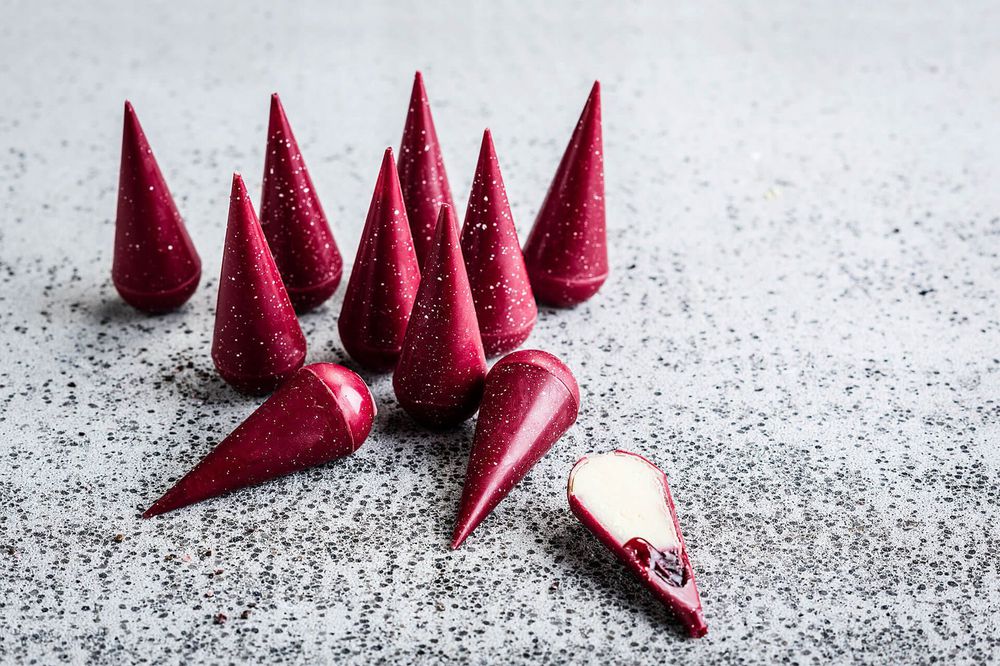
WHAT DOES RUBY CHOCOLATE TASTE LIKE?
“The tasting experience is fantastic,” says Diez. “There is a real tension between the berry, fruity notes and the velvety smoothness of the mouthfeel.” Ruby chocolate’s flavor is often attributed to berries by those who’ve tasted it, with a slightly higher acidity than that which is perceived in other types of chocolate. There’s a sweet serendipity of a berry-colored chocolate tasting like actual berries, though Barry Callebaut makes clear in their materials that no coloring or flavoring is added to the product.
Its unique taste opens it up to a range of inclusions and applications, according to Diez, some of which aren’t obvious matches for other forms of chocolate. “I usually pair ruby by association with ingredients that match the tasting profile,” he says, “such as fruits like red berries, passion fruit, and apricots, or herbs like basil, mint, or rosemary.” Classic chocolate companions can also easily harmonize with ruby chocolate. “Nuts work very well also,” says Diez, highlighting pistachios for not only their sympatico flavor with ruby chocolate, but dynamic color contrast. He even recommends a bit of an iconoclastic clash-up: ruby chocolate with cacao nibs, so long as their volume is kept to a level that doesn’t overpower the ruby.
RUBY CHOCOLATE IN THE WILD
“Ruby is now truly considered as the 4th type of chocolate within the chefs’ community and can be found in different shops and restaurants across the globe,” says Diez, citing ruby chocolate’s frequent appearances in everything from bonbons to cookies to ice cream. (In “Iron Chef,” it even made an appearance in Caesar salad.) Look for it in your local patisserie or chocolate shops, or you can experiment with ruby chocolate for yourself, as it is regularly available in bar or button form. In the US, Barry Callebaut supplies select chocolatiers with ruby chocolate including Charles Chocolate, who pairs it with strawberries and Vosges, who sells a ruby truffle collection.
This article originally appeared on TheChocolateProfessor and was syndicated by MediaFeed.
More from MediaFeed:
- Inside NASCAR legend Tony Stewart’s luxury hunting preserve
- This is the #1 most-hated fast food chain in America
- 18 best Costco membership benefits
Like MediaFeed’s content? Be sure to follow us.
You really can pair chocolate & cheese. Here’s how
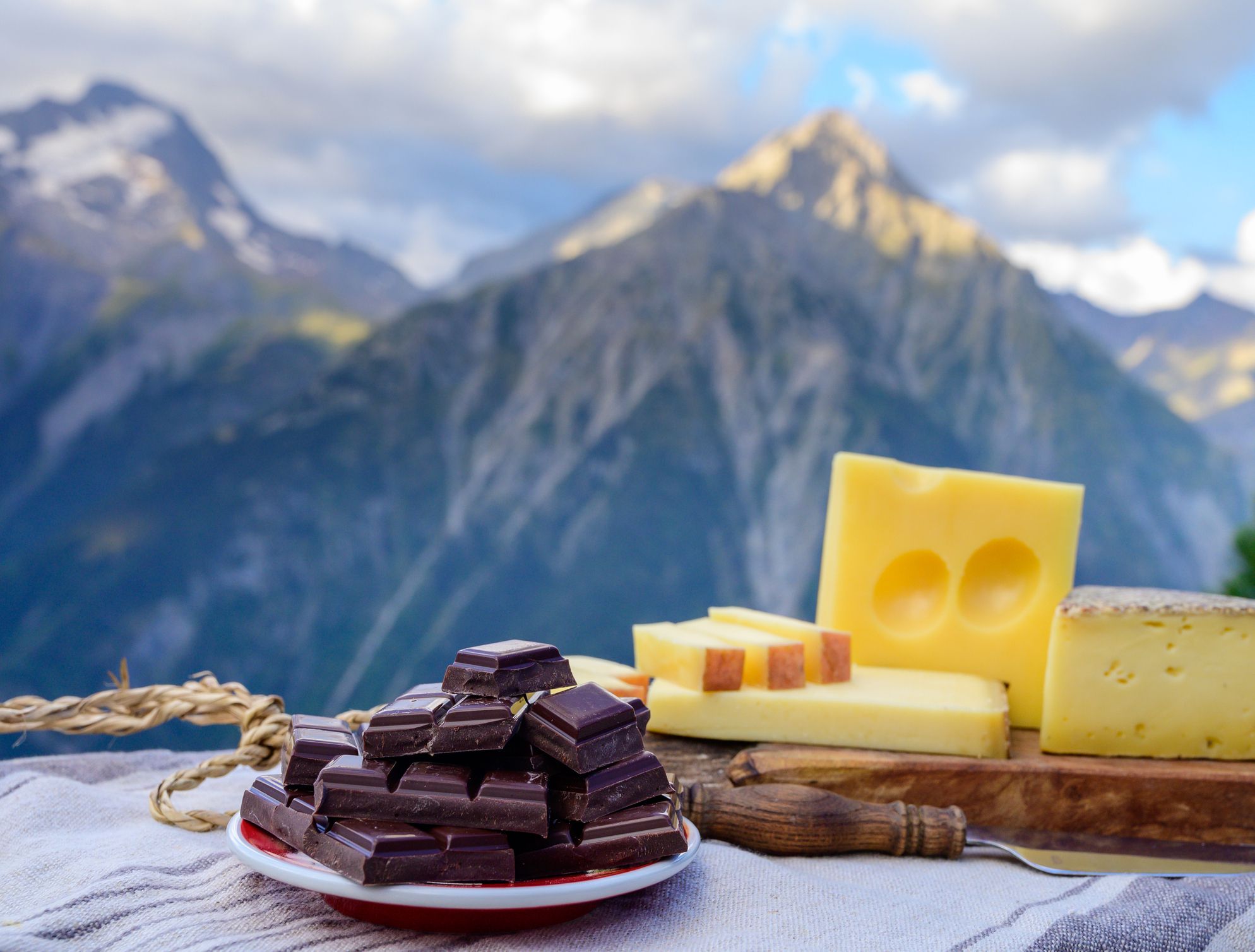
We can pamper ourselves (and our sweethearts) by sharing luxurious, indulgent treats and even discovering new sensuous pleasures. To be precise, I’m talking about pairing a variety of cheeses and chocolates, perhaps unlikely partners, which actually can bring out the best in each other.
The fermentation of each member of this duo produces complex notes, which can be matched to complement each other, unless you are into an “opposites attract” kind of game.
Cheesemonger Lilith Spencer of Jasper Hills Creamery and Jessica Robin of Dandelion Chocolate, joined forces to design a virtual cheese and chocolate tasting class which quickly sold out. But with their advice, anyone can create their own pairing at home.
Spencer recommends that you isolate flavor notes in cheese, such as nuttiness, fruitiness or milkiness since those flavors pair nicely with chocolate, especially the single-origin bars from places like Costa Rica, Peru and Venezuela that Dandelion specializes in. Their bars include a range of flavor profiles, including fruity, fudgy and toasty with notes ranging from bananas to espresso.
barmalini / iStock
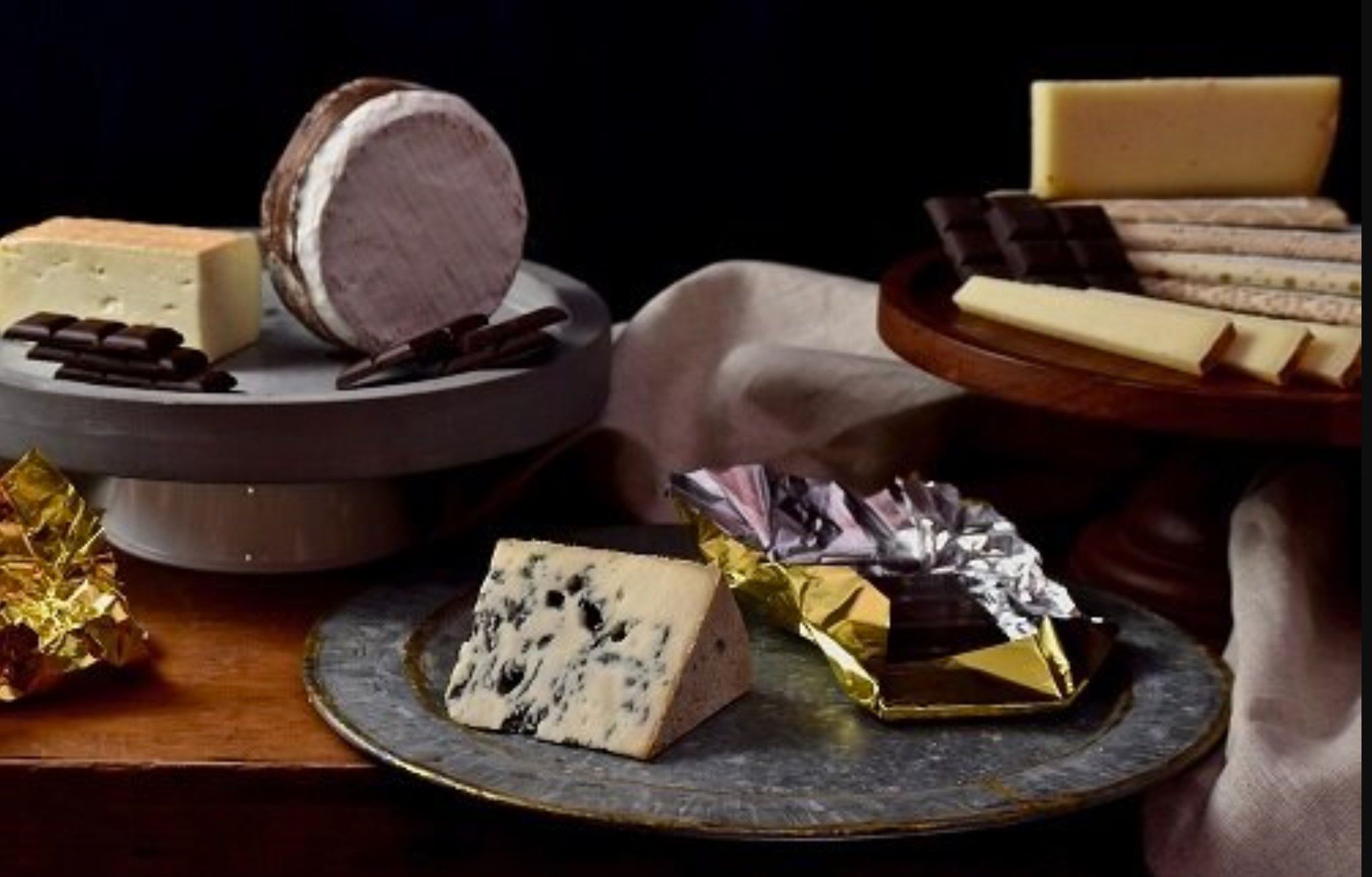
The pair matched up Dandelion’s Vietnamese chocolate bar, with its notes of candied ginger, molasses and apple cider, with the Brie-like Harbison, which Spencer describes as “gooey, smooth and velvety with a lingering, rich creaminess.” When they paired the two together, Spencer says, “The Harbison’s hidden vanilla note popped with a cinnamon-y gingery kick; it tasted like a whole new thing.”
Jessica Robin, who has organized monthly chocolate and cheese pairings for five years, says these pairings shine because “both chocolate and cheese have creamy, fatty, mouth feel and also incredibly complex flavors, which can overlap and be complimentary.” She adds, “In dark chocolate, we often taste a fruity note. So, look for cheese that you would want to eat with dried apricots, honey or jam for example.”
Just as some pairings can sing, other matchups can bring out the less desirable qualities in each other, which is something to avoid. Spencer gives bitterness as an example of what you wouldn’t want to highlight in a cheese. “Washed rind cheeses are most susceptible, so stay away from super dark chocolate and highlight sweetness or acidity, instead.”
In the end, they agree that there is no one right answer; it is all subjective and personal.
CheeseProfessor.com / Jasper Hill
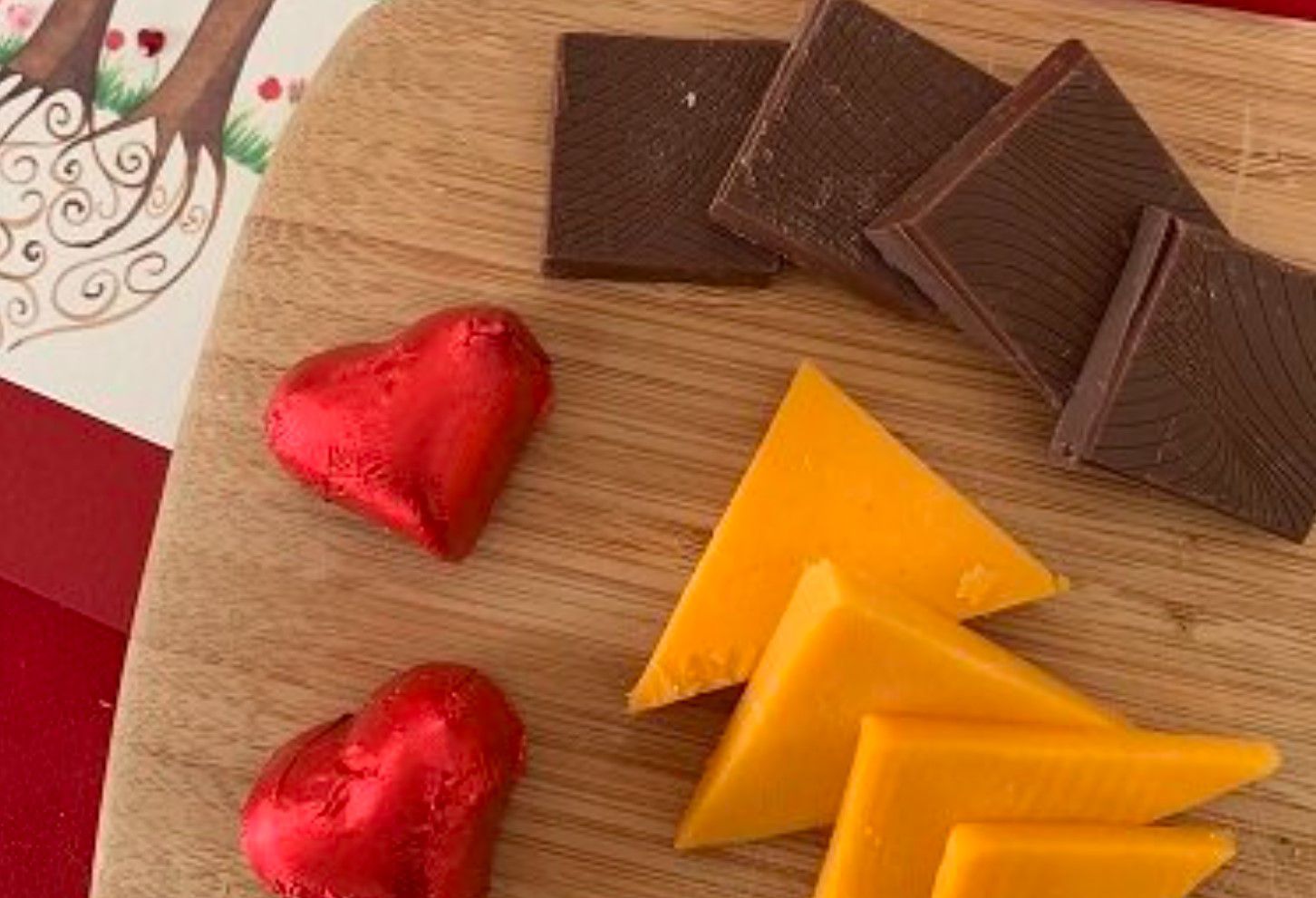
Emmy-nominated cookbook author, Chef Nathan Lyon suggests TCHO 39% Classic Milk Chocolate with aged cheddar. “The creaminess of the TCHO 39% is a lively juxtaposition next to the rugged texture of a well-rounded aged cheddar. Enjoyed together, the experience of a deep caramel flavor mixed with a buttery and delicate saltiness is a classic and soul-satisfying pairing.”
CheeseProfessor.com / Anna Mindess
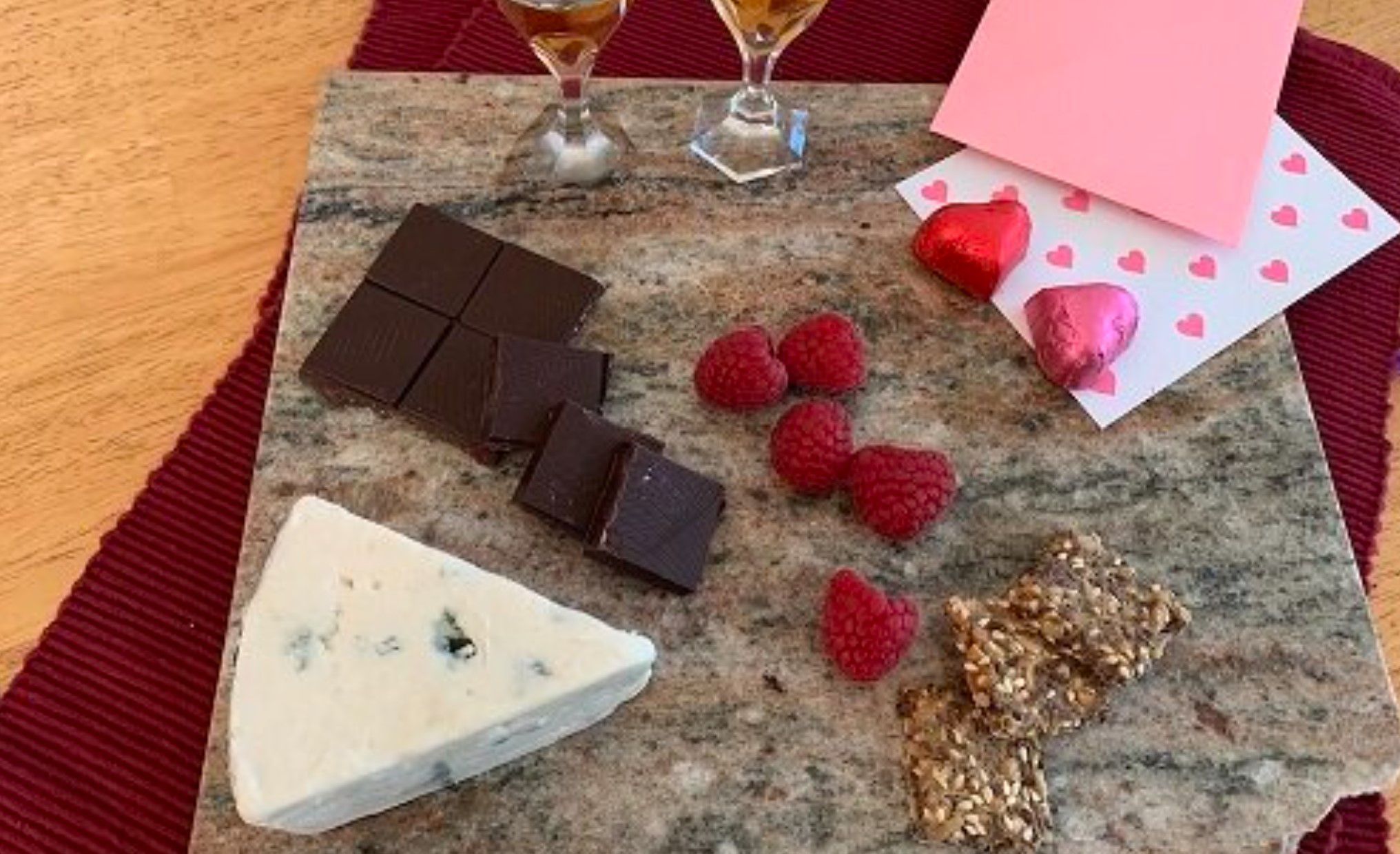
While pastry chef Jessica Craig, formerly of Almond in New York offers up TCHO Triple Berry Chocolate and blue cheese. “Blue cheese can have sweet notes and at 62% cocoa, the berry flavor in this chocolate bar will complement it very well. It is a great contrast to the earthy notes in a blue cheese, and this semisweet chocolate is strong enough in flavor to stand up to the pungency of blue cheese.”
CheeseProfessor.com / Anna Mindess
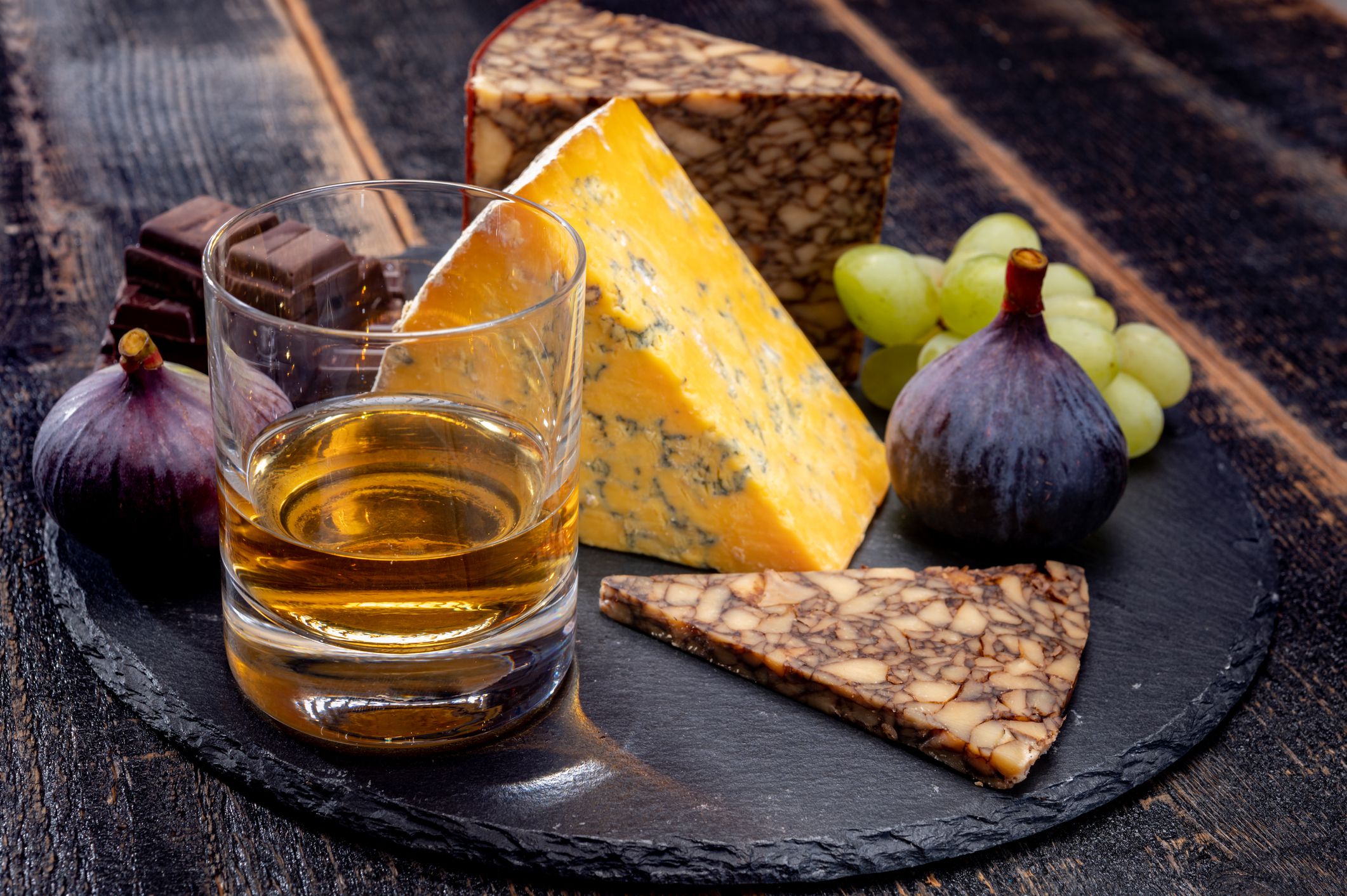
Mixologist Fitz Bailey at Coopers’ Craft shares his tips for pairing cheese and chocolate, using bourbon as a bridge between the two. “Sweet and salty is always a winning combo,” he advises. “If you’ve never tried leipäjuusto, you’re really missing out. Also known as Finnish squeaky cheese, this salty delicacy is often served alongside jam or coffee and heated into gooey perfection.”
He recommends pairing it with milk chocolate or even a low, dark (not higher than 55% cacao) with cherries or blueberries. “With the lighter and fruiter flavors, this will be great with Coopers’ Craft 82.2. The natural citrus and toasted oak in our Kentucky Straight Bourbon will complement and inspire your taste buds.”
Bailey continues, “Say you’re more in the mood for adventurous, hearty flavors that stick with you. Smoked Gouda is amazing on its own but shines when paired with a bar of nice dark chocolate. For this, I would shoot for chocolate that’s between 65-75% cacao. Ones with Almond and Cacao nibs will add some amazing texture.
“But what about the bourbon? With all these strong flavors we really need a whiskey that has the ability to stand out, Coopers’ Craft Barrel Reserve is absolutely up for the task. At 100 proof, this bold, robust bourbon has the perfect flavor balance to elevate your tasting to the next level. The rich smoke, leather, and stone fruit notes work wonders on the palate and provide a truly exceptional pairing.”
barmalini / iStock
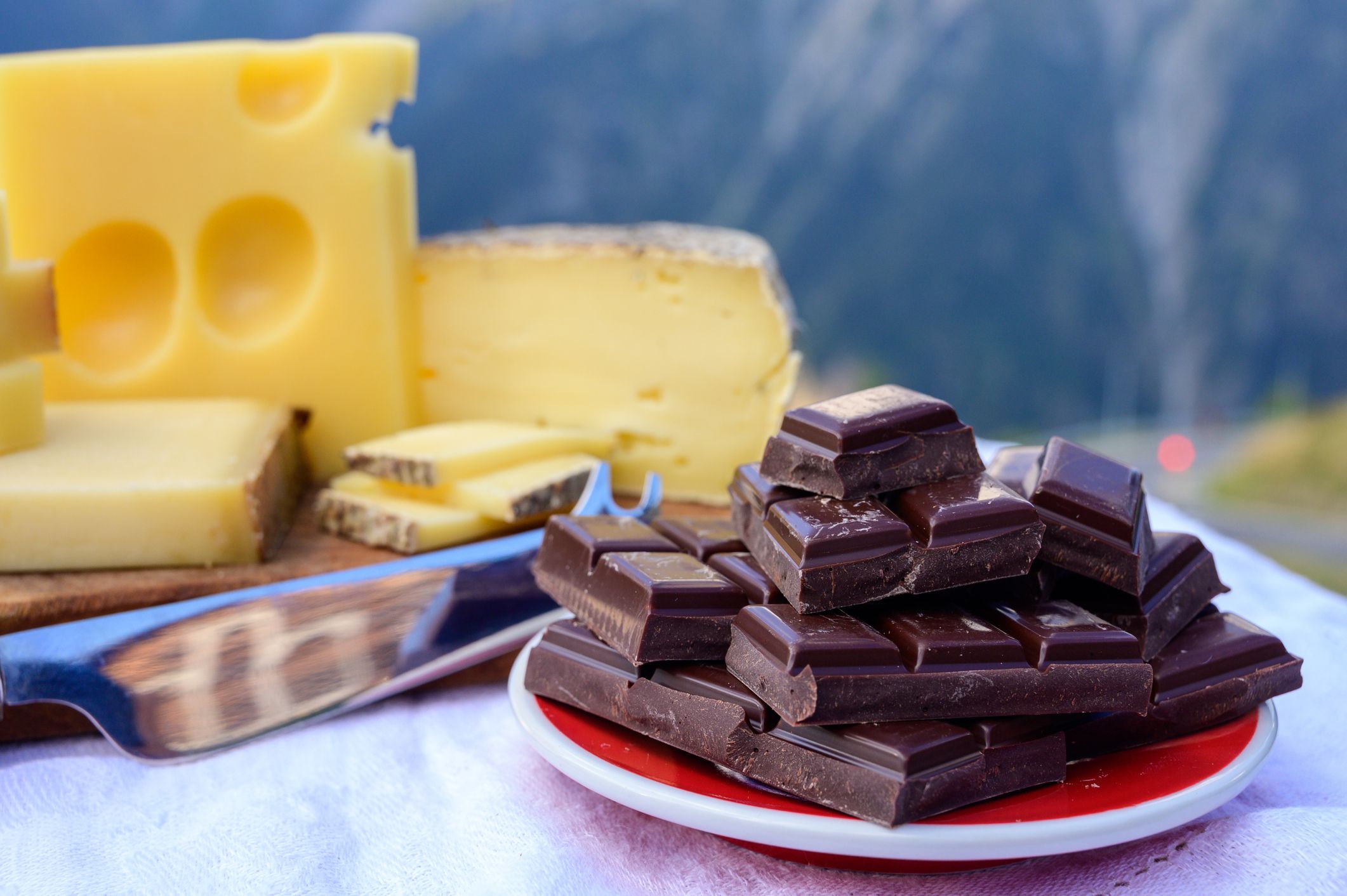
- Taste each element individually then try them together. Start with the chocolate, then taste the cheese and then try the two together to see what happens. You might even reverse the same combination with the cheese first to see if that changes anything. Sip some water in-between as a palate cleanser.
- Go from the mildest flavors to the strongest.
- Most pairings will be nicely compatible. A neutral pairing means each element maintains its own flavors but nothing new happens.
- Or you might notice flavors and aromas that you didn’t pick up on separately as each enhances the other. Extra credit if you detect a new third flavor you just created!
- Don’t fear a “bad pairing,” where tasting them together gives you an off-flavor, something unpleasant, like soap or cleaning fluid, perhaps. Jessica Robin often purposely tries a combination that she thinks will be a bad pairing because sometimes it turns out surprisingly good.
Remember, the goal in combining the complex tastes in cheese and chocolate is to create an exciting new experience together. What could be more romantic?
This article originally appeared on Cheeseprofessor.com and was syndicated by MediaFeed.org.
barmalini / iStock

LuckyBusiness / istockphoto
Featured Image Credit: chocolateprofessor.com.