
The public release of ChatGPT last November introduced society to a highly evolved form of artificial intelligence that’s both fascinating (it can write poetry!) and frightening (it also eloquently composed false information about Covid-19).
We decided to put the bot to the test by asking it a few questions about one of the biggest challenges humanity faces: Climate change.
Bottom line, ChatGPT was largely correct in broad strokes but not in details — and it made serious errors of omission that reflect a larger societal misunderstanding of climate change.
What follows are ChatGPT’s responses to our questions, which it composed in a matter of seconds, and an Environmental Defense Fund scientist’s analysis of what ChatGPT got right, and what it missed.
What’s causing climate change?
ChatGPT:

Climate scientist Dr. Ilissa Ocko: This is a pretty good answer. I love that it uses qualifiers like “primarily” and “particularly” because greenhouse gases aren’t the only cause of climate change, and carbon dioxide isn’t the only culprit. Everything is correct except for the part that says “greenhouse gases trap heat from the sun.” Energy from the sun (mostly shortwave radiation or sunlight) passes right through greenhouse gasses. But energy that radiates off the Earth’s surface (mostly longwave radiation or heat) can be absorbed by greenhouse gases on its way back out to space — and thus get “trapped.”
What’s the fastest way to slow global warming?
ChatGPT:

Dr. Ilissa Ocko: Yikes, this misses methane! Human-caused emissions of methane account for around 30% of today’s warming.
Addressing these emissions now are critical if we are to avoid the worst impacts of climate change. And because methane only lasts in the atmosphere for around a decade, we can almost immediately reduce its warming impact if we stop replenishing the atmosphere with more methane.
While reducing emissions of carbon dioxide is essential for stabilizing our climate in the long-term, the key to slowing down global warming right now is reducing emissions of methane. This is something more people need to know about.
Related: Dr. Ilissa Ocko at TED: The fastest way to slow climate change now
The good news is that there are numerous technologies and strategies available right now to cut methane emissions from human activities. We think we could slash emissions in half over the next decade with a full-scale effort to deploy these solutions globally. This could slow the global rate of warming by up to 30%.
So we asked it specifically about methane, typing in: Could reducing methane slow global warming faster than reducing carbon dioxide?
ChatGPT:

Dr. Ilissa Ocko: ChatGPT is absolutely right that cutting methane is the key to lowering warming in the near-term and that cutting carbon dioxide is the key to lowering warming in the long-term. It’s also right that we need to do both in order to achieve our climate goals. There needs to be much more awareness of these details. The thing I would change is about “slowing global warming in the long-term.” When we talk about near-term warming, we want to slow it down. But when we talk about long-term warming, we also want to keep it from increasing — not just slow it down.
Our takeaway
Climate science is complex and even though ChatGPT demonstrated decent accuracy responding to very specific questions, it missed several critical points — the most critical being that reducing methane is the fastest way to slow warming.
“There are so many subtleties in language that can make the science go from correct to incorrect,” says Ocko. “At best, incorrect information slows progress and, at worst, it can fuel misinformation campaigns that have dire consequences.”
Environmental Defense Fund’s Lauren Guite, who represents EDF in the Climate Action Against Disinformation Coalition, explains: “Misinformation has already caused divisions that have delayed action, and when it comes to an urgent problem like fighting climate change we don’t have any time to lose,” she says. “As AI-written material begins to circulate more widely, verifying your sources is more important than ever to make sure what you’re reading (and sharing) is accurate.”
Related:
- Can insurance save us from disaster?
- Was Glass Onion right about hydrogen? EDF’s Ilissa Ocko gets her knives out
This article originally appeared on EDF.org and was syndicated by MediaFeed.org.
More from MediaFeed:
Can climate change really affect the quality of your sleep?

From melting ice caps and rising sea levels to record-breaking temps and bigger and more destructive storms, we can see the impact of climate change all around us.
One place you might not realize climate change’s consequences, though, is your sleep.
MangoStar_Studio

As the world is getting warmer, the changes this is causing have the potential to wreak havoc on your ability to catch adequate Z’s. Here’s how climate change impacts your shuteye and ways to mitigate the challenges without causing additional harm to the planet.
Nastco / istockphoto
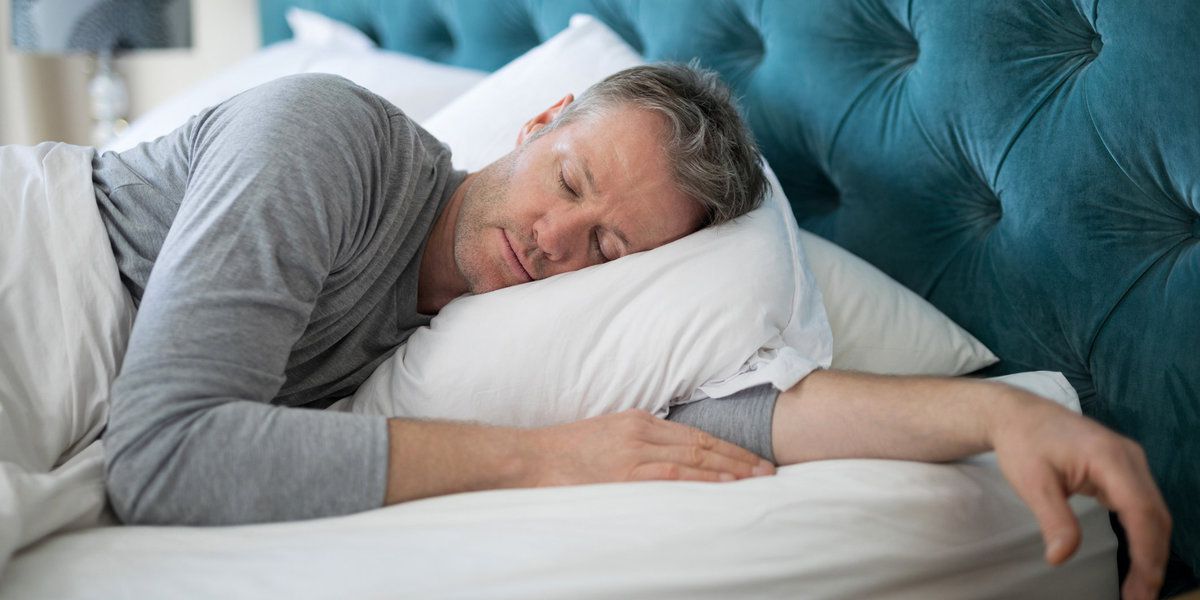
According to the National Sleep Foundation, the ideal room temperature for rest is between 60° and 67°F, but this can be harder to maintain as the worldwide climate heats up.
At night, your body’s core temperature drops to bring on sleep and then warms up in the morning to help you wake up. This natural thermoregulation is controlled by your circadian rhythm and is a key component of getting a good night’s sleep.
However, higher nighttime temps due to climate change can interfere with this cycle.
istockphoto

“Warmer temperatures are not great for inducing and maintaining sleep,” explains Abhinav Singh, MD, board-certified doctor in sleep medicine and internal medicine and medical director of the Indiana Sleep Center. “Our bodies need to cool down to support the steady release of melatonin, our sleep initiating hormone. Darkness and cool temperatures are key. Warmer temperatures reduce slow-wave restorative [SWS] sleep.”
According to a study published in the Journal of Physiological Anthropology, “The thermal environment is one of the most important factors that can affect human sleep.”
The study went on to report that warmer temperatures caused increased wakefulness and decreased deep sleep (or SWS) and REM sleep. Another small study found that warmer nighttime temps lead to a negative overall impact on “sleep calmness, difficulty in falling asleep, sleep satisfaction and sleep adequateness.”
And the temperature changes don’t even have to be big. A study in ScienceAdvances found that just an increase of one degree Celsius could negatively impact your shuteye.
amenic181 / iStock

While the impacts of global warming are often focused on a rise in overall temperature, studies also suggest that for certain areas, it may also cause an increase in humidity.
Though hotter nights offer their own sleep interruptions, humidity makes the problem even worse.
“Humid heat exposure further increases wakefulness, decreases REM and SWS, and excessively suppresses the decrease in [the body’s core temperature]”, according to a study in the Journal of Physiological Anthropology.
Here’s why humid nights are worse: When your body is hot, you sweat. In low humidity, this sweat can evaporate and allow your body to cool down. When it’s hot and humid, the sweat stays. This keeps the skin wet and the body stops trying to sweat, preventing you from cooling down and getting a good night of sleep.
amenic181

“Air quality in our bedrooms is another aspect of the sleep environment that tends to get overlooked,” writes sleep expert Michael Breus, PhD, in a blog post.
Climate change could worsen your air quality. According to the Centers for Disease Control and Prevention, global warming may cause an increase in allergens and air pollution, both of which can make it harder to get some shuteye.
“Pollution may irritate the airway and make it harder to breathe,” explains Singh. “This can induce cough, causing frequent interruptions to sleep and micro or macro awakenings from sleep.”
Layla Bedding

No surprise here, stress and anxiety are bad bedfellows when it comes to getting rest. Research has found that both chronic stress and sudden occasional stress can mess with your circadian rhythm and prevent satisfying sleep.
Climate change is something that can be seriously stress-inducing—and that’s especially true for kids.
A March 2020 survey conducted by the BBC Newsround found that 73% of the young people surveyed were worried about the state of the planet, and 58% were concerned about how climate change will impact their own lives. Twenty percent of the kids surveyed said climate change anxiety has impacted their sleeping and eating habits or given them a bad dream.
This stress-induced sleep loss can start a vicious cycle. According to research out of UC Berkeley, just one night of poor sleep due to stress can lead to a 30% increase in….you guessed it, more stress!
klebercordeiro / istockphoto

According to the Environmental Protection Agency, increasing global temperatures are associated with an increase in extreme weather events such as hurricanes, tornadoes, heat waves, and heavy storms. And research suggests these extreme weather events can hurt your sleep for numerous reasons.
Many of the extreme weather events bring increased heat and humidity, which can make it harder to get quality sleep. There’s also the stress and anxiety that comes when a hurricane or tornado is heading toward your hometown.
Plus, says Breus, “There’s new evidence that the weather can worsen sleep-disordered breathing. In other words, when the pressure drops, so does your ability to achieve smooth, restful breathing during the night.”
Research doesn’t clarify exactly why this occurs, but it suggests that changes in atmospheric pressure due to weather events do affect sleep apnea.
DepositPhotos.com

So how can you mitigate some of the sleep challenges that come with climate change without, you know, contributing to climate change?
- Be selective about your sheets. Not all sheets are created equal when it comes to keeping you cool. Choose breathable, natural materials like organic cotton, linen, or lyocell that allow for air to circulate as well as moisture-wicking to keep you cool and dry. As a bonus for the environment, natural materials are also produced more sustainably.
- Open your windows. When you can, avoid using an air conditioner and instead opt for a ceiling fan and an open window to help circulate cooler nighttime air.
- Go to bed in the buff. Skip the PJs and head to bed in your birthday suit. Sleeping this way is easy, cheap, and has more benefits than just keeping you cooler at night.
- Add some green. An easy way to improve the air quality in your bedroom is to add a plant, says Breus. “Keeping plants in the bedroom—and throughout your house—is a natural, low-cost, easy way to boost oxygen levels and improve air quality.”
Related:
This article originally appeared on Saatva.comand was syndicated by MediaFeed.org.
DepositPhotos.com
Featured Image Credit: hapabapa / iStock.