Black borrowers have a harder time repaying their education loans than white borrowers because of racial disparities, new research finds.
More than 20% of Black college graduates defaulted on a student loan over a 12-year period compared with 4% of white college graduates, according to Jason Houle, a sociology professor at Dartmouth College.
“Right now, and for the past few decades at least, Black borrowers have disproportionately borne the brunt of the student debt crisis,” Houle said in an interview with SoFi. “So much of the debate on student debt over the last several years has revolved around questions like: Are young people ending up with exorbitant amounts of debt? Do they have difficulty repaying their loans? And more broadly, is student loan debt actually a crisis? For Black young adults, the answer to these questions is a resounding yes.”
Image Credit: Anchiy/istockphoto.
New Research on Student Debt Crisis
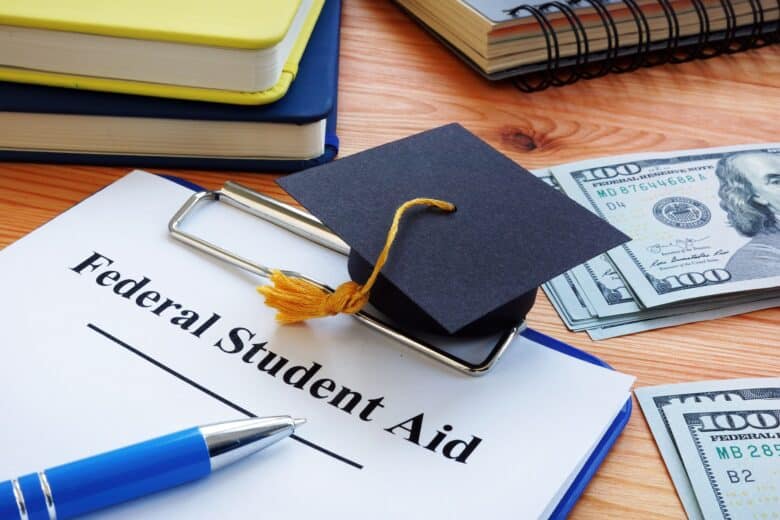
Americans hold more than $1.75 trillion in outstanding student debt, and most of that debt comes from federal student loans owned by the U.S. Department of Education.
Houle has analyzed U.S. student loan debt trends alongside Fenaba Addo, a public policy professor at the University of North Carolina at Chapel Hill. They’ve presented some of their findings in the 2022 book, A Dream Defaulted: The Student Loan Crisis Among Black Borrowers.
“One of the things we argue in the book and in our other work is that racial wealth disparities are a big part of the student loan debt story,” Houle said. “One of the more obvious reasons young people need to borrow is that their families lack the financial resources to help them pay for the rising costs of college. And wealth is an important piece of this puzzle.”
Image Credit: designer491/istockphoto.
Student Debt Racial Gap Data

The quantitative and qualitative research in A Dream Defaulted lay bare the following facts:
- Black borrowers accumulate more student debt than white borrowers on average and have a greater risk of defaulting on student loans
- A racial wealth gap created by historical inequalities and injustices make it harder for Black students to pay off student loans
- Black borrowers are more likely to get trapped in a cycle of debt due to student loan interest rates
- Black borrowers have the highest rates of student loan default and delinquency
Failing to repay a student loan can damage a borrower’s FICO Score, which can diminish their access to credit.
Image Credit: fstop123/istockphoto.
Racial Disparities in Wealth and Student Debt

Data show that the United States has had a wide race gap in homeownership since the abolition of slavery, and that racist policies and discriminatory lending practices have contributed to that gap. Non-Hispanic white families had a median household net wealth of $187,300 as of 2019, compared with $14,100 for Black households, according to the most recent U.S. Census survey data.
The race gap in wealth contributes to racial disparities in student debt accumulation and repayment among college attendees, graduates, and former students who’ve dropped out of school, according to Houle.
“One of the big ways that families pay for college is through their wealth,” he said. “[They do that] through savings and by tapping into the wealth generated from home ownership (such as home equity loans). While this strategy can work well for white families, Black families who lack this wealth increasingly need to turn to student loans to make up the difference. This includes federal loans, private loans, and Parent PLUS loans.”
Image Credit: Pekic/istockphoto.
Student Loan Forgiveness
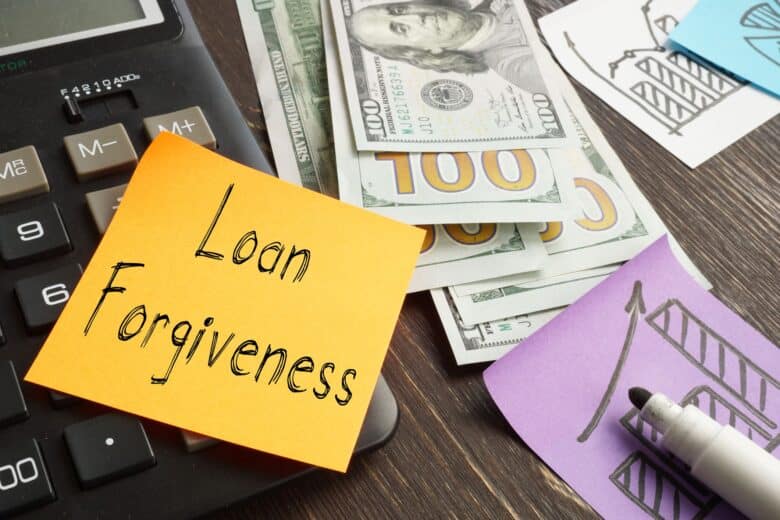
The average Black student accumulates more education loan debt and has a harder time repaying that debt than the average white student, according to Houle’s research. He said the solution to these disparities must include a combination of student loan forgiveness and greater public funding of higher education.
“What the research shows is that universal debt forgiveness — or forgiving very large amounts of debt (such as $50,000 or more) would do the most to move the needle on reducing racial disparities in student loan debt and mitigating wealth disparities that rising student loan debt has contributed to,” Houle said.
President Biden last August announced a one-time loan forgiveness program that would provide up to $20,000 in debt relief for many federal student loan borrowers. After lower court rulings blocked the program, the U.S. Supreme Court agreed to hear the case and may decide whether the president can cancel student loan debt. A final decision could come by June 30.
If Biden’s one-time loan forgiveness program survives the legal challenges, Houle said, it would represent “an important step in the right direction” toward tackling the student loan crisis facing Black borrowers.
Image Credit: Andrii Dodonov/istockphoto.
Addressing Racial Disparities in Student Debt Crisis

In addition to meaningful student loan forgiveness, Houle’s book suggests the following steps could help eliminate the racial disparities in student debt:
- Simplifying the Free Application for Federal Student Aid known as the FAFSA form
- Streamlining federal income-driven repayment plans (IDR)
- Making IDR more accessible and equitable
In January, the U.S. Department of Education officially proposed regulatory reforms to the IDR program. The proposals would amend the existing Revised Pay As You Earn (REPAYE) plan so that borrowers would only be required to pay 5% of their discretionary income on their undergraduate student loans or even qualify for $0 monthly payments if their income is low enough.
“It’s really important,” Houle said of the Education Department’s proposed changes to IDR. “We’re surprised folks haven’t talked about this more.”
The regulations would effectively make REPAYE the most affordable and most accessible federal IDR plan. Federal student loan borrowers, however, would still have to manually “opt-out” of the Standard Repayment Plan if they wish to “opt-in” to the REPAYE option. The authors of A Dream Defaulted and other researchers have suggested that IDR borrower participation would increase if IDR became the designated default student loan repayment program.
Image Credit: Ilya Burdun/istockphoto.
The Takeaway

February is Black History Month — a month to reflect on the achievements of Black Americans while acknowledging major challenges. Rising tuition rates and the crushing burden of student debt are among the biggest economic issues impacting Black families.
Can racial disparities in student debt accumulation and the race gap in household wealth both be eliminated? The authors of A Dream Defaulted have suggested reparations may be necessary to achieve diversity, equity, and inclusion in the U.S. higher education system, while promoting social justice at large.
Learn More:
This article originally appeared on SoFi.com and was syndicated by MediaFeed.org.
Please understand that this information provided is general in nature and shouldn’t be construed as a recommendation or solicitation of any products offered by SoFi’s affiliates and subsidiaries. In addition, this information is by no means meant to provide investment or financial advice, nor is it intended to serve as the basis for any investment decision or recommendation to buy or sell any asset. Keep in mind that investing involves risk, and past performance of an asset never guarantees future results or returns. It’s important for investors to consider their specific financial needs, goals, and risk profile before making an investment decision.
The information and analysis provided through hyperlinks to third party websites, while believed to be accurate, cannot be guaranteed by SoFi. These links are provided for informational purposes and should not be viewed as an endorsement. No brands or products mentioned are affiliated with SoFi, nor do they endorse or sponsor this content.
Communication of SoFi Wealth LLC an SEC Registered Investment Advisor
SoFi isn’t recommending and is not affiliated with the brands or companies displayed. Brands displayed neither endorse or sponsor this article. Third party trademarks and service marks referenced are property of their respective owners.
Communication of SoFi Wealth LLC an SEC Registered Investment Adviser. Information about SoFi Wealth’s advisory operations, services, and fees is set forth in SoFi Wealth’s current Form ADV Part 2 (Brochure), a copy of which is available upon request and at www.adviserinfo.sec.gov. Liz Young is a Registered Representative of SoFi Securities and Investment Advisor Representative of SoFi Wealth. Her ADV 2B is available at www.sofi.com/legal/adv.
Image Credit: skynesher/istockphoto.
More from MediaFeed

7 sneaky signs that you’re about to fall for a student loan scam
Image Credit: DepositPhotos.com.