’90s one-hit wonders that didn’t age well
Memory operates like a selective editor, burnishing specific experiences until they gleam with unwarranted significance. The 1990s produced countless musical moments that seemed revolutionary at the time, creating soundtracks for our most formative years that feel sacred in retrospect. Nostalgia transforms even mediocre songs into treasured artifacts, convincing us that what we loved during adolescence must have possessed genuine artistic merit rather than simply arriving at the right psychological moment.
Unfortunately, revisiting these musical time capsules often reveals harsh truths about their actual quality. Songs that once felt essential now expose their fundamental flaws: shallow lyrics masquerading as profundity, production tricks substituting for genuine creativity, and novelty concepts wearing thin after repeated exposure. The passage of time strips away the cultural context that made these tracks feel relevant, leaving behind their musical bones for honest evaluation.
This article highlights ten ’90s one-hit wonders whose reputations have benefited significantly from the passage of time. Each managed to capture fleeting cultural moments through catchy hooks or memorable gimmicks, yet their lasting appeal crumbles under scrutiny. Prepare to confront some uncomfortable truths about songs you may still defend based on teenage memories rather than objective musical assessment.

1. “Macarena (Bayside Boys Mix)” – Los del Río (1995)
Los del Río’s dance floor phenomenon dominated the summer of 1995 with its infectious simplicity and accompanying choreography, which united wedding receptions and baseball stadiums worldwide. The track’s universal appeal stemmed from its accessibility: anyone could master the dance moves, and the bilingual lyrics felt inclusive rather than exclusionary. Radio stations embraced it as programming that guaranteed listener engagement, regardless of demographic preferences.
Contemporary listening reveals the song’s profound limitations as actual music rather than participatory entertainment. The melody consists of barely three notes repeated endlessly, supported by the most rudimentary percussion patterns imaginable. The Bayside Boys’ English verses feel awkwardly grafted onto the Spanish original, creating linguistic dissonance that destroys any potential narrative coherence. Most damaging, the track’s relentless repetition becomes genuinely torturous after a single complete playthrough.
The dance component that once made “Macarena” feel revolutionary now seems like desperate compensation for musical inadequacy. Strip away the choreography, and nothing remains except monotonous vocal delivery over elementary instrumental backing. The song succeeded because it transformed listeners into performers, not because it offered meaningful artistic expression worth preserving. As Rolling Stone documented, “Macarena” was inescapable in 1996 but has “barely been played at a bar mitzvah since.”

2. “I’m Too Sexy” – Right Said Fred (1991)
Right Said Fred’s tongue-in-cheek celebration of vanity initially struck audiences as clever self-deprecation from performers who clearly didn’t take themselves seriously. The track’s deadpan delivery and absurd catalog of things deemed “too sexy” suggested sophisticated British humor that elevated typical pop music narcissism into satirical commentary. The fashion industry references mock celebrity culture’s superficiality rather than celebrating it.
Subsequent listens expose the humor’s shallow foundation and questionable satirical intent. The Fairbrass brothers’ spoken-word sections drag interminably, killing any comedic momentum through tedious repetition. Their delivery suggests genuine arrogance rather than ironic distance, transforming supposed satire into uncomfortable displays of actual vanity. The “joke” depends entirely on listeners assuming the performers are more self-aware than their lyrics demonstrate.
The song’s production values feel particularly dated, employing synthesized elements that sounded cutting-edge in 1991 but now seem primitive and artificial. Moreover, the track’s central conceit that extreme self-regard could be funny reflects cultural attitudes about masculinity and body image that feel deeply problematic decades later. What once seemed playfully narcissistic now appears genuinely offensive. Rolling Stone’s oral history reveals the band’s cynical origins, having lived through New York’s “dodgy” party scene of the ’80s.
3. “Ice Ice Baby” – Vanilla Ice (1990)
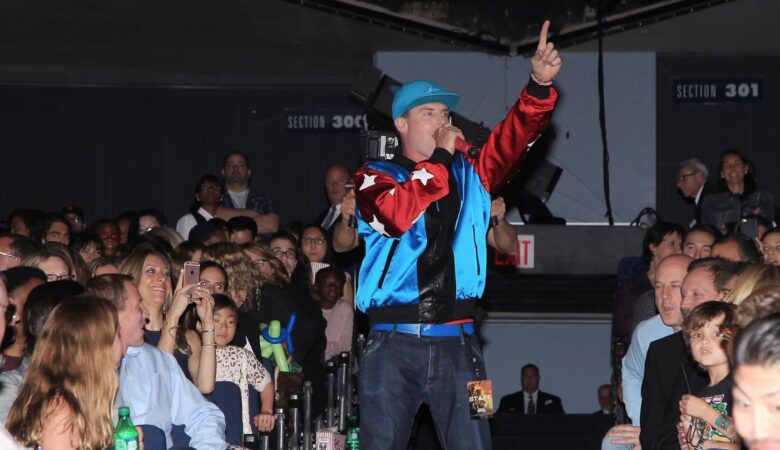
Vanilla Ice’s breakthrough single introduced mainstream America to rap music through a safely packaged suburban presentation, featuring an undeniably catchy hook built around Queen and David Bowie’s “Under Pressure” bassline. The track’s success opened doors for hip-hop in previously resistant markets, demonstrating the genre’s commercial potential to record industry executives. Robert Van Winkle’s charismatic video presence and crossover appeal made rap feel accessible to audiences who were intimidated by more authentic urban expressions.
A critical reevaluation reveals the song’s fundamental dishonesty regarding both its musical origins and cultural authenticity. The plagiarism controversy surrounding the borrowed bassline exposed Van Winkle’s willingness to appropriate existing work without proper attribution. His rapping technique lacks the rhythmic sophistication and lyrical creativity that define quality hip-hop, substituting forced rhymes and awkward phrasing for genuine flow and rhythm.
The cultural appropriation issues become more problematic with a historical perspective, as Vanilla Ice profited enormously from sanitizing a predominantly Black art form for white suburban consumption. His fabricated backstory and manufactured street credibility represented precisely the kind of musical colonization that hip-hop culture initially existed to resist. The Ringer’s comprehensive analysis notes that the song’s enduring popularity says more about America’s comfort with diluted versions of Black culture than its actual musical merit.

4. “Cotton Eye Joe” – Rednex (1994)
This Swedish group’s bizarre fusion of traditional American folk music with European dance production created an undeniably unique hybrid that dominated dance floors through pure novelty appeal. The track’s high-energy delivery and infectious fiddle hooks made it impossible to ignore, achieving the rare feat of making country music elements feel contemporary and relevant to club audiences. Its success demonstrated how creative genre-blending could produce commercially viable results.
Repeat exposure destroys whatever charm the genre fusion initially possessed, revealing fundamental incompatibilities between its constituent elements. The European dance production overwhelms rather than complements the folk melody, resulting in sonic chaos rather than creative synthesis. The fiddle, initially the song’s most distinctive feature, becomes genuinely irritating after extended listening, sawing through the mix like an alarm designed to cause maximum auditory discomfort.
The lyrics, adapted from traditional American folk sources, lose all contextual meaning when filtered through Swedish accents and Eurodance production. The result feels like cultural tourism at best, musical vandalism at worst. The track’s success required listeners to treat it as pure novelty rather than coherent artistic expression, and novelties inevitably lose their appeal once familiarity replaces surprise.

5. “Mmm Mmm Mmm Mmm” – Crash Test Dummies (1993)
Brad Roberts’ distinctively deep baritone voice and the band’s quirky storytelling approach created an immediately recognizable sound that stood apart from typical ’90s alternative rock. The track’s narrative structure, which explores childhood trauma and social awkwardness, resonated with listeners who appreciated its empathetic perspective on adolescent suffering. The humming chorus provided a memorable hook that lingered in listeners’ minds long after they had heard it.
Extended listening reveals how Roberts’s vocal mannerisms become genuinely unsettling rather than distinctively appealing. His deliberate, almost robotic delivery transforms potentially touching stories about children’s pain into emotionally detached observations that feel clinical rather than compassionate. The monotonous vocal rhythm creates hypnotic effects that prove more disturbing than engaging, particularly when combined with the song’s bleak subject matter.
The individual stories lack sufficient emotional depth to justify their inclusion in a pop song, reading more like newspaper headlines than meaningful artistic expressions. The famous humming hook, initially memorable, becomes mindlessly repetitive and slightly sinister when stripped of nostalgic associations. The combination of dark themes and detached presentation creates an overall effect that’s more creepy than compelling.

6. “What Is Love” – Haddaway (1993)
This Eurodance anthem’s philosophical title question and driving beat made it a perfect soundtrack for early ’90s club culture, and its accessibility helped introduce European dance music to American mainstream audiences. The track’s repetitive structure and simple lyrics made it ideal for extended dance floor play, and Haddaway’s passionate vocal delivery suggested emotional depth beneath the surface simplicity.
Critical listening exposes the song’s complete lack of substance beneath its polished Eurodance production. The titular question receives no meaningful exploration whatsoever. The lyrics simply repeat the query without offering insights, observations, or even attempts at answers. The production, once cutting-edge, now sounds generic and dated, indistinguishable from countless other early ’90s dance tracks that followed identical formulas.
Haddaway’s vocal performance, initially impressive for its power and conviction, reveals itself as empty theatricality upon closer evaluation. He delivers meaningless phrases with tremendous passion, creating the illusion of emotional investment without any actual content worth feeling passionate about. The song succeeds purely as a dance track, but fails as a meaningful artistic statement about love or any other human experience. As The A.V. Club noted in their retrospective analysis, the song remains “relentlessly catchy and far more profound than it ever had any right to be.”

7. “Barbie Girl” – Aqua (1997)
Aqua’s plastic pop confection captured late-’90s irony culture through its deliberately artificial aesthetic and playful sexual innuendo. The Danish group’s campy presentation and colorful videos felt perfectly matched to the era’s fascination with surface-level rebellion and manufactured controversy. The track’s unapologetic artificiality seemed refreshingly honest compared to alternative rock’s often pretentious authenticity claims.
Subsequent evaluation reveals how the song’s “subversive” elements actually reinforce rather than critique the gender stereotypes they purport to mock. The female vocals lean into deliberately infantilizing delivery that feels more exploitative than empowering, particularly when combined with sexual suggestions that transform playfulness into something considerably more uncomfortable. The male vocals compound the problem through aggressive responses that suggest domination rather than partnership.
The production’s emphasis on synthetic textures and artificial sounds, once cleverly postmodern, now seems lazy and cheap rather than conceptually sophisticated. The track’s reliance on shock value rather than musical creativity becomes apparent once the novelty wears off, leaving behind a hollow exercise in controversy generation. Bustle’s feminist analysis observed that the song “fails to offer women anything fun or fresh,” creating instead a “hot mess of reductive feminism” that offers nothing substantive beyond its initial ability to provoke reactions.
8. “Blue (Da Ba Dee)” – Eiffel 65 (1998)
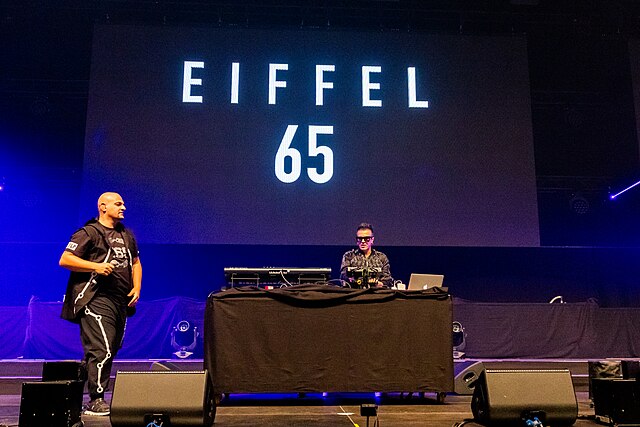
This Italian electronic group’s auto-tuned anthem represented the late-’90s fascination with digital processing and robotic vocal effects, creating an undeniably futuristic sound that felt ideally suited to the techno-optimism of the millennium approaching. The track’s infectious vocal hook and driving electronic production made it an instant dance floor favorite, and its sci-fi aesthetics appealed to listeners eager to embrace new technological possibilities.
Contemporary listening makes the song’s fundamental irritations impossible to ignore. The auto-tuned vocals, once novel and exciting, sound grating and artificial in ways that destroy rather than enhance the melodic content. The lyrics, such as they are, consist almost entirely of variations on the color blue, creating a listening experience equivalent to being trapped with someone obsessively repeating the same word for three and a half minutes.
The electronic production that once seemed cutting-edge now appears primitive and repetitive, employing the most basic synthesizer sounds and drum machine patterns available at the time. The track’s success depended entirely on technological novelty rather than songwriting craft, and technological novelties inevitably become dated as superior alternatives emerge. What remains is a thoroughly annoying artifact of the late 1990s digital excess.

9. “Rico Suave” – Gerardo (1991)
Gerardo’s swaggering introduction of Latin hip-hop to mainstream audiences represented important cultural boundary-crossing, demonstrating how bilingual artists could achieve crossover success without completely abandoning their cultural identities. The track’s confident delivery and infectious rhythm made it feel revolutionary to listeners accustomed to hip-hop’s predominantly English-language expression, and Gerardo’s charismatic persona suggested genuine star potential.
Critical analysis reveals how the song’s supposed cultural pride actually perpetuates harmful stereotypes about Latino masculinity and relationships with women. The lyrics haven’t aged gracefully, featuring attitudes toward women that feel genuinely problematic rather than simply dated. Gerardo’s persona, once appealingly confident, now seems like a cartoonish exaggeration rather than an authentic self-expression.
The musical backing, never particularly sophisticated, sounds especially primitive compared to the complex production techniques that hip-hop developed throughout the ’90s. Gerardo’s rapping technique lacks the rhythmic complexity and verbal dexterity that define quality hip-hop, substituting machismo posturing for genuine lyrical creativity. The track succeeds more as a cultural curiosity than a lasting musical achievement.
10. “Breakfast at Tiffany’s” – Deep Blue Something (1995)
This acoustic-driven ballad’s romantic premise and memorable chorus made it perfect for radio stations seeking alternative rock with mainstream appeal, and its literary reference suggested intellectual depth that distinguished it from typical love songs. The band’s earnest delivery and seemingly heartfelt lyrics about finding connection through shared cultural experiences resonated with listeners who appreciated its emphasis on emotional compatibility over physical attraction.
A closer analysis reveals the song’s central romantic premise as profoundly shallow and unconvincing. The couple’s entire relationship apparently hinges on both having watched the same movie, suggesting a connection so superficial it wouldn’t survive a single meaningful conversation. The lyrics treat this minimal shared experience as a sufficient foundation for lasting love, demonstrating a fundamental misunderstanding of how genuine relationships actually develop and sustain themselves.
The musical arrangement, competent though it may be, offers nothing distinctive or memorable beyond its acoustic guitar foundation and straightforward verse-chorus structure. The melody lacks the emotional complexity necessary to support the song’s supposed romantic depth, creating a disconnect between lyrical ambitions and musical reality. What initially seemed like romantic sincerity now appears to be lazy songwriting that mistakes cultural references for meaningful emotional expression.
Related:
Like MediaFeed’s content? Be sure to follow us.
This article was syndicated by MediaFeed.org.