To achieve financial freedom and grow wealth over long periods of time, it’s vital to understand the concept of inflation.
Inflation refers to the ever-increasing price of goods and services as measured against a particular currency. The purchasing power of a currency depreciates as a result of rising prices. Put differently, a rising rate of inflation equates to a decreasing value of a currency.
Inflation is most commonly measured by the Consumer Price Index (CPI), which averages the national cost of many consumer items such as food, housing, healthcare, and more.
The opposite of inflation is deflation, which happens when prices fall. During deflation, cash becomes the most valuable asset because it can buy more. During inflation, other assets become more valuable than cash because it takes more currency to purchase them.
The key question to examine is: What assets perform the best during inflationary times?
This is a much-debated topic among investment analysts and economists, with many differing opinions. And while there may be no single answer to that question, there are still some generally agreed upon concepts that can help to inform investors on the subject.
Image Credit: Huang Evan/istockphoto.
Is Inflation Good or Bad for Investors?

Depending on an individual’s perspective, inflation might be seen as either good or bad.
For the average person who tries to save money without investing much, inflation could generally be seen as negative. A decline in the purchasing power of the saver’s currency leads to them being less able to afford things, ultimately resulting in a lower standard of living.
For wealthier investors who hold a lot of financial assets, however, inflation might be perceived in a more positive light. As the prices of goods and services rise, so do financial assets. This leads to increasing wealth for some investors. And because currencies always depreciate over the long-term, those who hold a diversified basket of financial assets for long periods of time tend to realize significant returns.
It’s generally thought that there is a certain level of inflation that contributes to a healthier economy by encouraging spending without damaging the purchasing power of the consumer. The idea is that when there is just enough inflation, people will be more likely to spend some of their money sooner, before it depreciates, leading to an increase in economic growth.
When there is too much inflation, however, people can wind up spending most of their income on necessities like food and rent, and there won’t be much discretionary income to spend on other things, which could restrict economic growth.
Central banks like the Federal Reserve try to control inflation through monetary policy. Sometimes their policies can create inflation in financial assets, like quantitative easing has been said to do. (Learn more at What Are Interest Rate Options and How Do They Work?)
Image Credit: Galeanu Mihai/istockphoto.
5 Tips for Hedging Against Inflation
The concept of inflation seems simple enough. But what might be some of the best ways investors can protect themselves?
There are a number of different strategies investors use to hedge against inflation. The common denominators tend to be hard assets with a limited supply and financial assets that tend to see large capital inflows during times of currency devaluation and rising prices.
Here are five tips that may help investors hedge against inflation.
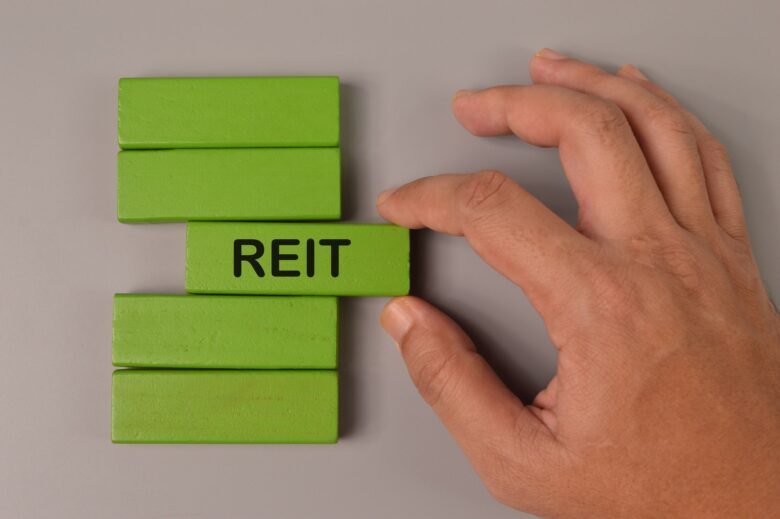
1. Real Estate Investment Trusts (REITs)
A Real Estate Investment Trust (REIT) is a company that deals in real estate, either through owning, financing, or operating a group of properties. Through buying shares of a REIT, investors can gain exposure to the assets that the company owns or manages.
REITs are income-producing assets, like dividend-yielding stocks. They pay a dividend to investors who hold shares. In fact, REITs are required by law to distribute 90% of their income to investors.
Holding REITs in a portfolio might make sense for some investors as a potential inflation hedge because they are tied to a hard asset—real estate. During times of high inflation, hard assets tend to rise in value against their local currencies because their supply is limited. There will be an ever-increasing number of dollars (or euros, or yen, etc.) chasing a fixed number of hard assets, so the price of those things will tend to go up.
Owning physical real estate—like a home, commercial complex, or rental property—also works as an inflation hedge. But most investors can’t afford to purchase or don’t care to manage such properties. Holding shares of a REIT provides a much easier way to get exposure to real estate.
Image Credit: Abu Hanifah/istockphoto.
2. Bonds and Equities

The recurring theme regarding inflation hedges is that the price of everything goes up. What investors are generally concerned with is choosing the assets that go up in price the fastest, with the greatest possible return.
In some cases, it might be that stocks and bonds very quickly rise very high in price. But in an economy that sees hyperinflation, those holding cash won’t see their investment, i.e., cash, have the purchasing power it may have once had.
In such a scenario, the specific securities aren’t as important as making sure that capital gets allocated to stocks or bonds in some amount, instead of holding all capital in cash. (Learn more at What is Decentralized versus Centralized Finance?)
Image Credit: David Gyung/istockphoto.
3. Exchange-Traded Funds
An exchange-traded fund (ETF) that tracks a particular stock index or group of investment types is another way to get exposure to assets that are likely to increase in value during times of inflation and can also be a strategy to maximize diversification in an investor’s portfolio. ETFs are generally passive investments, which may make them a good fit for those who are new to investing or want to take a more hands-off approach to investing. Since they are considered a diversified investment, they may be a good hedge against inflation.
Image Credit: Andrii Yalanskyi/istockphoto.
4. Gold and Gold Mining Stocks

For thousands of years, humans have used gold as a store of value. Although the price of gold or other precious metals can be somewhat volatile in the short term, few assets have maintained their purchasing power as well as gold in the long term. Like real estate, gold is a hard asset with limited supply.
Still, the question of “is gold a hedge against inflation?” has different answers depending on whom you ask. Some critics claim that because there are other variables involved and the price of gold doesn’t always track inflation exactly, that it is not a good inflation hedge. And there might be some circumstances under which this holds true.
During short periods of rapid inflation, however, there’s no question that the price of gold rises sharply. Consider the following:
- During the time between 1970 and 1974, for example, the price of gold against the US dollar surged from $240 to more than $900 for a gain of 73%.
- During and after the recession of 2007 to 2009, the price of gold doubled from less than $1,000 in November 2008, to $2,000 in August 2011.
- In 2019 and 2020, gold has hit all-time record highs against many different fiat currencies.
Investors seeking to add gold to their portfolio have a variety of options. Physical gold coins and bars might be the most obvious example, although these are difficult to obtain and store safely.
Image Credit: Mahmud013/istockphoto.
5. Better Understanding Inflation in the Market
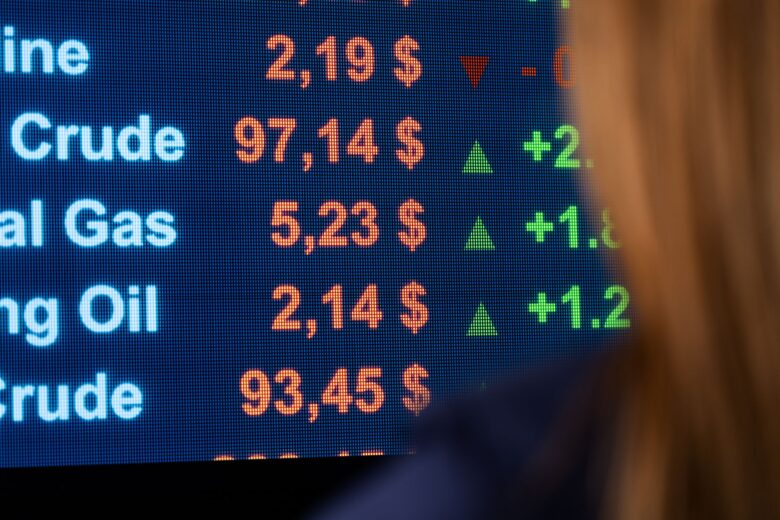
Ultimately, no assets are 100% protected from inflation, but some investments might be better than others for some investors. Understanding how inflation affects investments is the beginning of growing wealth over time and achieving financial goals.
This article originally appeared on SoFi.com and was syndicated by MediaFeed.org.
Please understand that this information provided is general in nature and shouldn’t be construed as a recommendation or solicitation of any products offered by SoFi’s affiliates and subsidiaries. In addition, this information is by no means meant to provide investment or financial advice, nor is it intended to serve as the basis for any investment decision or recommendation to buy or sell any asset. Keep in mind that investing involves risk, and past performance of an asset never guarantees future results or returns. It’s important for investors to consider their specific financial needs, goals, and risk profile before making an investment decision.
The information and analysis provided through hyperlinks to third party websites, while believed to be accurate, cannot be guaranteed by SoFi. These links are provided for informational purposes and should not be viewed as an endorsement. No brands or products mentioned are affiliated with SoFi, nor do they endorse or sponsor this content.
Communication of SoFi Wealth LLC an SEC Registered Investment Advisor
SoFi isn’t recommending and is not affiliated with the brands or companies displayed. Brands displayed neither endorse or sponsor this article. Third party trademarks and service marks referenced are property of their respective owners.
Communication of SoFi Wealth LLC an SEC Registered Investment Adviser. Information about SoFi Wealth’s advisory operations, services, and fees is set forth in SoFi Wealth’s current Form ADV Part 2 (Brochure), a copy of which is available upon request and at here. Liz Young is a Registered Representative of SoFi Securities and Investment Advisor Representative of SoFi Wealth. Her ADV 2B is available at here.
Image Credit: Torsten Asmus/istockphoto.
More from MediaFeed

How much will a $300,000 mortgage cost me monthly?
Image Credit: hikesterson/istockphoto.