
A typical first choice for an account to save and invest for the long-term is a designated retirement account. There are many different types of retirement plans, including Roth IRAs and employee-sponsored 401(k)s, most of which provide tax incentives to invest for the long haul.
It is important to remember, though, that retirement accounts are just that—accounts. For example, a 401(k) and a Roth IRA are not investments but instead, accounts that hold investments. Said another way, they provide a place where you can invest, but are not themselves an investment. This can be confusing, as many workplace retirement plans also automatically invest contributions made to the account.
Therefore, the decision on which retirement account to use will largely depend on what makes the most sense for your personal tax situation, and which you have access to. Here are some common options.
Image Credit: zamrznutitonovi/istockphoto.
1. Workplace Retirement Plan
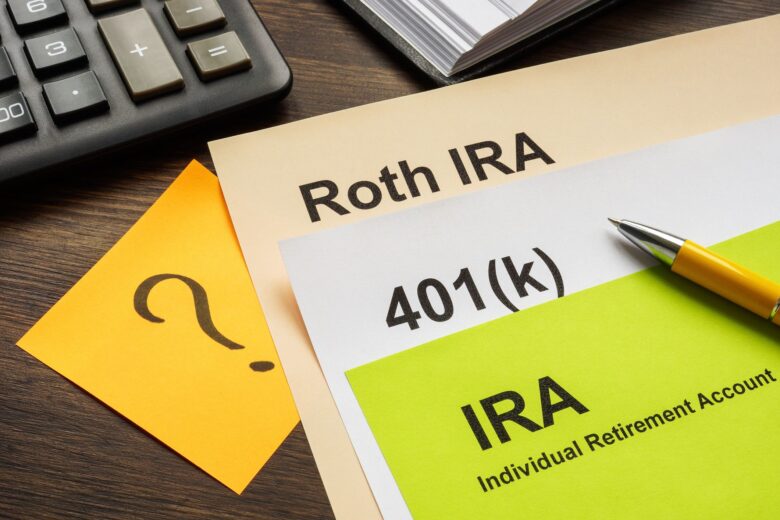
For individuals with access to one, a workplace retirement plan can be a convenient option that offers the benefit of automatic paycheck deduction. Many workplace plans, such as 401(k), 403(b), and SIMPLE (Savings Incentive Match Plan for Employees) IRA accounts, provide an easy place where retirement saving and investing can happen automatically.
As a bonus, many workplace plans offer a company match: when you contribute to your account, they do too. Many investors think of a company match as additional salary or “free money” that will help them reach their goals.
Image Credit: designer491/istockphoto.
2. Tax-deferred Retirement Account

Tax-deferred retirement accounts, which include traditional IRAs, 401(k)s, and solo 401(k)s and SEP IRAs, offer tax deferral—meaning that you contribute with pre-tax dollars. When you open an IRA (or other similar account), income taxes on all contributions are deferred until you withdraw money, usually in retirement.
One benefit of tax deferral is that an individual might be more likely to have a lower (effective) income tax rate as a retired person, so there may be an advantage to delay taxes.
Image Credit: BrianAJackson/istockphoto.
3. Roth IRA

Neither a Roth IRA or a Roth 401(k) offer tax deferral, so money entering into the account will be subject to income taxes. But that means that the money can be withdrawn tax-free, upon retirement or at other qualified times.
A Roth IRA could be a compelling option for someone looking to supplement their existing workplace plan, or someone who may not have access to an account through work. That said, Roth IRA accounts have income limitations, meaning that a high salary may disqualify you from using one.
There is one universal benefit to using a retirement account—as opposed to a non-retirement investment account—whether it’s tax-deferred or not: Tax-free investment growth. In a non-retirement account, money earned through investing will be subject to an additional tax on investment earnings. Within a retirement account, there is no such tax on any money earned through investing.
Image Credit: designer491/istockphoto.
4. Non-retirement investment account

Non-retirement investment accounts, such as brokerage accounts or general investing accounts, offer more flexibility in accessing your money than retirement accounts typically do. Typically, an individual can incur penalties if money is removed from their retirement account before age 59 ½. If an investor is planning to retire before this age or would like the flexibility to do so, a non-retirement investment account might be appealing.
Additionally, a non-retirement investment account isn’t subject to the contribution limits of a retirement plan like a 401(k) or a Roth IRA (the latter of which is $6,000 per year). Some investors may choose to max out retirement accounts and open up a taxable investment account in order to fully fund their retirement goals.
Image Credit: g-stockstudio/istockphoto.
Choose an Investment Strategy

Once an investor has decided where to put retirement money, it is time for the next step, which is how to invest that money. While many workplace retirement plans automatically invest money, it should be viewed as a separate step in the process.
Typically, investors choose (at minimum) a mix of stocks and bonds within their long-term investment portfolios. When contemplating bonds vs. stocks, it’s helpful to think of the differences in this way: Stocks tend to be higher growth, but that growth comes with more risk. On the other hand, bonds have historically lower rates of growth, but are considered to be less risky. An individual may want to determine their personal mix of stocks and bonds by assessing their goals, investing timeline, and risk tolerance.
Once an investor has determined their preferred mix of stocks, bonds, and any other major asset classes (called asset allocation), it is time to determine how to fulfill these allocations. There are several options, ranging from the completely DIY (buying individual stocks, for example) to the completely uninvolved (such as having a professional manage your portfolio).
Image Credit: Ridofranz/istockphoto.
Individual Stocks

Those who have an inherent interest in picking individual stocks could certainly do so, though it is not a requisite to building an investment portfolio. As you consider if and how to choose your first stock, it also makes sense to look into whether you’re more interested in a concentrated vs. diversified investment portfolio.
Image Credit: champpixs/istockphoto.
Index Funds and ETFs

A common way to invest for retirement is by using mutual funds or exchange-traded funds (ETFs). These funds are, essentially, baskets that hold lots of investments. That basket could hold stocks, bonds, something else entirely, or some combination of different investment types.
Some investors may find buying big baskets of investments easier than attempting to choose individual investments, like stocks. Individuals whose retirement plan automatically invests may already have a combination of funds.
Both mutual funds and ETFs can be either actively managed or “index.” Index funds—whether mutual funds or ETFs—are a popular choice because they are low-cost and often represent a broad swath of the market. For example, it’s possible to buy a low-cost index fund that invests in the entire US stock market. With just a handful of index funds, it may be possible to build a fully diversified portfolio.
Image Credit: Maxxa_Satori/istockphoto.
Target-date Funds

Similarly, there are options that utilize a passive, index fund strategy but that build a portfolio on your behalf. First, retirement target-date funds (also called lifecycle funds) are funds that typically hold other funds (as opposed to individual stocks and bonds) in amounts that are appropriate for your investing timeline—that’s why you pick one that corresponds to your approximate retirement date.
Target-date funds are popular within workplace retirement plans, but it also may be possible to buy into one at the brokerage bank of your choosing. Be sure to check and see whether the fund consists of index funds, which are typically lower cost, or holds managed funds, which generally have higher fees.
Image Credit: William_Potter/istockphoto.
Robo-advisor Service

Another hands-off option is to use a digital “robo-advisor” service that manages a portfolio of index funds on your behalf. This option might appeal to those who want a bit more assistance in maintaining a retirement investing strategy. Most of these services encourage a passive, long-term investment strategy.
Generally, you’ll answer questions about your goals, investing timeline, and risk tolerance, which indicates to the service your most suitable investment mix. Then, this strategy is built and maintained for you. Typically, this service comes with an additional cost on top of the cost of the funds used.
Image Credit: anyaberkut/istockphoto.
The Takeaway

For investors deciding where to put retirement money, choosing a preferred account type and an investment strategy are two ways to get started. With tax-deferred options like 401(k)s and other choices like traditional and Roth IRAs, an investor is likely to find at least one retirement plan account that suits their lifestyle and goals.
In considering possible investment strategies, it’s useful to think about how hands-on one wants to be. Putting together a stock portfolio requires more direct involvement, whereas utilizing robo-advisor services might require less.
Deciding where to invest and with what strategy will help guide an investor’s third and final decision regarding the bank or investing platform.
No matter where and how an individual decides to invest their retirement money, they’re not likely to welcome unnecessary fees. Service fees and other costs embedded in accounts can seriously erode any potential profit earned on an investment.
This article originally appeared on SoFi.com and was syndicated by MediaFeed.org.
Please understand that this information provided is general in nature and shouldn’t be construed as a recommendation or solicitation of any products offered by SoFi’s affiliates and subsidiaries. In addition, this information is by no means meant to provide investment or financial advice, nor is it intended to serve as the basis for any investment decision or recommendation to buy or sell any asset. Keep in mind that investing involves risk, and past performance of an asset never guarantees future results or returns. It’s important for investors to consider their specific financial needs, goals, and risk profile before making an investment decision.
The information and analysis provided through hyperlinks to third party websites, while believed to be accurate, cannot be guaranteed by SoFi. These links are provided for informational purposes and should not be viewed as an endorsement. No brands or products mentioned are affiliated with SoFi, nor do they endorse or sponsor this content.
Communication of SoFi Wealth LLC an SEC Registered Investment Advisor
SoFi isn’t recommending and is not affiliated with the brands or companies displayed. Brands displayed neither endorse or sponsor this article. Third party trademarks and service marks referenced are property of their respective owners.
Communication of SoFi Wealth LLC an SEC Registered Investment Adviser. Information about SoFi Wealth’s advisory operations, services, and fees is set forth in SoFi Wealth’s current Form ADV Part 2 (Brochure), a copy of which is available upon request and at here. Liz Young is a Registered Representative of SoFi Securities and Investment Advisor Representative of SoFi Wealth. Her ADV 2B is available at here.
Image Credit: jacoblund/istockphoto.
More from MediaFeed

Americans waste money every day on these things
Image Credit: damircudic/istockphoto.