The Washington Monument is one of the most recognizable landmarks in the world standing in the heart of Washington, D.C., this massive marble obelisk was built to honor George Washington, the hero of the American Revolution and the first president of the United States.
The idea for a monument to George Washington started even before he became president. In 1783, the Continental Congress proposed a statue to honor his leadership. When Pierre L’Enfant designed the layout for the new capital city, he left a specific spot for it. However, after Washington died in 1799, progress was slower. It wasn’t until 1832, the 100th anniversary of Washington’s birth, that a group of people formed the Washington National Monument Society to finally make the memorial a reality.
The design chosen was a grand obelisk created by architect Robert Mills. Construction began on July 4, 1848. However, the project faced many challenges. By 1854, the Society ran out of money, and shortly after, the American Civil War broke out. For over 20 years, the monument sat unfinished, standing at only about 150 feet tall.
Construction didn’t start again until 1876, when President Ulysses S. Grant authorized the federal government to finish the work. If you look closely at the monument today, you can see a slight change in the color of the stones about a third of the way up. This color line shows where construction paused, when they resumed, the marble came from a different quarry.
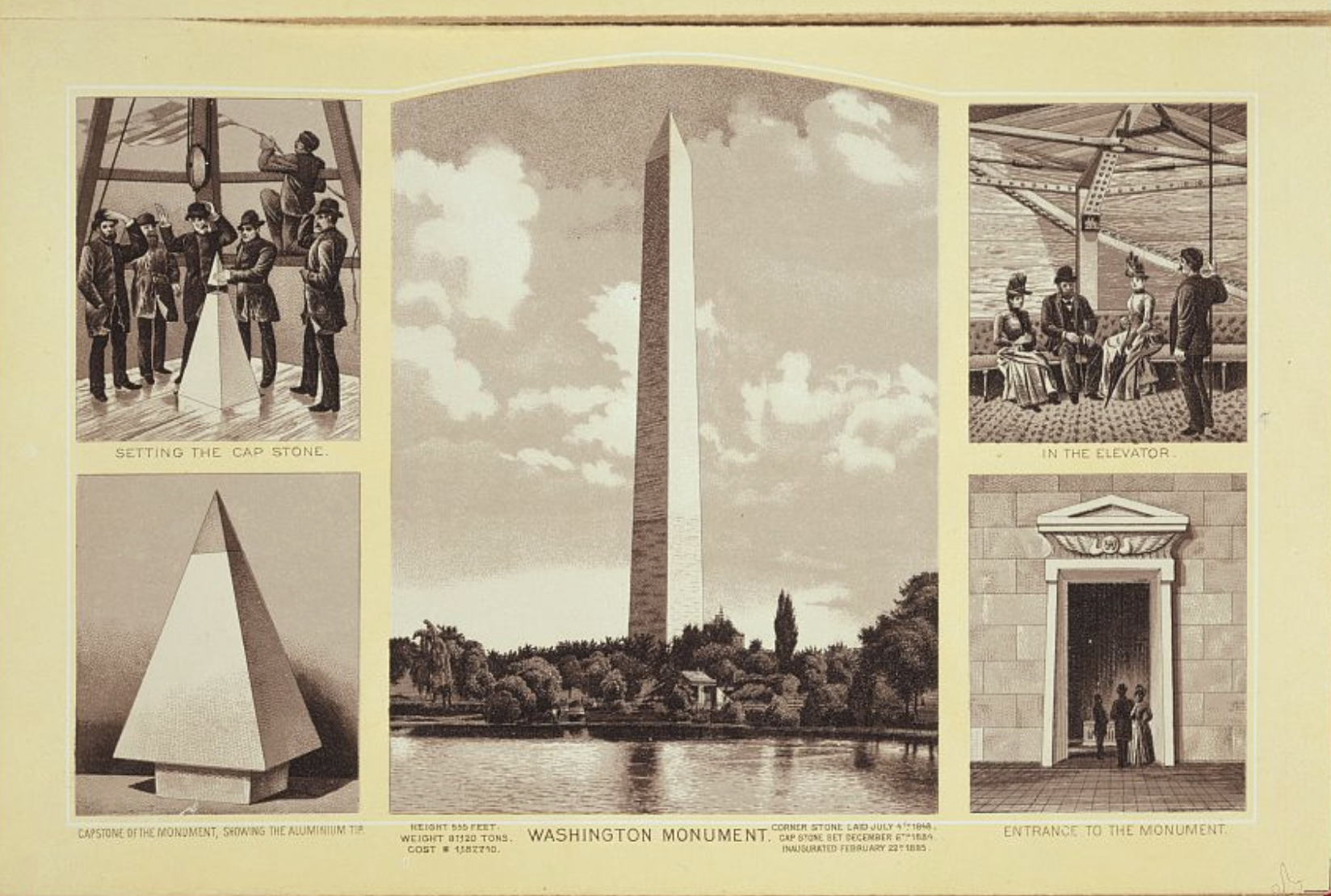
To finish the monument, the builders had to make some significant changes to the original plans. Instead of the 600-foot height first suggested by architect Robert Mills, the lead engineer, Thomas Casey, decided the height should be exactly ten times the width of the base, which resulted in the final height of 555 feet. The team also decided to keep the design simple, scrapping original ideas for fancy decorations and a ring of columns, that all allowed for much faster construction.
To manage the weight of the structure, Casey reduced the thickness of the walls from thirteen feet down to nine feet once they reached the 150-foot level, a transition that is still visible if you visit the interior today. The masons worked their way up using a powerful steam-powered elevator that could lift six tons of stone at a time. This elevator fed a movable 20-foot-tall iron frame at the top of the work area, which used a system of pulleys and blocks to set the stones. The crew would build twenty feet of stone and mortar, then slide the entire iron framework up another twenty feet, repeating this process over and over until they reached the top.
The total cost of completing the monument was estimated at between $1.2 million and $1.3 million, and was finally completed and dedicated on February 21, 1885. At the time of its completion, it was the tallest structure in the world.
Like MediaFeed’s content? Be sure to follow us.
This article was produced and syndicated by MediaFeed.us.