
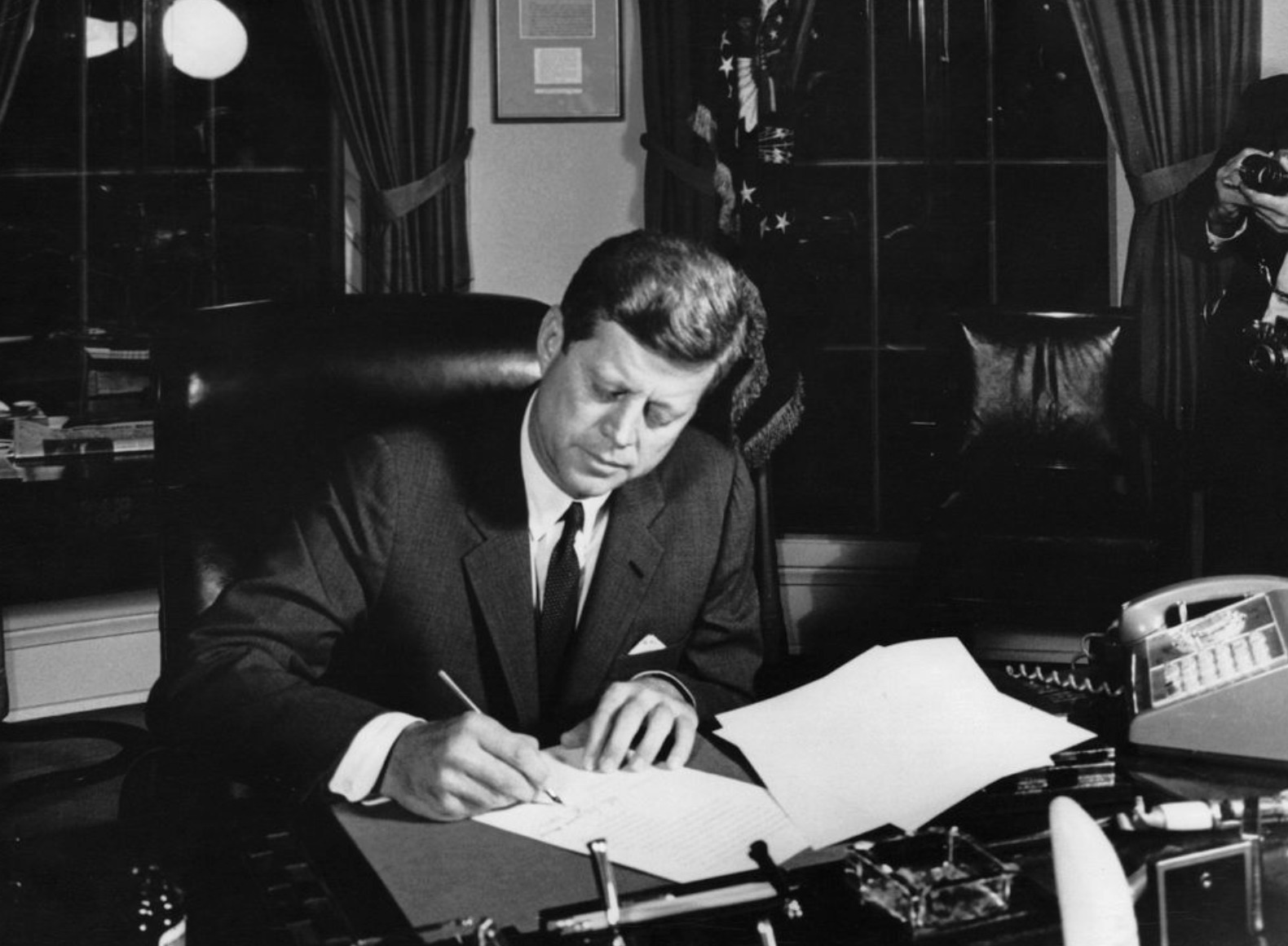
In February 1962, President John F. Kennedy proclaimed an embargo on trade between the United States and Cuba.
Known among Cubans as “el bloqueo” or “the blockade,” the embargo consists of economic sanctions against the country and restrictions on Cuban travel and commerce for all people and companies under U.S. jurisdiction.
Initial restrictions began under President Eisenhower in 1960, as The U.S. government was concerned about the threat posed by having a new Soviet ally so close to America. Eisenhower ended diplomatic relations with Cuba and closed the U.S. embassy in Havana on January 3, 1961
Declassified documents from the National Security Archive show the early rationale behind the sanctions.
The U.S. government sought to reduce the threat posed by Cuba’s alignment with communist powers and to pressure the regime to improve its human rights record.
The documents also show that the concept of U.S. economic pressure was to create, as mentioned in the documents, hardship and disenchantment among the Cuban populace and to deny money and supplies to Cuba, to decrease monetary and real wages, and to bring about hunger, desperation, and the overthrow of the government. However, a CIA case study of the embargo, written twenty years after its imposition, shows that the sanctions “have not met any of their objectives.”
One of the most visible traces of the 1960 embargo is Cuba’s vintage American cars. Before the trade ban, the United States was the primary source of vehicles and machinery. Today, approximately 60,000 pre-1960 American vehicles remain in use.
With little to no trade happening on a global scale, citizens turned to what was around them to keep cars running. However, this survival comes at a high cost. Without access to modern technology, these vehicles operate with extreme inefficiency.
In the 1990s, the Cuban government declared tourism a priority and even began prioritizing the restoration of classic cars. This led to fully guided tours around Havana in pieces of American history and proved to be quite a success.
The Cuban Democracy Act of 1992 and the Helms-Burton Act of 1996 (the Cuban Liberty and Democratic Solidarity Act) codified the sanctions into law. These acts prohibited U.S. foreign subsidiaries from trading with the island and allowed for penalties against foreign companies that “trafficked” in property confiscated by the Cuban government.
While President Obama took steps to normalize relations and ease travel in 2015, many of these restrictions were later expanded, keeping the core of the embargo intact.
According to the United Nations and Cuban government, the embargo has cost the Cuban economy over $130 billion, some assessments even reaching into the trillions when adjusted for inflation. Beyond the numbers, critics argue that the embargo causes significant suffering for everyday Cubans, as reports indicate that doctors on the island often have access to less than 50% of the world’s drug market, leading to critical shortages of medicine and food.
On the other hand, supporters of the policy argue that the embargo is a necessary moral stand. They maintain that the Cuban government has failed to meet the conditions required for lifting the sanctions, such as releasing political prisoners and moving toward free elections.
Until this day, proponents see the embargo as a vital bargaining tool to promote democracy, while opponents point to its sixty-year failure to topple the regime as proof of its ineffectiveness.
Currently, U.S. policy continues to restrict most financial transactions and travel, though exceptions exist for humanitarian aid, family visits, and specific educational activities.
Related:
This article was syndicated by MediaFeed.org.


