You can browse over 500k artworks online from the MET for free. Here are some of our faves
The Metropolitan Museum of Art has 500,000 artworks in its online collection and charges nothing to browse them. Public domain works can be downloaded in high resolution without permission or fee. Most people who visit the physical museum don’t know the digital collection exists, and most people who know it exists haven’t spent much time in it.
The following are six pieces worth the detour.
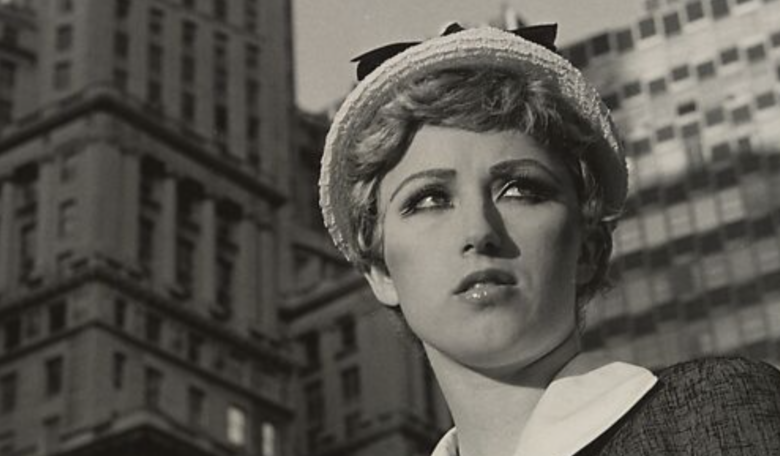
Cindy Sherman — Untitled Film Still #21 (1978)
Sherman photographed herself 67 times between 1977 and 1980, each time as a different cinematic archetype. This one is the career girl, alone on a city street, the camera angle and lighting suggesting a scene from a film that was never made. If the series is familiar, it may be because Netflix’s Inventing Anna built an entire scene around it in episode two, with Anna Delvey pointing at a Sherman Untitled Film Still and telling a hesitant buyer it’s the only thing in the room worth a damn. The image at the Met cannot be downloaded. Sherman’s copyright.
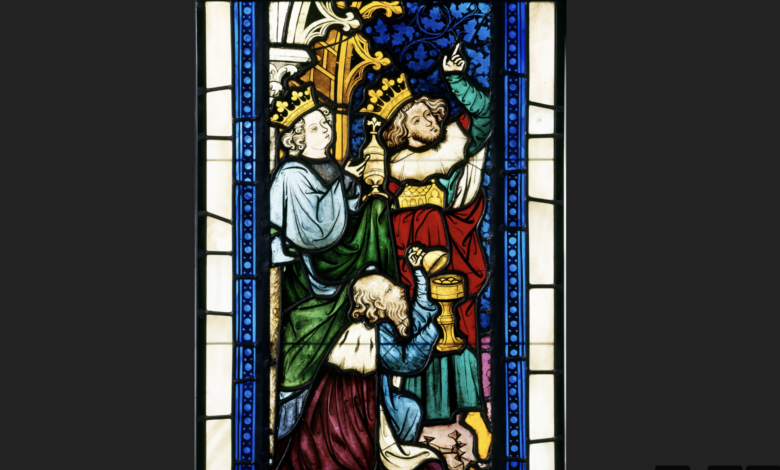
Adoration of the Magi — Austrian, ca. 1390
Rudolf von Tirna added a chapel to his castle at Ebreichsdorf, south of Vienna, before his death in 1406, and commissioned stained glass windows depicting scenes from the life of Christ. The Turks sacked the castle in 1683. The castle never recovered. Seven of the windows eventually came to the Met Cloisters, where they have been since 1986. This panel shows one of the Magi on his knees, crown removed, offering a gift. The color has not faded in 630 years, which is a thing worth looking at directly.
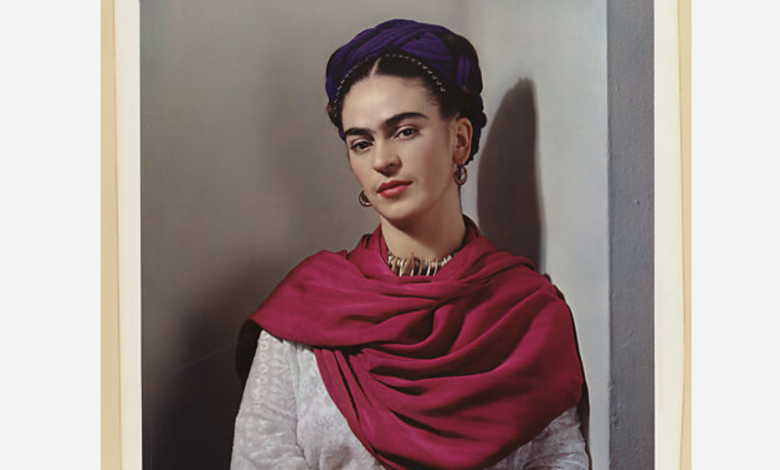
Nickolas Muray — Frida Kahlo (1939)
Muray and Kahlo were friends and at various points lovers. He photographed her many times. This 1939 carbro print, made with a color process that produces unusually dense and lasting tones, is the photograph most people have seen without realizing it. On view at the Met Fifth Avenue in Gallery 099. Copyright belongs to the Nickolas Muray Photo Archives.
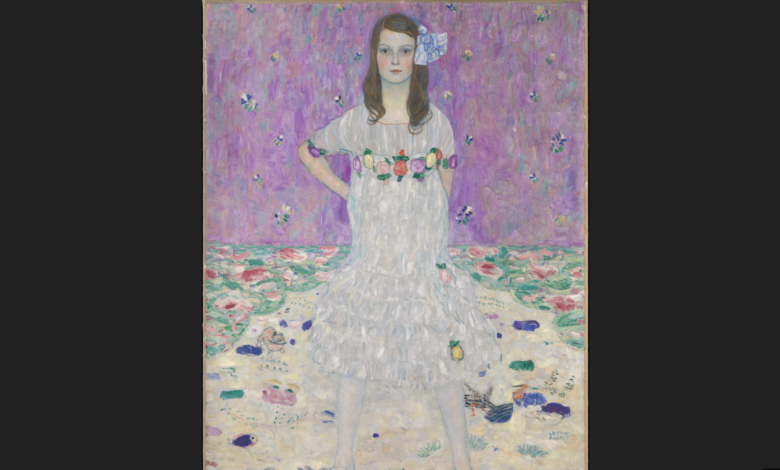
Gustav Klimt — Mäda Primavesi (1912)
In 1912 Klimt made dozens of preparatory pencil drawings before settling on this: a nine-year-old girl standing directly facing the viewer, hands at her sides, looking back with complete self-possession. Her father was a banker who commissioned the portrait. Mäda Primavesi grew up, survived the twentieth century, and died in 2000 at 97. The painting is in the public domain and can be downloaded in full resolution.
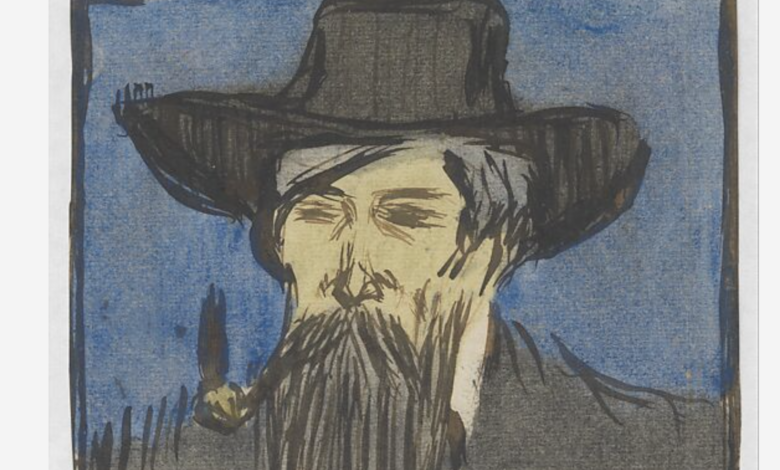
Pablo Picasso — Santiago Rusiñol (1900)
Ten point seven centimeters by 10.2. Pen and brown ink. Made when Picasso was 19, shortly after his first solo exhibition at the Barcelona tavern Els Quatre Gats. Rusiñol was one of the founders of the informal bohemian club that served as the center of Barcelona’s avant-garde, and one of the artists Picasso closely watched before he became Picasso. A caricature. Small. Not the Picasso most people would ask for. The one that shows you what he was looking at before he figured out what he was doing.
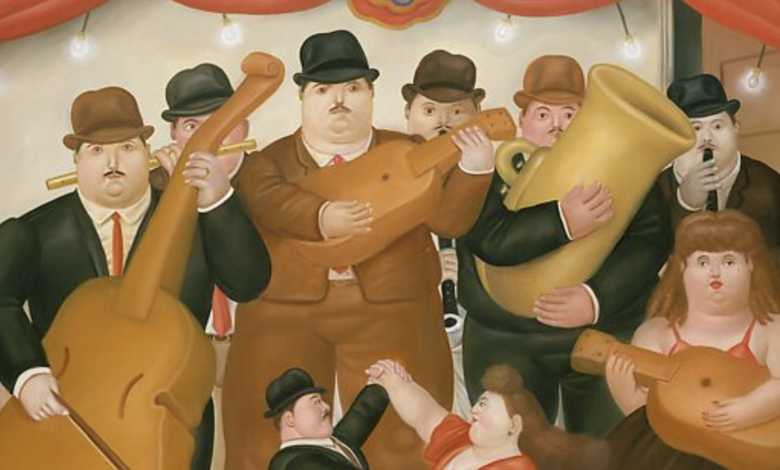
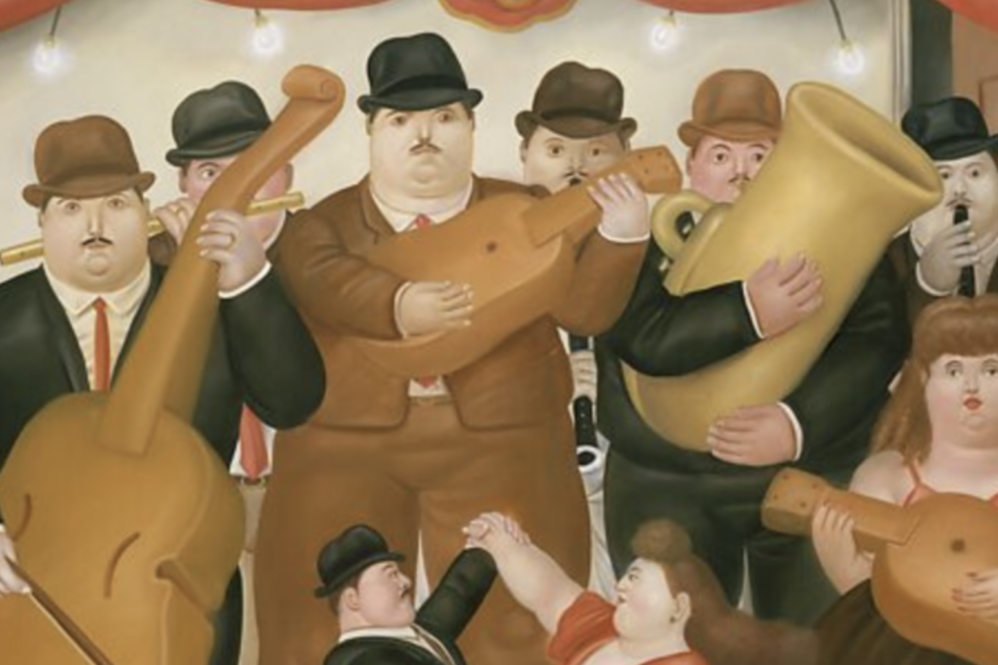
Fernando Botero — Dancing in Colombia (1980)
Seven musicians in a room. Two dancers, inexplicably smaller than the musicians, moving with their hair and legs flying. The floor has cigarettes and fruit on it. Botero was born in Medellín in 1932, started drawing at 16, and developed a style of inflated figures that he applied to Colombian café scenes. The Met’s own description suggests rooms available for rent upstairs by the hour, though the painting shows none of this explicitly. On view in Gallery 681. It is very large.

The bottom line
Five of these six works have a story attached that the artwork alone doesn’t tell you. The stained glass came from a castle the Turks destroyed. The photographer and his subject were lovers. The nine-year-old in the Klimt portrait made it to 97. The collection has 500,000 more.
Ask us! What questions do you have about content, strategy, pop culture, lifestyle, wellness, history or more? We may use your question in an upcoming article!
Related:
- Celebs who walked away from chaos to find clarity
- Boomer wellness secrets that never went out of style
Like MediaFeed’s content? Be sure to follow us.
This article was syndicated by MediaFeed.co.