Even in 2022, gendered stereotypes are hard to escape.
An online finance magazine, Sophisticated Investor, asked Americans their observations on inflation. Their research supports earlier findings on how women often experience financial anxiety more than men and helps explain why that happens.
In early May, pollsters surveyed more than 2,000 adults and found that, overall, respondents agreed that they experienced worse inflation at the grocery store. But this was even more true for women; according to the survey, “Women find that their grocery bills have been hardest hit by inflation.”
But men disagreed. They are much more likely to say inflation has been worse at the gas pump.
“The fact that more women than men claim to have experienced inflation the most when buying groceries is consistent with gender-based stereotypes of women being the primary caregiver in families burdened with domestic chores and labor,” wrote the Sophisticated Investor’s financial writer Liam Hunt. “The same is true for men, who are subject to traditional gender roles and stereotypes that have them driving to and from their jobs.”
So, which category is actually experiencing the most inflation, food or gas? The right answer changes month to month. In April grocery costs increased while gas decreased. But in March, gas increased significantly more than groceries.
Stereotyped responsibilities bring more stress
Wherever inflation is increasing the most, women often feel more anxiety over inflation.
The Pew Research Center found that, with or without kids, women do more of the grocery shopping and food prep than their male partners.
Being expected to do the majority of shopping means women spend more time in stores, so they’re more likely to notice changes in pricing. The Institute for Women’s Policy Research (IWPR), a non-profit organization, says that because women are in stores more often, they feel the stress of inflation more intensely.
Women also have to spend more on non-durable goods, like Tampons and diapers, which have also risen in cost.
Findings from the National Bureau of Economic Research support Sophisticated Investor and the IWPR. They found that women are more anxious about inflation and how it could increase in the future because they’re exposed to volatile prices.
Their study showed that in households where shopping responsibilities were shared equally between partners, there was little to no difference in perceptions of inflation.
“Traditional gender roles expose women to different information about prices than men,” researchers conclude. “Differences in women’s and men’s daily environments can have significant consequences for their beliefs.”
No one is really off the hook
At the end of the day, anyone with a lower income is going to feel inflation worse than those who are wealthier. Most low and middle-income people have felt the worst of 2022’s record-high inflation. As Debt.com previously reported, “The most broke and wealthiest Americans are both stressed over inflation.”
But the IWPR refers to COVID’s economic impact as the “she-cession.” They explained that the pandemic had the worst impact on women in low-wage jobs, Black women, and immigrant women.
Inflation especially hurts people in debt or with fixed incomes, populations made up disproportionately of women. Women hold nearly two-thirds of the nation’s student loan debt and according to the IWPR, women are more likely to receive Social Security benefits and typically earn less than men who receive benefits.
While inflation may feel more extreme for women, high costs have everyone stressed. Quote Wizard, an insurance comparison platform from LendingTree, analyzed data from the U.S. Census Bureau.
They found that regardless of gender, 60 percent of people said that inflation has made it “difficult” to keep up with their usual household expenses.
And 15 percent are having a “very difficult” time, meaning expenses have gone up by up to 200 percent for some households.
If you’re struggling with your budget, you’re certainly not alone. Debt.com has coupons for day-to-day items and tips on how to budget through difficult times.
This article originally appeared on Debt.com and was syndicated by MediaFeed.org
More from MediaFeed:
6 ways to protect your money from inflation

Inflation has been squeezing — and infuriating — U.S. consumers for a long time now.
What began as an annoyance (an extra pinch at the gas pump and the grocery store) has turned into a painful reminder that budgeting and saving may be even more important than anyone ever thought. And without a plan to deal with inflation’s effects — day to day and over time — your dollars can lose purchasing power.
The good news is that it’s never too late to consider strategies that could protect your money from inflation, while also keeping in mind your personal financial situation, your goals, and your tolerance for risk.
Read on for intel on how to protect your money and yourself from inflation.
Related: What is wealth management?
nicoletaionescu / iStock
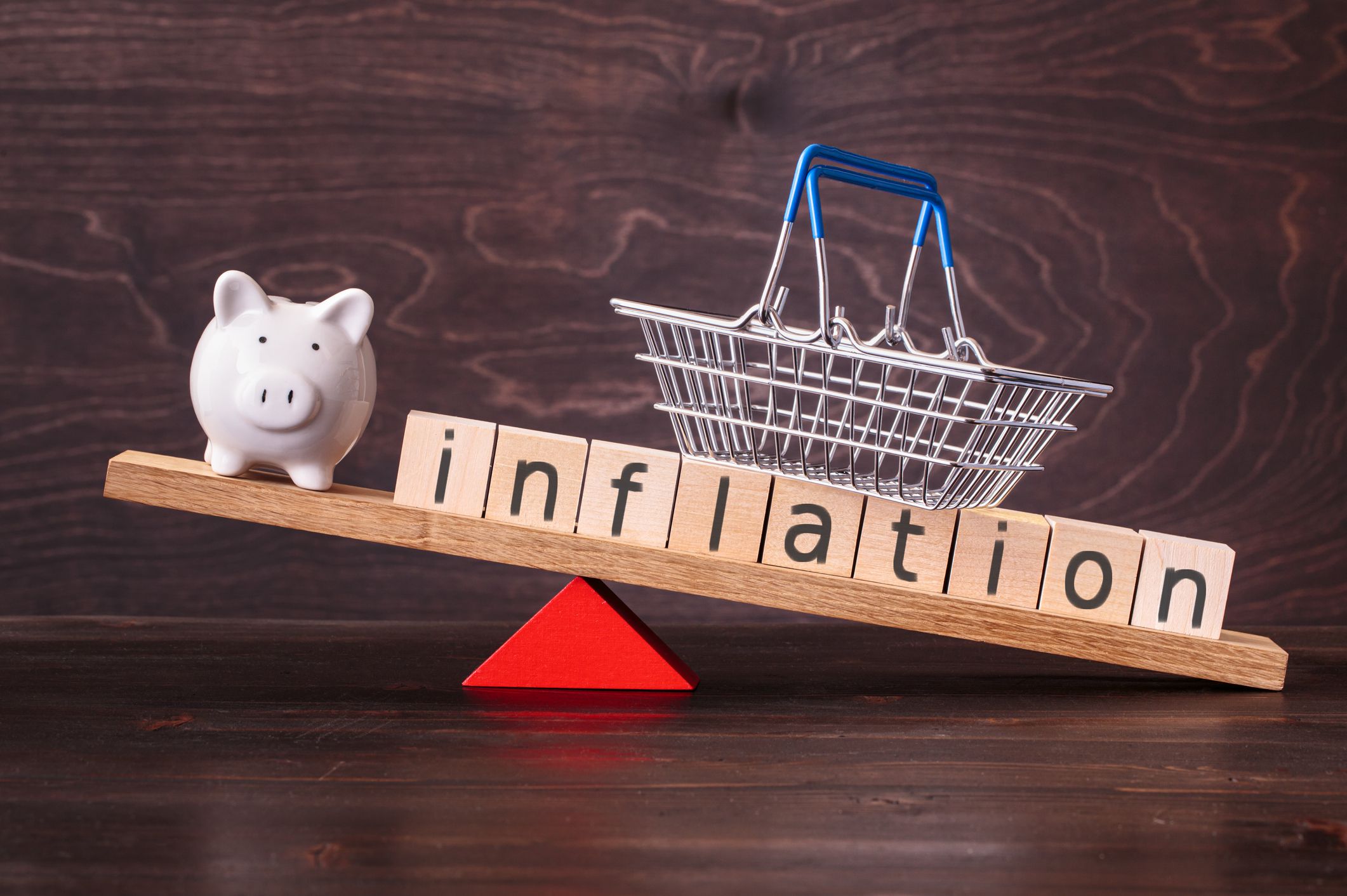
Wondering what inflation is exactly? In basic terms, inflation means prices are rising and your purchasing power is declining. You can’t get the goods and services you’re used to buying without paying more for them. And if your income doesn’t increase to match those higher prices — because you can’t get a pay raise that keeps up, or you’re a retiree on a fixed income — it can really impact your lifestyle.
The U.S. has been on a months-long run of record-setting inflation since the start of the coronavirus pandemic. And according to the U.S. Department of Labor Statistics, it’s the costs most people can’t avoid — like food, gas, and rent — that are driving the continued increase in the Consumer Price Index (the most commonly used measure of inflation).
It’s true that there are common causes of inflation and escalating prices aren’t uncommon, but what is happening right now is undoubtedly intense. Rates are hitting the highest numbers the U.S. has seen since the early 1980s, which means it’s the first time many consumers here have experienced inflation at this level.
But even a low inflation rate can erode purchasing power over the long haul. For example, according to the U.S. Inflation Calculator, if you purchased an item for $100 in 2000, that same item would have cost $150.30 in 2020 — before inflation soared. The dollar had an average inflation rate of 2.06% per year in the two decades between 2000 and 2020, producing a cumulative price increase of a whopping 50.30%.
That’s why preparing for inflation can be an important consideration for every consumer, whether you consider yourself a saver, a spender, an investor, or (like most people) you’re a mix of all three.
Recommended: Is Inflation a Good or Bad Thing for Consumers?
Yingko/istock

Needless to say, stuffing your money into a mattress or cookie jar probably isn’t the best strategy for protecting your hard-earned dollars.
Not only is an FDIC-insured savings account generally considered a safer place to keep your funds, but you also can earn interest on your money until you need it. Perhaps you’re saving for a down payment on a car or home, a wedding or vacation, or maybe for an unexpected expense.
Although most savings accounts pay minimal interest — usually not enough to counteract even low inflation rates — you’re at least earning something. And if you take time to occasionally review the interest rates various financial institutions are offering, you may be able to improve on what you’re currently getting.
For example, online financial institutions are more likely to offer high-yield savings accounts than traditional brick-and-mortar banks. So, if you’re comfortable with the idea of electronic banking, you may find a significantly higher annual percentage yield (APY). You also might be able to reduce or eliminate some of the fees you’re paying, which can boost your savings as well.
If the Federal Reserve continues to raise its benchmark interest rate in an effort to combat inflation, as it has indicated it will, you may see the rate on your current savings account slowly increase. But if it doesn’t, or if you don’t want to wait around for that to happen, it may make sense to start shopping for a smarter way to save right now.
Photodjo / iStock

Taking the time to reassess the potential earnings from your savings account can be an important step in offsetting inflation’s impact on your bottom line.
But there are other strategies you also may want to consider. Here are steps that can help you protect yourself from inflation.
Love portrait and love the world / iStock

It might be hard to believe when the housing market is this hot and prices are this high, but homeownership actually may help protect you from inflation.
If you’re a renter, you’re probably at the mercy of your landlord when it comes to how much your monthly payment could go up when it’s time to renew your lease. And during an inflationary period, your landlord may decide to raise your rent to reflect higher prices. If you decide to move, your new lease also could reflect the high inflation rate. Plus, you’ll have to go through the hassle of finding a new place and moving.
If you buy a house, on the other hand, you’re more likely to have a fixed monthly payment that’s locked in for the life of your mortgage. Another benefit: The value of the home you own may increase along with inflation. And if you hang onto your home until it’s paid off, you won’t have to worry about what housing prices (renting or owning) might look like in the future.
DepositPhotos.com

Especially if you’re a first-time homebuyer, you might feel more than a little overwhelmed thinking about signing off on a 30-year fixed-rate mortgage for, let’s say, $350,000.
It might help to take a deep breath and think about this: According to the U.S. Inflation Calculator, $350,000 in today’s dollars is equal to about $173,000 in 1992 dollars. Thirty years ago, somebody thought $173,000 was a crazy-high amount of money for a house. Now, it sounds like a bargain. It often takes us by surprise how prices (and salaries) do rise over the years.
If you’re borrowing money for 30 years (the most common mortgage term) at a competitive interest rate — and you aren’t paying more than the home’s appraised value — inflation could work for you. That’s because the value of money, including debt, declines as the inflation rate rises. So, the inflation-adjusted value of your mortgage payments goes down as inflation and your property value go up.
depositphotos.com

If you have the room and a knack for bargain-hunting, it may make sense to build up a supply of the kinds of goods that could be affected by inflationary prices. This is especially those items that are often linked to shortages.
Unfortunately, it isn’t really feasible for most folks to stockpile gasoline. But your backup supply might include canned goods, baby food, paper towels, toilet paper, and other necessities that you find on sale or can buy for less in bulk.
Keep in mind, though, that if you pay for those goods with a high-interest credit card and you don’t pay off the balance each month, you might not see any savings. (Which is another good reason to keep some money stashed in your checking and savings account to pay for such purchases.)
Valeriy_G/istockphoto

The price of durable goods (products that typically last at least three years) also can be affected by shortages and increased consumer demand.
If you need a new car, for example, and prices seem high for the make or model you want, it may be tempting to purchase a lower-quality replacement. Keep in mind, though, that over the long term, you could end up spending more on repairs than you would have if you bought the better brand. Or the less expensive make may not last as long as a better car would have.
You may find it’s a smarter strategy to get an auto loan and invest in the higher-priced car from the start.
martin-dm

A household budget can be a helpful tool any time, but it could be particularly useful when prices are soaring.
Even if you already have a budget, you may want to reevaluate your spending in categories that are or could be vulnerable to inflation, such as food, transportation, healthcare, and utilities. And you may have to look for categories you can spend less on (at least temporarily), such as entertainment, dining out, clothing, and vacations.
If you’ve put most of your bills on autopay, you also can check for “expense creep” on things like cable and Wi-Fi, subscription services, and utilities.
Sticking to a budget could help you avoid touching your emergency savings when times are tight—or, worse, overusing high-interest credit cards.

Once you’ve established a savings account (hopefully a high-interest one) for your emergency fund and other short-term expenses, you may want to look at investing as another strategy to combat inflation.
Though it carries more risk than keeping your money in a high-yield savings account, investing in stocks, mutual funds, or exchange-traded funds (ETFs) can help you grow your money for the future.
Once again, let’s go back 30 years to get some perspective. According to Officialdata.org’s S&P 500 data calculator, if you had invested $100 in the S&P 500 at the beginning of 1992, you’d come out with about $1,974.20 at the end of 2022 (assuming you reinvested all dividends). That’s a return on investment of 1,874.20%, or 10.42% per year. Even after adjusting for inflation, you’d be looking at a 7.87% return per year — which is better than most alternatives. Which all goes to say that investing may be a very good hedge against inflation.
nortonrsx

What is the best way to protect against inflation?
The best approach may be to prepare for the worst while hoping it doesn’t happen. This means finding ways to get the most for your money as a saver (perhaps with a savings account that pays more in interest), spender (adopting a budget and savvy buying tactics), and investor (with investments that keep growing your money over time).
Where should I put my money to combat inflation?
You may want to start by shopping for a savings account that offers a higher APY and/or lower fees. That way, you won’t be slowly losing money as your cash sits in the bank. Another option is to invest it, which is riskier but may yield you a higher return.
How can I prepare for hyperinflation?
You can use many of the same tactics to protect against runaway or hyperinflation as you would for high inflation. You might decide to stockpile goods now, while your money has value, for example. You may choose to buy a car or make another important purchase sooner rather than later. You also can evaluate what expenditures are “needs” vs. “wants” and budget appropriately. Also try not to panic — which can lead to poor decision-making.
RossHelen/ iStock

To younger consumers, today’s high inflation may seem like a new phenomenon. But inflation always has been — and always will be — a challenge.
While you probably can’t avoid inflation completely, with proactive planning, you may be able to blunt its impact on your day-to-day and long-term finances. If you haven’t already, you may want to review your savings, spending, and investing strategies to be sure you’re getting the most you can for your money.
Learn More:
This article originally appeared on SoFi.com and was syndicated by MediaFeed.org.
Financial Tips & Strategies: The tips provided on this website are of a general nature and do not take into account your specific objectives, financial situation, and needs. You should always consider their appropriateness given your own circumstances.
SoFi Checking and Savings is offered through SoFi Bank, N.A. ©2022 SoFi Bank, N.A. All rights reserved. Member FDIC. Equal Housing Lender.
SoFi members with direct deposit can earn up to 1.25% annual percentage yield (APY) interest on all account balances in their Checking and Savings accounts (including Vaults). Members without direct deposit will earn 0.70% APY on all account balances in their Checking and Savings accounts (including Vaults). Interest rates are variable and subject to change at any time. Rate of 1.25% APY is current as of 4/5/2022. Additional information can be found at http://www.sofi.com/legal/banking-rate-sheet
DepositPhotos.com

Damir Khabirov / iStock
Featured Image Credit: fizkes/ iStock.