Last summer my kids returned from a couple weeks in Los Angeles where they stayed with their aunt.
Me: Why does Lucas have all new underwear?
Helena: All his underwear had skid mark stains in them, so Aunt Tina bought him all new chonies at Target. Why didn’t I, his own mother, know that my son’s underwear was all stained? Because I refuse to do laundry. So I don’t ever intimately handle my kids chonies. .
That’s a bit of an overstatement, but I really, really hate to do the wash, and I really, really hate to fold. The sorting and cycling and hauling of this never-ending chore so tedious, so mundane and omnipotent that it’s a joke for moms everywhere. Except that it will make you poor. Nothing funny about that!
When you are a single mom, money and time are especially precious.
ur professional lives, our kids and we ourselves simply cannot be weighed down by grouting the tub (unless that is your thing, of course) or keeping your kids undies sparkling white. You are better than that.
When I get on my soapbox about this topic, I often hear people – and by “people,” I mean “women” – who cry: “Laundry is just a part of life, you spoiled brat!”
Not so long ago dying in childbirth was just part of life. Economies and technology changed since that was a valid point, and you are now free to unload unsavory tasks to people who want to earn a living doing them.
“Laundry doesn’t take that long, I don’t see what the big deal is, jeez! So lazy!”
One, two hours is a lot of time for me — as you will see below my long list of other things you might do with those minutes. Second, it is actually far more than just two hours of labor to do your laundry. Because you spend countless hours thinking about and remembering and stressing about when and how you will do the laundry. You might fight with your spouse or kids about the laundry. Get annoyed with yourself if you forget the wash overnight — or the drying and wind up with a crumply, wrinkly mess.
So it is two hours, plus countless brain cells and energy and emotion spent on laundry.
It’s a big-picture thing.
“Oh, but doing laundry is just a part of life. I’d feel guilty for sending it out.”
Do you feel guilty for using a dishwasher, instead of cleaning every grimy fork and sippy cup by hand? Do you feel guilty for not washing your clothes on rocks by the river — because you are already outsourcing their cleaning to a machine made in China, that sits in your garage / basement / laundry room and does 99 percent of the work involved in laundry. In other words: You already outsource, so why not take it just a fraction of a step further and offload that task completely?
“I feel it is my duty as a parent to teach my kids to mop the floor.”
Really? Do you really think that your child will grow up incapable of knowing how to mop a floor in an emergency? For real?
“Not everyone can afford spending all their money on house cleaners and laundry service. I hate you.”
Look, no one has ever gotten rich without outsourcing some tasks. No one. You can’t do it all — I don’t care if you are sculptor slaving away in your attic, you rely on an agency, a gallery, someone to publicize your shows and host boozy after parties where hedge fund guys will feel all important and buy your stuff. Or if you are a tech entrepreneur, you simply cannot work alone in a Starbucks and create a bazillion dollar enterprise. You are one person. Successful enterprises consist of people doing what they do best, and being wise enough and humble enough to pass along other tasks to others who are more competent and enthusiastic about those things.
If you spend your energy and time on sorting and washing and drying and ironing and sorting and matching and folding, your energy is on a low-skilled task that fosters resentment. I don’t know of one fabulously successful person who does his or her own laundry. Do you?
I often hear from blog readers or friends incredulous cries: “How do you get so much done all the time! Do you ever sleep?!”
Actually, many nights I’m in bed by 9 p.m. (not proud of that, it is what it is), and I spend plenty of time dawdling on Facebook. But it is true: I produce a lot of creative work I am very proud of, make a handsome living, pick my kids up from the bus most days, hit the gym, jogging path, or yoga studio five times per week and enjoy a hot date or evening out with my friends once or twice weekly. Not to mention day trips, vacations, weekly Movie Night and family dinners every weeknight with my kids and guests. No complaints.
My secret – the one all those incredulous friends do not want to hear? I outsource stuff I don’t like to do. I even outsource stuff I DO like to do, because it makes more sense for someone else to do it! In my business, I hire people in my business to do things I can do but am not efficient at — like podcast production and editing, web design and marketing.
How to find a laundry service near you
On the home front, my gorgeous house cleaner takes care of my apartment, I rely on the occasional sitter to give me freedom to balance work, home and a personal life, and since becoming a single mom.
I am adamant about not ever doing laundry. I send it out. I live in New York City, where every neighborhood has wash-and-fold services for around $1 per pound. Most places will pick-up your filthy sack of poopy, pee-y, spit-up-y, avocado-y, spaghetti-saucy, grass-stained laundry in the morning, and deliver it after work, neatly folded, sorted and smelling fresh as your baby’s butt that you just washed.
That same bag full of laundry would cost me about $8 to do in the coin laundry, including detergent (I live in an apartment) each week.
I figure it would also cost about $10 per week if I had my own washer and dryer, factoring in detergent, water, electricity, and wear and tear on a Maytag.
For the past few years, however, I have been paying my weekly housekeeper, Sandra, an extra $20 to take on the task. I also pay for the coin laundry and detergent, but by having Sandra means that I am saved the extra task of rounding up all my filthy things, or even putting away the clean items.
Plus, I prefer that Sandra (of whom I am very fond) earns the money over the laundry service (nothing personal guys, you do great work! But I don’t know you personally).
If you live in my area, give me a shout and I am happy to refer Sandra!
Not every zip code has these amazing wash-and-fold services (I live in NYC), but you can find someone to do your laundry in your home through sites like Care.com or TaskRabbit.com.
But all this outsourcing really isn’t about the saved $15 or the extra $15 or the wear and tear.
Wash and fold laundry service is about economizing time and energy.
Investing in laundry service makes me richer because it makes me happier.
What if you invested just half all those loaded hours in your career, a business or freelance gigs?
That $20 weekly could be worth thousands monthly. Take it from me.
We haven’t even mentioned the happy factor. Some people just love laundry. I have never met one of these people, and I suspect I would not like her.
For me, wiping laundry off my weekly to-do list has been the most incredibly liberating exercise.
Before, it was a constant gnat swarming around my mind – what was clean when, when would I schedule a load, when to haul the dripping sheets into the dryer and to remember to take out my lacey things to air dry.
Now, I spend a fraction of that mental energy to coordinate a visit with Sandra.
Another example of outsourcing of tasks? Recently my assistant, who manages my social media accounts because she is better at that than I am, said: “You know you get a bunch of unsavory pics in Instagram messenger, right?”
Actually, I had no idea!
That is because I outsource that unsavory task, and my assistant takes on all the burden of managing this, bless her heart.
Now about laundry, housework, and gender equality:
Couples fight over housework, so just outsource it
People keep getting divorced. A lot. Rates have been around 40-50 percent for more than four decades.
Younger people aren’t getting married, as marriage rates hitting historic lows.
Married women are pretty freaking unhappy. Researchers found: “The average married woman is less happy than the average married man, less happy than single women, less convinced that married people are happier than single people, and more likely to file for divorce. Once returned to single life, women’s happiness recovers, whereas men’s declines, and divorced women are less eager to remarry than divorced men.”
Why? One big reason:
Women keep doing far more housework than men — even as earnings increase
No. 1 reason: Women do way more housekeeping than men — 72 percent more, in fact. Things get especially interesting when you learn that the more she earns than her husband, the more housekeeping a woman does, and the less her husband takes on.
Mothers keep dropping out of the workforce, which is bad for everyone, including kids and marriages, which suffer higher divorce rates than in marriages where both partners work. Reasons are often that life was just too bananas to have two parents working full-time, as well as shuffle around the kids, and keep the house clean. We know that in marriages in which the wives earn more than their husbands suffer higher rates of divorce.
Anecdotally, I hear lots of stories about the resentment about housework that simmers between even the most enlightened, progressive feminist spouses or romantic partners. Usually, the complaint comes from the woman: I come home from busting my butt all day, and then have to manage the kids and house — and he doesn’t do a freaking thing!
In single-mom families, women are killing themselves to keep the house clean — spending precious energy and guilt on a task far beneath their abilities, and which competes with their work, joyful parenting, hobbies, health and a social life. All in the name of fulfilling some preconceived idea about what it means to be a woman and mother.
Does he need to do more housework — or does she need to do less?
The studies around women doing so much more housework than men usually evoke cries for men to step it up, already. I suggest: Just because someone is cleaning and laundering and cooking all the time, doesn’t mean that all that cleaning and laundering and cooking needs to be done. Maybe she needs to clean less? Or lower her standards? After all, in the study in which the amount of housework a wife does correlates with her professional success suggests that this is a far more complex issue that meets the eye — one mired in ancient, if not biological, gender norms, the need for romantic love and acceptance — never mind sparkling countertops.
You and I are not going to sort this out in our lifetimes. The answer? Outsource housekeeping using Care.com or TaskRabbit.com. It is good for cohabiting relationships, and, as a recent Harvard study found, makes people happier:
People who spent money to buy themselves time, such as by outsourcing disliked tasks, reported greater overall life satisfaction,” said Ashley Whillans, an assistant professor at the Harvard Business School and lead author of the study, which was based on a series of surveys from several countries. Researchers did not see the same effect when people used money for material goods.
I call to take this a step further. You can lecture the public all day long that paying someone to clean, cook and launder for you is the answer, but our culture must first, change. As the Harvard researchers noted in the New York Times, in response to the low rate of Dutch millionaires who outsource unsavory tasks:
In the United States: a Protestant work ethic that values being busy or guilt over paying someone for a task that people could easily do themselves.
Add to this working-mom guilt, and women’s complicated relationship between our femininity and household chores. Turning this around will take far more than Ivy League research and New York Times articles laying out the facts I elaborate on the cost-benefit analysis of outsourcing laundry alone in this post, which is one of the most-frequented on all of this blog. People get really, really defensive about why they should clean their own toilets. This calls for a life and societal-altering culture change.
The answer?
Save relationships and close the pay gap by giving gifts of housecleaning
Give housekeeping as a gift for weddings, housewarmings, house guest stays, and when people decided to move in together. Give it to people when they have a baby, divorce or to celebrate a new job or business. This is one part giving the family a gift that science proves will make them happier, and likely improve the chances their relationship will be harmonious and lasting. The gift is also an act of resistance, one freeing women from the shackles of our own — and others’ — expectations of wifely, domesticity, and equal that playing field for once and all.
Find a housekeeper whose services you can give as a gift at Care.com (or TaskRabbit.com), or if you live close to your loved one, pay your own cleaner to attend to their home — and relationship.
This article originally appeared on WealthySingleMommy.com and was syndicated by MediaFeed.org.

The National Trust for Historic Preservation has compiled a list of 1,000 iconic American women who have had an impact on their local communities, states, the country and even the world.
Here are 55 of the women on the group’s “Where Women Made History” campaign, and information on the enduring legacies they left behind.
National Trust for Historic Preservation

Maud Powell was acclaimed as one of the finest international concert violinists of the late 19th and early 20th centuries, and known as well as “the educator of a nation” for her tireless crisscrossing of the country to awaken an appreciation of music in even the most remote corners of the still-adolescent United States.
The legacy she left behind in many small towns was music clubs, musical societies and even symphony orchestras. By 1904 she had found an even more effective way deliver fine music to the masses: the phonograph. She became the first instrumentalist of either gender to record for the Victor Talking Machine Red Seal label and was until her untimely death a bestselling recording artist. She received a posthumous Emmy Award for Lifetime Achievement in 2014.
National Trust for Historic Preservation

At age 28, Mae Reeves secured a loan for $500 from black-owned bank, Citizens and Southern Bank. In 1940, Reeves opened Mae’s Millinery Shop at 1630 South Street in downtown Philadelphia.
Reeves was one of the first African-American business owners in the city, and the shop served as a gathering place in the community. Some of the hat collection and shop furniture is on display at the Smithsonian National Museum of African American History and Culture.
National Trust for Historic Preservation
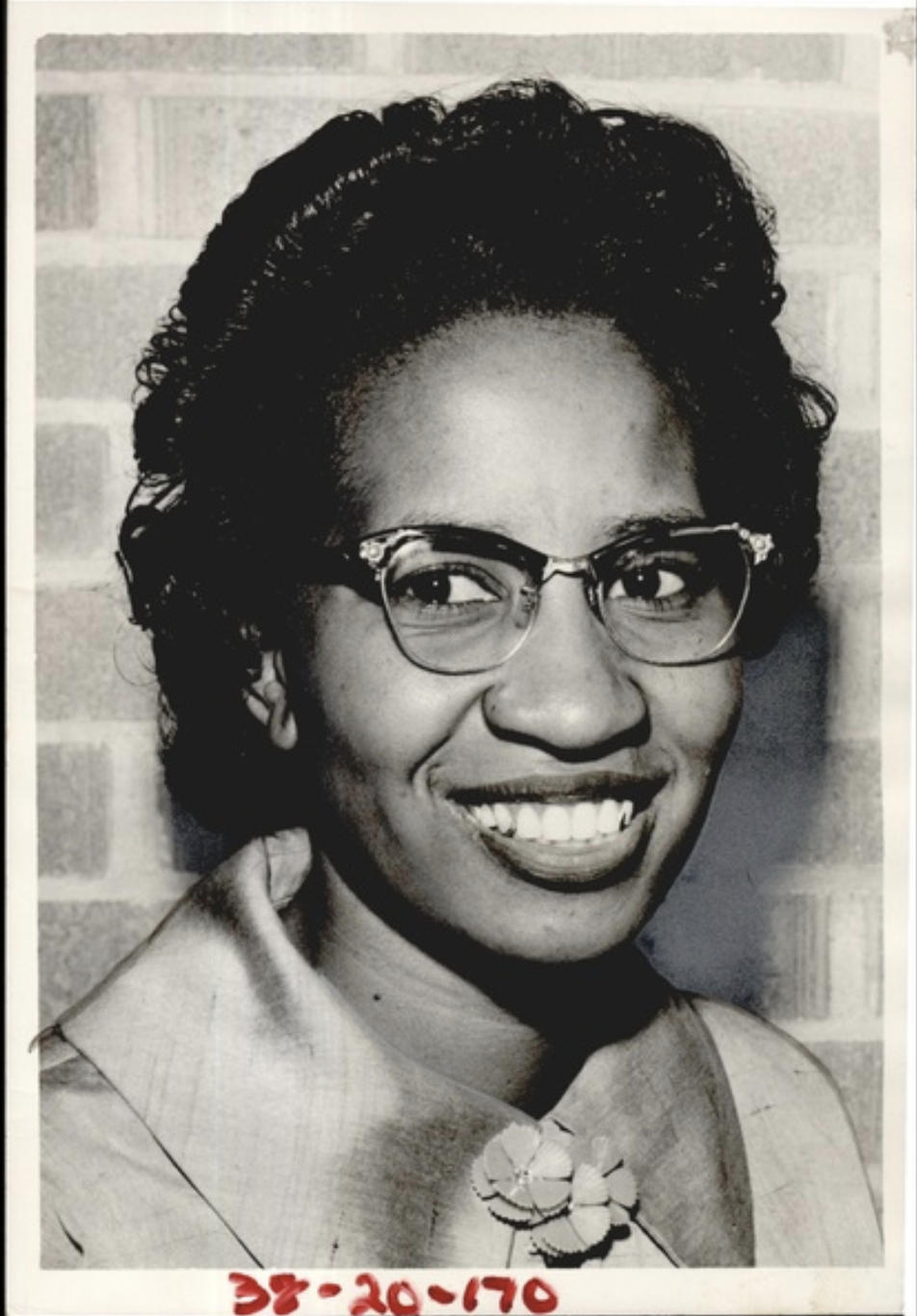
The late Clara Luper of Oklahoma City was a true trailblazer when it came to peaceful protest to ensure that she and others in her city, state and nation received the civil rights afforded them by the U.S. Constitution. A lifelong public-school teacher, Mrs. Luper taught her students and others in the community, including members of the clergy, non-African-Americans and business and civic leaders to employ nonviolent means to protest injustices ─ most famously through drugstore and department store sit-ins ─ that effectively ended longtime policies that discriminated against Blacks.
Mrs. Luper exhibited a unique leadership style. She led by example. Jailed 26 times, she compared her commitment to that of another equal rights movement: American women fighting for and finally achieving the right to vote. She stated, “Just as in the women’s suffrage movement, some of us had to go to jail. We knew we couldn’t just sit back, point at someone else, and them they had to go.”
National Trust for Historic Preservation

Dr. Anne Wight Phillips was a pioneering surgeon in the 1940s, breaking barriers for women in the medical field. She specialized in the treatment of burn victims and became the nation’s leading voice on the dangers of smoke inhalation, educating millions of children to, “get on the floor and stay below the smoke!”
She was born in 1917 and at age 5 announced her intention to become a doctor. Upon graduating from Bryn Mawr College in 1939, she applied to Harvard Medical School, but was denied because she was a woman. She went on to graduate from University of Penn, one of the few schools that accepted women and then was appointed to the faculty of Harvard Medical School and the Staff of Mass General Hospital.
In doing so, she became the first woman surgeon on the faculty and the first woman to perform major surgical procedures at the facility. She founded and directed the National Smoke, Fire and Burn Institute for 30 years, and developed “smoke drills” which were taught to millions of school children.
National Trust for Historic Preservation

Hattie Hooker Wilkins was an Alabama suffragist from Selma, who had helped form the Selma Equal Suffrage Association. In 1920, she helped convert the Suffrage organization into the League of Women Voters. In 1922, Wilkins became the first women elected to the Alabama State Legislature.
Wilkins had campaigned for women’s suffrage. Retiring from the State House of Representatives after only one term, Wilkins was well respected for her work on education and healthcare reform during her tenure.
Portrait belongs to the collection of the Alabama Department of Archives and History.
National Trust for Historic Preservation

Elizabeth Freeman, also known as Bet, Mum Bett, or MumBet, was the first enslaved African American to file and win a freedom suit in Massachusetts.
The Massachusetts Supreme Judicial Court ruling, in Freeman’s favor, found slavery to be inconsistent with the 1780 Massachusetts State Constitution.
National Trust for Historic Preservation

Camilla Williams was born October 18, 1920 in Danville, Virginia. She began crafting her singing at Calvary Baptist Church. Calvary was well known for having wonderful religious and musical programs for young people. She began piano lessons and soon was accompanying the choir. After she sang a solo at the church when she was 12 years old, the minister, Rev Goode said to the congregation, “Today, we have heard a voice that will be heard around the world.”
On May 15, 1946 she made her New York City Opera debut as Cio-Cio-San in “Madame Butterfly.” She became the first black female opera singer to sign a contract with a major American opera company. In 1959 she was the first African American to receive the Key of the City of Danville, Virginia. In 1963 she sang at the Lincoln Memorial during the March on Washington where Martin Luther King gave his “I Have a Dream” speech.
National Trust for Historic Preservation

Ross was born in St. Joseph, Missouri in 1876. In Kansas she graduated from high school, teacher-training and taught kindergarten. In 1902, she married William B. Ross and moved to Wyoming where he became Governor in 1923. In 1925, by special election, she became the Governor of Wyoming after her husband’s sudden death — the first female governor in the United States. She pushed progressive issues including requiring municipal/county budgets, bank regulation, safety standards for miners and women and regulation of child labor.
Her staunch support of prohibition lost her the re-election in 1926. In 1933, Ross became the first female Director of the U.S. Mint, serving for 20 years. Ross managed innovations in coin manufacture, construction of new buildings and increased demands for currency.
In retirement she published numerous articles, maintained a full schedule of speaking engagements and remained active in the Democratic party. She died in Washington, D.C. in 1977 at the age of 101.
National Trust for Historic Preservation

Emma Big Bear Holt (Wa’ ka’ ja’ ze Winga), a Ho-Chunk born in 1869 near Tomah, Wisconsin of the Bear tribal family, was the daughter of Chief Big Bear and Mary Blue Wing, wife of Henry Holt (Floating in Air) and mother of Bertha Emiline. Big Bear, who walked in silence, kindness and humbleness, was a direct descendant of Ho-Chunk Chief Waukon Decorah, and instilled in her bloodline was the fortitude to be honest, strong in beliefs and to march ahead, never complaining of the hardships she encountered and endured.
Outliving her husband and daughter, Big Bear made a living by selling her black ash baskets, beaded jewelry and ginseng, and by accepting food and assistance offered by the caring local people of McGregor and Marquette, Iowa.
She didn’t wander far from the graves of her ancestors and lived out her days until 1968 as the last in the tradition of the ancestors who inhabited the prehistoric site near the Effigy Mounds sacred space along the Mississippi River in northeast Iowa.
National Trust for Historic Preservation

Dr. Katie John was a beloved Ahtna Athabascan Elder and champion of Alaska Native rights. She was raised in Batzulnetas (roasted salmon place), a historic village and fish camp within what is now Wrangell-St. Elias National Park. To protect the right to fish where her family had always fished, she spearheaded the most significant litigation over subsistence rights in Alaska history.
Subsistence to her was about community, balancing conservation, respecting cycles of life and sharing. The matriarch was passionate about passing down a way of life that is intimately connected to the land to future generations, including her own 20 children.
Katie passed away before she could witness the final resolution of her nearly 30-year peaceful struggle, which made it all the way to the U.S. Supreme Court, but all Alaska Natives benefit from her victory. The State of Alaska officially declared May 31 as a day to forever honor her legacy and recognize the accomplishments of her work.
National Trust for Historic Preservation

Izetta Jewel Brown began her career as President Woodrow Wilson’s favorite actress, but moved into politics. As early as 1913, she was active in women’s rights, and subsequently became a leader of the National Women’s Party, which sought equal rights and equal opportunities for women.
In 1914, she was married to William G. Brown Jr., a Congressman from West Virginia, who died two years later, leaving her with their infant daughter and a $3.5 million fortune. After his death, Jewell took over management of their Preston County farm and established a modern dairy operation.
Active in farm organizations, she attended the first farm women’s camp at Jackson’s Mill and later served on a committee to improve wool production in the state. She also became a noted breeder of purebred milk cows in West Virginia. In 1922, Jewell became the first woman south of the Mason-Dixon Line to run for the U.S. Senate.
National Trust for Historic Preservation

Katharine Wright served as director of the Young Woman’s League of Dayton, supported efforts to gain women the right to vote, and remained active in Oberlin College affairs after her graduation in 1893, leading its alumni group and gaining election to its board of trustees.
She married a college friend, Kansas City newspaper owner and editor Henry J. Haskell, at Oberlin on November 20, 1926. Katharine taught Latin and English at Dayton’s Steele High School, but left in 1908 to assist her brothers with their airplane invention and company.
She traveled with her brothers, Wilbur and Orville, in France for a promotional tour and actively assisted her brothers’ careers, serving as a confidant and sounding board.
National Trust for Historic Preservation

Peregrina Trujillo stood up for La Placita de Los Trujillos in 1890’s California. The recently established city of Riverside told Peregrina that the Santa Ana River water the two communities shared now belonged solely to Riverside, and that to continue use of water they had been using for almost 50 years, La Placita would have to pay $2003 in gold coin.
La Placita was a humble community comprised of genizaro pioneers from New Mexico who established the community in 1843 when Alta California and most of the Southwest was still part of Mexico. Peregrina personally asked every resident of La Placita to donate what little they could.
She was able to collect the needed sum, pay the Riverside Land and Irrigating Company $2003 and form the Trujillo Water Company thus guaranteeing La Placita the water it needed to survive as a community. The Trujillo Water continues to this day as a subset of Riverside Public Utilities.
National Trust for Historic Preservation

Olivia Langdon Clemens, much-upstaged by her spouse, Mark Twain, was a brilliant and educated woman. She edited her husband’s work, deepening it beyond mere funny stuff, as he explicitly acknowledged. She held the title to their elegant home in Hartford, Connecticut, and managed its business affairs. Her civic activities included co-founding the Hartford Art School, now an important part of the University of Hartford.
She organized receptions for such forward-looking groups as the Chinese Educational Mission and the Connecticut Indian Association.
In a letter to her mother, she burst out in her own vivid prose: “In this day women must be everything. [T]hey must keep up with all the current literature, they must know all about art, they must help in one or two benevolent societies — they must be perfect mothers — they must be perfect housekeepers and graceful gracious hostesses… above all they must make their houses ‘charming’ and so on without end.”
National Trust for Historic Preservation
American socialite and fashion designer Lilly Pulitzer Rousseau was born to an heiress of the Standard Oil fortune. Lilly married millionaire Herbert Pulitzer Jr. and they settled in Palm Beach, Florida. They owned several Florida citrus orange groves and, with produce from the groves, she opened a fruit juice stand on Via Mizner, just off Worth Avenue in Palm Beach.
While working at the stand, Pulitzer found that squeezing juice made a mess of her clothes. Seeking to camouflage the juice stains, she designed a sleeveless shift dress made with bright, colorful, floral patterns. She discovered that customers loved her dress, so she produced more to sell at her juice stand.
In time, she was selling more dresses than juice, and decided to focus on designing and selling what had become known as her “Lillys”. In 1959, Pulitzer became president of her own company, Lilly Pulitzer, Inc. and as the brand was popular with high society, such as Jackie Kennedy, she was called the “Queen of Prep”.
National Trust for Historic Preservation

Goldie G. Walker Hayes, was born on October 1, 1897 and grew up in Overton Village, Dawson County, Nebraska. Goldie graduated from Kearney State Normal in Kearney County, Nebraska and Black hills Teachers College (Spearfish Norma) at Spearfish, South Dakota.
She taught at Audacious, Cherry County, Nebraska Teaching school in District 164. In October of 1947, She was elected as the Cherry Co. Rural Teachers first Black delegate to the General Assembly. Goldie taught all over Cherry County and by September 1955, she was the principal of her school in Norris, South Dakota.
National Trust for Historic Preservation

Marcet Haldeman-Julius (Anna Marcet Haldeman) was an American feminist, actress, playwright, civil rights advocate, editor, author and bank president. She was born in Girard, Kansas, niece of social activist Jane Addams, with whom Marcet maintained a close relation until the end of the Addams’s life.
In 1916, she married activist and publisher Emanuel Julius, and both partners adopted the surname Haldeman-Julius. They wrote both separately and together, their most well-known collaboration being the 1921 novel “Dust.”
Together with her husband, Emanuel Haldeman, Julius published some of the first paperback books. Little Blue Books were a series of small staple-bound books published from 1919 through 1978 by the Haldeman-Julius Publishing Company of Girard, Kansas. They were extremely popular and achieved a total 500 million booklets sold over the series’ lifetime.
Within the first decade of production the Little Blue Books had grown into a global phenomenon.
National Trust for Historic Preservation

Electa “Wuhwehweeheemeew” Quinney was Wisconsin’s first public schoolteacher. Quinney was a member of the Stockbridge-Munsee Band of Mohican Indians. She grew up in New York with a passion for education, attending some of the best boarding schools in the area.
She moved to the Kaukauna area of Wisconsin during the mass removal and migration of native peoples from New York in 1827. A year after arriving, Quinney opened a school — the first one in Wisconsin that did not charge an enrollment fee. She taught both Native and white children, many who could not have attended school if there had been a fee, and had forty to fifty children in her class at a time. S
he moved to Missouri for a time because of her husband’s work, but after his death, she moved back to Stockbridge, Wisconsin, and lived there until her death in 1885.
National Trust for Historic Preservation

Patsy Matsu Takemoto Mink was the first woman of color elected to the U.S. House of Representatives and the first Asian-American woman to serve in Congress. Mink was an American lawyer and politician from the U.S. state of Hawaii. Mink was a third generation Japanese American and member of the Democratic Party.
She also was the Assistant Secretary of State for Oceans and International Environmental and Scientific Affairs. Mink was a distinguished, dedicated and innovative legislator who served as a member of the territorial House of Representative of Hawaii, State Senator of Hawaii and for over two decades as the representative of Hawaii’s Second Congressional District.
For over four decades, Mink championed the rights of immigrants, minorities, women and children, and worked to eradicate the kind of discrimination she had faced in her life.
National Trust for Historic Preservation

Isolated by vast distances and the stern demands of the land, the people of the American frontier knew first hand the promise and the hardship of America’s last “free” land in the Nebraska Sandhills that was settled in the early years of the twentieth century.
Today, the feats, the passions and the distinctive speech of the Western Nebraska homesteaders still come alive in the writings of Mari Sandoz, daughter of Swiss immigrants Mary and Jules Sandoz.
Sandoz was born on Mirage Flats, south of Hay Springs, Nebraska on May 11, 1896. Mari Sandoz wrote more than 20 books and dozens of short stories and she left a Great Plains legacy of social novels, sympathetic Indian biographies and histories enlivened by dramatic episodes that chronicle the growth of the West.
National Trust for Historic Preservation

Dr. Dawn Bohulano Mabalon was a passionate activist who dedicated her life to chronicling Filipina/o-American history in California and the US. Born and raised in Stockton, California, Mabalon was a tireless advocate for saving the Little Manila neighborhood home to the largest Filipina/o population in the U.S.
She co-founded the Little Manila Foundation (Little Manila Rising) which advocates for the historic preservation of the Little Manila Historic Site and provides education and leadership to revitalize the Filipina/o American community. She was an associate professor of history at San Francisco State University and wrote “Little Manila Is in the Heart: The Making of the Filipina/o American Community in Stockton, California (2013)” and co-authored with Gayle Romasanta “Journey for Justice: The Life of Larry Itliong (2018).”
She served on numerous boards including as Filipino American National Historical Society (FANHS) National Scholar and Trustee and APIAHiP.
National Trust for Historic Preservation

A century ago Margaret “Molly” Brown worked closely with prominent women’s rights activists, including Alva Vanderbilt Belmont, Alice Paul and fellow Coloradoan Helen Ring Robinson, to extend women’s suffrage, already granted in western states, to the rest of the nation.
Most known for her harrowing Titanic experience, Brown championed for women’s rights, labor reform and was prominent in several charitable projects in Colorado. In 1914 alone, she responded to the deadly Ludlow miner’s strike, worked on the Conference of Great Women with Belmont, ran for US Senate and lastly, departed for France to set up medical relief stations at the onset of WWI.
Owned and operated by Historic Denver, her 1889 Capitol Hill neighborhood home stands as a museum dedicated to the inspiring story of a woman dedicated to improving the world around her through an “equality for all” personal motto.
National Trust for Historic Preservation

Justina L. Ford (known throughout Colorado as the baby doctor) became Colorado’s first female/African American doctor in 1953; making history. She lived in the Five Points neighborhood in Denver, Colorado and practiced for over 50 years, mostly delivering babies and giving health care to adolescent children.
She did almost all medical visits in homes because African Americans weren’t allowed in hospitals or doctors offices back than. Now today in the new millennium you will often hear stories from the older generation where and how she delivered them, siblings, relatives or even friends. She is part of the historic Five Points neighborhood museum.
National Trust for Historic Preservation

Before 1900, few established universities allowed women to earn degrees. Jessie Daniel Ames graduated in 1902 with a perseverance that defined her life. Upon her husband’s death in 1916, Ames moved home to Georgetown, Texas where she organized the Georgetown Equal Suffrage League and worked with the Texas League of Women Voters.
In 1929, she became the Director of Commission on Interracial Cooperation’s Women’s Committee in Atlanta. The next year she founded the Association of Southern Women for the Prevention of Lynching, which aimed to “cancel the claim of Southern white men that lynching was necessary for the protection of white women.”
She strongly believed only education could prevent lynchings and thought national anti-lynching legislation would increase rather than prevent the crime. This belief led to the end of ASWPL in 1942, although she continued to work on racial equality issues for the remainder of her life until her death in Georgetown in 1972.
National Trust for Historic Preservation

Anna May Wong was an American actress, considered to be the first Chinese American Hollywood movie star, as well as the first Chinese American actress to gain international recognition. Her varied career spanned silent film, sound film, television, stage and radio.
Wong was born Wong Liu, a 3rd generation Chinese American, on January 3, 1905, on Flower Street in Los Angeles, one block north of Chinatown, in an integrated community of Chinese, Irish, German and Japanese residents. In addition to her roles in silent films, television, and stage, Wong landed a role in one of the first movies made in Technicolor.
As a child, she and her siblings attended California Street public elementary school in Los Angeles. However, Wong and her older sister were teased and bullied because of their race. Wong’s parents later moved them to the Chinese Mission School in Chinatown where they were welcomed.
National Trust for Historic Preservation

Flora Molton sang what she called “spiritual and truth music,” a combination of traditional religious songs and her own compositions. Born here in Louisa County, the daughter of the Reverend and Mrs. William Rollins, she began singing in church.
At local parties she heard slide guitar played with a knife, a style she adopted to accompany herself. In 1937, she moved to Washington, D.C., to make her living playing music on the street, and was known and loved by the generations who encountered her there.
She also performed at festivals and clubs, recorded three albums and was featured in two documentary films.
National Trust for Historic Preservation

Espiritu Chijulla was the Chumash/Tongva common law wife of one of the most fascinating figures in 19th century Los Angeles, a litigious, wealthy French Basque rancho owner and land grabber named Miguel Leonis.
Espiritu was equally remarkable. Their 30-year union stood against Basque tradition as she was a Spanish-speaking Native American woman, essentially a non-citizen with no legal rights. When Leonis died in 1889, the bulk of his estate was left to relatives in France. Espiritu was designated as Leonis’ “faithful housekeeper” and awarded a small sum to be distributed over time and guaranteed only if she agreed not to challenge the will.
Espiritu took the highly unusual step of contesting the estate. She sued to remain in the adobe home they shared, to be legally recognized as Leonis’ wife, and for a wife’s share of the assets. After a protracted 16-year battle, she won her case in 1905. Her courage, fortitude and legal victory were groundbreaking feats for the time.
National Trust for Historic Preservation

Born on a farm in Montgomery County, Indiana, Mary Holloway took in sewing and taught school for four years to save the money for her tuition to medical school. Mary also worked for women’s rights. In 1850, she sold subscriptions for The Women’s Advocate, an early suffrage newspaper.
Holloway graduated from the Woman’s Medical College of Pennsylvania, becoming one of the first women in Indiana to earn a medical degree with her thesis “Constituents of Organic Bodies,” graduating in June 1856. She completed, and set up her medical practice in Crawfordsville.
In 1860, she married and had seven children, three of whom died in infancy. She chaired the Woman’s Suffrage Association of Montgomery County, was vice president of the Indiana Equal Suffrage Association, wrote regularly on suffrage issues for the local newspapers, hosted Susan B. Anthony and Elizabeth Cady Stanton at her home and established the Montgomery County Orphan’s Home.
National Trust for Historic Preservation

Sheridan is considered the country’s first formally trained nurse anesthetist, according to the American Association of Nurse Anesthetists. The Sister of St. Joseph worked at Saint Vincent Hospital from 1877 until 1886, and studied the new medical field of anesthesia. Women would lead in the field of anesthesia working with only the surgeon as a means to deliver anesthesia.
Women would be pioneers in anesthesia for decades in the United States. These first anesthesia providers were almost exclusively women. Male surgical residents were often conscripted to give anesthesia however it was discovered their attention was frequently on the surgery and not the anesthetic.
Nuns and female nurses were deemed superior and quickly became the anesthesia provider of choice. In 1927 the first residency program in Wisconsin began training medical doctors as physician anesthesiologists. Women had dominated the field of anesthesia for over 50 years prior to that point.
National Trust for Historic Preservation

When Marvel Crosson, a local Sterling, Colorado girl, and her family moved to California, she and her brother Joe got “hooked” on the newest invention – the airplane. She learned to fly and became a National hero when she set several altitude records for women.
“People seem to think that I am some sort of a queer animal when they are told that I have devoted my life to flying. Women, particularly, look upon me as something strange — and I do not see it at all. Nice women say to me, ‘Why don’t you stop flying? Why don’t you do like the rest of us?’ Then I have to give them my reason and somehow or other they seldom seem properly impressed,” she said.
Marvel competed in air races and even airlifted watermelons into the Alaskan wilderness. In August, 1929 her plane crashed while she was competing in a cross country Air Derby. Sterling’s Crosson Field is named for Marvel Crosson.
National Trust for Historic Preservation
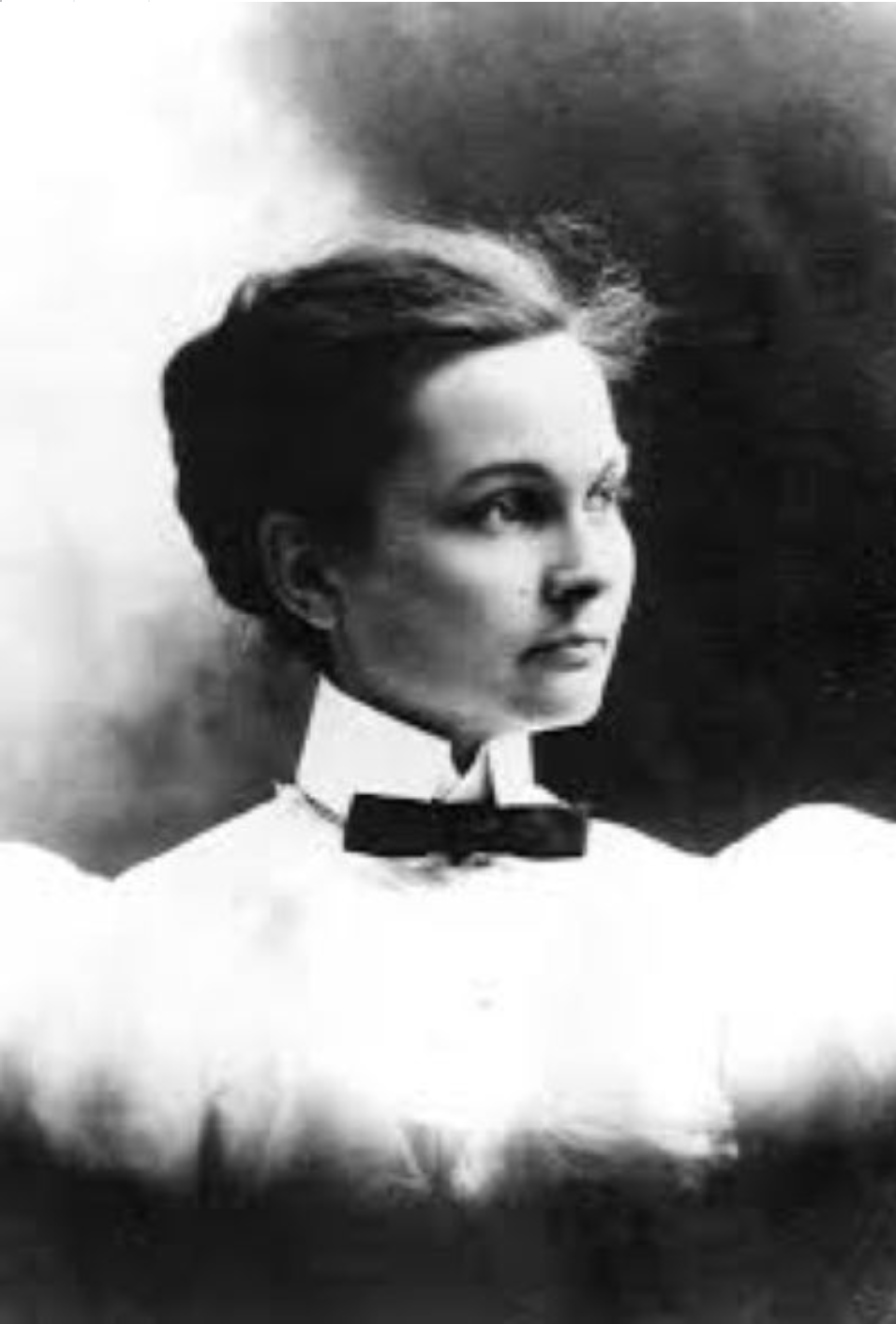
Dr. Susan Anderson, ‘Doc Susie’ was a physician and one of the first women to practice medicine in Colorado. In 1907, Doc Susie contracted tuberculosis. She was advised to relocate to the mountains for the dry mountain air. She moved to Fraser, Colorado.
For almost 50 years, she was the only doctor in Grand County and often snowshoed miles to make house calls. Patients would often pay her in goods and services. One example is the log building that became Doc Susie’s home. A rancher gave it to Doc Susie as payment. Several of the townsfolk helped her move the log building to its new location.
Doc Susie was the subject of a Pic article in the 1950s that garnered national attention. Ethel Barrymore even offered to make a movie about Doc Susie, however, Doc Susie refused. Doc Susie passed in 1960 in Denver. Her log cabin still stands in Fraser. It is used as a private residence and remains a testament to this brave woman’s dedication to the citizens of a small mountain community.
National Trust for Historic Preservation

Edmonia Lewis was an African and Indigenous sculptor in the 19th century. She lived in Albany for a time and attended Oberlin college, but was not allowed to graduate due to false accusations against her.
She went to Boston in 1863 to study art and had a studio on Tremont Street where she created busts of abolitionists like William Lloyd Garrison and Charles Sumner. She was also a part of the abolitionist movement.
In 1865 she had earned enough money to move to Rome where she continued her sculpting career and created works like “Forever Free”, a sculpture showing the end of slavery. This is one of the only well known pieces of a Black subject by a Black sculptor from that time period.
National Trust for Historic Preservation

Cornell College made history in 1871 with the hire of Harriette J. Cooke as professor of German and History. Harriette was the first woman in the United States to be a full professor and earn pay equal to her male colleagues. Harriette started her three-decade employment at Cornell as a preceptress in November of 1857.
She taught art, mental science, mathematics, surveying, Latin and English, and she developed a reputation for both having high expectations of her students and being sympathetic to their needs. This combination earned her a promotion to Dean of Women in 1866.
By 1871, Harriette was awarded full professorship. That same year, she also founded the Cornell Association for the Higher Education of Women. Harriette eventually dropped German from her teaching schedule and added Science of Government. She remained a professor at Cornell until her resignation in 1890.
National Trust for Historic Preservation

Born into the Omaha Tribe in Nebraska Territory, Susan’s father urged his children to be educated in white man’s schools. Susan graduated from Women’s Medical College of Pennsylvania, valdictorian of her class in 1869 and the first Native American to earn a medical degree.
She worked among her native people, doctoring, educating and leading social reform. She led temperance campaigns on the reservation, helped advance sanitation practices and often fought financial and legal issues for her tribal people. Before her death in 1915, she had raised money for the first ‘modern’ hospital on the Omaha and Winnebago reservations.
The building is now a small museum in Walthill, Nebraska. (Smithsonian Magazine, March 2017) Joe Starita has written a biography of Susan LeFlesche Picotte’s life, published in 2016: “A Warrior of the People”.
National Trust for Historic Preservation

Beginning in the 1890’s, Caroline “Carrie” M. Edwards (later known as Carrie Williams after marrying her husband Abraham Williams) was a schoolteacher at the Coketon Colored School, found at the head of the Blackwater Canyon in West Virginia.
She taught the children of African American coal and coke workers in the area. In 1898, the Tucker County School Board reduced the school term for black students to five months to save money, while keeping the full eight month term for white students.
Williams and her lawyer J.R. Clifford (1848-1933), West Virginia’s first black attorney, won equal treatment in West Virginia’s Supreme Court for black students and equal pay for black teachers all across the State of West Virginia.
National Trust for Historic Preservation

Jeannette Rankin, prominent suffrage lobbyist helped secure the vote for Montana women in 1914. The first woman elected to US Congress in 1916, before women nationwide had the right to vote. Despite harsh criticism she voted against entry into WWI, asserting, “The first time the first woman had a chance to say no against war she should say it.”
In 1941 she bravely stood alone in Congress voting against entry into WWII. Her stand against war as a viable resolution to international conflicts provoked questions on the basic assumptions about peace, war and conflict. Rankin’s staunch opposition to war made her a spokesperson for veteran’s rights, introducing the first GI Bill to Congress.
Her long career distinguished by her deep commitment to our country’s women, poor and children. She put forth an alternate vision for this country, championing peace and justice. She worked tirelessly opposing war and oppression, attending rallies and giving speeches into her 90s.
National Trust for Historic Preservation

Elder Bertha Polk Lyle’s journey began March 25, 1913, where her parents, former slave Allen Polk and Emma Early were tenant farmers in rural Lawrence County, Alabama. Confessing Christ in 1928 at Flower Hill Primitive Baptist Church, she married Oliver Lyle, Jr., December 1933, and a year later, their only daughter, Myrtle was born.
At Decatur, Alabama, Bertha joined St. Paul Spiritual Church. She preached her first sermon at Flower Hill, on January 23, 1944.
“Many of you come to hear what I’m going to say, but you don’t have nothing to do with it, it’s between me and my God,” she proclaimed.
An ordained minister, Elder Bertha Lyle received her Pastor Certificate, May 19, 1953, and became pastor of St. Paul Spiritual Church on Newcomb Street in Decatur. At a time when women preachers were not only forbidden, but unthinkable, she was the first woman of color, (possibly the first female) of any denomination to preach and pastor a church in North Alabama.
National Trust for Historic Preservation

Frances Kellor was born in Columbus, Ohio. When her father abandoned the family, her mother moved them to Coldwater, Michigan where she became a laundress in very reduced circumstances.
Frances quit school to support her family, working at the local newspaper and eventually achieved the status of an investigative reporter at the paper. Her remarkable drive to succeed by seeking truth was noticed by Mary Eddy, Coldwater librarian, and her sister Frances.
The sisters both mentored Frances and supported her financially, so that she was able to earn her law degree at Cornell University in 1897 and then pursue the study of sociology at the University of Chicago. Frances became a scholar, an author, and a progressive activist over the next 30 plus years in the areas of rights and education for women, minorities, immigrants and prisoners.
Frances Kellor is credited as the only female among the founders, and inaugural First Vice President of the American Arbitration Association.
National Trust for Historic Preservation

May Patterson Goodrum Abreu received the first Woman of the Year award in 1943 for her work with the Red Cross. Her efforts had resulted in 90,442 registered blood donors, 30,346 through her initiative of the Mobile unit and a total contribution of over 150,000 pints of blood.
Her 1930 English Regency style home located on West Paces Ferry Road in Atlanta, Georgia and designed by Philip Shutze with interiors by Edith Hills can be vistied by appointment.
National Trust for Historic Preservation

Mary Clark Thompson created the Victorian estate that is now Sonnenberg Gardens in Canandaigua, New York. Initially started with her banker husband Frederick Ferris Thompson, she continued expanding it after his death in 1899.
Many of the gardens that thousands of visitors annually enjoy were installed by Mary, including the first privately owned Japanese garden in North America. Besides her interests in gardens, Mary’s philanthropic gifts were far-reaching and lasting. She is one of the founders of the Metropolitan Museum of Art and supported Williams College, Vassar College, Teacher’s College (now Columbia University) and the Bronx Zoo.
She created The Mary Clark Thompson Medal award at the National Academy of Sciences to honor achievements in geology and paleontology. In 1920 she was awarded the Cornplanter Medal for her support of preserving Native American history and she also supported a wide range of community and social needs in her Canandaigua home including building a hospital.
National Trust for Historic Preservation

Lucy Addison was a teacher and elementary school principal in Roanoke who was largely responsible for bringing high school–level education to the city’s African Americans.
Born enslaved in Fauquier County, she earned a teaching diploma in Philadelphia. Addison taught briefly in Loudoun County before moving to Roanoke in 1887. She served briefly as an interim principal at the city’s First Ward Colored School before resuming her regular teaching duties.
In 1918 she became principal of the Harrison School. Although the school offered classes only up to grade eight, Addison campaigned for a secondary-school curriculum, steadily adding advanced classes. The State Board of Education accredited Harrison as a high school in 1924. Addison retired from the position after the 1926–1927 school year, and the city named the school after her in 1928.
She never married and died in Washington, DC in 1937.
National Trust for Historic Preservation

Elizabeth Lord, together with Edith Schryver, her lifelong personal and business partner, founded and operated the first female-owned landscape architecture firm in the Pacific Northwest.
Together they created over 200 public and private gardens from 1929 to 1969. In addition to being a landscape architect, Ms. Lord was also a notable educator, writer, businesswoman, artist and civic leader.
National Trust for Historic Preservation

Jane Grant, born Jeanette Cole Grant in Joplin, Missouri, was a New York City journalist who co-founded The New Yorker with her first husband, Harold Ross. In 1921, Grant joined the Lucy Stone League, which was dedicated, in the manner of Lucy Stone, to helping women keep their maiden names after marriage.
In 1939, she married William B. Harris, the editor of Fortune magazine. In 1976, Harris donated Jane Grant’s papers to the university. Upon his death in 1981, he left a $3.5 million bequest in his wife’s name to establish the Center for the Study of Women in Society.
National Trust for Historic Preservation

Emily Jane Newell Blair was born in Joplin, Jasper County, Missouri on January 9, 1877 and died on August 3, 1951.
She was an American writer, suffragist, feminist, national Democratic Party political leader and a founder of the League of Women Voters.
National Trust for Historic Preservation

Geneva Haugabrooks, with $300, founded Haugabrooks Funeral Home in 1929 in Atlanta, Georgia. She operated the funeral home on Auburn Avenue, home to Atlanta’s thriving black commercial district.
She is regarded as an early pioneer of Atlanta’s black businesses and was one of the only female entrepreneurs on Auburn Avenue. Today the space carries her name and legacy by serving as a community gathering space and providing affordable commercial space for entrepreneurs of color.
It also features an exhibition space that highlights artists that embody Mrs. Haugabrooks’ spirit of resilience and commitment to community building.
National Trust for Historic Preservation

Sumi Harada was the youngest daughter of Jukichi and Ken Harada. Unable to purchase property due to the 1913 California Alien Land Law, Japanese immigrants Jukichi and Ken Harada purchased the house at 3356 Lemon Street in 1915 under the names of their American-born children.
A court battle ensued and in a landmark decision, Judge Hugh Craig of the Riverside Superior Court ruled in favor of Mr. Harada, et al., confirming the 14th Amendment rights of the children, and allowing the Harada family to keep their home. Decades later, like other Japanese American families, the Haradas were forced to abandon their home with the implementation of President Franklin D. Roosevelt’s Executive Order 9066, the mandatory incarceration of Japanese and Japanese Americans.
After the war, the Haradas’ youngest daughter, Sumi, was able to return home. Upon her return, Sumi opened the house to displaced Japanese Americans, helping them in their transition back from incarceration.
National Trust for Historic Preservation

Born in Superior, Arizona in 1925, Lilly Hing was the oldest of 10 children and married Wing Fong of Las Vegas, NV in 1950. She was the first Asian public school teacher in Clark County, President of the Association of University Women and the first Chinese American regent of a public university (UNLV) for 10 years (1975-1985).
UNLV’s Geoscience Building is named in her honor. An elementary school and the UNLV Computer Center are named in honor of her and her husband. She has won numerous community awards, served on commissions such as the Commission on the Status of Women, and worked for the passage of the Equal Rights Amendment.
National Trust for Historic Preservation

Helen Stewart was an unwilling settler in Las Vegas in 1882, arriving with her husband, three children and another on the way. Her husband Archibald recently foreclosed on ranch property and he came to take possession.
After his murder in 1884, Helen was left alone with four children and another one on the way. She and her father Hiram Wiser bought up more land until they were the largest landowners in Clark County.
Helen, a woman of vision sold 1834 acres in 1902 to Senator William Clark of the San Pedro, Los Angeles and Salt Lake Railroad. In 1905 there was a land sale and Las Vegas developed as a town.
The Las Vegas Mormon Fort gave birth to this new town of Las Vegas, Nevada on May 15, 1905. Thus she was known as the “founding mother of Las Vegas.”
National Trust for Historic Preservation

Dr. Nettie Craig Asberry was a pioneer in African-American civil rights leadership in the Northwest. Born in Kansas in 1865, Asberry moved to the Northwest in 1890. Asberry was one of the founding members of Tacoma’s NAACP chapter, the first to be established west of the Rockies.
Archives document her tireless campaigns for justice, including her efforts to protest the showing of Birth of a Nation in Tacoma and segregation at Fort Lewis. Asberry is also associated with the growth of the African American women’s club movement in the Northwest. She established the Tacoma City Association of Colored Women’s Clubs before touring the state to encourage other communities to do the same, eventually helping to establish a statewide federation.
A longtime resident of Tacoma’s (WA) Hilltop neighborhood, Asberry taught music — a subject in which she held a PhD — to generations of students. In fact, it is believed that she was the first African-American woman ever to receive a PhD.
National Trust for Historic Preservation

Dora. B. Davis Antwine of Bunkie, Louisiana, founder and owner of Progressive Funeral Homes of Central Louisiana, Inc., was the first Black registered voter in Avoyelles Parish since Reconstruction.
She was also the first black female notary public in Louisiana.
National Trust for Historic Preservation

Katherine Rebecca “Kate” Glass Greene founded and operated the Fort Loudoun Seminary in Winchester, Virginia for two decades. The goal of this school was not to produce housewives, but to “cultivate young women who would take their education into the wider world.”
An accomplished scholar and artist, Kate served as president of the school for the twenty years of its existence (1905-1925) attracting students from the surrounding area, around the country and even students from around the world. Many of the Seminary’s students earned college degrees and became educators themselves.
The Fort Loudoun Seminary building is on N. Loudoun St. in Winchester, Virginia and now operates as private apartments. The Glen Burnie House, Kate’s family home, is part of the Museum of the Shenandoah Valley campus and is open to the public.
Image: Portrait of Katherine Rebecca Glass Greene by Edward Caledon Bruce, Winchester, Virginia. Collection of the MSV, gift of Mollie Glass Pamplin.
National Trust for Historic Preservation

Leona Tate, one of the McDonogh 3, innocently entered in to the Civil Rights Movement at the tender age of six.
On November 14, 1960, nearly six years after Brown vs Board of Education ruled segregated schools unconstitutional, Leona Tate, Gail Etienne and Tessie Prevost, escorted by federal marshals, bravely attended their first day at McDonogh #19 Elementary school, a New Orleans public school that was opened to white students only.
National Trust for Historic Preservation

Born into slavery in 1861, Coralie Franklin Cook was an orator, professor and suffragist. A direct descendant of Elizabeth Hemmings, she is also the first known descendant of those enslaved at Monticello to have graduated college.
After graduating from Storer College, Cook became a faculty member at Howard University, where she taught elocution. She established herself as a gifted orator in Washington, D.C., and was the only African American woman invited to speak at Susan B. Anthony’s 80th birthday celebration in 1900. Cook soon established herself as an activist and suffragist by becoming a leader of the National Association of Colored Women’s Clubs (NACWC) and a member of the National American Woman’s Suffrage Association (NAWSA).
Having established herself as an educated, middle-class woman, Cook became a central figure of the suffragist movement, and used her voice to emphasize the importance of dismantling discrimination based on both race and sex.
National Trust for Historic Preservation

Elvira Ellen Roberts Bleakman was born in Edinburgh Scotland on December 9, 1842. She was educated in England. She was married to George Bleakman in 1870 and shortly after she and her husband emigrated to America, they arrived in Hardman, Morrow County, Oregon in 1882.
She had taught school in England, Nebraska and Hardman for 25 years prior to being appointed postmistress at Hardman in 1890, and she continued this position for 35 years. It is said that in the point of years of service, Mrs Bleakman held the record of being second in the United States, and during all these many years she had the commendation of the post office department for never having made any mistakes in her work.
She was one of the landmarks in Hardman. She died a noble, Godly woman in 1924 at the age of 81 at which time her son became the Postmaster in Hardman.
National Trust for Historic Preservation

Eliza Bryant was an American humanitarian. With a group of other women, she established the Cleveland Home for Aged Colored people in 1896 which has become the longest continuing home for aged colored people.
In 1960, its name was changed to Eliza Bryant Home for the Aged. Later the name was changed to Eliza Bryant Village.
Learn more:
- Here’s how much you need to retire comfortably in every state
- Only boomers will remember these common household things
This article was produced and syndicated by MediaFeed.org.
National Trust for Historic Preservation
Featured Image Credit: DepositPhotos.com.