On its scale of 300 to 850, FICO® considers a score below 580 to signify poor credit.
A credit score is a tool lenders use to help gauge how much risk they’re accepting if they decide to work with a borrower. The higher the credit score, the less risky the borrower appears to lenders. Those with high scores typically have an easier time getting approved for loans and oftentimes receive the best interest rates.
The lower a person’s credit score, the more likely it is that a lender will decide that person is a risk. In addition to struggling with loan approvals, those with poor credit may receive higher interest rates and fewer loan options.
Read on for more information on what determines a low credit score, average credit score ranges, and how to build your credit score.
Image Credit: Casper1774Studio/istockphoto.
What Determines a Low Credit Score?
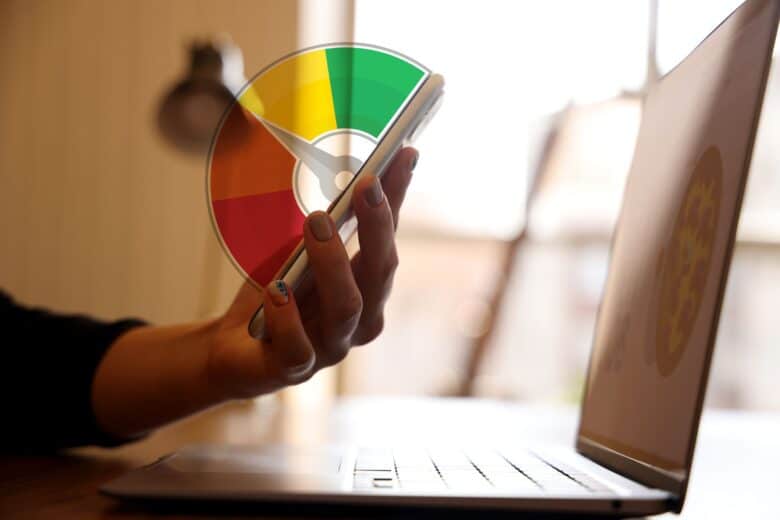
Credit scores are calculated with an algorithm that uses data from a consumer’s credit report issued by a credit bureau — usually Equifax®, Experian®, or TransUnion®. The bureaus issue credit reports to lenders, insurers, and other businesses that are legally permitted to ask for the information.
Because the data in each bureau’s credit report may be different, the scores generated from each could also differ. You might have a “fair” score based on one report, for example, and a “poor” score based on another.
The credit score ranges that are used to define good and bad credit can also vary, depending on the scoring model that’s being used. The scores you probably hear about most come from the Fair Isaac Corporation and are called FICO® scores. But you might also see scores from a company called VantageScore®.
FICO Score Ranges
Here’s how FICO scores are typically categorized:
- Poor: 300-579
- Fair: 580-669
- Good: 670-739
- Very Good: 740-799
- Exceptional: 800-850
VantageScore Ranges
This is how VantageScore sorts its scores, which also range from 300 to 850:
- Very poor: 300-499
- Poor: 500-600
- Fair: 601-660
- Good: 661-780
- Excellent: 781-805
Image Credit: tolgart/istockphoto.
How Can You Learn Your Current Credit Score (or Scores)?
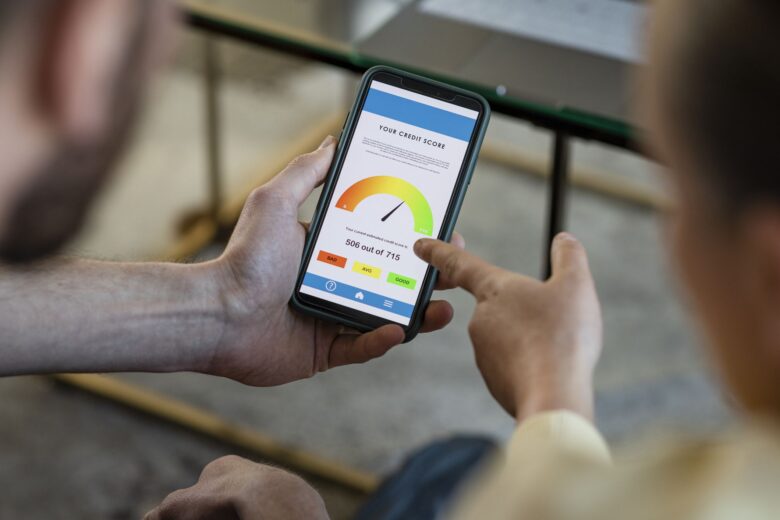
It’s important to remember that your credit score isn’t set in stone. Your score may change as the information in your credit reports changes, for better or for worse. That’s why it can be a good idea to check your scores regularly and to look at your credit reports at the different credit bureaus to be sure the information is accurate.
Depending on your accounts, you may be able to access your credit score for free by logging into your credit card or bank account online, by using your financial institution’s app, or by checking your monthly loan, credit card, and bank statements.
If you can’t get the information through one of your accounts (or even if you can), you may want to consider using a credit monitoring service to stay on top of your score. Besides helping individuals and businesses track and potentially improve their credit scores, a monitoring service can serve as an extra line of defense against identity theft.
It also can be helpful to get copies of your credit reports to be sure the information is up to date and accurate. Credit reports from the three credit bureaus usually don’t include credit scores, but because the information they contain is used to calculate credit scores, it’s a good idea to review your reports and fix any inaccuracies quickly.
You can request a free report annually from each credit bureau at annualcreditreport.com.
Image Credit: SolStock/istockphoto.
How Could a Poor Credit Score Affect You?

A bad credit score can have several negative consequences.
Having very poor credit could affect your ability to be approved for certain credit cards (especially those that have perks) and some loans. If you are approved, the terms you’re offered may not be as appealing as those you’d have gotten with a higher score. The amount of credit that’s extended could be lower, for example, or you might have to pay a higher interest rate or higher fees.
Borrowers who can’t qualify for an account may feel forced to ask a relative or friend for the money or seek funds from a payday loan. There could be an especially high price to pay for those types of loans — both emotionally and in interest.
The ramifications for poor credit can also extend beyond borrowing, including:
- Being denied a rental application. Landlords often check credit scores as part of the application process. If a landlord or rental company decides your bad credit makes you a risk, you might be denied a lease or asked to provide a larger security deposit. According to Experian, a FICO score of 620 is frequently the cut-off point for approving potential renters.
- Paying larger deposits. Utility companies — including water, gas, electric, phone, cable, and internet companies — may also ask for a deposit before providing services if your credit is not good.
- Paying larger insurance premiums. Auto and homeowner’s insurance providers may charge higher premiums if your credit score is low.
- Being denied a job. Looking for a job? Employers sometimes check a job candidate’s credit report (with permission) to see if the individual is fiscally responsible.
Image Credit: Nastasic/istockphoto.
How Can You Build a Bad Credit Score?

The sources that typically provide credit scores to consumers often list the factors considered in arriving at the credit scores that had a negative influence on the reported score. It could be that even though you’re paying your bills on time, your credit card balances are too close to your credit limit. Or maybe you have too many new credit cards or too much debt overall.If you want to get an idea of what behaviors you might need to adopt to help build your credit score, here’s a list of what FICO looks at when determining a credit score:
Payment History (35%)
Because a consumer’s payment history can be a strong predictor of his or her behavior going forward, this is the biggest factor in determining a FICO score. Paying on time can help your score; missing payments can hurt it.
What You Can Do
- Consistently pay your bills on time
- Set up automatic payments for bills you pay regularly
- Create payment reminders to avoid late payments
Finally, if your debt seems insurmountable, don’t ignore it. You can always try calling a creditor to talk about how you can get back on track. Or, if you take action before your credit score drops, you may find a personal loan that can help consolidate your bills into one more manageable payment per month.
Image Credit: fizkes/istockphoto.
Amounts Owed (30%)

Lenders want to be sure that borrowers aren’t at risk of becoming overextended, so a FICO score also looks at:
- How much total debt you’re currently carrying
- How much you owe on different types of accounts (credit cards vs. installment loans)
- How many of your accounts have a balance at the time the score is calculated
- Your credit card utilization ratio (total credit card balances divided by total credit card limits)
- How much you owe on an installment loan compared to the loan’s original amount
What You Can Do
If you’re close to maxing out your credit cards or still owe a large amount on an installment loan, it may have a negative effect on your credit score. Experts generally recommend trying to keep your credit utilization ratio below 30%.
Image Credit: Kunakorn Rassadornyindee/istockphoto.
Length of Credit History (15%)

Lenders want to see that you can manage money over time, so the longer your credit accounts have been open, the better it can be for your credit score. Although you may take pride in never having had any credit cards or in having paid off and closed all your accounts, those moves could actually hurt your credit score.
What You Can Do
If you’re having trouble building your credit, you may want to apply for a secured credit card — which is where you provide a cash deposit as collateral for your line of credit. Check first, though, to be sure the card issuer will report your payment history to the three main credit bureaus.
If you have a credit card that you no longer use, you may want to continue keeping the account open (as long as it doesn’t require an annual fee). You’ll improve your length of history and, if the card is paid off, enhance your credit utilization score. If you do use a card, paying off the purchase promptly can also have a positive effect on your payment history.
(Learn more: Personal Loan Calculator)
Image Credit: Viorel Kurnosov/istockphoto.
Credit Mix (10%)

A diverse mix of installment credit (a home mortgage, an auto loan, student loans) and revolving credit (credit cards, a home equity line of credit) can help lenders see that you can manage different kinds of debt. This is a smaller factor in determining your credit score, but it’s something to be aware of.
What You Can Do
The goal here isn’t to add more debt — it’s to create a balance.
If you have only a car loan, for example, you might choose to open a credit card account (that you can keep paid off every month) to add to your mix. Or you might use a low-interest personal loan to pay off several credit cards and diversify your mix that way.
Image Credit: hobo_018/istockphoto.
New Credit (10%)

Sometimes it can make sense to open a new credit account — to get better terms or to take advantage of a rewards program. But if a consumer applies for several new credit cards in a short amount of time, it could be interpreted as a sign that money is tight — and lenders may see it as a risk.
Opening new accounts can also affect other categories that go into calculating your score, including the length of your overall credit history and, if you make a purchase, the total amount owed on your cards.
What You Can Do
If you’re tempted to open a new account, consider whether it will help or hurt your financial situation.
Will it assist you in making payments on time? Will the new account make it easier to track your spending and stick to your budget? If you have a new credit card with a better interest rate, will it help you stop using your other cards? When it comes to your credit score, it may be useful to think of your debt holistically rather than as a bunch of individual bills.
Image Credit: JulPo/istockphoto.
The Takeaway

A credit score is one of the most important tools lenders use to determine whether they want to work with a borrower. A poor score can have serious consequences for your finances — and possibly other aspects of your life — so it’s important to maintain the highest score you can.
That means striving to always make on-time payments and, if you can, paying more than the minimum on credit card balances to keep your credit utilization ratio below 30%.
You also may want to use a credit monitoring service to be sure you always have an idea of what your score is and know that the information the credit bureaus are reporting is accurate.
Watching your score improve could serve as motivation as you work to show lenders you can responsibly manage your debt. And, as your score rises, you can enjoy the additional financial opportunities that become available, including more credit card options and better loan terms.
This article originally appeared on SoFi.com and was syndicated by MediaFeed.org.
Lantern By
SoFiSoFi receives compensation in the event you obtain a loan, financial product, or service through the Lantern marketplace. This Lantern website is owned by SoFi Lending Corp., a lender licensed by the Department of Financial Protection and Innovation under the California Financing Law, license number 6054612; NMLS number 1121636. (nmlsconsumeraccess). This site is NOT owned and operated by SoFi Bank. Loans, financial products, and services may not be available in all states.
All rates, fees, and terms are presented without guarantee and are subject to change pursuant to each provider’s discretion. There is no guarantee you will be approved or qualify for the advertised rates, fees, or terms presented. The actual terms you may receive depends on the things like benefits requested, your credit score, usage, history and other factors.
*Check your rate: To check the rates and terms you may qualify for, Lantern and/or its network lenders conducts a soft credit pull that will not affect your credit score. However, if you choose a product and continue your application, the lender(s) you choose will request your full credit report from one or more consumer reporting agencies, which is considered a hard credit pull and may affect your credit.
All loan terms, including interest rate, and Annual Percentage Rate (APR), and monthly payments shown on this website are from lenders and are estimates based upon the limited information you provided and are for information purposes only. Estimated APR includes all applicable fees as required under the Truth in Lending Act. The actual loan terms you receive, including APR, will depend on the lender you select, their underwriting criteria, and your personal financial factors. The loan terms and rates presented are provided by the lenders and not by SoFi Lending Corp. or Lantern. Please review each lender’s Terms and Conditions for additional details.
Many factors affect your credit scores and the interest rates you may receive. SoFi is not a Credit Repair Organization as defined under federal or state law, including the Credit Repair Organizations Act. SoFi does not provide “credit repair” services or advice or assistance regarding “rebuilding” or “improving” your credit record, credit history, or credit rating. For details, see the FTC’s website on credit (consumer.ftc.gov)
Financial Tips & Strategies: The tips provided on this website are of a general nature and do not take into account your specific objectives, financial situation, and needs. You should always consider their appropriateness given your own circumstances.¹
SoFi’s Insights tool offers users the ability to connect both SoFi accounts and external accounts using Plaid, Inc.’s service. When you use the service to connect an account, you authorize SoFi to obtain account information from any external accounts as set forth in SoFi’s Terms of Use. SoFi assumes no responsibility for the timeliness, accuracy, deletion, non-delivery or failure to store any user data, loss of user data, communications, or personalization settings. You shall confirm the accuracy of Plaid data through sources independent of SoFi. The credit score provided to you is a VantageScore® based on TransUnion® (the “Processing Agent”) data.
Personal Loan
SoFi Lending Corp. (“SoFi”) operates this Personal Loan product in cooperation with Engine by MoneyLion. If you submit a loan inquiry, SoFi will deliver your information to Engine by MoneyLion, and Engine by MoneyLion will deliver to its network of lenders/partners to review to determine if you are eligible for pre-qualified or pre-approved offers. The lenders/partners receiving your information will also obtain your credit information from a credit reporting agency. If you meet one or more lender’s and/or partner’s conditions for eligibility, pre-qualified and pre-approved offers from one or more lenders/partners will be presented to you here on the Lantern website. More information about Engine by MoneyLion, the process, and its lenders/partners is described on the loan inquiry form you will reach by visiting our Personal Loans page as well as our Student Loan Refinance page. Click to learn more about Engine’s Licenses and Disclosures, Terms of Service, and Privacy Policy.Personal loan offers provided to customers on Lantern do not exceed 35.99% APR. An example of total amount paid on a personal loan of $10,000 for a term of 36 months at a rate of 10% would be equivalent to $11,616.12 over the 36 month life of the loan.
Student Loan RefinanceSoFi Lending Corp. (“SoFi”) operates this Student Loan Refinance product in cooperation with Engine by MoneyLion. If you submit a loan inquiry, SoFi will deliver your information to Engine by MoneyLion, and Engine by MoneyLion will deliver to its network of lenders/partners to review to determine if you are eligible for pre-qualified or pre-approved offers. The lenders receiving your information will also obtain your credit information from a credit reporting agency. If you meet one or more lender’s and/or partner’s conditions for eligibility, pre-qualified and pre-approved offers from one or more lenders/partners will be presented to you here on the Lantern website. More information about Engine by MoneyLion, the process, and its lenders/partners is described on the loan inquiry form you will reach by visiting our Personal Loans page as well as our Student Loan Refinance page. Click to learn more about Engine’s Licenses and Disclosures, Terms of Service, and Privacy Policy.
NOTICE: The debt ceiling legislation passed on June 2, 2023, codifies into law that federal student loan borrowers will be reentering repayment. The US Department of Education or your student loan servicer, or lender if you have FFEL loans, will notify you directly when your payments will resume For more information, please go to https://docs.house.gov/billsthisweek/20230529/BILLS-118hrPIH-fiscalresponsibility.pdf https://studentaid.gov/announcements-events/covid-19
If you are a federal student loan borrower considering refinancing, you should take into account the new income-driven payment plan, SAVE, which replaces REPAYE, seeks to make monthly payments more affordable, and offers forgiveness of balances that were originally $12,000 or lower after 120 payments, among other improvements. Also, please note that once you refinance federal student loans you will no longer be eligible for current or future flexible payment options available to federal loan borrowers, including but not limited to income-based repayment plans, such as SAVE, or extended repayment plans.
Auto Loan RefinanceAutomobile refinancing loan information presented on this Lantern website is from Caribou, AUTOPAY, Engine by MoneyLion, and each of Engine’s partners (along with their affiliated companies). Caribou, AUTOPAY, and Engine by MoneyLion pay SoFi compensation for marketing their products and services on the Lantern site.
Auto loan refinance information presented on this Lantern site is indicative and subject to you fulfilling the lender’s requirements, including but not limited to: credit standards, loan size, vehicle condition, and odometer reading. Loan rates and terms as presented on this Lantern site are subject to change when you reach the lender and may depend on your creditworthiness, consult with the lender for more details. Additional terms and conditions may apply and all terms may vary by your state of residence.
Secured Lending DisclosureTerms, conditions, state restrictions, and minimum loan amounts apply. Before you apply for a secured loan, we encourage you to carefully consider whether this loan type is the right choice for you. If you can’t make your payments on a secured personal loan, you could end up losing the assets you provided for collateral. Not all applicants will qualify for larger loan amounts or most favorable loan terms. Loan approval and actual loan terms depend on the ability to meet underwriting requirements (including, but not limited to, a responsible credit history, sufficient income after monthly expenses, and availability of collateral) that will vary by lender.
BankingSoFi Lending Corp. (“SoFi”) operates this website in cooperation with Engine by MoneyLion presenting promotions for products and services offered by other banks, lenders, and financial institutions. If you select a promotion above, you will be connected to the website of the company offering the product. The promotions presented on this site are from companies that pay SoFi and Engine by MoneyLion compensation for marketing their products and services. This may affect whether a provider is featured on this site and could affect the order of presentation. Lantern and Engine by MoneyLion do not include all providers in the market or all of their available offerings. Click to learn more about Engine’s Licenses and Disclosures, Terms of Service, and Privacy Policy.
Image Credit: milan2099/istockphoto.
More from MediaFeed

10 thing to do now if you’re worried about your retirement savings
Image Credit: PeopleImages/istockphoto.