When it comes to pairing, cheese lovers have a plethora of foods at their disposal: fruits fresh, dried, or preserved; cured meats; fresh or pickled veggies; condiments ranging from floral honey to puckery mustard; nuts and seeds, raw, roasted, or candied in a crackly shell. But one significant, cheese-friendly food—actually a whole biological kingdom—is often overlooked.
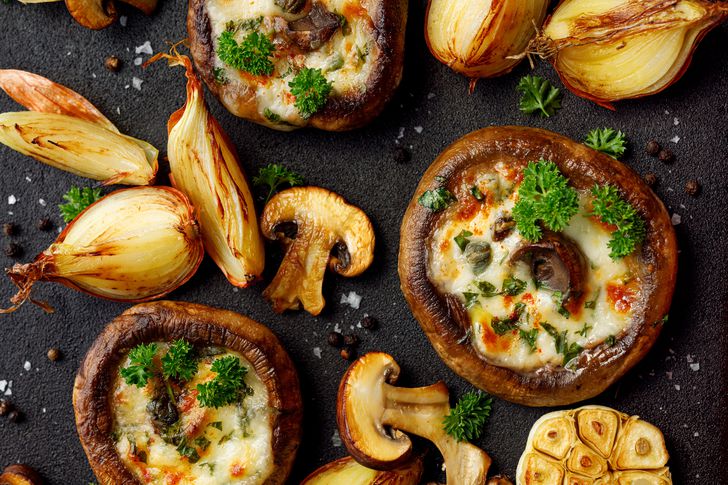
We should be eating mushrooms, from humble supermarket buttons to precious foraged varieties, with our cheese more often. Aside from complimentary flavors ranging from sweet to meaty to woodsy, mushrooms have more in common with our favorite cheeses than meets the eye—literally.
Both foods depend on vast, unseen networks of microbes to transform the substrate they’re growing on into something delicious. In the case of cheese, that’s cultured milk solids, while mushrooms grow on and consume dead organic matter ranging from trees to fruit to flesh.
Digging into the mushroom-cheese connection
“Mycology, the study of mushrooms and fungi, is like a gateway drug to microbiology,” says Eugenia Bone, journalist and author of several books on food preservation, microbiology, and mushrooms. She’s also the editor of the new Fantastic Fungi Community Cookbook, a compilation of 100 mushroom-centric recipes—several incorporating cheese—from chefs, scientists, and entrepreneurs in the world of mushrooms.
With their visible (and delicious) fruiting bodies, fungi can act as a bridge to the microscopic world we can’t see. “Mushrooms are a very effective way to start thinking about microbial ecologies—the fact that there could be an ecology as complex as an ecosystem in the Amazon happening in a cheese cave,” Bone says.
In fact, the molds that make our beloved cheeses are fungi themselves, from vivid veins of Penicillium roquefortii in hunks of blue to the fluffy yellow clouds of Chrysosporeum sulfurem known as fleur jaune that can appear on long-aged natural rinds. But their visible fruiting bodies, typically a tiny stem with a packet of spores on top, are much less complex than the mushrooms we enjoy. “When you see blue mold, you’re really looking at a layer of spores attached to these little fruiting structures that are coming off the mycelium, or fungal threads, of this multicellular organism that is colonizing and consuming whatever it’s living on or in,” Bone says.
Umami
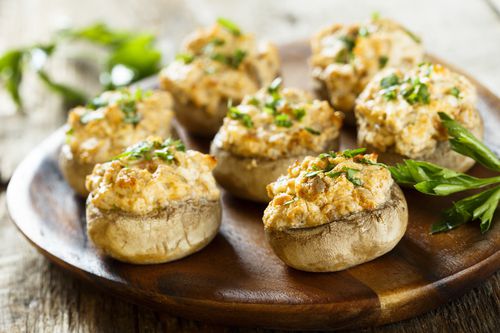
Apart from biological affinities, mushrooms and cheese have something else in common. Though they’re mostly water, mushrooms contain small amounts of high-quality protein, including the amino acids humans need. Those amino acids include glutamate, the substance responsible for the rich, savory taste known as umami that’s present in foods like meat, fish, tomatoes, soy sauce, and, of course, cheese.
Within that umami profile, Bone says, mushroom flavor profiles can range from sweet to musty to bitter. Traditional preparations may help balance those flavors. Edible species of russula mushrooms, for example, are salt preserved in Russian cuisine to help cut their natural bitterness. With their distinctive scent of maple syrup, candy caps are sweet enough to be used in desserts (including recipes for poached pears and sugar cookies in Fantastic Fungi).
Ways to pair mushrooms & cheese
When it comes to serving mushrooms and cheese together, a few preparations are easy go-tos. For example, baking and melting cheese and cooked mushrooms together mellow and meld their flavors.
In pastry
The classic holiday dish brie en croûte can be made savory (and more nutritious) by slicing the cheese in half and stuffing it with sauteed mushrooms before it’s wrapped in puff pastry and baked. Make it in spring with morels, as suggested in the book, or swap in easier-to-find varieties like oysters or creminis any time of year.
With sauce
Mushrooms and pasta or rice are another classic combination, often married together in a creamy, cheesy sauce or with a shower of hard, salty cheese. Chopped, sauteed mushrooms make a great addition to your favorite mac and cheese or risotto. Bone recommends a recipe featuring gorgonzola dolce and woodsy black trumpet mushrooms tossed with farfalle, submitted to Fantastic Fungi by California chef Michael Wood. “The combination of gorgonzola cheese and black trumpet mushrooms is like 50 shades of mustiness. It’s really, really sexy,” she says.
Sauteed or pickled
On a cheese board, Bone recommends serving warm sauteed mushrooms as you might a dish of pickles or olives to complement styles from mild, creamy fresh cheeses to whiffy washed rinds. But mushrooms can add other profiles to the party, too. Pickled shiitakes or king trumpets can add a triple punch of umami, sweetness, and acidity that balances the richness in cheese, while their pleasantly fleshy and fibrous chew offers textural contrast. (Pickling is also a great way to make use of a small harvest that would otherwise cook down to a minuscule serving, Bone says.)
Baked
But pickling isn’t the only way to preserve mushrooms for your cheese boards. Toss shiitake caps, thin-sliced king trumpets, or oyster mushrooms in olive oil and salt, then bake them in a 300-degree oven for 30 minutes to one hour or until crisp to create a savory, gluten-free chip with an umami punch. You can also cook mushrooms down with sugar into a jam-like conserve for an unexpected combination of sweet and savory. Bone prefers to do this with smaller chanterelles, known for their fruity apricot notes.
She sees cheese and mushrooms complementing each other nutritionally, not just culinarily—an important distinction as more and more diners seek more sustainable diets by limiting meat consumption.
You complete me, said the mushroom to the cheese
With their fleshy texture and savory flavors, mushrooms can make a tasty and filling substitute for meat in recipes, but they don’t provide the same nutrients. Cheese can offer the fat and protein that mushrooms lack while enhancing their appeal. Serving a portobello burger with a slab of squeaky, savory grilled halloumi on top, Bone suggests, makes sense in terms of nutrition as well as enjoyment.
“I can’t imagine a future without cheese, but I can imagine a future where consumption is more precious—there’s more respect for it,” she says. “If we’re showing certain respect for those products, then the idea of eating them with mushrooms is ideal. Why not have a mushroom-forward meal, and the cheese is your dessert?”

Recipe: Farfalle with black trumpets and gorgonzola sauce
By Michael Wood, California
When I first started collecting black trumpet mushrooms (Craterellus fallax) in the early 1980s, I was looking for ways to cook them that highlighted their distinctive flavor and texture. (I wrote about them in my book, California Mushrooms, and there is lots of information about black trumpets on my website, MykoWeb.com.) At that time, Fettuccine with Gorgonzola Sauce from Marvella Hazan’s great The Classic Italian Cookbook was a regular dish in my household. I thought that black trumpet mushrooms would go well with the Gorgonzola, and the resulting dish was a hit! Over the years, I have continued to try many variations of a blue cheese sauce with black trumpets and pasta—they are all good. This is one variation on that theme. Try it, but it is really hard to beat the original Hazan Gorgonzola version with freshly made fettuccine and the added black trumpets.
Farfalle with Black Trumpets and Gorgonzola Sauce Recipe
4 Servings
- 4 tablespoons unsalted butter, divided 2½ cups fresh black trumpet mushrooms, washed, or ½ ounce dried black trumpets, rehydrated in water and drained
- 8 ounces Gorgonzola dolce cheese, cubed or crumbled
- ½ cup milk
- ¼ cup grated Parmesan cheese
- 12 ounces farfalle or other cut pasta Salt and freshly ground black pepper
- 2 tablespoons chopped fresh flat-leafed parsley, for garnish (optional)
Heat 2 tablespoons of butter in a medium skillet over medium-high heat. When the butter is melted, add the black trumpets and cook until they release their liquid, and the liquid evaporates about 10 minutes. Add ¼ to ½ cup of water to avoid burning the mushrooms. Set aside.
Place the cheese in a medium saucepan and heat gently over medium-low heat until it melts. Add the milk and the remaining 2 tablespoons of butter and whisk until smooth, about 10 minutes.
In the meantime, bring a large pot of salted water to a boil over high heat. Add the farfalle and cook for about 12 minutes, until the pasta is al dente. Drain and pour pasta into a serving bowl. Add Gorgonzola sauce and black trumpets and toss. Add salt and freshly ground black pepper to taste. Garnish with parsley, if you like.
Recipe reprint from Fantastic Fungi Community Cookbook by permission, Insight Editions, 2021.
This article originally appeared on CheeseProfessor.com and was syndicated by MediaFeed.org.
More from MediaFeed:
This 1730 restaurant is the oldest in the US
The restaurant business in the United States is notoriously competitive. Approximately 60% of new restaurants don’t survive more than a year in business, and 80% don’t last five years. And that was even before coronavirus caused an epidemic of restaurant closures, so even in normal times, it’s a tough racket.
Despite those daunting odds, some restaurants survive and even thrive, welcoming customers for decades or even centuries. While there’s no single specific reason why these restaurants endure as others fall by the wayside, consistently good food and a welcoming atmosphere combined with a location that gets lots of foot traffic probably helps more than it hurts.
The following 21 restaurants are the oldest in America. While some of them are located in cities that experience a steady stream of tourists, others are located in obscure, out-of-the-way burgs that suggest a bit of travel may be involved for many wishing to visit. Whatever the case, these restaurants have endured while others have slipped through the cracks.
unionoysterhouse.com

- Address: 27 S. Broadway, Lebanon, Ohio
- Established: 1803
Golden Lamb opened in 1803 shortly after the village of Lebanon itself was established. When it first opened, founder Jonas Seaman hung a sign with a golden lamb at the door since many travelers couldn’t read. The sign would become the restaurant’s namesake.
Since then, Golden Lamb has hosted 12 U.S. presidents, politicians like Mitt Romney and Henry Clay, as well as literary geniuses like Charles Dickens, Harriet Beecher Stowe, Alex Haley, James Whitcomb Riley, Louis Bromfield and Samuel Clemens (Mark Twain). That’s not to mention the many stars who have dined at Ohio’s longest operating businesses (think Kesha and Charles Laughton, just to name two).
thegoldenlamb / Instagrm

- Address: 72 W. 36th St.
- Established: 1885
When you walk into a restaurant, does it make you sad that they don’t check your pipe? For many years, this was not a problem at Keens Steakhouse in New York City.
Established in 1885, Keens would allow patrons to check their churchwarden pipes, which were too thin and fragile to be shoved thoughtlessly into a pocket or handbag during a meal, lest they break. Sadly, this era is long gone, but you’ll still see hundreds of these pipes displayed throughout the restaurant. You can admire them as you enjoy delectable food,. The menu is chock full of steaks, lobster and some desserts that are pretty hard to pass up.
Keens.com
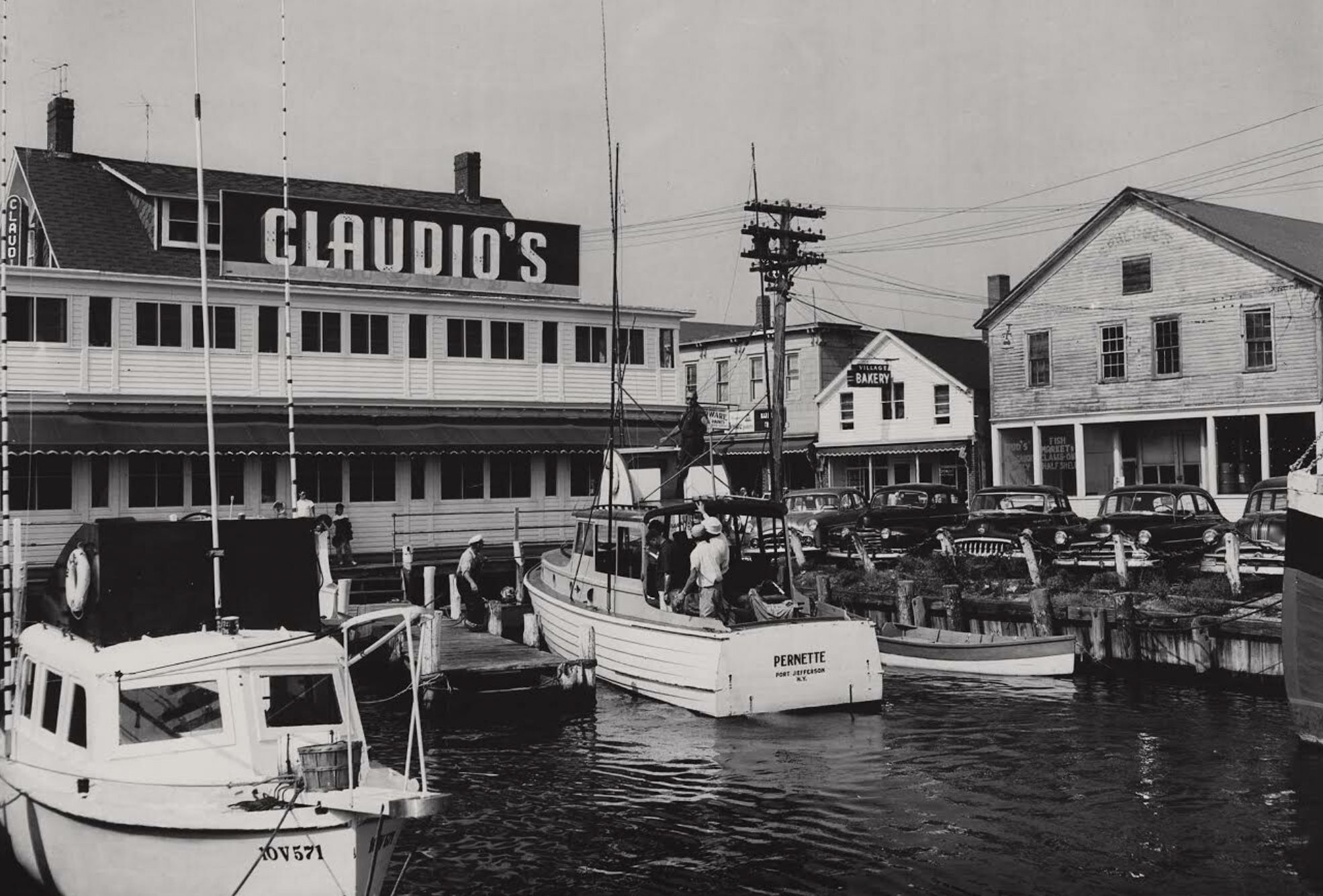
- Address: 111 Main St.
- Established: 1870
Greenport is located in the north fork of Long Island in New York state, and it’s home to Claudio’s, a waterfront restaurant and national historic landmark. Like a lot of restaurants that survived the prohibition era, it served only food in an official capacity during those horrible dry years, and had a speakeasy upstairs.
Today, you can openly drink there while you dine on the goods from its predominantly seafood menu.
Claudios.com
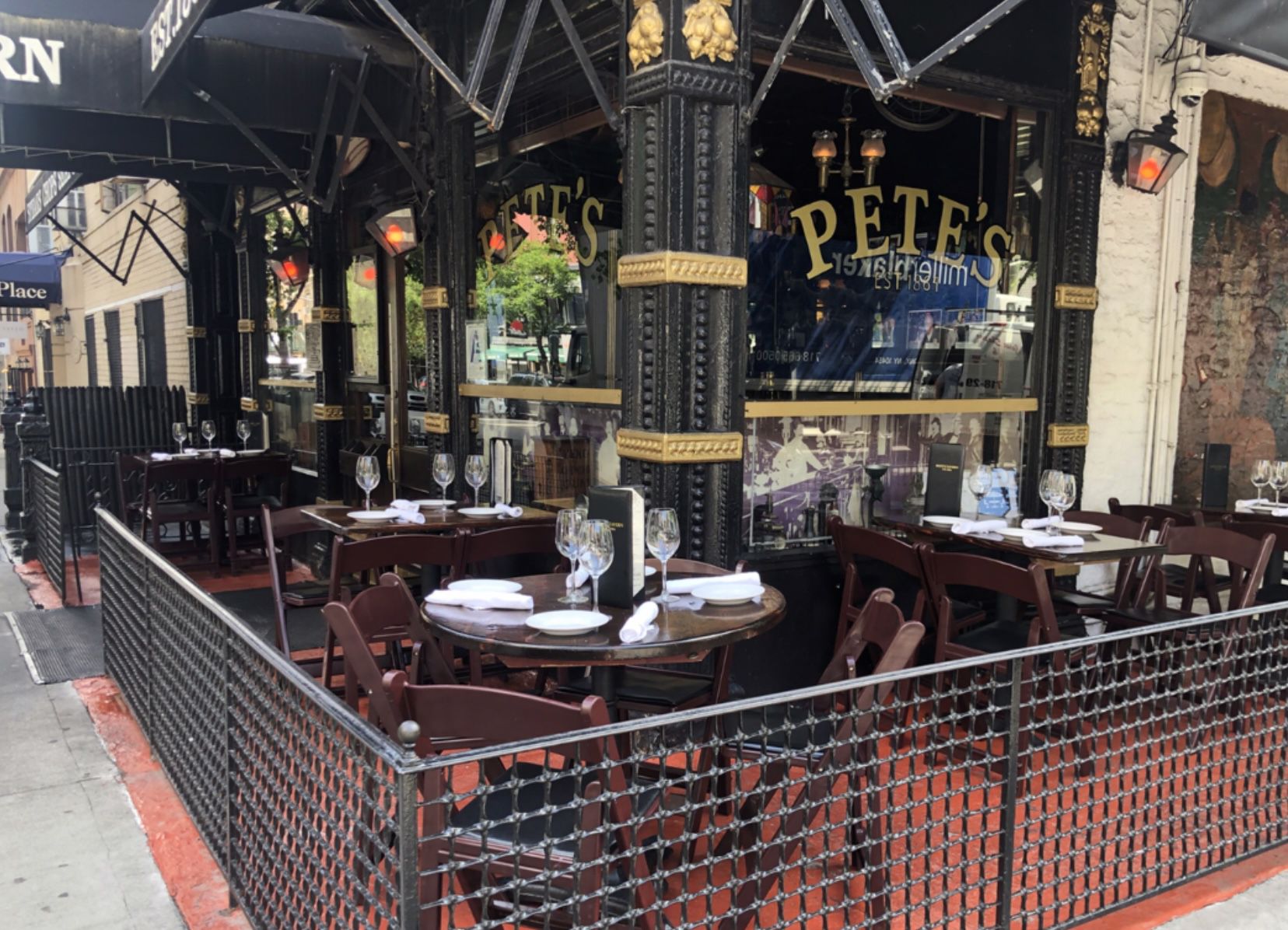
- Address: 129 E. 18th St.
- Established: 1864
On its website, Pete’s Tavern describes itself as “the tavern O. Henry made famous,” as it’s the location where he wrote “The Gift of the Magi,” a moving story about two people who give each other presents neither can use. The establishment serves “O. Henry chicken wings” in his honor and even allows you, the intrepid diner, to “build your own burger.”
petestavern.com
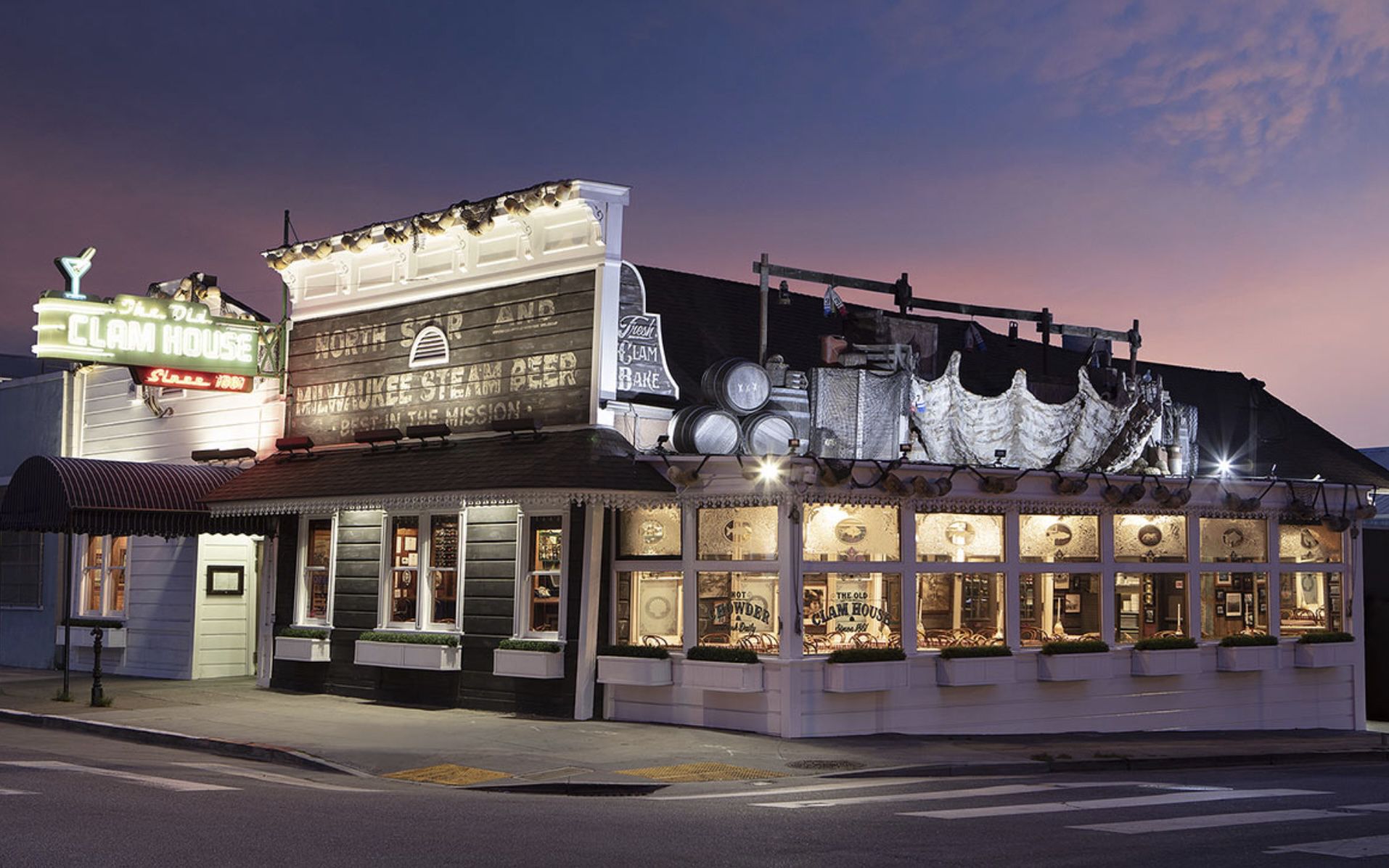
- Address: 299 Bayshore Blvd.
- Established: 1861
The Old Clam House has been operating out of the same San Francisco location since 1861. It was originally called the Oakdale Bar & Clam House, and it survived such calamities as the Great Earthquake and Fire of 1906, most likely because the food keeps people coming back. As of June 1, 2021, it is temporarily closed due to the pandemic without a firm re-opening date.
The menu contains lots of seafood, although the landlubbers might prefer their “Wicked Wiches” (sandwiches, get it?). The restaurant normally operates 365 days a year.
theoldclamhousesf.com
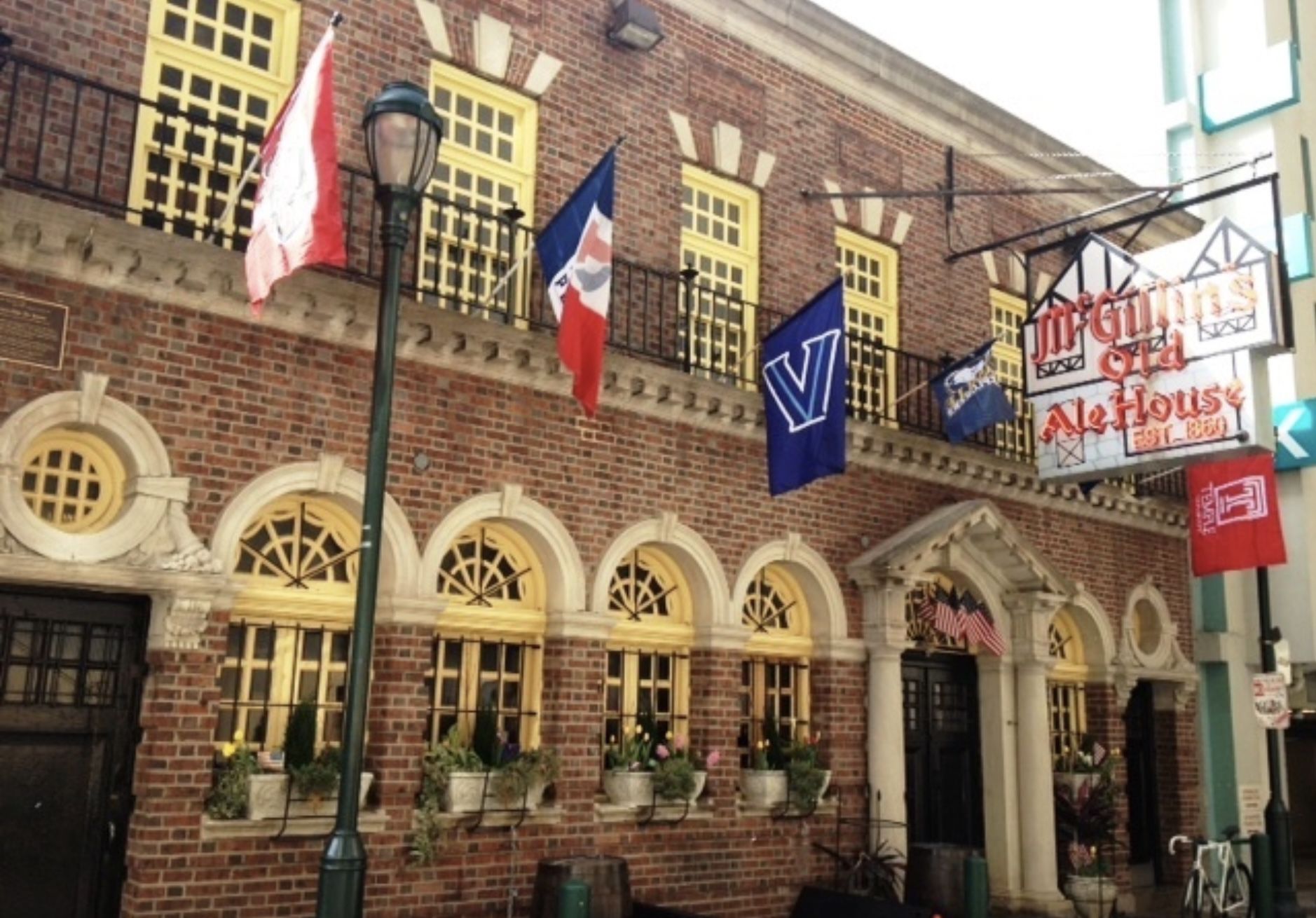
- Address: 1310 Drury St.
- Established: 1860
McGillin’s Olde Ale House’s website wants you to know two very important things: “We opened the year Lincoln was elected” and “We survived prohibition.” Those are two data points that illustrate how much history this place has lived through, but none of it would have mattered if the food wasn’t any good.
The menu boasts everything from “fun food for grazers” (translation: fries, wings, and nachos) to sandwiches, burgers and “Mile High Meatloaf,” which one assumes is for people who need to gain a lot of weight very quickly.
mcgillins.com
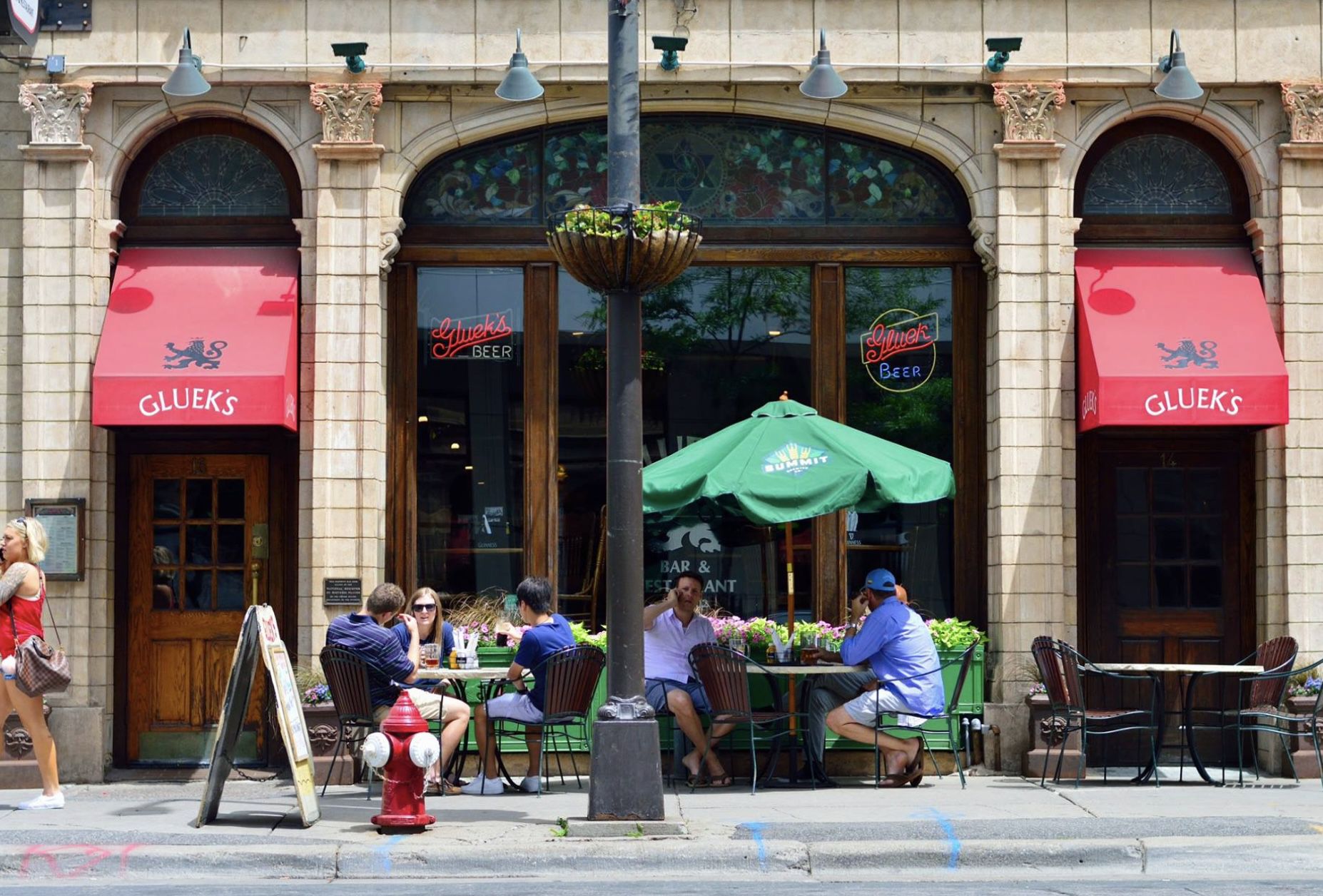
- Address: 16 N. 6th St.
- Established: 1857
Gluek’s Restaurant & Bar is the self-described “oldest bar in Minneapolis,” dating back to 1857. The building that it’s in suffered a devastating fire in 1989, and it was completely restored one year later, so that today it can bring customers the cheddar curds, fried pickles and Bavarian pretzels that perfectly compliment the cornucopia of beer that the restaurant offers. They also observe Oktoberfest.
glueks.com
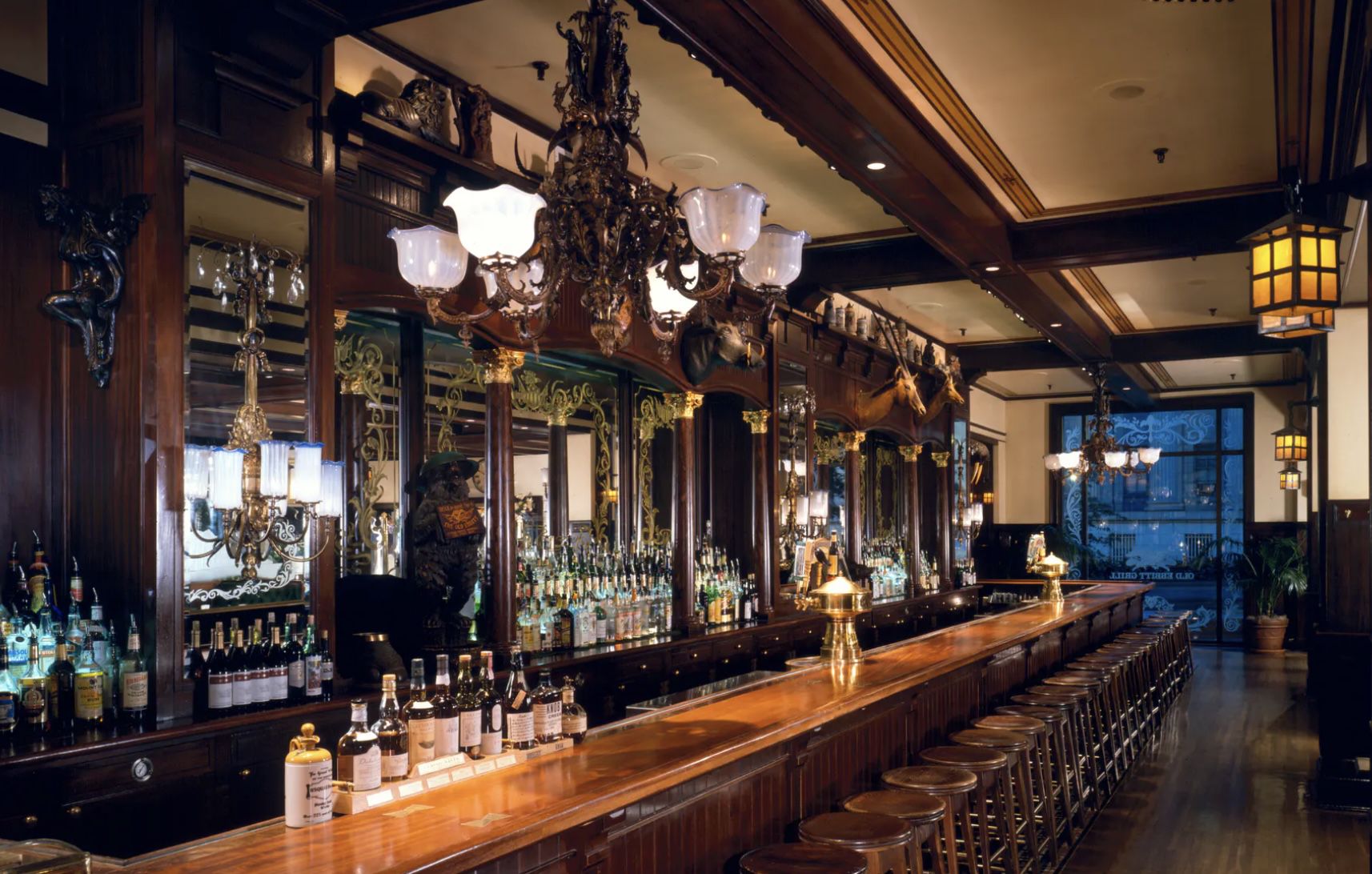
- Address: 675 15th St. NW
- Established: 1856
If Washington, D.C. is going to be a fetid swamp of corruption and degeneracy, there might as well be some good places there to eat. Old Ebbitt Grill has been serving that function since 1856, and even though it’s not in the same location where it started, you are highly unlikely to care about that once the food arrives at your table. Please put us down for a Reuben sandwich and one order of peanut butter pie.
ebbitt.com
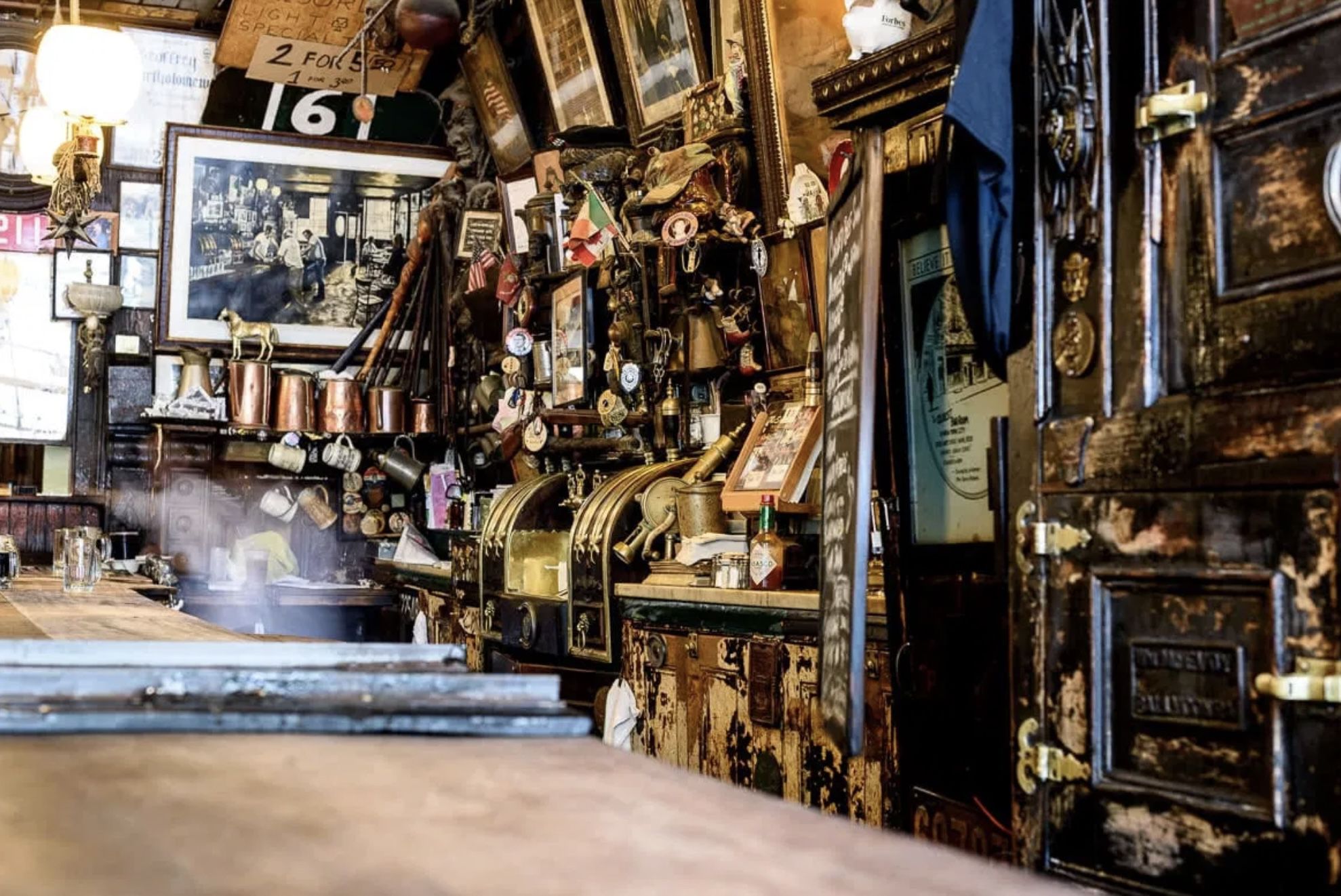
- Address: 15 E. 7th St.
- Established: 1854
OK, this is a special case. Founded in 1854, McSorley’s Old Ale House does not actually serve food unless you count the complimentary saltines that you can eat there. The main attraction here is ale, specifically McSorley’s Ale, which is the only thing they serve.
Why are we including them on this list? We’re including them because of all the famous long-ago names that were served there, such as William “Boss” Tweed, but also because it took a landmark 1970 lawsuit for them to start letting women in. A women’s restroom was installed just 16 years later.
mcsorleysoldalehouse.com
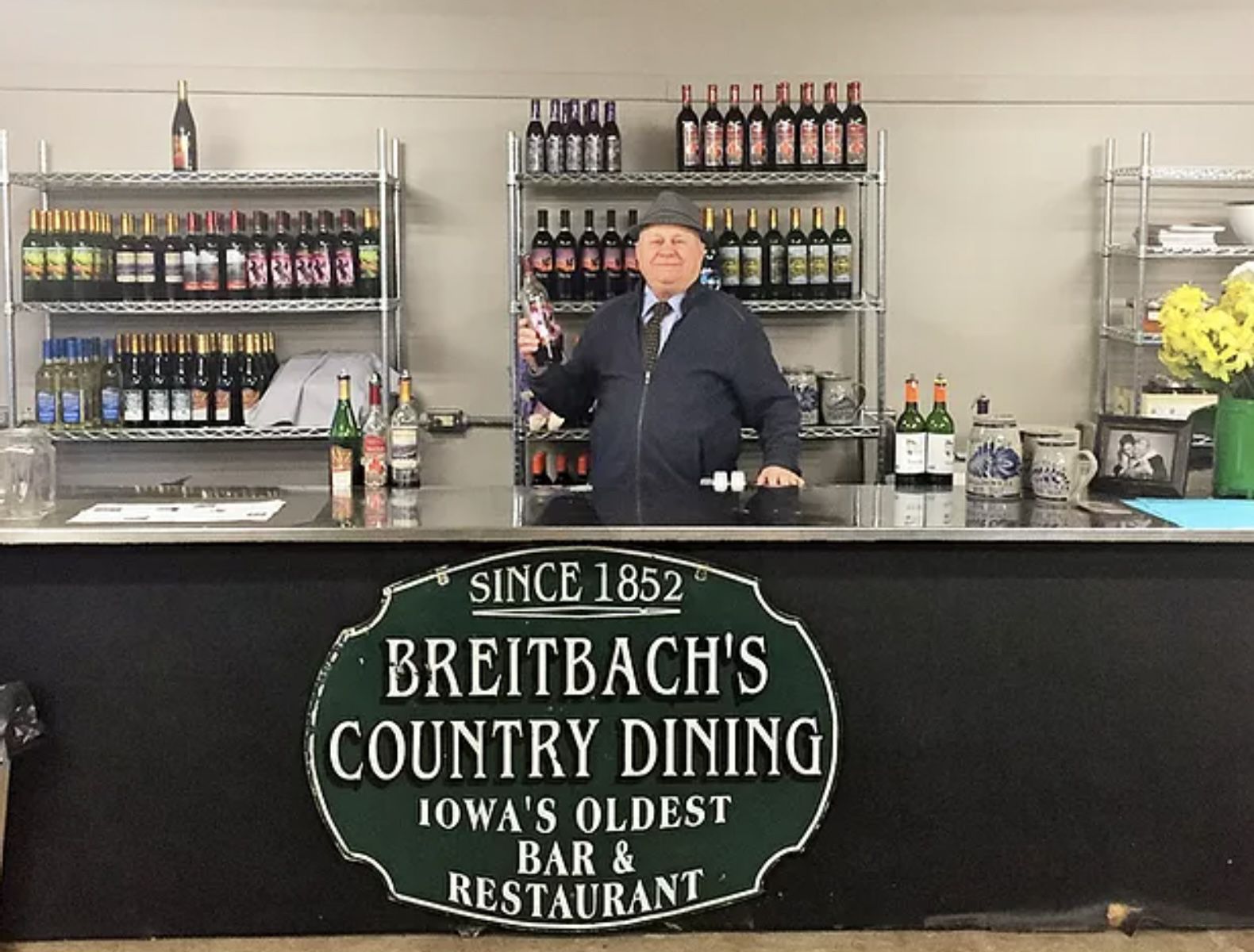
- Address: 563 Balltown Rd.
- Established: 1852
Per Breitbach’s Country Dining’s website, Balltown, Iowa is a town so small it doesn’t even have a post office. What it does have in Breitbach’s Country Dining, however, is the oldest food and drinking establishment in the entire state. Opened in 1852 thanks to a federal permit from President Millard Fillmore, it serves all-American comfort food and even has an all-you-can-eat buffet.
breitbachscountrydining.com
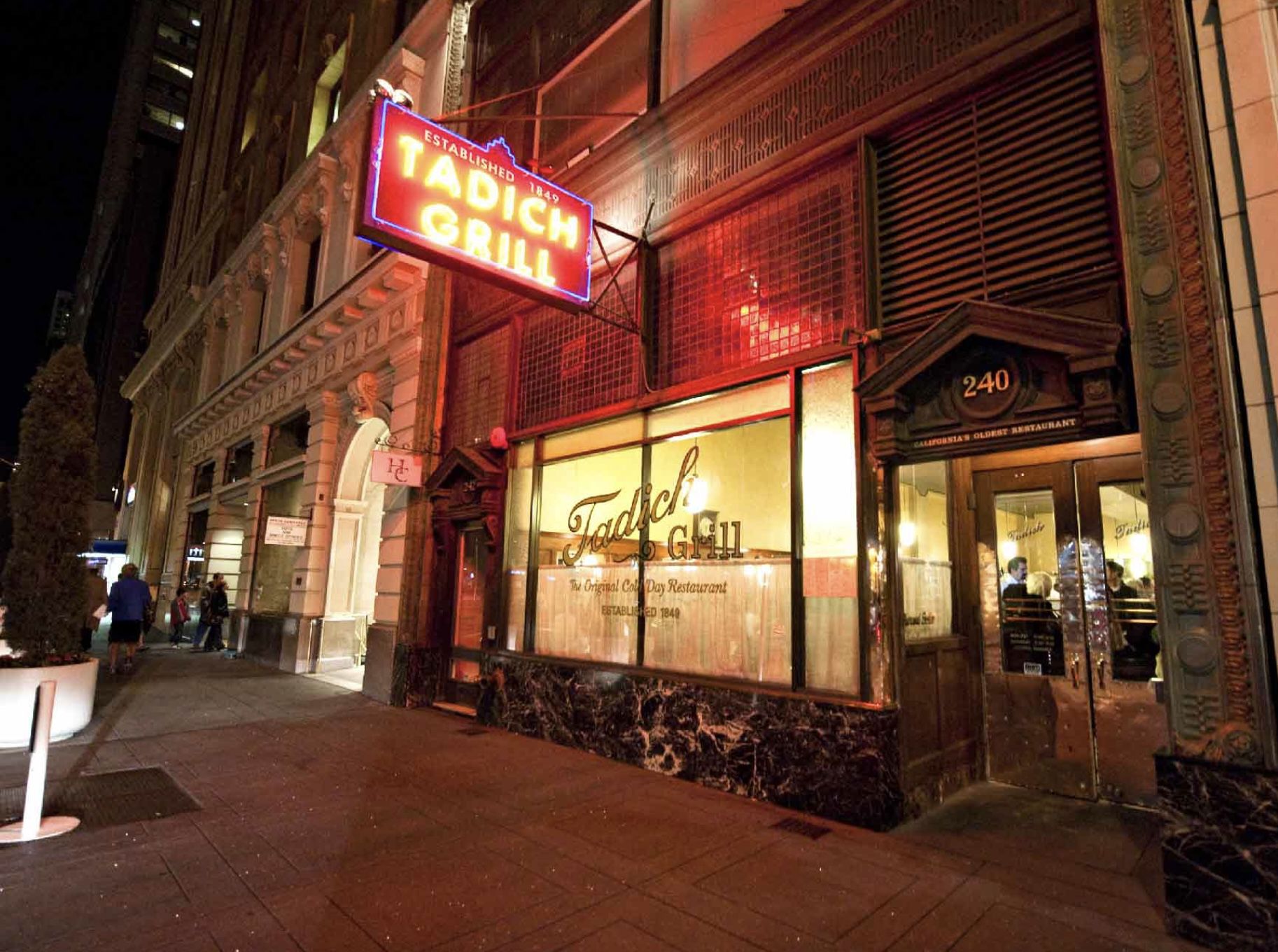
- Address: 240 California St.
- Established: 1849
Tadich Grill is not just the oldest continuously-run restaurant in San Francisco; it’s the oldest one in the entire state of California. Founded in 1849, their website proudly proclaims that it has “large portions [and] fresh ingredients,” and the menu contains a diverse mix of salads, seafood, steaks and among much, much more. They even serve Boston and Coney Island Clam Chowder for displaced and homesick East Coast residents.
tadichgrillsf.com
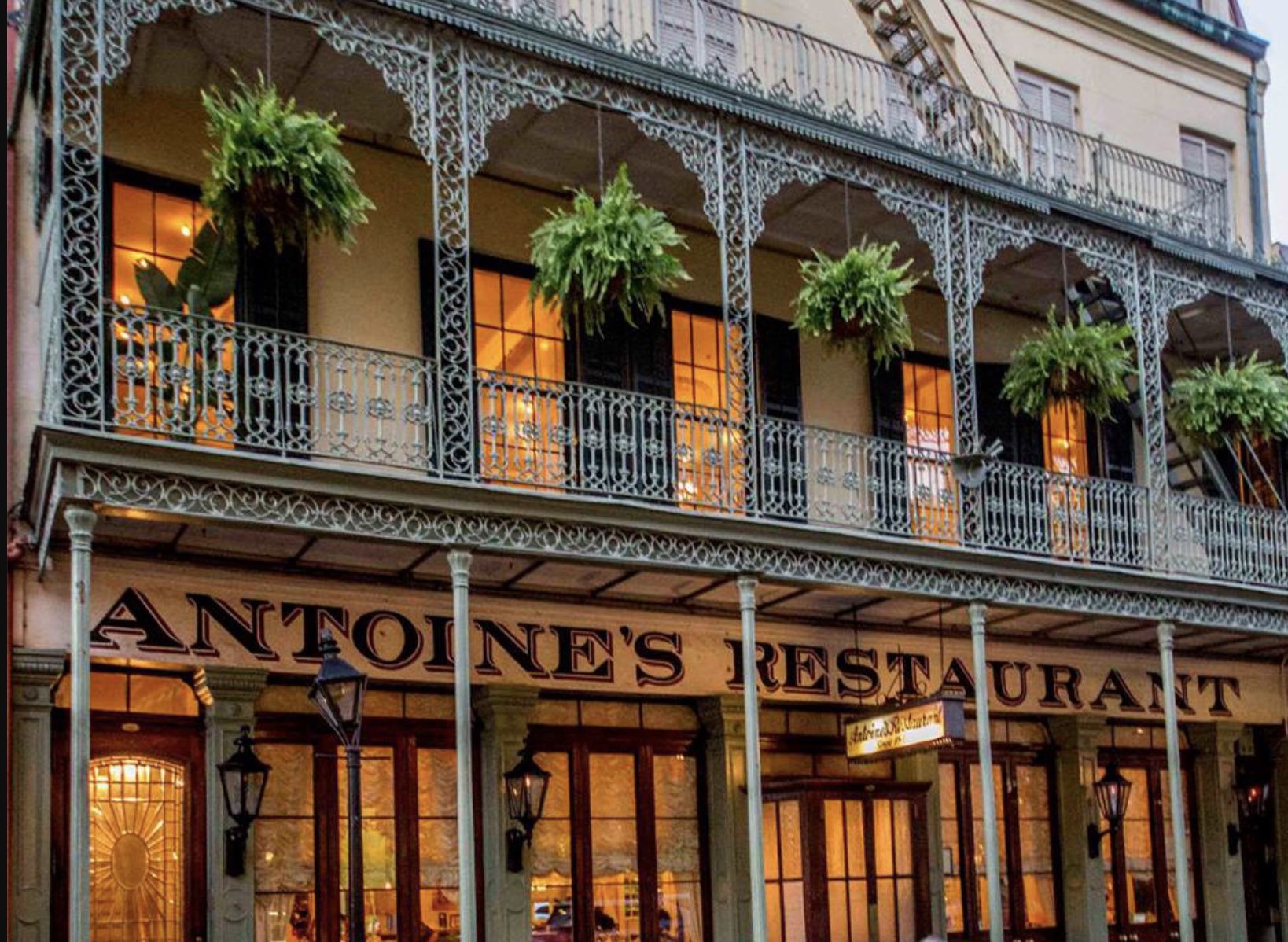
- Address: 713 St Louis St.
- Established: 1840
It’s really hard to get a bad meal anywhere in New Orleans, but some places are simply a cut above. Antione’s is one of those places. Situated in the French Quarter, it’s been serving customers since 1840, and considering how much competition there is among NOLA’s restaurants, that’s saying a lot. The menu is full of mouthwatering French-Creole dishes, and even has a four-course dinner special that starts with baked gruyere cheese bits and ends with Baked Alaska.
antoines.com
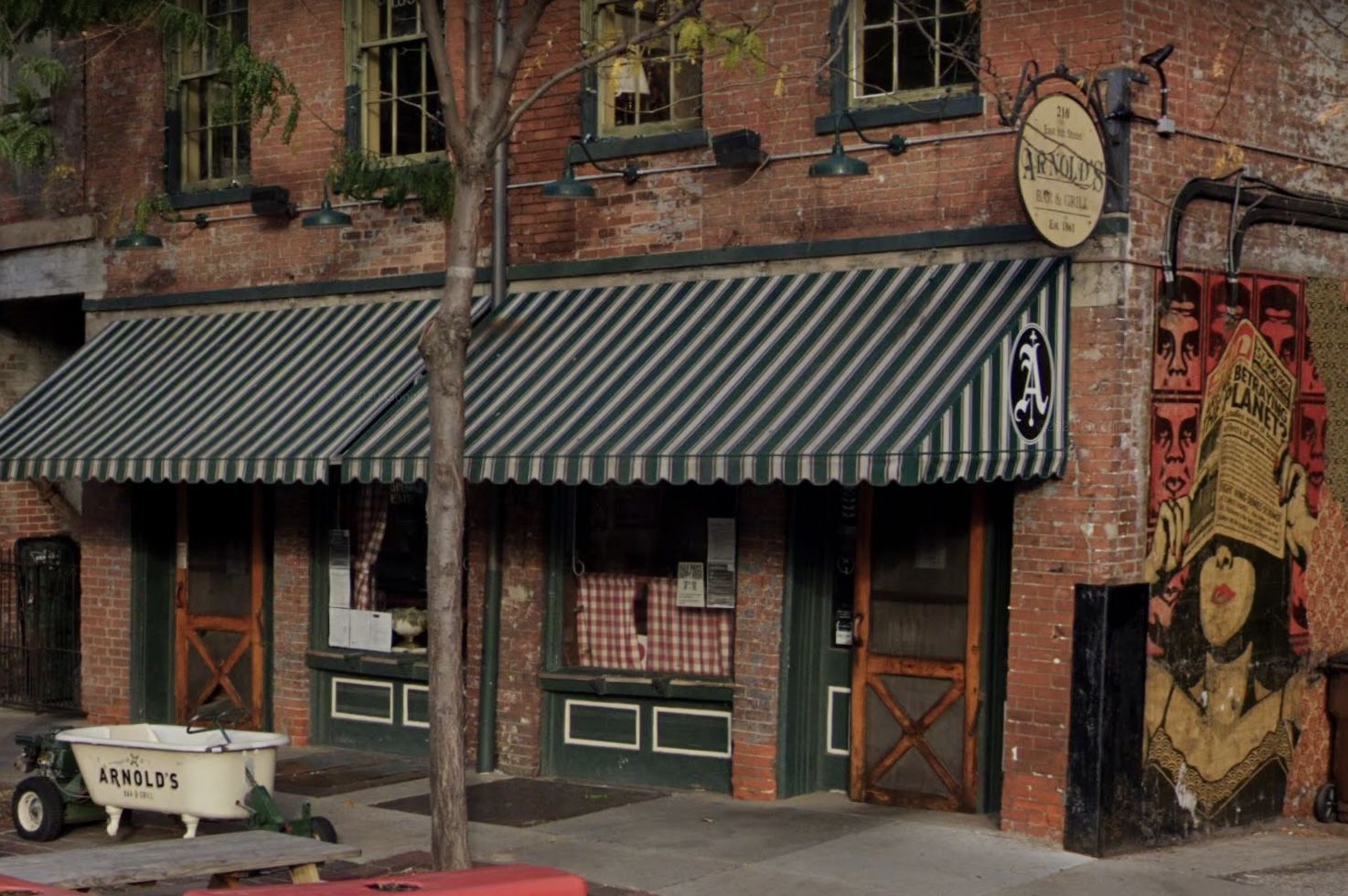
- Address: 210 E. 8th St.
- Established: 1838
Arnold’s Bar and Grill consists of two buildings that were both created in the late 1830’s. One was originally a barber shop and the other was originally a feed store.
According to the website, during the prohibition years, Hugo Arnold, a descendant of the founder Simon Arnold, made gin in his bathtub. Today of course, you can drink brazenly while you nosh, and in a sign of the times, the restaurant even has vegan and gluten-free menus.
arnoldsbarandgrill.com
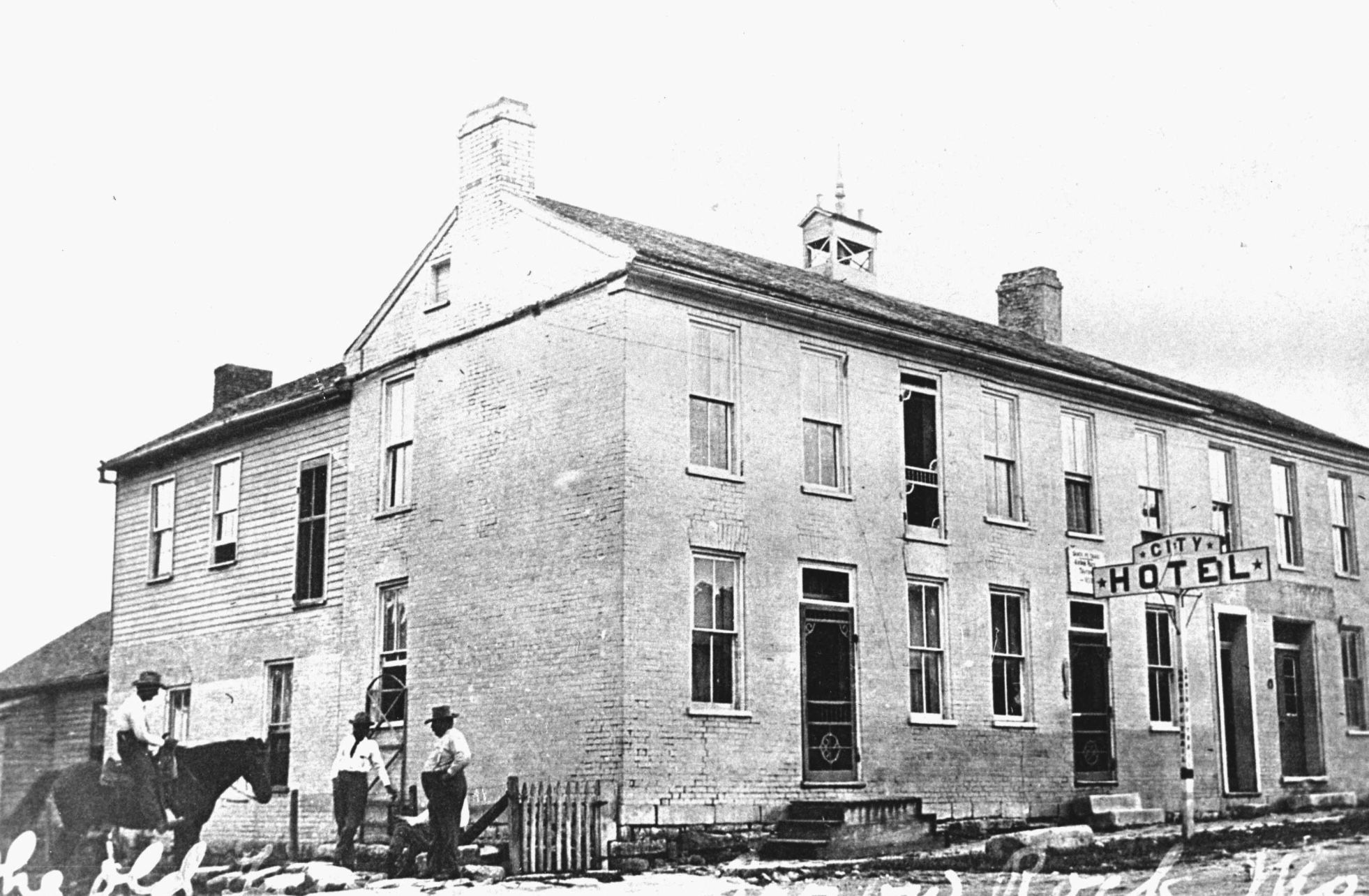
- Address: 305 Main St.
- Established: 1834
J. Huston Tavern asks potential patrons to “step back in time” when you dine within its four walls. Built in 1834 by Joseph Huston, Sr., it was originally meant to be his family’s home, but the immigrants traveling west became the first customers to eat and lodge there.
It’s the oldest continuously operating restaurant west of the Mississippi, and the smoked pork, fried chicken and beef brisket keeps people coming back for more. You can even get a chicken fried pork tenderloin, which sounds heavenly.
hustontavern.com
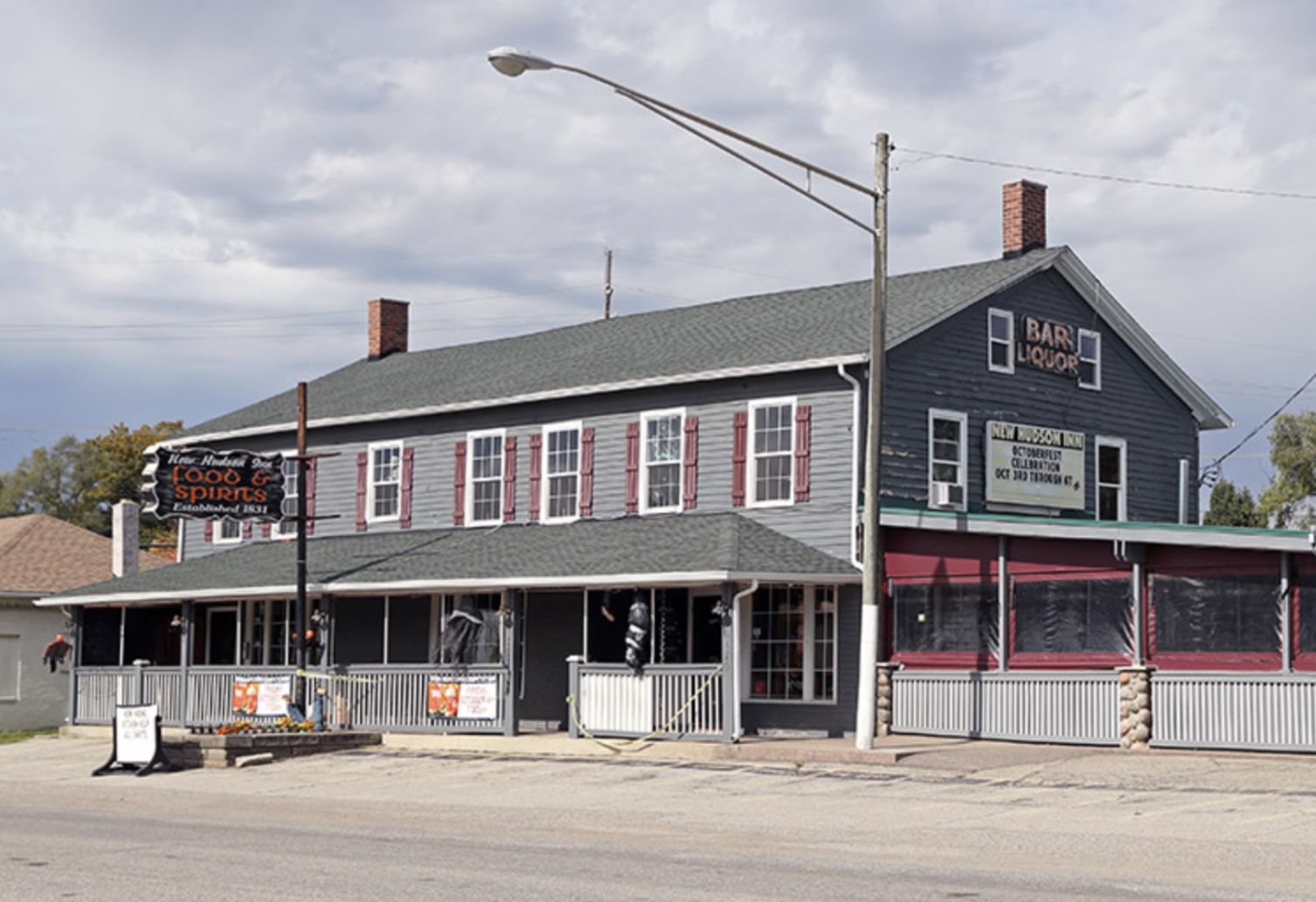
- Address: 56870 Grand River Ave.
- Established: 1831
The New Hudson Inn was founded in 1831 and, according to its website, was “solidly built out of 18” sewn timbers and hardwood held together with wooden pegs.”
Those who choose to dine there can do so free of concern that their meal will be disrupted by shoddy workmanship, allowing them to focus on such delicacies as “White Trash Nachos,” otherwise known as potato chips covered in bacon, smoked pork and cheddar cheese. Ask your cardiologist if White Trash Nachos are right for you!
newhudsoninn1831.com
- Address: 41 Union Street
- Established: 1826
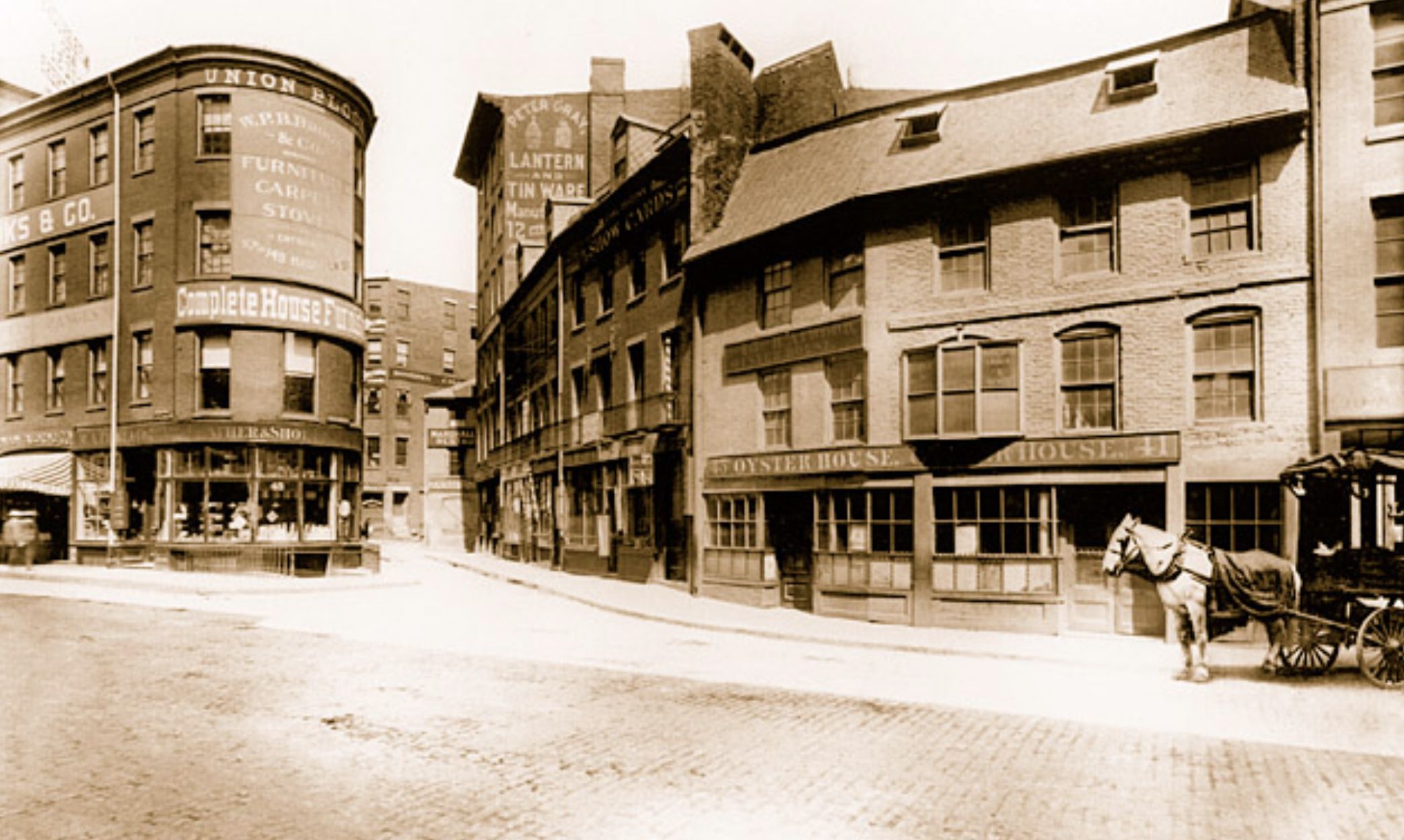
Union Oyster House proclaims itself “America’s oldest restaurant,” which some other restaurants on this list may take issue with. Located right next to Boston’s Faneuil Hall, the building it’s in dates back to before the Revolutionary War.
Since it started serving food in 1826, it’s boasted such luminaries as Daniel Webster as a customer. Because it’s in Boston, the menu is heavy on seafood, not that anyone’s complaining. You can get a steak there too, if you feel you must.
unionoysterhouse.com
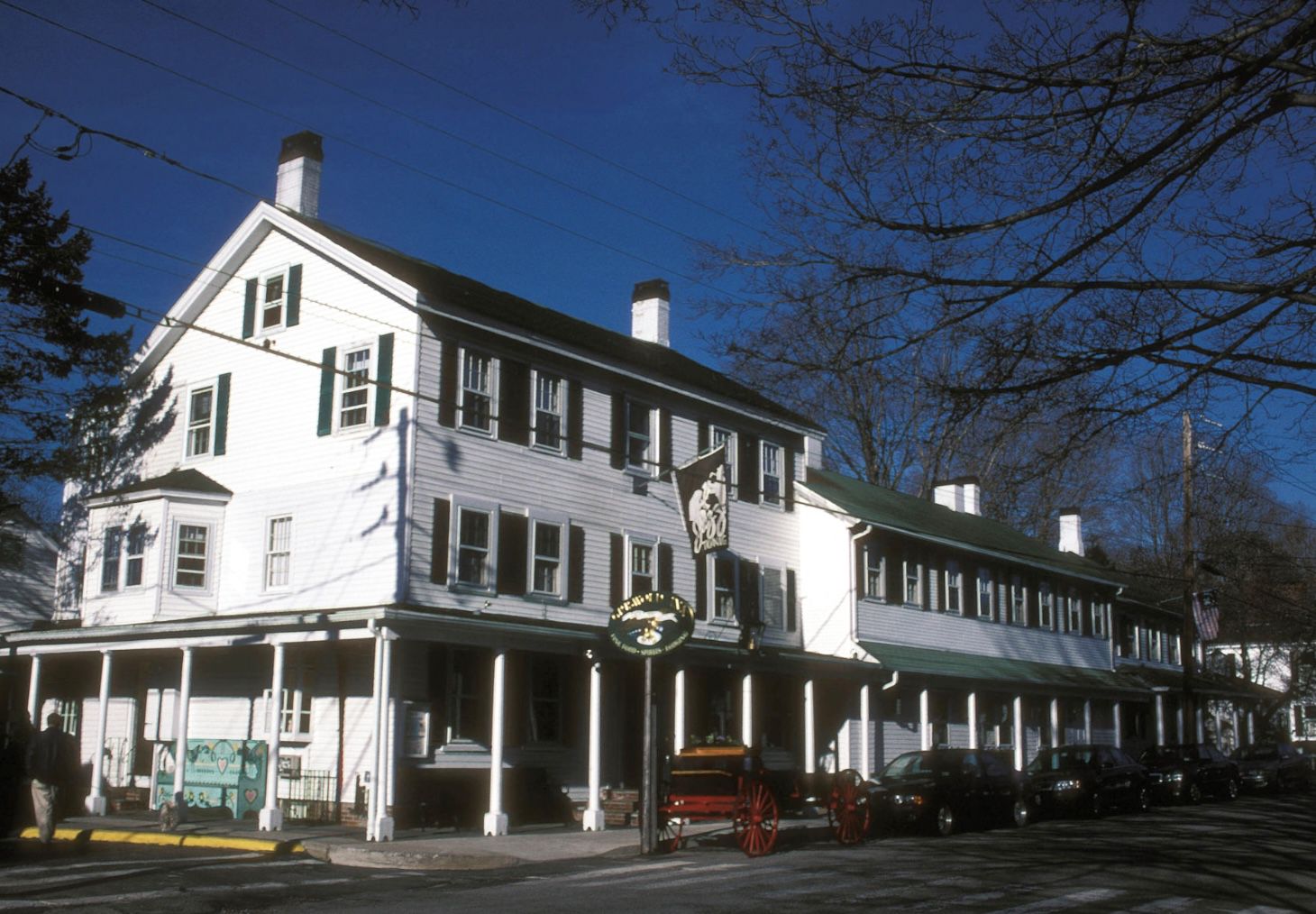
- Address: 36 Main Street
- Established: 1776
Despite the Revolutionary War starting in 1776, someone apparently thought that was a good time to open a restaurant. Built primarily to serve the appetites of shipyard workers who were building the warship Oliver Cromwell, the restaurant mainly serves comfort food, and even though it’s steeped in history, their website assures one and all that the food at the Griswold Inn is “anything but dated.”
The Griswold Inn
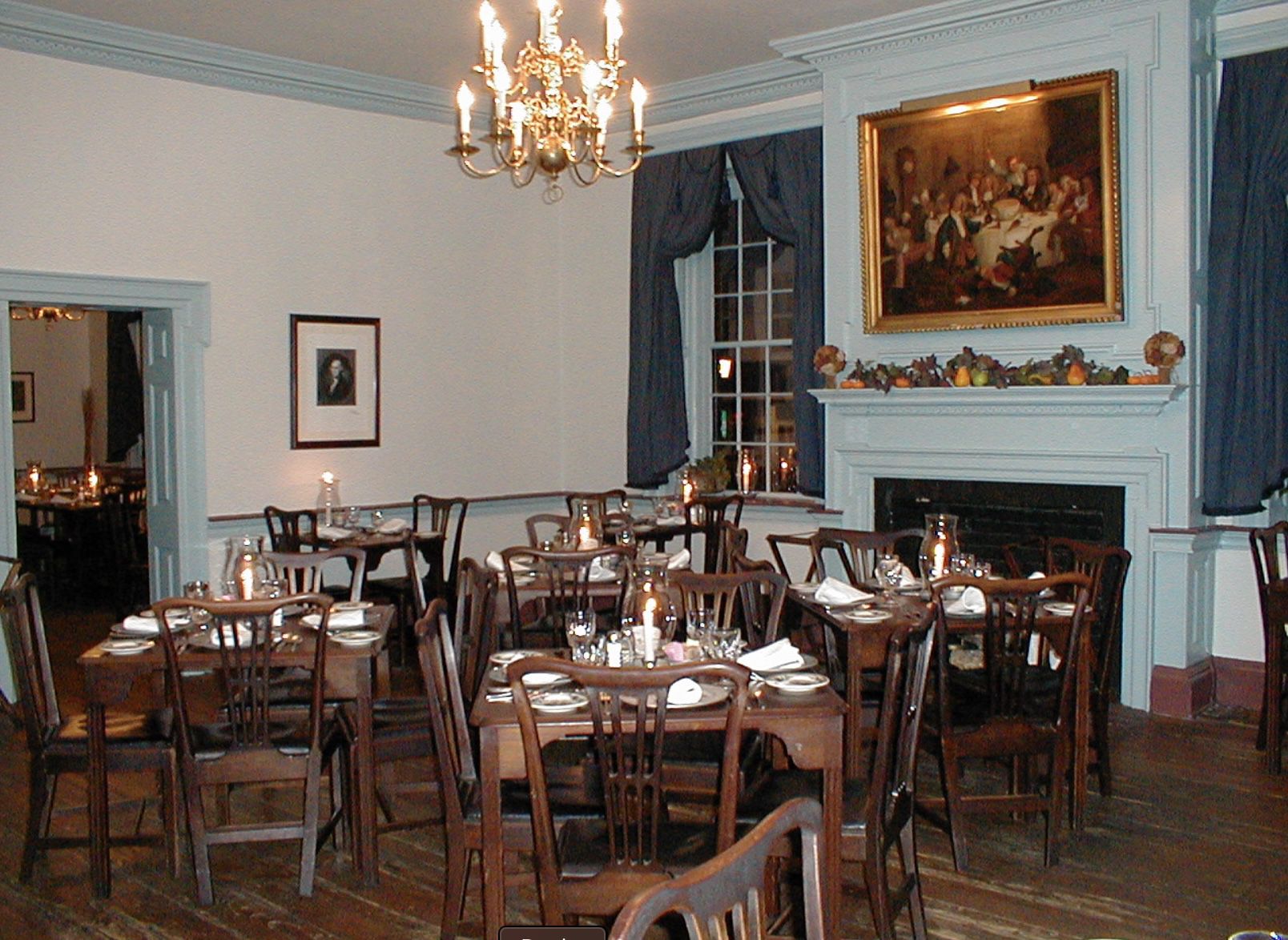
- Address: 138 N. Royal Street
- Established: 1770
Founded in 1770, Gadsby’s Tavern is just 21 years younger than the city of Alexandria where it resides. Today the site consists of two buildings – a second tavern that was built in 1785 and the City Hotel, built in 1792.
The part that was the original tavern in 1770 is now a museum. It gets a little confusing, but since you can eat a dish called “George Washington’s Favorite” (roasted half duck with corn pudding), just put on your tri-cornered hat and get eating!
gadsbystavernrestaurant.com
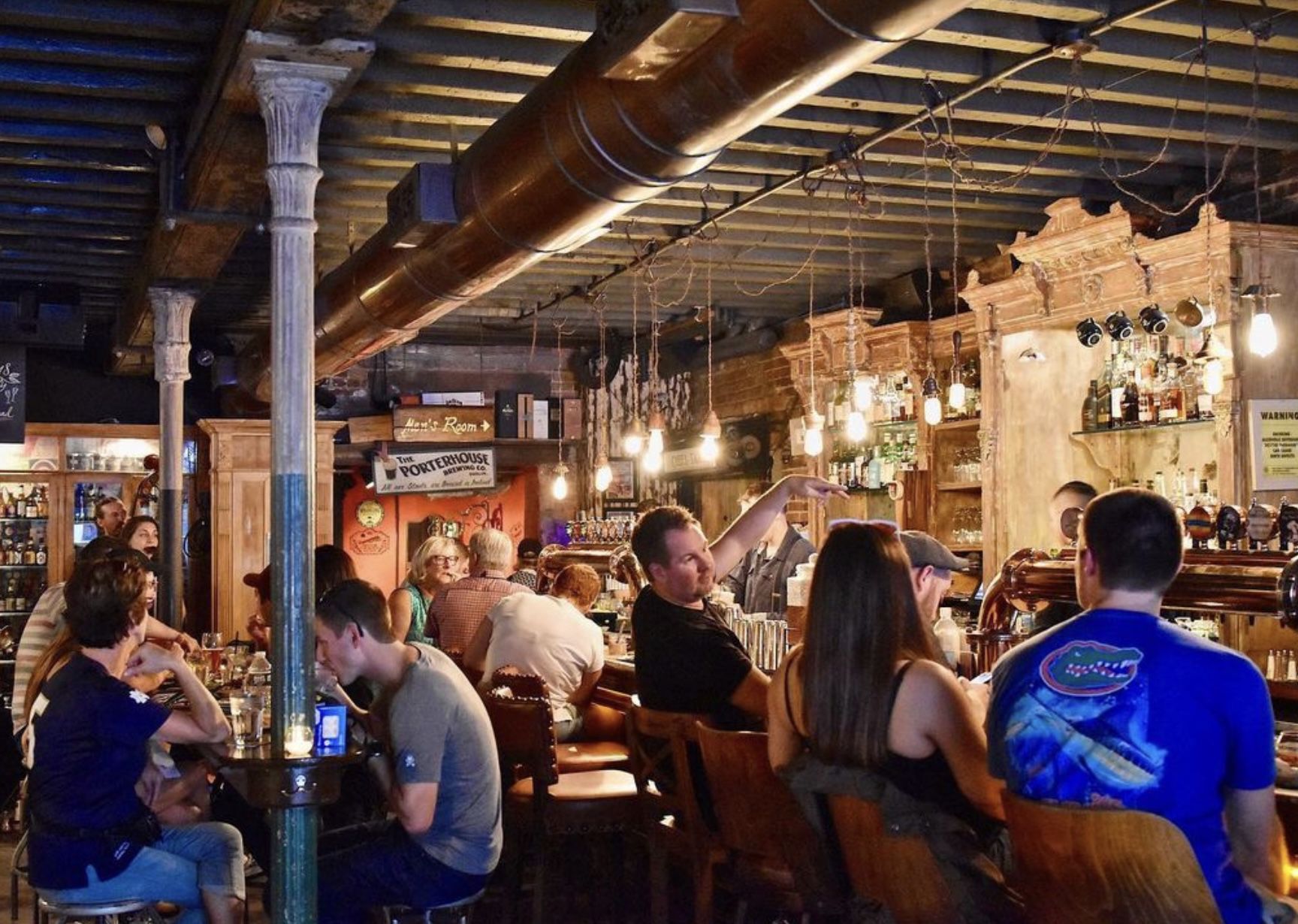
- Address: 54 Pearl St.
- Established: 1762
Fraunces Tavern is located in a landmarked building in Manhattan’s Financial District that is the city’s oldest standing structure. It was established prior to the Revolutionary War, and none other than George Washington himself used it as the site to thank his officers nine days after that war ended.
The tavern has a museum on-site, and while most of the food is pretty modern, although you can also get “Jefferson’s Cobb Salad,” which one assumes refers to the dude on the $10 bill.
frauncestavern / Instagram
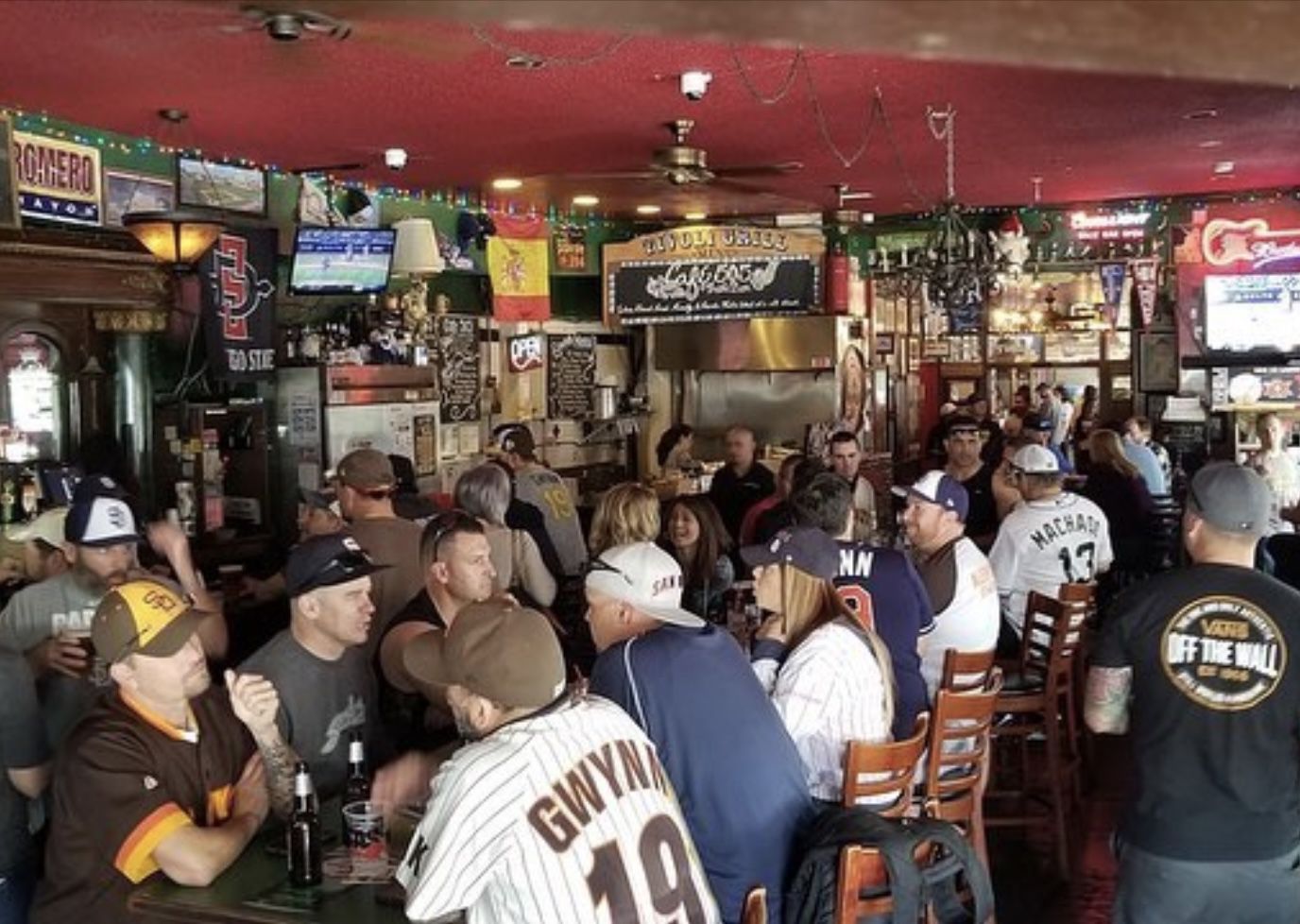
- Address: 505 Sixth Ave.
- Established: 1885
Tivoli Bar and Grill opened in 1885, and it has a rich and colorful history. By “rich and colorful,” we mean that the apartments above the bar once served as brothel rooms, with hourly rates to boot! Also, Wyatt Earp used to frequent the establish to gamble and drink when he wasn’t taming the Wild West.
The wooden bar is an original fixture dating back to the establishment’s earliest days, along with its silver cash register. Eater gave it high marks for having a “friendly staff, a laidback clientele of varying age groups, cheap drinks and respectably decent bar fare–think wings and burgers.”
Tivoli Bar and Grill / Facebook
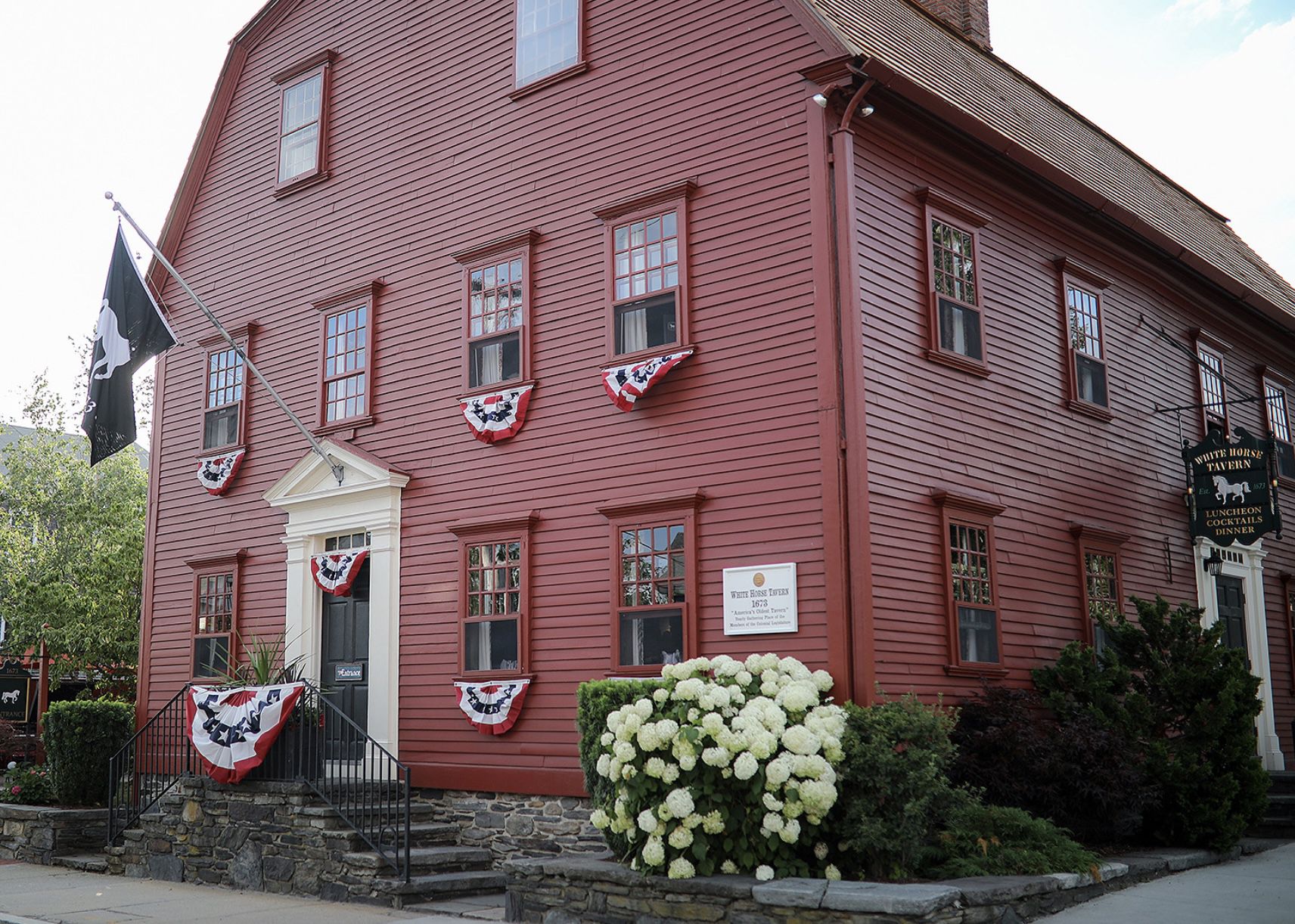
- Address: 26 Marlborough St.
- Established: 1673
The White Horse Tavern is the oldest restaurant in America. Built in 1652 as a residence for an English immigrant named Francis Brinley, it was acquired in 1673 by William Mayes, Sr. and turned into a tavern.
It didn’t get its name until tavern keeper Jonathan Nichols dubbed it the White Horse Tavern in 1730. Today, its locally-sourced menu offers Beef Wellington, Waygu Beef Short Ribs and Lobster Mac & Cheese.
This article was
produced and syndicated by MediaFeed.org.
whitehorsetavernnewport.com

DepositPhotos.com
Featured Image Credit: zi3000 / iStock.