When most people buy a car, they finance it, meaning they take out a loan to purchase the vehicle. Some buyers finance through the car dealership, and others bring their own lenders, such as banks or credit unions. Sometimes lenders charge high-interest rates for car loans. This article covers the pros & cons of refinancing a car, because, it often makes sense to refinance later to get a better deal with better interest and more equitable terms.
What is Refinancing?
Refinancing refers to paying off the original loan with a new loan with different terms, possibly a better interest rate, and a lower principle. When someone applies for refinancing, they must go through a similar process as when they first bought the vehicle. However, the borrower may have partially paid off the initial loan, and refinancing could lower the monthly payment.
Upon closing, the lender will first pay off the original car loan and then set up a new one with the revised interest rate, terms, and monthly payment. The car buyer may or may not have to put any money down to close the new loan. The vehicle will be used as collateral to secure the loan.
Refinancing may take longer than the original purchase, especially if the buyer used dealer financing. There is also the question of whether or not refinancing is worth it. Car owners should always review their finances first and speak to a credit specialist before making any changes. The federal government has national programs to help consumers with credit, debit, and financial decisions.
When Should You Refinance Your Car?
The decision to refinance a vehicle can be tricky. There are instances when refinancing might make things worse and others where it will dramatically improve the vehicle owner’s situation.
If the loan on the vehicle is higher than what the car is currently worth (fair market value), an owner should skip refinancing. If they just bought the car and haven’t even made one payment yet, that is another reason to put off refinancing. Experts suggest not refinancing for at least six months after purchase. Some loans have prepayment penalties. If the original loan came with payoff sanctions, the owner should not refinance unless absolutely necessary. Another reason not to refinance is if the car owner’s credit score has dropped since buying the vehicle. They could have trouble getting financed with a new company. It’s better to wait until their credit score has improved.
Reasons a car owner should refinance
Financial trouble
When someone is in financial trouble if they own a car, it may provide a solution. Refinancing a vehicle could help lower monthly payments and sometimes even offer a cash payout for other expenses. In addition, if the loan required is far less than the car’s value, the owner could use the excess to pay off high-interest credit cards or other debts.
Improved credit score
Car loans are typically easy to qualify for because the car provides built-in protection against defaulting on the loan. What this means is if the buyer doesn’t make the payments, the lender can repossess the vehicle and sell it to get their money back. Therefore, even people with poor credit scores may qualify for a car loan. If someone gets a car loan but then works hard to improve their credit score, they could apply to refinance the car and possibly get a new loan with a much better interest rate and terms. Lenders often base interest rates and terms on an applicant’s credit score. That is why it is so essential to keep good credit.
Change the loan’s term
Car loans may be structured using various terms. Some might be for three years, five years, or even seven years. The longer the period, the lower the payment. If a car owner wanted to lower their amount or shorten the loan term and pay off the car quicker, they could refinance to achieve this goal. Keep in mind that extending the duration of an auto loan could end up costing more in the long run.
Interest rates have dropped
If a buyer purchases a vehicle when loan rates are high, they could save a lot of money by refinancing when interest rates fall. Getting a better interest rate could save a ton of money over the life of the loan. For example, suppose a buyer purchased a car for $25,000 with an interest rate of 7% for a term of 60 months. If the buyer pays every payment and keeps that loan, they will have spent a total of $29,702. However, if the car owner keeps the loan for a year, paying down the principal to $21,000, and they refinanced that for 48 months at a rate of 5% interest, they would pay a total of $23,214 on the new loan. The two loans combined total $27,214, meaning the buyer would save $2,488 in interest.
Emergencies
A person experiencing an emergency could potentially refinance their car loan to get some extra cash to pay for unexpected medical bills or other expenses
| Bad lender |
It’s possible that the initial lender could have terrible customer service or a complicated payment system to use. If working within their system is too cumbersome, customers may choose to refinance to work with a more flexible, modern company.
Requirements to Refinance
Before agreeing to refinance, the lender may require a few items. They may use a reverse check VIN number tool to gather details about the vehicle. Since the car will be used as collateral, they want to ensure it is the right vehicle and the information on the VIN matches what the buyer provides. They can use a VIN number search to determine if the car has any water, fire, or flood damage or has been in any accidents. Some other requirements a lender might ask for include:
- Pay stubs for the last month of income.
- Last two W2s from previous years.
- Bank statements for at least two months.
- Canceled checks showing payment of the current auto loan.
- Proof of employment.
- Proof of automobile insurance.
- The original purchase documentation for the car.
- Name, address, and phone number for the current lender.
- A copy of the car owner’s driving records.
- A copy of the person’s valid driver’s license.
- Tax returns for the last two years.
Pros of Refinancing a Car
There are dozens of great reasons to refinance a vehicle. Some of the most common pros of refinancing a car include:
Better Interest Rate
Interest rates vary a lot from time to time and within different financial institutions. For example, a car buyer might be offered a great promotional rate from the dealer but expect to pay two points higher with a bank loan. Often credit unions offer lower auto rates to their customers and can be an excellent option for refinancing a vehicle. Since interest rates fluctuate quickly, it is essential to lock in a lower rate as soon as they drop. Lowering the interest rate on the loan means paying a lot less for the same car. Refinancing can help car owners save hundreds and even thousands of dollars throughout the loan.
Read more: Cars and Credit: 14 Things to Know to Get the Best Deal
This article originally appeared on The Financially Independent Millennial and was syndicated by MediaFeed.org.
More from MediaFeed:
The coolest cars from 1968

1968 may not have been a great year for the United States, but it was a banner year for cars. Some of the most famous and popular models were manufactured that year, and motorists salivated en masse in response. Fast forward 53 years to 2021, and they’re still salivating over these cars.
Technology has advanced exponentially, and cars today can do things no one in 1968 ever even considered possible. All fine and good, but the cars of today are all missing that certain something, that iconic look that was part and parcel of every car made in that very tumultuous year.
If you’re skeptical, just try to imagine the car chase in Bullitt with Steve McQueen driving a Honda Civic. No offense meant to Honda, but it just isn’t the same.
To get a better look at what people were driving back then – or at least what they wished they were driving – we’ve stepped back in time and included comments from Car and Driver magazine’s reader’s choice picks for 1968. As you’ll see, no matter what’s under your car’s hood today, the outside will never get the envious ooh’s and aah’s that these babies got from passers-by and fellow motorists.
Richard-P-Long / iStock

The Javelin was introduced in 1967 for the 1968 model year, and it was manufactured by the American Motors Corporation, better known as AMC. It was available in pony car and muscle car variants. The starting price when it was introduced was $2,743. Pictured here is a 1968 model at a 2020 auto show in Daytona Beach, Florida, where we’re guessing that the seller wanted significantly more than that.
Different_Brian / iStock

Glas started life in 1883 as an agricultural machinery company. After World War II, people were doing considerably less sowing than they did in the 1800s, so Glas transitioned to manufacturing scooters in 1951, and finally began making cars.
BMW bought the company in 1966, and two years later the BMW Glas 1600 GT started rolling off the assembly lines. At the time, Car and Driver wrote that it was “the best $2,447 sedan on the market… it handles better than most sports cars.”
Gaschwald / iStock

The first Dodge Charger was a show car that made its debut in 1964. The car that people actually bought and drove came out in 1966, but it was the 1968 model, shown here at a 2019 car show in Nova Scotia, that made Car and Driver get all hot and bothered in its description.
“The sensuous, brute appeal of the new Charger is attributable to some of the most dramatic styling ever to come out of Detroit, and it’s backed up by some impressive credentials, including the standard 440 V-8 and the optional 426 Hemi,” the magazine said.
kenmo / iStock
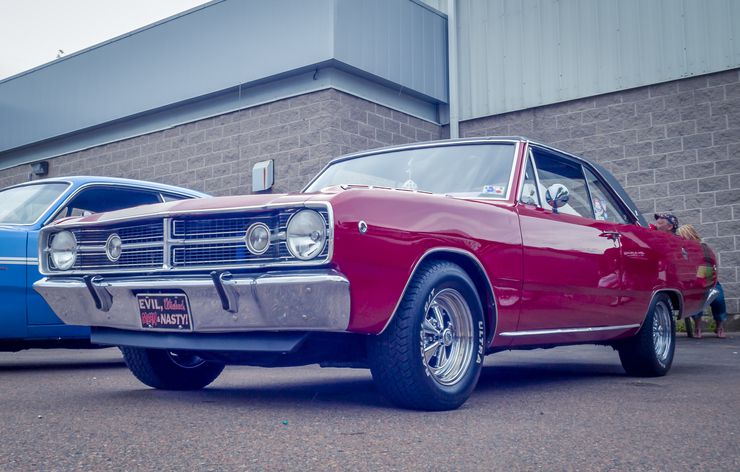
Dodge manufactured the Dart from the 1959 to 1976 model years. The name originally belonged to a Chrysler 1956 show car that was modified and rechristened the Dart Diablo and, long story short, Dodge ended up with the “Dart” name and manufactured it as a compact car for over a decade.
According to the automotive website Hagerty.com, the Dart was a member of what was known as the “Scat Pack,” the name used for a group of muscle cars manufactured in the 1960s and 1970s. This one was photographed in 2019 at the Blaikies Mopar Show & Shine.
kenmo / iStock
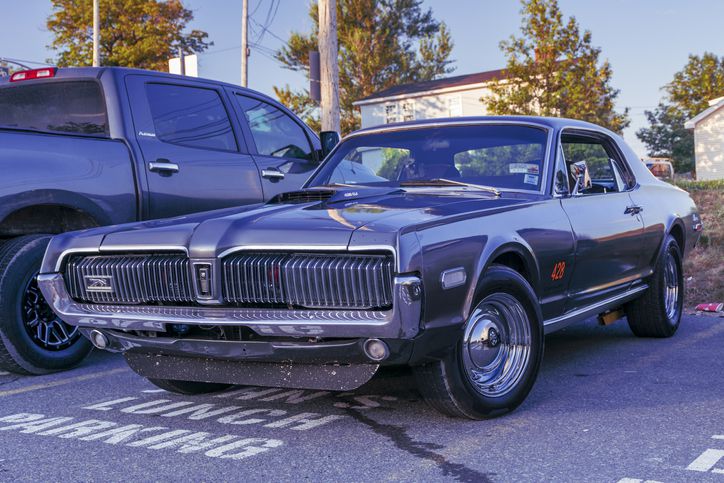
The first-generation Mercury Cougar was so popular upon its 1967 release that it ended up accounting for almost 37% of all cars sold by Lincoln-Mercury in the entire year. According to Car and Driver, its “rich appointments, subdued styling and a fistful of awards make Mercury’s Cougar the prestige car in the sporty car market.”
The magazine went on to say that the Cougar was the result of Mercury’s decision to make the car less about “all-out performance” and more of a “personal car.” In other words, you could drive it to work or to run errands, but not to tear down the Autobahn at 150 miles an hour.
kenmo / iStock

The Oldsmobile 4-4-2 was a muscle car made between the 1964 and 1987 model years. According to Hagerty.com, the look of the 1968 model had more than just a passing resemblance to Oldsmobile’s own Toronado.
The 4-4-2 ended up being so popular that the company produced 33,607 of them, a record at the time. The one shown here was photographed at a 2020 classic car show in Doha, Qatar.
Shakeel Sha / iStock
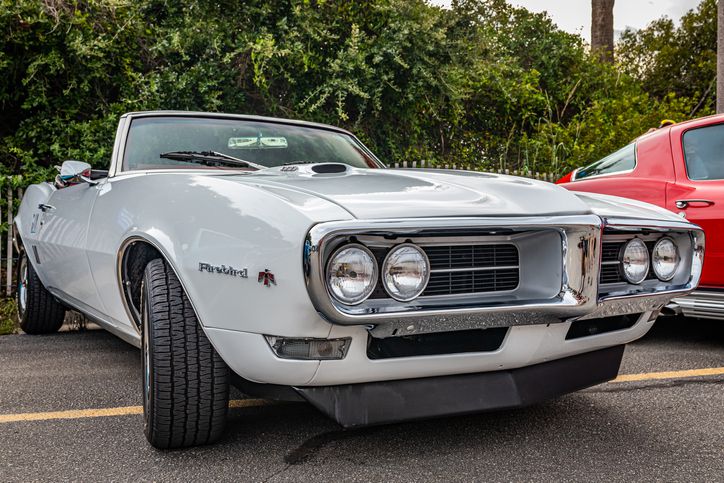
The Firebird is one of the most iconic cars ever made. Even so, it couldn’t escape the clutches of government regulations. Specifically, the feds mandated that for its 1968 model year, it needed to add side marker lights and larger turn signals. Tyranny!
In addition to those changes to the exterior, the overhead camshaft engine was enlarged. The one shown here was photographed at a 2020 car show in Tybee Island, Georgia.
Different_Brian / iStock

The name “Porsche” itself suggests luxury, affluence, and the thrill of tearing down the road at high speeds. In 1968, the Porsche 912 was chosen by the readers of Car and Driver as one of their favorite cars of the year.
At the time, the magazine said, “Any Porsche boasts of excellent road manners, precise braking, meticulous workmanship and outstanding comfort… Porsche is what the Grand Touring concept is all about.” This one was photographed in Ufa, Russia in 2019.
Zarifa / iStock
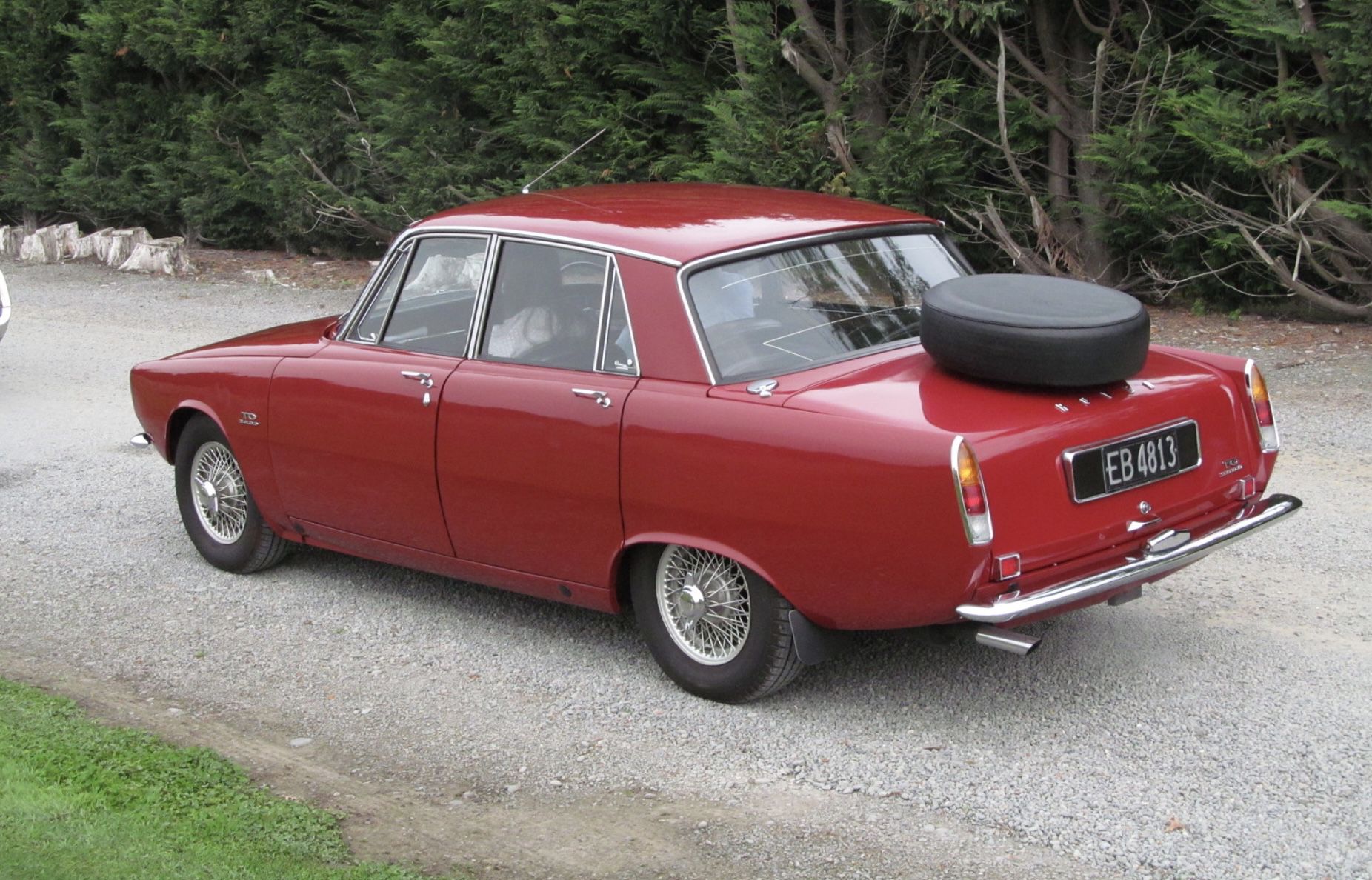
In 1968, Car and Driver described the Rover 2000 TC as one of its all-time favorite cars. When it fdebuted, the magazine said that it was one of the only sports sedans in the world that was worth such an accolade, but even after a bunch of other manufacturers decided to get into the sports sedan act, none of them could take the 200 TC’s crown away.
In the magazine’s 1968 poll, the 2000 TC won a quarter of all votes cast. This happened despite the car being up against such fierce competitors as the Dodge Dart GTS and the Alfa Romeo Giulia Super, whose name alone is plenty intimidating.
Riley / Flickr

In 1968, Volkswagen could seemingly do no wrong, and the company’s creations regularly topped reader polls. This includes the Volkswagen 1500 Limousine 113A, shown here.
A decade earlier, American car manufacturers didn’t consider a foreign car manufacturer to be any threat to their bottom line. Today, we would file this assumption under “spectacularly wrong.”
According to Car and Driver, the reason for Volkswagen’s reign over the market was simple – they made better cars than anyone else. “VWs are now available with automatic transmissions, semi-automatics and even fuel-injection. Mercy,” the magazine said, calling it the best economy sedan.
Related:
- This is the state where you’re most likely to get pulled over
- These stupid-expensive auto repairs are easy to avoid
- Our top picks for US summer travel destinations
This article was produced and syndicated by MediaFeed.org.
Rolf_52 / iStock
Featured Image Credit: DepositPhotos.com.