Ever been so engrossed in an on-screen battle that you nearly knock over that bowl of chips? It happens to the best of us. Think about it: The vast, windswept plains of Westeros, where every clash is a dance of strategy and steel. Or the echoing chambers of ancient Rome’s coliseums, where the roar of the crowd matches the fierceness of the gladiators below.
Filmmakers have this ability to transport us right into the heart of the action. They craft these scenes with such detail — from the thunderous charge of cavalry to the sly maneuvers of a cunning general — that we’re left hanging on every move. And then, there are those moments where the outcome hangs by a thread, and every second feels like an eternity.
So, grab a cozy blanket (and maybe anchor down that snack bowl), because we’re about to relive some of the most thrilling, edge-of-your-seat battle sequences ever crafted for our screens!
Image Credit: IMDb.
‘The Lord of the Rings: The Return of the King’ — Battle of Pelennor Fields

We start with a bang, or rather, the thundering of hooves. When Gandalf and Théoden led the charge against Sauron’s forces in the third and final installment of Peter Jackson’s epic adaptation of J.R.R. Tolkien’s renowned fantasy series—it wasn’t just a battle – it was a masterpiece. The Telegraph wrote that “the battle scenes involving the storming of Minas Tirith and the climactic battle of Pelennor Fields are quite simply the most spectacular and breathtaking ever filmed.”Jackson revealed he draw inspiration from Albrecht Altdorfer’s 1529 painting, ‘The Battle of Alexander at Issus,’ which portrays the 333 BC events. With a ridiculous number of extras and a shoot that lasted more than twenty days, this battle was grandiose in every sense. The CGI work combined with practical effects made for a stunning visual feast. Director Peter Jackson’s attention to detail and Howard Shore’s powerful score added to the scene’s immense impact.
Image Credit: IMDb.
‘Game of Thrones’— Battle of the Bastards

Remember Jon Snow gasping for air in the melee? That was real. The crush, the chaos, the mud-soaked brutality — it was a battle that made you feel the weight of every blow. More than 600 crew members, 500 extras, 80 horses, 65 stuntmen and stuntwomen, four separate camera crews, and 25 days of non-stop shooting: that was what it took for all of us to revel in the glorious death of the sadistic maniac Ramsay Bolton. The episode nine of the sixth season of HBO’s “Game of Thrones” aired on June 19, 2016, and shortly after became the highest-rated TV episode ever. With more than 85,000 votes and a perfect 10/10 rating on IMDb.
Image Credit: IMDb.
‘Saving Private Ryan’ — Omaha Beach Landing
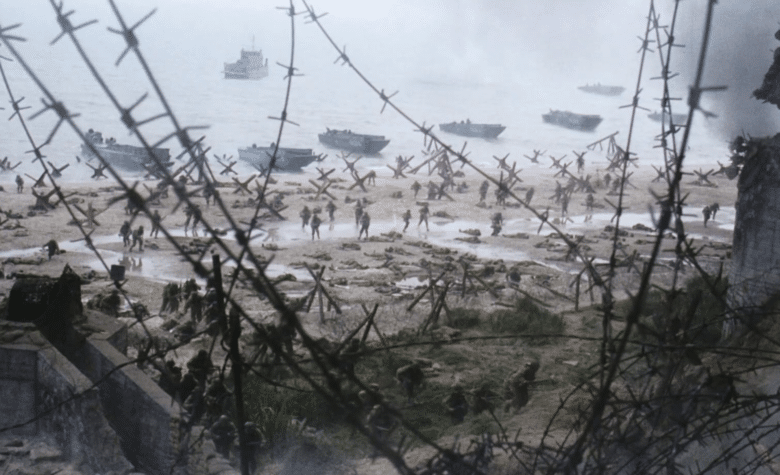
In “Saving Private Ryan,” Steven Spielberg undertook the mammoth task of recreating one of the most significant moments in World War II history: the Omaha Beach landing on D-Day. But he did more than just recreate it; Spielberg plunged audiences directly into the heart of the harrowing battle. Spanning a breath-taking 24 minutes, this pivotal scene demanded months of intricate planning and filming, as well as the coordination of over a thousand extras to encapsulate the sheer magnitude of the landing.
The scene isn’t just a technical marvel, but an emotional tour de force. Spielberg’s unflinching portrayal evokes an intensity that leaves viewers both aghast at the horrors of war and in awe of the bravery exhibited. To further ground the sequence in harsh reality, real-life amputees were cast to portray the wounded soldiers, intensifying the gut-wrenching realism. The combination of masterful direction, meticulous production design, and raw performances culminated in a cinematic experience that remains unparalleled, etching the Omaha Beach landing indelibly into the consciousness of all who witnessed it on screen.
Image Credit: IMDb.
‘Gladiator’ — Battle of Germania

Ridley Scott is known for his meticulous attention to detail, and “Gladiator” it’s best proof of that.When Maximus Decimus Meridius said, “Unleash hell,” he meant it. The opening battle in the 2000 historical epic was a cinematic feast that showcased Roman warfare’s brutality and efficiency. Rome wasn’t built in a day, and neither was this spectacular battle scene. The movie crew had restrictions on the number of extras they could use, the number of catapults they could build, and the space they had (a Surrey forest in England). Nelson mentioned that in the past, someone like Kubrick would’ve just hired a whole army, but today that would be too costly. To capture the grand battle scene, they filmed using a fixed camera and later shifted people and objects for more footage. They then combined these shots digitally, added effects like arrows and fire, and created a panoramic view of the battle. This digital method helped enhance the scene beyond the actual site’s limitations.
Image Credit: IMDb.
‘300’ — Battle of Thermopylae

If you thought battle scenes couldn’t be art, think again. Directed by Zack Snyder, “300,”redefined how audiences perceived battle scenes. Instead of simply showing violence, Snyder turned warfare into a mesmerizing dance of aesthetics and emotion. It wasn’t just about the clash of shields and spears; it was a visual symphony that spoke to the viewer on multiple levels.
Snyder’s distinct use of CGI played a pivotal role in achieving this. Rather than using computer graphics merely as a tool, “300” used it as a medium of art. The movie adapted Frank Miller’s graphic novel, and the CGI-enhanced visuals paid homage to the source material’s stylized illustrations.
Image Credit: IMDb.
“Braveheart” — Battle of Stirling
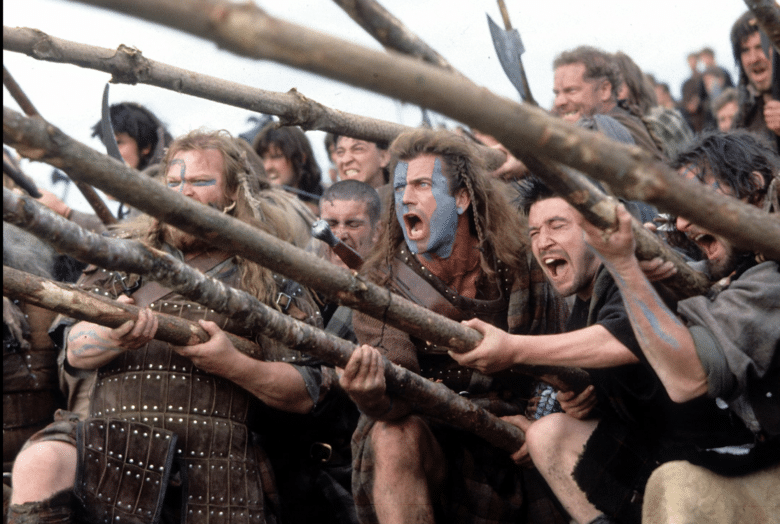
“Braveheart” is a film that doesn’t hold back, especially when it dives into the heart of the Battle of Stirling. The embodiment of passion and the struggle for freedom, Mel Gibson’s portrayal brings the gritty reality of medieval warfare right before our eyes.
At the center of it all is the Battle of Stirling — a pivotal moment that stands out not just for its scale but also for its intensity. The production roped in an astounding 1500 extras, ensuring the battlefield felt vast, alive, and overflowing with energy. Yet, amidst this vastness, there was chaos. The muddy grounds, the clash of metal, and the desperate shouts painted a scene of disorder and ferocity, capturing the true essence of what it might have felt like to be a soldier on that fateful day.
However, “Braveheart” was more than just its technical prowess. The emotional weight carried by the characters, especially William Wallace, gave depth to every sword swing and battle cry. Speaking of which, Wallace’s iconic war cry, his shout for “Freedom!”, wasn’t just a call to arms. It was the very soul of the film, echoing the sentiment and the fervor of a nation desperate to break free from oppression.
Image Credit: IMDb.
“The Last Kingdom” — Battle of Tettenhall

Netflix’s “The Last Kingdom” brilliantly marries historical accuracy with cinematic intensity, especially evident in the Battle of Tettenhall. This pivotal skirmish is more than just a fierce fight; it’s a turning point in the narrative, reflecting the tumult of the Viking-invaded England. The series’ creators went to lengths to capture the essence of the 10th-century battle, from the trudging muddy footsteps to the gleaming armor in the fray. At the forefront is Uhtred, whose tactical prowess shines as he navigates the chaotic battlefield. His strategy is a blend of physical combat and mental gamesmanship, making each clash feel both visceral and cerebral. As swords meet and alliances are tested, the Battle of Tettenhall emerges as a standout moment in “The Last Kingdom,” illustrating the blend of strategy, valor, and raw emotion that defines the era.
Image Credit: IMDb.
“Avengers: Endgame” — Battle of Earth

“Avengers: Endgame” brought an epic culmination to the Marvel Cinematic Universe’s Infinity Saga with the climactic Battle of Earth. This battle wasn’t just about the culmination of a single film but the climax of over a decade of interconnected storytelling.
Set against the ruins of the Avengers’ headquarters, the battle showcased an impressive roster of superheroes from various corners of the universe coming together to take on Thanos and his formidable army. The sheer scale was monumental — from the arrival of portals showcasing heroes like Black Panther from Wakanda, Doctor Strange and his sorcerers, to Spider-Man swinging into action, it was a visual treat for fans.
The iconic “Avengers Assemble” shout by Captain America resonated deeply, marking the unification of the MCU’s beloved characters. This was further emphasized with character moments such as Tony Stark’s reunion with Peter Parker and the passing of the Infinity Gauntlet between heroes, culminating in Tony’s ultimate sacrifice.
Image Credit: Marvel Studios / IMDb.
“Black Hawk Down” — Battle of Mogadishu
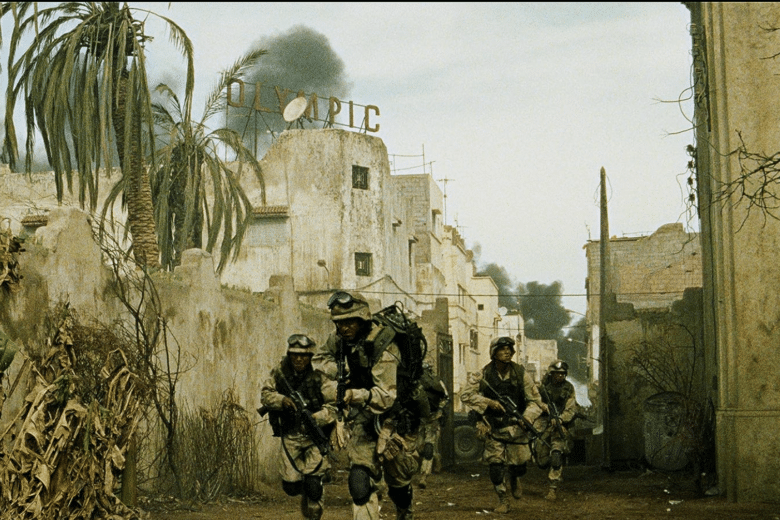
“Black Hawk Down” recounts the harrowing Battle of Mogadishu that took place in 1993, where a U.S. military operation to capture a Somali warlord’s associates unexpectedly spiraled into chaos when two Black Hawk helicopters were shot down. The ensuing intense urban combat left 18 American soldiers dead and many wounded. Transitioning this intense real-life event to the silver screen was no small feat. Under the direction of Ridley Scott, the 2001 film rendition brought to life the gritty details and the visceral reality of warfare, achieving a balance between storytelling and the portrayal of raw combat. The production saw meticulous attention to authenticity, with cast members undergoing rigorous military training to accurately depict their real-life counterparts. Critically acclaimed, the film drew both praise for its realistic action sequences and critique for its limited focus on the Somali perspective. Garnering multiple awards and nominations, “Black Hawk Down” not only impacted the box office but also left an indelible mark on war cinema, prompting discussions about the complexities of military interventions.
Image Credit: IMDB.
“The Chronicles of Narnia: The Lion, the Witch and the Wardrobe” — Battle of Beruna
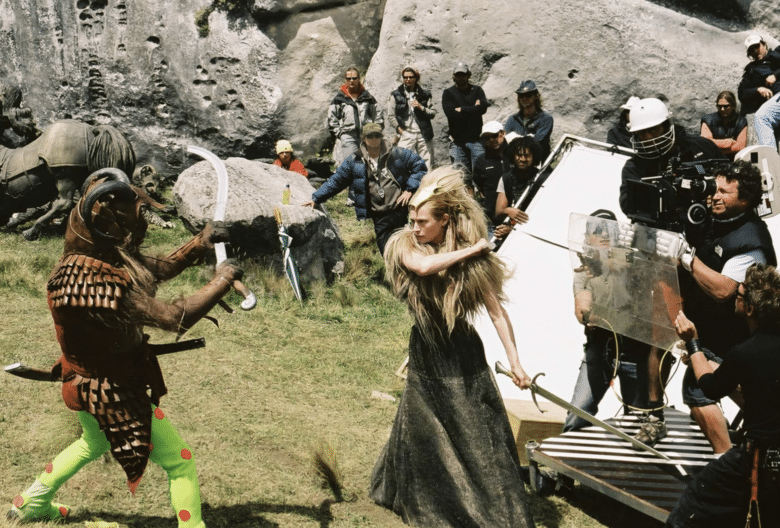
Aslan leading a mythical army? Yes, please. “The Chronicles of Narnia: The Lion, the Witch and the Wardrobe,” directed by Andrew Adamson and based on C.S. Lewis’s beloved fantasy novel, showcased a pivotal moment with the Battle of Beruna. This climactic battle is set against the backdrop of Narnia’s frozen landscape, a land under the oppressive rule of the White Witch, played with chilling poise by Tilda Swinton.
The Battle of Beruna is more than just a clash of armies; it symbolizes the larger struggle between good and evil. The forces of the White Witch, with her menacing horde of mythical creatures, go head-to-head with Aslan’s loyalists, a collection of Narnians led by the four Pevensie siblings.
The visual spectacle of this sequence is undeniably captivating. Centaurs, minotaurs, griffins, and fauns clash amidst a snowy battlefield, creating a cinematic tapestry that’s both enchanting and intense. The Pevensie children, especially Peter, played by William Moseley, come into their own, transitioning from unsure children to leaders in their right.
This article was produced and syndicated by MediaFeed.
Image Credit: Phil Bray – © Disney Enterprises, Inc. and Walden Media, LLC/IMDB.
More from MediaFeed
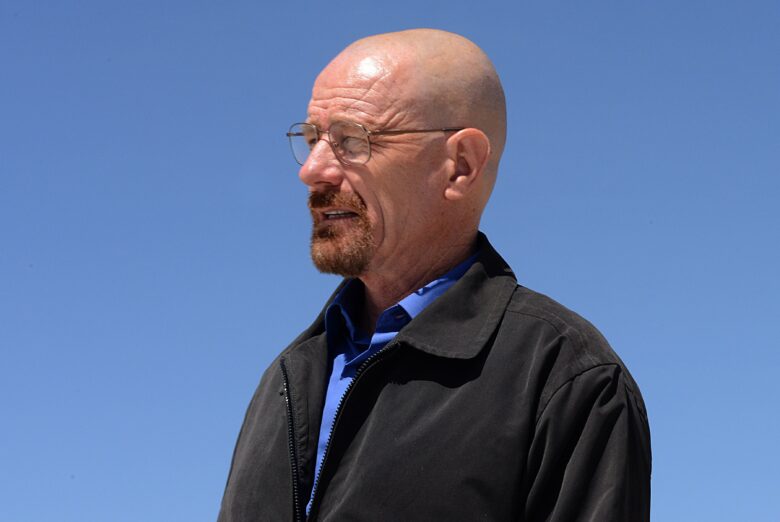
10 iconic TV & movie villains we’re supposed to hate but secretly love
- 10 of the greatest, most sought-after Chevy models of all time
- 10 of the wildest UFO stories we’ve ever heard
Like MediaFeed’s content? Be sure to follow us.
Image Credit: AMC.