In an age where convenience is king, we find ourselves ensconced in a digital cocoon woven from smart homes, chatty Alexas, vigilant cameras, and smart whatnots.
But let’s not forget, all these smart gadgets had humble beginnings. There’s a kind of rugged coolness when you look back at the first motor cars or the initial designs of headphones – simple, yet groundbreaking in their time. So, as we enjoy the convenience of our modern-day gadgets, let’s also give a nod to those early inventions that paved the way.
Image Credit: Wikipedia.
The first electric washing machine

Tracing back to the early 1900s, the introduction of the electric washing machine stands as a significant development in household technology. Designed by Alva J. Fisher, an engineer at the Chicago-based Hurley Electric Laundry Equipment Company, the Thor-branded appliance marked a revolution in household chores, dramatically transforming laundry from a labor-intensive task to a matter of mere convenience.
Widely hailed as one of the top ten inventions of the last century, Thor washers quickly became a staple in American households, thus establishing the Thor brand as a symbol of quality and innovation.
In an era striving for efficiency, the Thor washer represented not just a leap in technology, but also a significant step towards liberating individuals from the drudgery of manual laundry, gifting them precious hours to invest elsewhere.
Image Credit: eatonvilletorainier.com.
An American electric bread toaster also also known as “The Sweetheart” from 1929

From its inception in 1893, the humble toaster has embarked on a remarkable journey in terms of both design and functionality. Through the years, it morphed considerably, but the pinnacle of its evolution came in the roaring 1920s, characterized by the elegance and sophistication of the “Sweetheart” toaster.
Crafted by Landers Frary & Clark, a pioneering company in the realm of electrical home appliances, the Sweetheart toaster was the epitome of form meeting function. Patented in 1929, this remarkable appliance dazzled many with its earring-like handles and diamond-shaped body, complemented by delicate floral and arabesque decorations.
More than just an appliance, it came equipped with innovative mechanics, featuring cages that swiveled out to hold two slices of bread, adding a touch of theatre to the simple act of toasting bread. The Sweetheart toaster transformed the breakfast table into a space of luxury and delight, promising not only toasted bread but also a hearty spectacle to start the day.
Image Credit: CyberToasterMuseum.
Apple’s first product: ‘Apple’

Before Apple began dazzling the world annually with sleeker, smaller, and smarter devices, there was the humble genesis of the tech giant. In 1976, the technology world witnessed the debut of a product that would herald the beginning of a new era: the Apple I. Engineered by Steve Wozniak, this first iteration from Apple was nothing more than an assembled circuit board, devoid of what we now consider essentials: a keyboard, monitor, and case.( Well, some things never change!)
Image Credit: Wikipedia.
The pedal skates, 1910
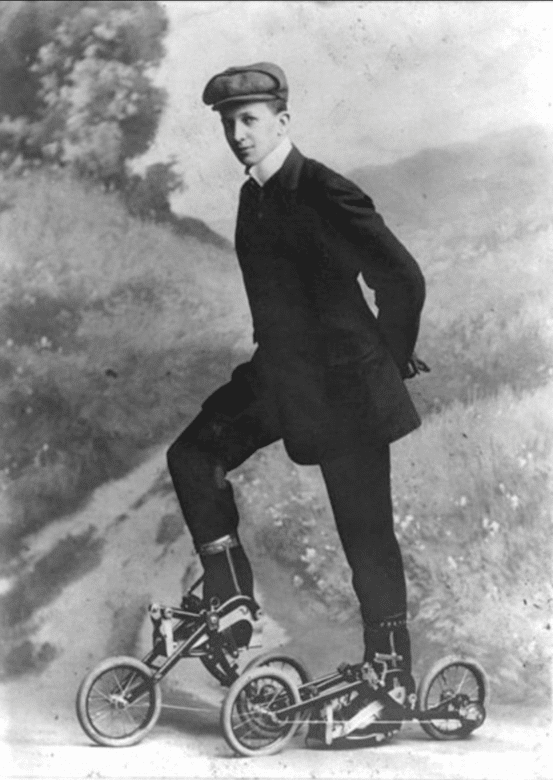
Roller skating has seen quite an evolution since its inception, but the real game-changer arrived in 1913 with Charles A. Nordling’s innovative pedal skate. This groundbreaking invention, hailing from Suisun, California, allowed enthusiasts to cruise smoothly without lifting their feet off the ground, introducing a breezy and effortless approach to skating. Nordling’s pedal skate not only revolutionized the skating world with its unique pedal action mechanism but also set the stage for future innovations, keeping the spirit of roller skating alive and vibrant throughout the decades.
Image Credit: Library of Congress.
The first computer mouse prototype, 1964

Computing took a monumental leap in the 1960s when a seemingly simple device – the computer mouse – was introduced by its inventor, Douglas Engelbart. Hailing from the Stanford Research Institute, Engelbart’s groundbreaking invention was more than just a point-and-click gadget; it fundamentally changed human-computer interaction.
The prototype, “creatively” dubbed the “X-Y position indicator for a display system,” bore little resemblance to today’s sleek devices but laid the foundation for the intuitive point-and-click system that we now take for granted.
Image Credit: Marcin Wichary/FLickr.
The first refrigerator to see widespread use

In the golden age of invention, the refrigeration revolution took a massive leap forward with the debut of the General Electric “Monitor-Top” refrigerator in 1927. Conceived by the brilliant mind of Christian Steenstrup, this pioneering appliance became a beacon of modern convenience and luxury in American households. With its innovative all-steel cabinet, it not only promised durability but also introduced a new era of aesthetic sophistication in kitchen appliances. Carrying a hefty price tag of $525, it was a testament to innovation, encapsulating the spirit of progress that defined the roaring twenties.
Image Credit: Wikipedia.
The first vacuum cleaner

In 1901, engineer Hubert Cecil Booth introduced the world to the concept of vacuum cleaning, drastically altering home maintenance practices. Initially known for constructing suspension bridges and Ferris wheels, Booth shifted his focus to revolutionize carpet cleaning. Spotting a flaw in a machine that blew air to remove dust, he embarked on creating a device that would suck in dirt through a filter. Despite facing initial skepticism and near-fatal experiments, Booth triumphantly launched his massive vacuum cleaner, flaunting a luxurious red and gold design reminiscent of a fire engine. This horse-drawn invention, equipped with a petrol-powered motor and glass chamber to showcase accumulated dirt, swiftly became a status symbol among wealthy Londoners. Though the venture faced early objections and legal hurdles, Booth’s vacuum cleaner proved its efficacy, cleaning prestigious locales like Buckingham Palace and setting the stage for the future of domestic cleaning technology.
Image Credit: Wikipedia.
The first mass-produced electronic television set, 1946–1947

In 1946-1947, the first mass-produced electronic television sets were introduced, marking a revolutionary shift in home entertainment. Spearheaded by companies like RCA, these initial TV sets, although bulky with large cathode-ray tubes, brought families together in their living rooms, offering a new way to experience broadcasts. These sets laid the foundation for the high-definition and smart TVs we have today, significantly influencing popular culture and the way information and entertainment are consumed.
Image Credit: Wikipedia.
The first cell phone was originally the size of a brick

In a world that seemed almost untouched by the digital marvels we witness today, the unveiling of the first cell phone heralded an era of unbounded connectivity and innovation. It was the 1980s when Martin Cooper, an engineer at Motorola, dared to envision a future where communication transcended the confines of offices and homes. This vision blossomed into the groundbreaking invention that was the Motorola DynaTAC, a bulky yet astonishing device that allowed people to carry conversations with them wherever they went.
Image Credit: Wikipedia.
The world’s first practical modern car, 1885
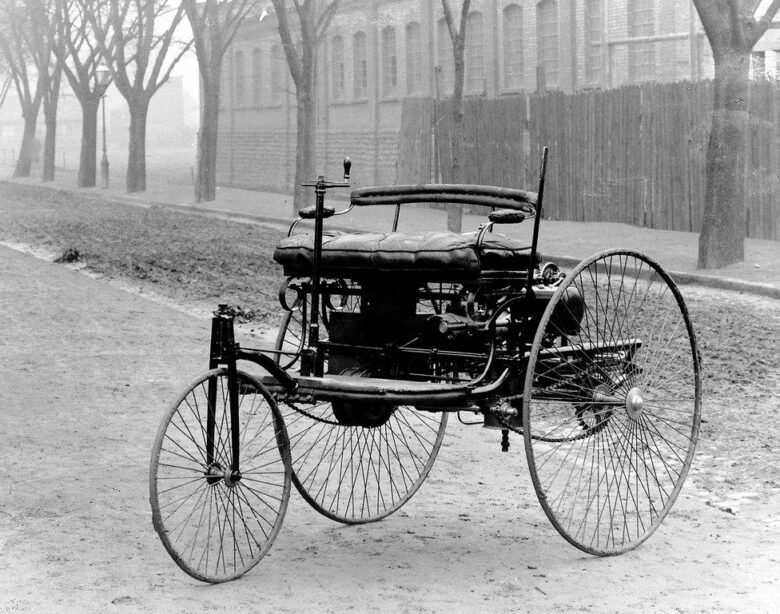
The first widely recognized motor car was the Benz Patent-Motorwagen, developed by Carl Benz in 1885-1886. It was a three-wheeled vehicle equipped with a petrol-powered engine, a revolutionary invention at the time. This invention marked the beginning of the automobile era, fundamentally changing transportation by introducing a reliable, faster, and more efficient means to travel compared to horse-drawn carriages. The Benz Patent-Motorwagen is celebrated as the pioneering vehicle that paved the way for the modern automotive industry, which would later be characterized by innovation and a pursuit for speed and comfort.
Image Credit: Wikipedia.
One of the earliest versions of radio headphones

In the early 20th century, particularly around the 1910s, the first headphones made their debut, primarily used by telephone and radio operators. These were nothing like the sleek designs we see today; rather, they were bulky, often heavy, and provided mono sound. Nathaniel Baldwin is credited with inventing the first successful set of headphones, which caught the attention of the U.S. Navy, leading to a surge in production. Despite their primitive design, offering minimal comfort and sound quality, these initial versions laid the foundation for an industry that would evolve to incorporate technological advancements, such as noise-cancellation features and wireless connectivity, enhancing the personal audio experience immensely over the years.
This article was produced and syndicated by MediaFeed.
Image Credit: Wikipedia.
More from MediaFeed
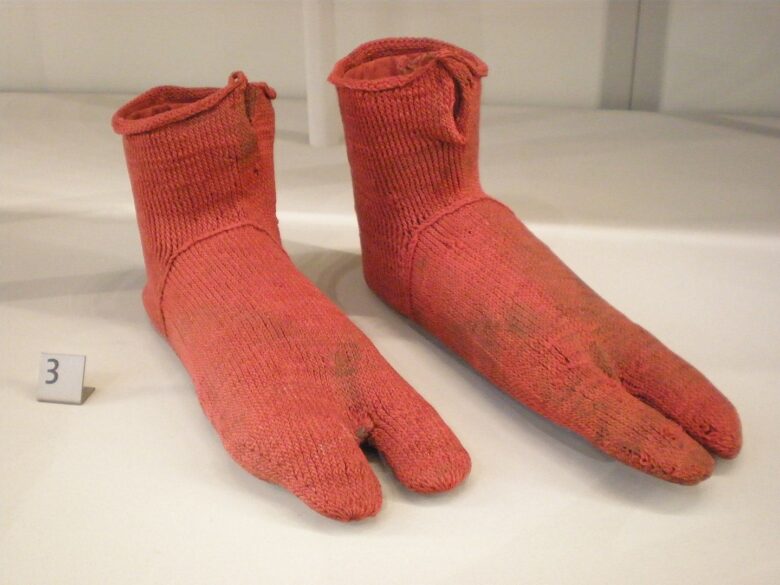
The fascinating history of the clothes you wear every day
- This forgotten Gen-X actor is the richest movie star of all time
- 10 of the wildest UFO stories we’ve ever heard
Like MediaFeed’s content? Be sure to follow us.
Image Credit: David Jackson/Wikimedia Commons.