
This article was reviewed by Lynn Marie Morski, MD, JD.
Key Takeaways:
- Progesterone is a natural reproductive hormone that declines during perimenopause and menopause.
- Progestin is a synthetic version of progesterone, and micronized progesterone is a bioidentical form.
- Progestin and micronized progesterone are used in hormone replacement therapy (HRT) for menopause to lower uterine cancer risk.
- Effectiveness, side effects, and safety depend on each person. Your healthcare provider can help determine the best option for you.
When navigating menopause and considering hormone replacement therapy (HRT), you might hear the terms progesterone and progestin.
What’s the difference between progestin vs. progesterone? Though they sound similar and do share some commonalities, they aren’t the same thing.
We’ll explain what each is, how they work in the body, and why the differences between progestin and progesterone matter for managing menopause and overall hormonal health.
Progestin vs. Progesterone
Progesterone is a naturally occurring hormone in the body, while progestin is a synthetic version found in certain medications.
Both bioidentical (micronized) progesterone and synthetic progestins belong to a class of drugs called progestogens that act on progesterone receptors.
Bioidentical progesterone is chemically identical to the hormone your body naturally produces. Meanwhile, progestins have slightly different structures and may act differently in the body.
What Is Progesterone?
Progesterone is a steroid hormone your body naturally produces. It plays a key role in the female reproductive system and supports many other aspects of overall health.
Balanced progesterone levels support:
- Menstrual cycles. After ovulation, the ovaries produce progesterone to help prepare the uterine lining, making it ready for a fertilized egg.
- Fertility and pregnancy. If pregnancy occurs, progesterone helps maintain the uterine lining, prevents early contractions, and supports fetal development.
- Other body systems. Besides reproduction, progesterone influences breast tissue, mood, brain function, bone health, and cardiovascular wellness.
During perimenopause and menopause, progesterone levels naturally decline. This can lead to symptoms like mood swings and sleep changes.
Hormone replacement therapy (HRT) can help ease these symptoms. It often involves a combination of estrogen and progesterone-like medications, known as progestogens, to protect the uterine lining.
One option is micronized progesterone, a form used in bioidentical HRT that closely replicates the hormone your body makes naturally.
What Is Progestin?
Progestins are synthetic compounds that imitate some of the effects of natural progesterone. They act on the same progesterone receptors, but their chemical structures differ slightly — meaning they can produce effects that natural progesterone doesn’t.
Progestins are key components in many medications, including:
- Birth control. Progestins are the primary active ingredients in oral contraceptive pills that suppress ovulation. Some forms of birth control, like the minipill and intrauterine devices (IUDs), only contain progestin.
- Endometriosis treatment. Progestin-containing oral contraceptives can also be prescribed to treat endometriosis.
- Hormone replacement therapy. In HRT, progestins are commonly combined with estrogen to protect the uterine lining. This helps lower the risk of endometrial thickening or cancer in people who still have a uterus.
When it comes to menopause hormone therapy, your healthcare provider will help determine whether a progestin or natural progesterone is the right choice to complement estrogen therapy. They’ll recommend a treatment based on your symptoms, medical history, and personal preferences.
Progestin vs. Micronized Progesterone for Hormone Replacement Therapy
With hormone replacement therapy, you may have the choice between using micronized progesterone and synthetic progestins — especially if you still have a uterus.
Some form of progesterone is prescribed in HRT because estrogen therapy alone can stimulate the uterine lining. This increases the risk of thickening the uterine lining (endometrial hyperplasia) and, over time, endometrial cancer. So, adding a progestogen (either micronized progesterone or a progestin) helps lower this risk by minimizing endometrial hyperplasia.
There are a few different formats and methods for both progestin and bioidentical progesterone, including skin patches or gels (transdermal) and oral medications.
Micronized Progesterone for HRT
“Natural” progesterone used in HRT is called bioidentical or micronized progesterone because it’s structurally identical to the hormone your body naturally produces.
It’s commonly prescribed to:
- Protect the uterine lining when used alongside estrogen
- Manage perimenopause and menopause symptoms, including hot flashes, night sweats, and mood swings
- Support sleep, as oral micronized progesterone can have mild calming effects
Many people choose natural progesterone for HRT because some studies suggest it might not carry as many heart health and cancer risks as some synthetic progestins. But research is still ongoing.
Some brand-name bioidentical progesterones include Bijuva® (combined estradiol and progesterone oral tablets) and Prometrium® (micronized progesterone oral capsules).
Progestins for HRT
Progestins are synthetic compounds designed to mimic the effects of natural progesterone. In HRT, they’re used to:
- Protect the uterine lining when estrogen is prescribed
- Manage menopause symptoms effectively alongside estrogen
Brand-name examples of medications made with progestins include:
- Provera® (medroxyprogesterone oral tablets)
- Prempro® (conjugated estrogens/medroxyprogesterone tablets)
- FemHRT® (ethinyl estradiol/norethindrone oral tablets)
Different progestins have slightly different risk factors and side effects. Your healthcare provider will consider these when tailoring therapy to your specific health needs.
Possible Side Effects and Risks of Progesterone vs. Progestin
Both natural progesterone and synthetic progestins can cause side effects. Though the likelihood and type of effects depend on:
- The specific hormone used
- Dosage
- Medication format
- Individual sensitivity
Understanding these differences can help you work with your healthcare provider to choose the safest and most effective option for menopause management.
Possible Side Effects of Progesterone
Natural (bioidentical) progesterone — also known as micronized progesterone — is generally well-tolerated in hormone replacement therapy for menopause.
The primary side effect of bioidentical progesterone is drowsiness, which is why most take it at bedtime.
Anecdotally, some women report experiencing fewer side effects with micronized progesterone than with progestins in HRT.
“Unlike synthetic progestins, micronized progesterone is structurally identical to the hormone your body makes, which helps preserve its natural benefits with fewer unwanted side effects for many patients,” says board-certified physician Lynn Marie Morski, MD.
It should be noted that some of the FDA-approved versions of micronized progesterone contain peanut oil, so please keep that in mind if you have an allergy or sensitivity to peanuts or peanut oil.
Possible Side Effects of Progestins
Progestins are synthetic, and their side effects vary depending on the specific type used. Some may have androgenic activity (similar to testosterone), which can lead to effects not typically seen with natural progesterone.
Common side effects of progestin in hormone replacement therapy for menopause include:
- Swelling
- Abdominal bloating
- Muscle pains (myalgias)
- Mood changes, including irritability, anxiety, or depression
Risks of Micronized Progesterone vs. Progestin for HRT
Some progestins may carry a slightly higher chance of health risks than progesterones when combined with estrogen in hormone replacement therapy. This includes a:
- Slight increased chance of blood clot risk in some populations
- Possible link to a higher risk of breast cancer compared to estrogen alone or estrogen plus micronized progesterone
Research in this area is ongoing. Plus, other factors influence risk, like when someone starts treatment and how long they continue HRT.
Overall, research suggests progesterone might have a more favorable safety profile than progestins.
Risks and Benefits of Progestin vs. Progesterone for Menopause HRT
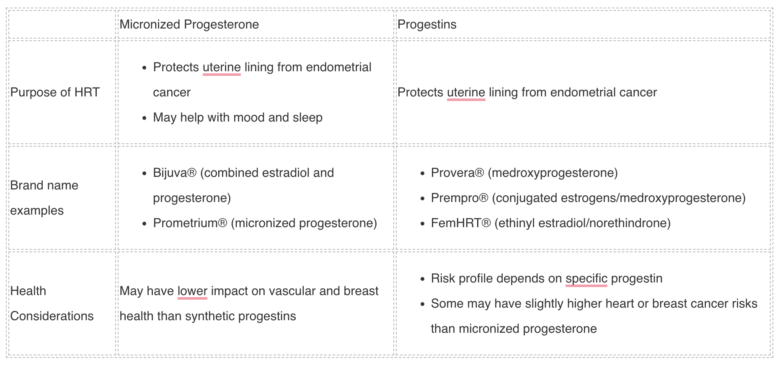
Here’s a quick side-by-side comparison of micronized progesterone vs. progestins for menopause HRT.
The Bottom Line: Progesterone vs. Progestin
Progesterone is a naturally occurring hormone that supports menstrual cycles, fertility, pregnancy, and overall hormonal balance. It naturally declines during perimenopause and menopause, which can contribute to symptoms like sleep changes, anxiety, or irregular vaginal bleeding.
Micronized progesterone and progestins are medications often used in HRT for menopause to protect the uterine lining from excess estrogen.
Here’s what to keep in mind about progesterone vs. progestin:
- Micronized progesterone is a bioidentical form of the hormone your body naturally produces. Progestins are synthetic compounds designed to mimic some of progesterone’s actions.
- Although micronized progesterone and synthetic progestins serve a similar purpose in HRT — protecting the uterine lining — their chemical structures differ slightly. These differences can affect how they interact with other bodily systems.
- Your personal health history, including any history of blood clots, breast cancer, or heart conditions, plays a major role in deciding which type of progestogen is safest for you.
- Some research suggests micronized progesterone may be better-tolerated and carry a potentially lower risk for certain people. But your provider will help decide the best option for you.
By understanding the difference between progesterone and progestin — and working closely with your provider — you can find the right balance of symptom relief, safety, and peace of mind during menopause and beyond.
FAQs
See answers to frequently asked questions about progestin vs. progesterone.
Is progestin the same as progesterone?
No, progestin and progesterone aren’t the same thing. Progesterone is a naturally occurring hormone in the body, while progestin is a synthetic version found in certain medications.
Is progestin or progesterone better for hormone replacement therapy?
Neither progesterone nor progestin is inherently “better.” The right choice depends on your individual health needs and goals. That said, bioidentical progesterone is often preferred in menopause hormone replacement therapy because it more closely matches the hormone your body naturally produces.
What are the benefits of bioidentical progesterone HRT?
Bioidentical progesterone may support better sleep. Some research suggests it could have a more favorable effect on heart and breast health than certain synthetic progestins. Studies are still ongoing, though.
What are the benefits of progestin HRT?
Progestins come in numerous forms and doses, which can make them a good fit for some people, depending on their treatment plan. The best choice is one you make together with your healthcare provider. Regular check-ins help ensure your therapy stays safe, effective, and tailored to your needs.
Can I use progestin and progesterone at the same time?
It’s generally not necessary or recommended to use both micronized progesterone and a synthetic progestin at the same time because they both act on the same progesterone receptors. Combining them doesn’t offer extra benefits and could increase the risk of side effects.
“In most cases, patients only need one form of progesterone therapy,” says Dr. Morski. “Combining micronized progesterone with a progestin is generally avoided because they work on the same receptors.”
How do I know which form of progesterone is right for me?
Choosing between micronized progesterone and a synthetic progestin for hormone replacement therapy is a personal decision. Your healthcare provider will take into account your full medical history, current symptoms, other medications, and personal preferences.
They’ll also consider factors like your age, whether you’ve had a hysterectomy or still have your uterus, and any underlying health conditions before recommending the best approach for you.
Whichever option you choose, maintaining open communication and scheduling regular check-ins with your provider can help you get the best symptom relief while minimizing potential risks.
Related:
Like MediaFeed’s content? Be sure to follow us.
This article originally appeared on ForHers.com and was syndicated by MediaFeed.org.