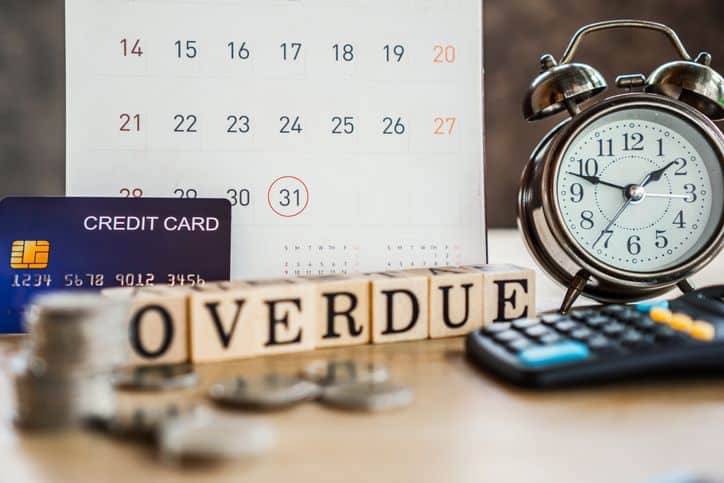
Whether you’re paying for college, buying a house, or starting a business, it’s common to take on debt at some point in your life. Repaying that debt typically involves making a fixed or minimum monthly payment by a certain day each month. But what happens if money is tight and you don’t have enough to make that monthly payment?
It might seem like making a partial payment is better than paying nothing at all. However, that’s not necessarily the case. Depending on the lender or creditor, a partial payment may be looked at the same way as a late or missed payment. Though partial payments might help lower your balance and reduce the interest that accrues on your debt, lenders and creditors generally don’t see them as on-time payments and may still consider your account as in default.
If you’re thinking about making partial payments, here’s what you can expect to happen — and what you can do instead.
Related: 3 ways to help pay off debt faster
What is a Partial Payment?
A partial payment on a debt is any payment smaller than the minimum amount due, as specified by the creditor.
Credit cards have minimum payment amounts, which can vary depending on your balance and annual percentage rate (APR). Other types of debt, such as car loans and mortgages, typically have set monthly payments that don’t vary as much.
Partial payments typically do not satisfy a creditor’s payment requirements for loans, credit cards and other debt. And not paying the full amount could be treated the same as a missed payment.
Why Do Customers Make Partial Payments?
Generally, customers make partial payments if they’re dealing with financial hardship or other money issues that make them unable to cover all their monthly expenses. Even a sound budget can go off the rails when emergency expenses, such as medical bills or car repairs, arise. When bills are due, paying for necessities like food, housing and utilities is usually a higher priority than long-term debt.
People who are out of work due to the pandemic (or other reasons) and collecting unemployment benefits may also consider making partial payments on debt for a period of time.
Does a Partial Payment Affect Your Credit Score?
It could. If you pay less than the minimum amount due on a credit card or loan, it likely won’t satisfy your creditors and they will still consider it a missed payment. In addition to hitting you with a late fee, they may also report to the credit bureaus that your payment is late.
By law, creditors can’t notify credit bureaus of a late payment until it’s 30 days past the due date. Paying the remainder of what you owe for that month before the 30-day mark can keep a late payment from showing up on a credit score, though you could still be liable for fees and penalties set by the creditor for making a late payment. Because your payment history makes up 35% of your FICO Score, having a late payment on your record can cause your score to drop.
Lenders consider a borrower’s repayment track record as a primary indicator of their ability to pay back future debt, which is why payment history is the largest component of most credit scores.
The impact of late and partial payments on your credit score will vary based on your existing credit history and how far behind you are on payments. Accounts that go unpaid for several months will do more harm to a credit score than a single late payment. Over time, the impact of a late payment on your score will diminish and, after seven years, it will be removed from your credit report.
Other Downsides of Making a Partial Payment
Falling short of what you owe can create other issues besides putting a dent in your credit score. Creditors may impose fees and take additional measures to secure repayment. Here’s a closer look at what could happen if you only make partial payments on these common types of debt.
Auto Loans
What happens to your auto loan will depend on your agreement and history with the lender. If you’ve never missed a payment before, they may be willing to accept a partial payment for now.
Depending on the state, defaulting on your car loan can mean vehicle repossession, which can involve selling the car at a public auction or electronically disabling the car to prevent it from being used. It can be a good idea to check the contract terms to learn what the lender is authorized to do and when.
Credit Cards
Unless you’ve come to a prior agreement with the credit card company, partial payments likely won’t satisfy your account’s minimum payment requirements. Even if you pay something toward the bill, your account will likely still become delinquent, and the credit card company may report the late payments to the credit bureaus.
Failing to pay the minimum amount on a credit card bill also typically comes with late fees. Delaying payment further can result in additional consequences, such as freezing your credit card and sending your debt to a collection agency.
Mortgages
Making partial payments on a mortgage can be considered defaulting on the loan and even trigger the foreclosure process. Before foreclosure, borrowers will likely incur late fees and receive a notice of default when the mortgage payment is a few months past due.
In general, a foreclosure can’t begin until 120 days after the first missed mortgage payment. That means you have some time to pay the amount that’s past due before the lender starts the foreclosure process.
Student Loans
Partial payments on student loans could cause them to become delinquent one day after the payment due date unless alternative arrangements are made with lenders. With federal student loans, your loans typically enter default when you miss or only make partial payments for 270 days. The lender can then report the default to the credit bureaus. In addition, the government can garnish your wages and even keep your tax refund.
A possible exception: If you have an income-driven federal student loan repayment plan, your monthly payment could be as low as $0 if your income dips low enough.
With private student loans, the rules will depend on the lender. If you remain delinquent for 90 days or more, the delinquency may be reported to the credit bureaus. If the account continues to be delinquent, you could fall into default, at which point private lenders can take legal action.
Alternatives to Making Partial Payments
Before making a partial payment, you may want to consider some alternatives:
1. Reaching Out to Your Creditor
It can be a good idea to contact the creditor or lender before the payment is due to explain your situation and what you can afford to pay that month. You may also want to ask about a “hardship repayment plan.” This type of plan could potentially allow you the option of minimal or no payment, a temporary reduction or suspension in account interest, or interest-only payments. You may want to keep in mind, however, that interest-only payments won’t decrease your principle — or the size of your loan. Some programs last a month, and others up to six months or so.
2. Contacting a Nonprofit Credit Counseling Agency
These agencies can help by negotiating lower interest rates with your current creditors. This can often result in lower monthly payments. If you can work out a plan, the payment you make may no longer be considered a “partial payment,” but instead an agreed-upon amount.
3. Considering Debt Consolidation
If you have multiple credit cards with high-interest rates and you’re having trouble paying the minimum on each, you may want to look into whether a debt consolidation program might help. The process involves taking out a personal loan at a bank or other reputable lender and then using it to pay off your credit cards. You then end up with one loan to pay back, ideally at a lower interest rate.
Typically, a closed-end loan like a personal loan means higher monthly payments, since personal loans have fixed terms. This is great news for borrowers who want to pay down their debt sooner, but it might not be the right choice for everyone.
The Takeaway
If cash flow is tight, you might consider making a partial payment on a debt, hoping that paying something will prevent a late fee or a late payment from showing up on your credit report.
However, borrowers don’t typically get any extra credit for making a partial effort. If the monthly minimum or fixed payment hasn’t been paid in full, the lender will likely mark the payment as missed. While partial payments may help chip away at your account balance, you can still end up facing fees, a reduced credit score, and potentially loan default.
If you’re unable to make full payments on your debt, it can be a good idea to contact your creditor as soon as possible to let them know about your financial situation first. In some cases, they may be able to offer alternative payment plans, forbearance or postponement. Setting up — and sticking to — a monthly spending budget can help you avoid having to make partial payments.
Learn more:
This article originally appeared on SoFi.com and was syndicated by MediaFeed.org.
SoFi Money
SoFi Money is a cash management account, which is a brokerage product, offered by SoFi Securities LLC, member FINRA / SIPC. Neither SoFi nor its affiliates is a bank. SoFi Money Debit Card issued by The Bancorp Bank. SoFi has partnered with Allpoint to provide consumers with ATM access at any of the 55,000+ ATMs within the Allpoint network. Consumers will not be charged a fee when using an in-network ATM, however, third-party fees incurred when using out-of-network ATMs are not subject to reimbursement. SoFi’s ATM policies are subject to change at our discretion at any time.
Disclaimer: Many factors affect your credit scores and the interest rates you may receive. SoFi is not a Credit Repair Organization as defined under federal or state law, including the Credit Repair Organizations Act. SoFi does not provide “credit repair” services or advice or assistance regarding “rebuilding” or “improving” your credit record, credit history, or credit rating. For details, see the FTC’s website.
SoFi Loan Products
SoFi loans are originated by SoFi Lending Corp. or an affiliate (dba SoFi), a lender licensed by the Department of Financial Protection and Innovation under the California Financing Law, license # 6054612; NMLS # 1121636. For additional product-specific legal and licensing information, see SoFi.com/legal.
Financial Tips & Strategies: The tips provided on this website are of a general nature and do not take into account your specific objectives, financial situation, and needs. You should always consider their appropriateness given your own circumstances.
More from MediaFeed:
6 strategies for becoming debt free

It isn’t the $5 cups of coffee. Or the $50 a month for the gym.
It isn’t that new smartphone, or your shoe addiction, or even that pricey cable subscription. These are common things everyone likes to waggle their finger at when they talk about overspending. But it isn’t necessarily any one of those expenses that really gets people into debt.
It’s usually all of them. And then some.
According to the 2018 U.S. Financial Health Pulse survey by the Center for Financial Services Innovation, 46.5% of Americans said their spending equaled or exceeded their income in the past 12 months. 33.9% said they were unable to pay all their bills on time. And 29.5% said they had more debt than they could manage.
That’s a lot of people who are worried about money.
Though frivolous or impulsive spending can be part of the problem, the slide sometimes starts with the best of intentions — with the desire to get a college education, perhaps, or to own one’s own home.
According to Northwestern Mutual’s 2018 Planning and Progress Study, mortgages and student loans, along with credit cards, are among the leading sources of debt in the U.S.
And when the nonprofit organization Student Debt Crisis surveyed student loan borrowers in 2018, 86% said student debt is a major source of stress. Add in credit card payments, car payments, utility bills, groceries and gas, and all the other things — big and small — that take our money every single day, and it’s clear how debt can become a deep, dark hole.
Which is why it’s so important to have a plan to get back out.
If you’ve wanted to become debt-free for a while, but didn’t know how to get there, think of your plan as a rescue rope you can hold onto during the climb. Everyone’s situation is different, but here are some popular strategies you might consider on your journey to becoming debt-free.
Doucefleur / istockphoto

If you have a significant amount of debt to pay off, you’ll likely be looking to cut costs in a meaningful way. A budget can help with that. First, when you’re going through bills, it can help to determine your priorities, this information can assist you in making informed decisions about what can go and what should stay.
Later, it can create a feedback loop, as you (and your partner, spouse, or other family members) compare real-world spending to the numbers in the budget and consider whether to take corrective action to stay on track.
And over time, it also may be possible to uncover the behaviors that have been holding you back.
If the idea of bird-dogging every penny has been a barrier to budgeting, or if you’ve tried and failed in the past, it may help to keep the process simple. The 50/30/20 rule is a simplified budgeting strategy that’s gained traction because it limits the number of spending categories a budgeter must establish and then follow.
After determining net take-home pay (what’s left after paying taxes), it breaks down the spending money that’s left into three buckets: needs, wants, and savings:
• 50% of the money goes toward needs, including housing costs, utilities, groceries, transportation, medical expenses and any regular debt payments that have to be made (credit card bills, loans, etc.). From there, it’s up to whoever is drawing up the budget to determine what are the true necessities and what belongs in the wants bucket.
• 30% goes to those wants. That’s everything from grabbing takeout, to your Netflix subscription, to getting your car washed and detailed for date night. Logically, this is the portion of the budget that has the most potential for trimming, but emotionally, it might require some real effort to get everything to fit the allocated funds.
• 20% goes to savings. This money might go into an emergency fund, some sort of savings account for short- and long-term goals and/or an investment savings/retirement account. If you decide to pay extra toward your credit card or student loan debt, that expense also would go in this category.
The percentages are meant as a guideline, and they can be tweaked to fit individual needs. The key is to make a budget that’s strict but doable.
fizkes/istockphoto

Yes, this is easier said than done, but before rolling your eyes and moving on, consider the possibilities.
Is it time for a pay raise? If a bump is overdue, it might be time to have a talk with the boss.
Is there side-gig potential? Do you always have nights or weekends off, and would your employer be OK with your taking on a part-time or occasional job for extra money? Maybe a friend does catering, landscaping, house-painting, or some other work and could use an extra hand from time to time.
Could a hobby become a money-maker? Crafty folks can sell their wares online or at craft fairs and flea markets. History buffs can give lectures or teach classes. Animal lovers can offer dog-walking or cat-sitting services. Where there’s a passion, there’s often a way to earn income.
MARHARYTA MARKO

If that raise comes through, or you earn a bonus at work, or you get a tax refund from Uncle Sam, instead of living it up while the money lasts, consider using it to pay down some debt.
A few hundred dollars might not feel like it’s making much of a dent, but every dollar you pay over the minimum can help reduce the interest you owe on a credit card or student loan.
To get some idea of how paying even a little extra toward a bill can help, check out the alert on your monthly credit card statement. The Credit Card Accountability Responsibility and Disclosure (CARD) Act of 2009 requires card issuers to warn consumers about how long it will take to pay off a balance if only the minimum is paid each month.
Farknot_Architect / istockphoto

One way to consolidate debt is with an unsecured personal loan. You may be able to consolidate all or some of your debts at better terms, such as a lower or fixed interest rate and possibly pay them off in less time than you expected.
This strategy could be useful for those who aren’t up for keeping tabs on several bills every month. A personal loan can consolidate multiple debts together into one manageable payment, which could help make it easier to keep tabs on what you’ve paid and what you still owe.
And because the interest rates offered for personal loans can sometimes be lower than the rates on credit cards, you could end up paying less in interest over the life of the loan than you would have if you just kept plugging away at those individual revolving credit card balances.
Typically, the better your financial and credit history, the better the loan terms are likely to be, so it can be a good idea to check your credit record and make sure the information listed on credit reports is accurate.
Then look for a lender who offers the best terms to fit your needs. Keep the length of the loan in mind, as well as the interest rate and other terms to help you on the road of becoming debt-free.
DepositPhotos.com

It could be difficult (okay, next to impossible) to stop using credit cards completely since they’re commonly used for things like booking or holding flights, making online purchases and more. But making a commitment to reduce credit card utilization could help you cut spending and reduce the amount of money that’s only going toward interest on those cards.
A credit card is a convenient way to pay — if you can keep your balance at zero. But if you can’t afford to erase the balance each month with a full payment, the interest can start piling up.
And though many credit cards make limited-time “no interest” offers, it’s good to review the terms in detail.
For instance, some cards may have terms where if consumers don’t pay off the entire balance by the end of the promotional period, they may be charged all of the interest accrued since the date of purchase.
To better the chances of staying in check, some options may be to consider recording all credit card purchases with a budgeting app or pen and paper and to try and face the costs in real-time, instead of weeks later when the bill arrives.
DepositPhotos.com

Seeing progress is inspiring for many people. Think about how good you feel when you lose a little weight from dieting or gain some muscle from working out. Even small wins can be motivating.
How does that apply to downsize your debt?
Two of the commonly recommended approaches to debt repayment are the Debt Snowball and Debt Avalanche methods. These strategies vary but primarily focus on paying extra toward just one balance at a time instead of trying to put a little extra money toward all your balances at once.
The Debt Snowball
The Debt Snowball method directs any excess free cash you might have to the debt with the smallest outstanding balance. Here’s how it can work:
• Start by listing outstanding debts based on what you owe, from the smallest balance to the largest. (Disregard interest rates.)
• Make the minimum payment on all other debts and pay as much as possible each month toward eliminating the smallest balance on your Debt Snowball list.
• After you pay off the smallest debt, turn your attention to the next-lowest balance.
• Keep going until you are debt-free.
The Debt Avalanche
The Debt Avalanche method targets the highest interest rates rather than the balance that’s owed on each bill. It’s more about math than motivation — you can save money as you eliminate each of those high-interest loans and credit cards, which should allow you to pay off all your bills sooner. Here’s how it can work:
• Disregard minimum payment amounts and balances, and list balances in order starting with the highest interest rate.
• Make the minimum payment on all other debts and pay as much as you can each month to get rid of the bill with the highest interest rate.
• Move through the list one debt at a time until you pay off all the balances on your list.
Though the methods are different, both plans provide focus, and as each balance disappears, momentum grows. But a newer approach, the Debt Fireball method, may be a better fit for modern-day debt, which could include a large amount of low-interest student loan debt.
The Debt Fireball
The Fireball method takes a hybrid approach to the traditional Snowball and Avalanche strategies. It’s called the Fireball because it can help blaze through bad debt faster by making it a priority. Here’s how it can work:
• Categorize all debts as either “good” or “bad.” “Good” debt is generally things that can increase your net worth such as student loans or mortgages. (Interest rates under 7% could be considered good debt—rates above 7% would likely fall into the “bad” category.)
• List all those “bad” debts from smallest to largest based on each bill’s outstanding balance.
• Make the minimum monthly payment on all other debts and funnel any extra cash available each month toward the smallest balance on the Fireball’s “bad” debt list.
• Once that balance is paid in full, move on to the next smallest balance on that list. Keep blazing until all “bad” debt is repaid.
• Pay off “good” debt on the normal schedule while investing for the future. Apply everything you were paying toward “bad” debt to investing in a financial goal.
The Fireball makes sense mathematically because it gets rid of expensive (or bad) debt first, but it also provides plenty of motivation because momentum can grow as you approach the finish. These two combined elements could provide an extra boost to your efforts.
DepositPhotos.com

The deeper the hole you’re in, the longer it may take to climb out. But having the right plan in place before you start could give you a better shot at sticking to a budget, minimizing your dependence on credit cards and methodically reducing your debt in a way that keeps you motivated and saves you money.
Learn more:
This article originally appeared on SoFi.com and was syndicated by MediaFeed.org.
Disclaimer: Many factors affect your credit scores and the interest rates you may receive. SoFi is not a Credit Repair Organization as defined under federal or state law, including the Credit Repair Organizations Act. SoFi does not provide “credit repair” services or advice or assistance regarding “rebuilding” or “improving” your credit record, credit history, or credit rating. For details, see the FTC’s
website .
External Websites: The information and analysis provided through hyperlinks to third party websites, while believed to be accurate, cannot be guaranteed by SoFi. Links are provided for informational purposes and should not be viewed as an endorsement.
Financial Tips & Strategies: The tips provided on this website are of a general nature and do not take into account your specific objectives, financial situation, and needs. You should always consider their appropriateness given your own circumstances.
SoFi Loan Products
SoFi loans are originated by SoFi Lending Corp (dba SoFi), a lender licensed by the Department of Business Oversight under the California Financing Law, license # 6054612; NMLS # 1121636. For additional product-specific legal and licensing information, see SoFi.com/legal.
fizkes / istockphoto
Featured Image Credit: Doucefleur / istockphoto.