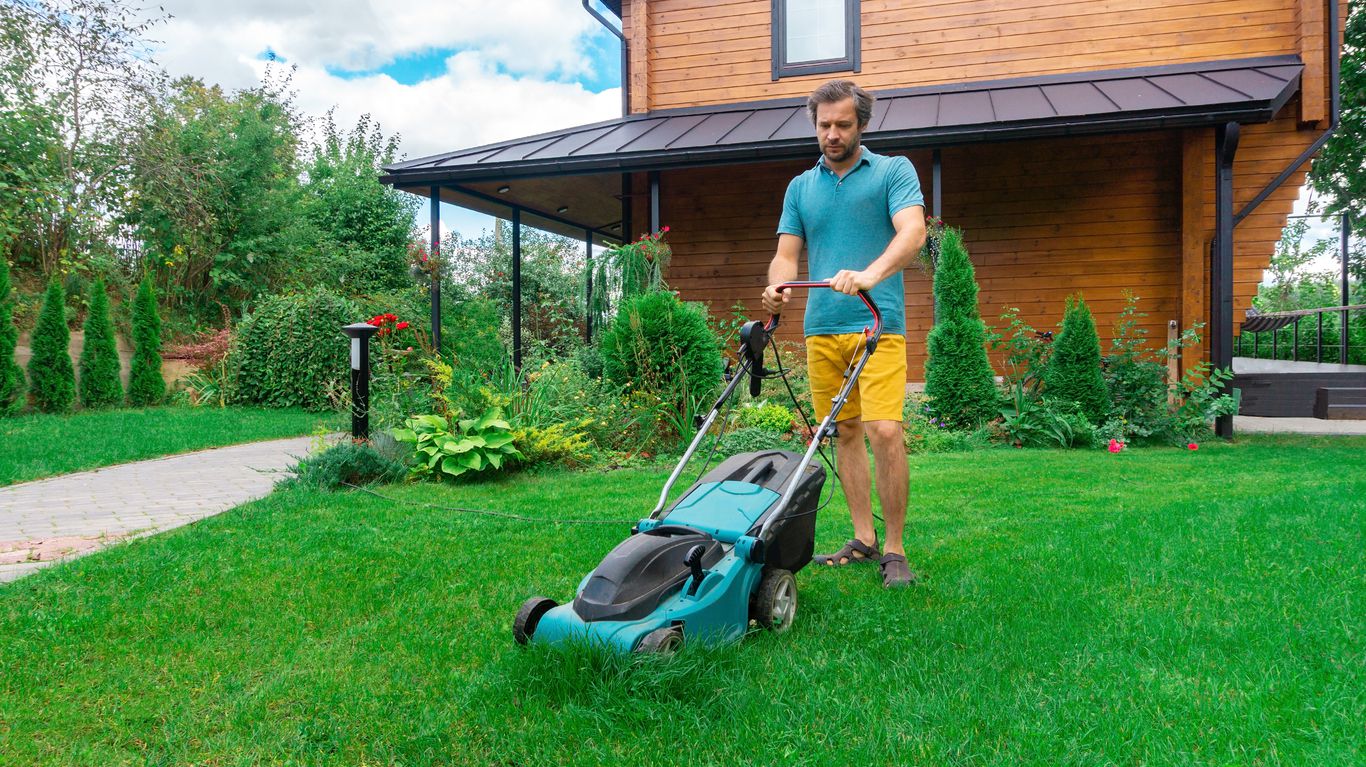
After years of mowing lawns in all kinds of conditions, I’ve learned that proper mowing technique makes all the difference between a mediocre yard and a lawn that makes neighbors stop and stare.
Here’s my straightforward guide to mow your lawn the right way.
Project difficulty: Beginner to Intermediate
Estimated time to complete: 0.5 to 1.5 hours for a 1/2-acre lawn, depending on the mower
Project cost: $260 to $300 (low-end price for a push mower, string trimmer, leaf blower, safety glasses, and ear protection to get you started)
Image Credit: RINA NAZAROVA/Istockphoto.
Before You Mow

I always walk the lawn first to remove debris. Last summer, I ran over a hidden rock that not only damaged my mower blade but sent dangerous projectiles flying. Now I wear garden gloves and do a quick sweep for:
- Sticks and stones
- Toys and sports equipment
- Dog waste
- Anything that could damage your mower or become a projectile
Image Credit: Grb/Istockphoto.
Proper Mowing Height

The golden rule I never break: Never cut more than one-third of the grass blade at once. When I ignored this after a vacation, my lawn turned yellow for weeks.
For example, if your grass is 3 inches tall and you want it at 2 inches:
- First mow to 2.5 inches (removing 1/3)
- Wait 3-4 days
- Then cut to your target 2-inch height
Through trial and error, I’ve found these optimal heights work best:
- Bermudagrass: 1-2 inches
- Kentucky bluegrass: 2.5-3.5 inches
- St. Augustine: 2.5-4 inches
- Tall fescue: 3-4 inches
- Zoysia: 1-2 inches
To set your mower height accurately, place it on a flat surface and measure from the ground to the blade.
Image Credit: Olena Miroshnichenko/Istockphoto.
Best Time to Mow
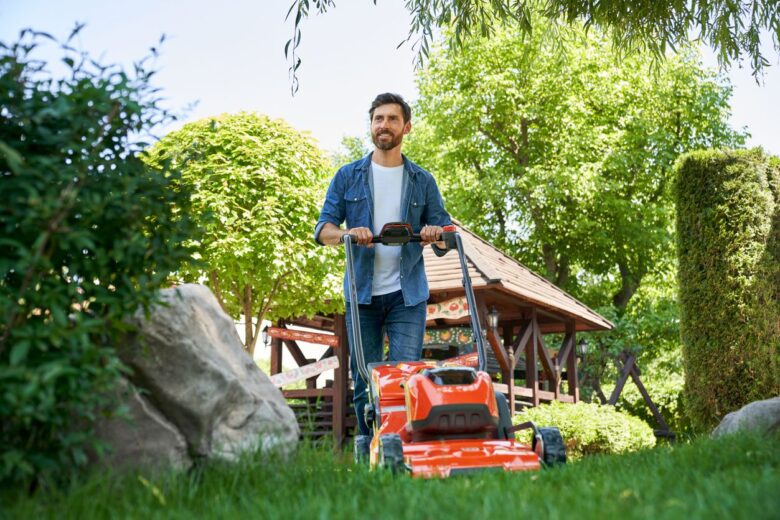
I’ve learned the hard way when NOT to mow:
- Early morning (6 a.m. to 8 a.m.): Wet dew causes clumping and disease
- Midday heat: Stresses both you and your grass
- Evening after 6 p.m.: Grass needs time to recover before nightfall
The sweet spots are mid-morning (8 a.m. to 10 a.m.) and late afternoon (4 p.m. to 6 p.m.). Last July, I mowed at noon during a heatwave and both my lawn and I suffered for it.
Never mow wet grass. After a rainstorm last spring, I got impatient and mowed anyway. The result? Clogged mower, uneven cuts, and fungus problems that took weeks to resolve.
Image Credit: SerhiiBobyk/Istockphoto.
Mowing Pattern

I change my mowing pattern every single time. When I used to mow the same route weekly, ugly ruts developed that collected water after rain.
My most efficient patterns:
- For rectangular lawns: long straight lines with the fewest possible turns
- For irregular shapes: start on the perimeter and spiral inward
Always overlap your previous pass by about 2 inches to avoid missed strips. Last summer, I rushed and didn’t overlap properly, leaving mohawk strips that stood out for days.
Image Credit: Juan Rodriguez.
Slopes and Obstacles

For safety on slopes:
- With push mowers: Mow side-to-side across the hill.
- With riding mowers: Mow straight up and down.
Around trees, I stay at least 12 inches away from trunks to avoid “mower blight” – I damaged a young maple before learning this lesson.
For tight spots near fences or garden beds, I finish with a string trimmer after mowing. Using a thin piece of plastic as a shield protects my flowers from accidental trimmer damage.
Image Credit: AntaresNS/Istockphoto.
Clipping Management
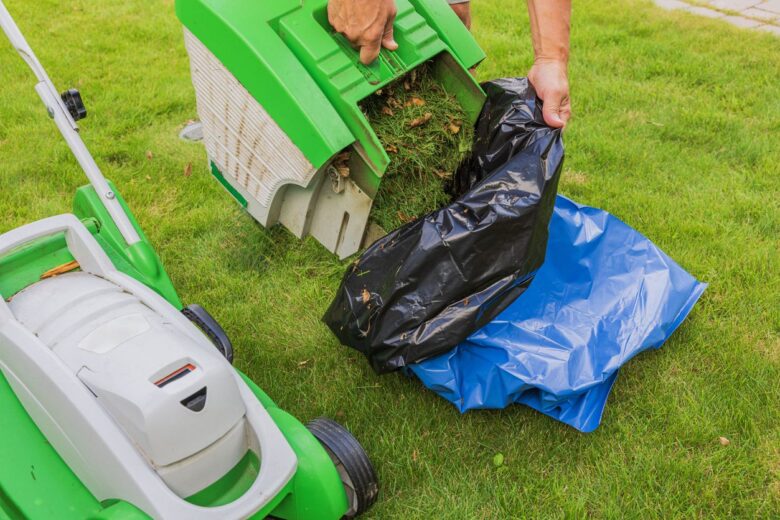
I used to bag all my clippings until I learned they provide up to 25% of my lawn’s fertilizer needs. Now I mulch whenever possible, except when:
- The grass is extremely tall.
- There’s visible disease in the lawn.
- I’m doing the first spring mowing with lots of debris.
For my compost bin, I empty the bag at convenient turning points near the bin to minimize walking.
Image Credit: Alexander Shapovalov/Istockphoto.
Final Cleanup

After mowing, I use a leaf blower to clear clippings from hard surfaces:
- For driveways, I blow toward the lawn, not the street
- For flower beds, I use a gentle circular pattern to avoid disturbing mulch
Image Credit: Alexander Shapovalov/Istockphoto.
Equipment Quick Notes

I won’t bore you with endless equipment details – that’s another topic entirely. Just make sure your mower:
- Has sharp blades (I sharpen mine every 25 hours of use)
- Is appropriate for your lawn size
- Is properly maintained
For safety, I always wear:
- Closed-toe shoes
- Eye protection
- Ear protection
- Long pants
Image Credit: gpointstudio/Istockphoto.
The Bottom Line on Lawn Mowing

Perfect mowing comes down to:
- Right height (never cut more than 1/3)
- Right timing (mid-morning or late afternoon)
- Changing patterns (avoid ruts)
- Sharp blades (clean cuts)
- Proper cleanup
Follow these principles, and you’ll have the best-looking lawn on the block – I guarantee it from years of experience.
Related: How to Stripe Your Lawn Like a Pro
Related: When Is the Best Time of Day to Mow My Lawn?
This article originally appeared on Lawnstarter.com and was syndicated by MediaFeed.org
Image Credit: Aigars Reinholds/Istockphoto.