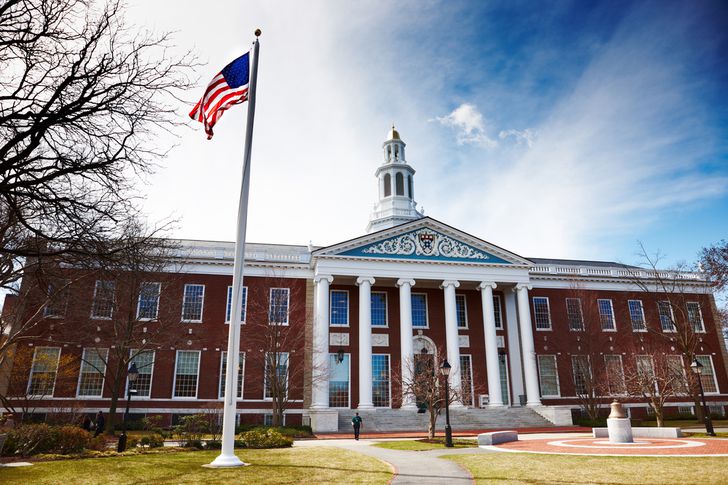
Harvard University is known for being one of the oldest (if not the oldest) institutions of higher learning in the United States. Harvard tuition, which is $55,587 a year, is above the national average for four-year private nonprofit institutions of $35,807, though a high number of students receive student loans or scholarships to cover this cost.
Related: Penn State tuition & fees

Financial Aid
Approximately 84% of the admitted students get some sort of financial aid to assist with Harvard tuition, whether that is a grant, a scholarship, or a loan. Harvard is need-blind, which means that students who require financial aid aren’t discriminated against in the application process. Anyone, regardless of income, may qualify for acceptance.
Explore financial aid options: Massachusetts Student Loan & Scholarships.
Generally, financial aid is monetary assistance awarded to students based on personal need and merit. Students that qualify for financial aid can use it to pay for college costs like tuition, books, and living expenses.
The federal government is the largest provider of student financial aid. However, aid can also be given by state governments, colleges and universities, private companies, and nonprofits. The different types include:
- Scholarships: These can be awarded by schools and other organizations based on students’ academic excellence, athletic achievement, community involvement, job experience, field of study, and financial need.
- Grants: Generally based on financial need, these can come from federal, state, private, and non-profit organizations.
- Work-study: This federal program provides qualifying students with part-time employment to earn money for expenses while in school.
- Federal student loans: This is money borrowed directly from the U.S. Department of Education. It comes with fixed interest rates that are typically lower than private loans.
Colleges, universities, and state agencies use the Free Application for Federal Student Aid (FAFSA) to determine financial aid eligibility. The FAFSA can be completed online, but note that state and federal and school deadlines may differ.
You can find other financial aid opportunities on databases such as:
- US Department of Education – Search for grants from colleges and universities by state
- College Scholarship Service Profile (CSS) – A global college scholarship application used by select institutions to award financial aid
Recommended: The Differences Between Grants, Scholarships, and Loans
Private Student Loans
While 3% of incoming undergraduates at Harvard get federal student loans, twice that receive private student loans to help with Harvard tuition. On average, students receive $10,151 in private student loans.
Private loans are funded by private organizations such as banks, online lenders, credit unions, some schools, and state-based or state-affiliated organizations. While Federal student loans have interest rates that are regulated by Congress, private lenders follow a different set of regulations so their qualifications and interest rates can vary widely.
What’s more, private loans have variable or fixed interest rates that may be higher than federal loan interest rates, which are always fixed. Private lenders may (but don’t always) require you to make payments on your loans while you are still in school, compared to federal student loans which you don’t have to start paying back until after you graduate, leave school, or change your enrollment status to less than half-time.
Private loans don’t have a specific application window and can be applied for on an as-needed basis. However, if you think you may need to take out a private loan, it’s a good idea to submit your FAFSA first to see what federal aid you may qualify for as it generally may have better rates and terms.
If you’ve missed the FAFSA deadline or you’re struggling to pay for school throughout the year, private loans can potentially help you make your payments. Just keep in mind that you will need enough lead time for your loan to process and for your lender to send money to your school.
Recommended: Guide to Private Student Loans
Projected 4-Year-Degree Price
The Harvard costs for a four-year degree, including books, tuition, and all other expenses, would be approximately $312,112, based on the 2021-22 school year. In comparison, the average cost for private school tuition and room and board in the U.S. is $54,880 a year (also based on ‘21/22), totaling $219,520 for four years, according to CollegeData.com.
This student loan and scholarship information may be valuable as you research schools and costs.
Undergraduate Tuition and Fees
Students spent approximately $55,587 for Harvard University tuition in the 2021-22 school year. Additionally, costs for room and board totaled $18,941, bringing the total cost of attendance to $74,528.
This is substantially higher than the average for private schools in the U.S. of $54,880.

Graduate Tuition and Fees
Tuition for graduate school at Harvard was $50,928 in 2021-22, with additional fees of $1,242, bringing the total to $52,170. The average cost for tuition for graduate school at a private institution in the United States was $19,493. Many students at Harvard opt for graduate loans to help cover these costs.

Cost per Credit Hour
Full-time students pay the full tuition, but some students attend part-time, and in that case, they pay per credit hour. The Harvard University cost per credit hour is $1,622. Multiply that times the number of credits you’re taking. If you take six credits per semester, your tuition would be $9,732. If you took 12 credits, the cost would be $19,464.
Campus Housing Expenses
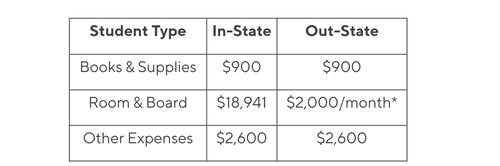
*Based on studio pricing. Average rate based on available apartments on Harvard’s off-campus housing website in 2022.
In addition to Harvard University tuition, room and board is the next highest expense. View our student loans guide for help paying for it.
There are 17 freshman dorms and 12 Houses for upper-level students. Freshmen generally live in suites with a common room and two to four bedrooms. Roommates are chosen by the University. Upperclass students are assigned to one of Harvard’s historic Houses, each of which serves as a residence to 350-500 students.
Only a small percentage of students choose to live off-campus, and there are many apartments and homes for rent near campus. Harvard has partnered with private landlords and real estate agents to provide affordable housing to students. The average price for a studio in Cambridge is $2,000, though many are even higher. Keep in mind that leases may be for a full year, not a school year.
[Explore off-campus living options at Harvard Off-Campus Housing.]
Harvard Acceptance Rate

With just 5% of applicants accepted, the Harvard acceptance rate is extremely competitive.
Admission Requirements
To be accepted as a student at Harvard, there are certain considerations you must meet. Some, like secondary school record, recommendations, and admission test scores, are required, while others, including secondary school GPA and school rank, are recommended. There is not a required GPA minimum to qualify.
Required:
- Secondary school record
- Recommendations
- Admission test scores
Recommended:
- Secondary school GPA
- Secondary school rank
The deadline to apply as a Restrictive Early Action candidate for the 2023-24 school year is November 1. You will receive notification by mid-December. The deadline for Regular Decision candidates is January 1, with notification sent by the end of March. You can apply here.
SAT and ACT Scores
Harvard no longer requires SAT or ACT scores for classes of 2027-2030. Students who do not submit test scores will be considered equally for admissions as those who do.
Though there are no required test scores for admissions, here are the scores by subject at the 25th and 75th percentile.

Popular Majors at Harvard
Harvard offers 50 areas of concentration for students to study, and 49 secondary fields. Here are a few of the most popular majors offered.
1. Social Studies
The most popular area of study at Harvard is that of social studies, which includes courses in history, political science, economics, sociology, and anthropology. Students also learn to analyze, research, and write, and are assigned a thesis their senior year.
Undergraduate degrees in 2020-21: 186
2. Applied Mathematics
Another popular major is applied mathematics. In this program, students learn about computation, probability, discrete, and continuous mathematics.
Undergraduate degrees in 2020-21: 166
3. Economics
Harvard’s economics major provides background in social systems including markets, corporations, legislatures, and families.
Undergraduate degrees in 2020-21: 154
4. Computer Science
Another of the most popular areas of concentration, the computer science program teaches students to design and code correct solutions to problems, design and reason about algorithms, and develop and analyze the ways computation interacts with other systems.
Undergraduate degrees in 2020-21: 131
5. History
Harvard offers several degrees in history, including anthropology, comparative study of religion, east Asian studies, history and literature, and more. These areas of concentration examine the social life, the economy, culture, thought, and politics of the past.
Undergraduate degrees in 2020-21: 110
6. Government
If politics and critical thinking appeal to you, you may be interested in Harvard’s government major. Students learn to analyze arguments, write, and speak persuasively.
Undergraduate degrees in 2020-21: 71
7. Neuroscience
Students majoring in Neuroscience will learn about cells and circuits, physiology, learning and memory, cognitive science, development, genetics, computational modeling, and disease and therapeutics.
Undergraduate degrees in 2020-21: 62
8. Experimental Psychology
Harvard’s psychology program teaches students to understand the human mind, as well as critically assess data and speak and write about topics concerning the mind.
Undergraduate degrees in 2020-21: 60
9. Human Evolutionary Biology
Human Evolutionary Biology provides a working knowledge of human and organismic biology, including genetics, physiology, anatomy, behavioral biology, and paleontology.
Undergraduate degrees in 2020-21: 59
10. Sociology
In the sociology program at Harvard, students look at the study of society, from individual relationships to great civilizations.
Undergraduate degrees in 2020-21: 42
Find out about all the fields of study Harvard has to offer here.
Graduation Rate
The Harvard graduation rate is fairly high. Here are the graduation rates of students who began their studies in 2014:
- 4 years: 86%
- 6 years: 98%
Post-Graduation Median Earnings
Curious how much money you could make after graduating from Harvard? Median earnings after graduation in 2022 are $84,918, according to the U.S. Department of Education’s College Scorecard. In contrast, the average for four-year schools, in general, is $47,976.
Bottom Line
At $78,028 a year, Harvard’s tuition and fees are relatively high for the country, but in exchange, you’ll get a world-class education. And Harvard isn’t just for the rich and elite: because it’s need-blind, applicants from all financial backgrounds are welcome. The hard part is getting in.
Learn More:
This article originally appeared on SoFi.com and was syndicated by MediaFeed.org.
SoFi Loan Products
SoFi loans are originated by SoFi Bank, N.A., NMLS #696891 Opens A New Window.(Member FDIC), and by SoFi Lending Corp. NMLS #1121636 Opens A New Window., a lender licensed by the Department of Financial Protection and Innovation under the California Financing Law (License # 6054612) and by other states. For additional product-specific legal and licensing information, see SoFi. Equal Housing Lender.
External Websites: The information and analysis provided through hyperlinks to third-party websites, while believed to be accurate, cannot be guaranteed by SoFi. Links are provided for informational purposes and should not be viewed as an endorsement.
SoFi Private Student Loans
Please borrow responsibly. SoFi Private Student Loans are not a substitute for federal loans, grants, and work-study programs. You should exhaust all your federal student aid options before you consider any private loans, including ours. Read our FAQs. SoFi Private Student Loans are subject to program terms and restrictions, and applicants must meet SoFi’s eligibility and underwriting requirements. See SoFifor more information. To view payment examples, click here. SoFi reserves the right to modify eligibility criteria at any time. This information is subject to change. SoFi Lending Corp. and its lending products are not endorsed by or directly affiliated with any college or university unless otherwise disclosed.
More from MediaFeed:
Average student loan debt by state

Most Americans have had a reprieve from needing to make student loan payments during the coronavirus pandemic; however, that relief is soon set to expire in a few months if President Biden doesn’t do something about it. There are over 40 million student loan borrowers in the United States, in total carrying more than $1 trillion in loans from various lenders. Estimates put about 1 in 5 Americans in forbearance for those student loans, too, and a large portion of student loan borrowers recently surveyed shared that they’re not ready for student loan payments to resume on October 1st, as scheduled.
Many current college students have seen the way that student loans have impacted older generations, and so for Americans who are 24 or younger, student loan debt is less than $15,000 on average. However, as you look at older age groups, the average student loan debt continues to increase, with borrowers aged 25 to 34 and 35 to 49 owing about $33,000 and $42,000 on average, respectively.
SPONSORED: Find a Qualified Financial Advisor
1. Finding a qualified financial advisor doesn’t have to be hard. SmartAsset’s free tool matches you with up to 3 fiduciary financial advisors in your area in 5 minutes.
2. Each advisor has been vetted by SmartAsset and is held to a fiduciary standard to act in your best interests. If you’re ready to be matched with local advisors that can help you achieve your financial goals, get started now.
CREATISTA / iStock

While age is one way to analyze higher education costs—and the debt Americans have incurred to pay for that education—it certainly isn’t the only way to look at the issue. In fact, comparing average student loan debt by state can also provide some interesting insight, since it allows you to evaluate yourself compared to other residents in your geographic area.
Whether you have private student loans or federal student loan debt, here’s a quick overview of how student loan debt stacks up from one state to the next—including which state has the highest average student loan debt.
Ta Nu/ istockphoto

How does your state stack up to its neighbors when it comes to student loan debt? Do you owe more or less than other people living in your state? See how you compare to other student loan borrowers in your region and the rest of the United States in this chart.
DO NOT USE

Average debt: $39,413
DepositPhotos.com

Average debt: $36,829
Chilkoot

Average debt: $38,720
DepositPhotos.com

Average debt: $35,349
Tara Ballard

Average debt: $41,282
KGrif / iStock

Average debt: $38,819
istockphoto

Average debt: $39,350
DenisTangneyJr

Average debt: $39,571
mdgmorris

Average debt: $40,866
DepositPhotos.com

Average debt: $44,872
SeanPavonePhoto

Average debt: $38,050
Art Wager

Average debt: $35,590
shanecotee

Average debt: $40,293
ibsky

Average debt: $34,999
f11photo

Average debt: $32,057
Pixabay

Average debt: $34,508
Tiago_Fernandez / istockphoto

Average debt: $34,918
Thomas Kelley

Average debt: $37,441
DepositPhotos.com

Average debt: $35,347
DepositPhotos.com

Average debt: $45,906
James_Lane

Average debt: $38,867
Rolf_52

Average debt: $38,474
haveseen

Average debt: $34,766
SPONSORED: Find a Qualified Financial Advisor
1. Finding a qualified financial advisor doesn’t have to be hard. SmartAsset’s free tool matches you with up to 3 fiduciary financial advisors in your area in 5 minutes.
2. Each advisor has been vetted by SmartAsset and is held to a fiduciary standard to act in your best interests. If you’re ready to be matched with local advisors that can help you achieve your financial goals, get started now.
Jacob Boomsma

Average debt: $38,899
SeanPavonePhoto/istockphoto

Average debt: $37,189
DepositPhotos.com

Average debt: $34,247
DepositPhotos.com

Average debt: $32,838
Matt Bills / iStock

Average debt: $37,448
DepositPhotos.com
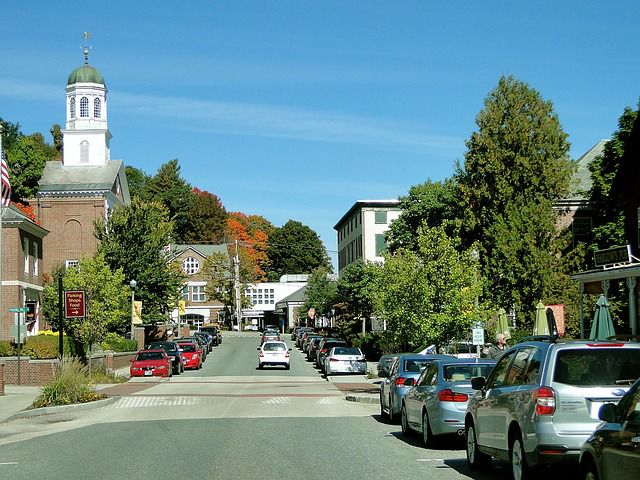
Average debt: $37,034
Pixabay.com

Average debt: $40,296
Ultima_Gaina / istockphoto

Average debt: $36,293
Davel5957

Average debt: $41,044
DepositPhotos.com

Average debt: $39,965
SeanPavonePhoto / istockphoto

Average debt: $30,449
sequential5

Average debt: $37,383
dypics

Average debt: $34,494
Deposit Photos

Average debt: $39,658
DepositPhotos.com

Average debt: $38,166
weaver1234

Average debt: $35,736
SeanPavonePhoto/istockphoto

Average debt: $40,882
” Darwin Brandis”

Average debt: $31,507
RiverNorthPhotography

Average debt: $38,632
DepositPhotos.com

Average debt: $35,689
DepositPhotos.com

Average debt:$33,965
AndreyKrav

Average debt:$37,560
istockphoto

Average debt:$41,270
DepositPhotos.com

Average debt:$37,499
thyegn / istockphoto

Average debt:$34,350
DepositPhotos.com
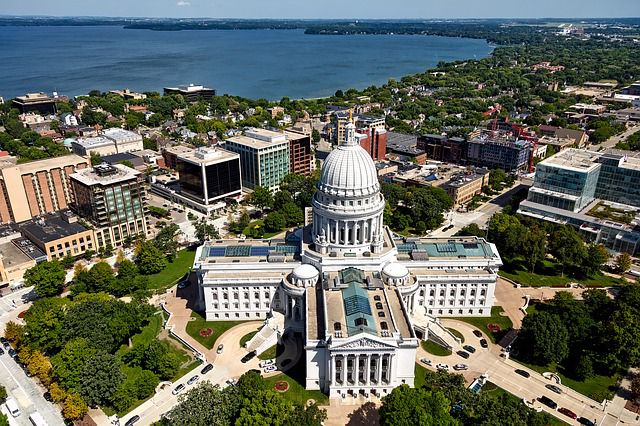
Average debt:$33,371
Pixabay.com

Average debt:$32,977
AnujSahaiPhotography

As you can see, the picture isn’t pretty no matter where you live, with most borrowers in America carrying more than $30,000 in student loan debt.
The states with the highest average student loan debt in 2020 were Maryland and Georgia, followed by California and Virginia. On the other end of the spectrum, borrowers living in North Dakota owed the least in student loan debt—although they still owed, on average, about $30,000.
SPONSORED: Find a Qualified Financial Advisor
1. Finding a qualified financial advisor doesn’t have to be hard. SmartAsset’s free tool matches you with up to 3 fiduciary financial advisors in your area in 5 minutes.
2. Each advisor has been vetted by SmartAsset and is held to a fiduciary standard to act in your best interests. If you’re ready to be matched with local advisors that can help you achieve your financial goals, get started now.
All of these facts point to the fact that student loan debt is something that a wide number of Americans have to contend with, regardless of whether they live in the midwest, west, east, northeast, or south.
Indeed, four of the states with the highest average student loan debt by borrower in 2020 are in disparate parts of the country, illustrating that it isn’t just one region that is dealing with a large amount of student loan balances. As such, it’s no surprise that Americans across the country are calling for student loan forgiveness from the Federal Reserve and the U.S. Department of Education.
Related: 11 Practical Methods to Pay off Student Loans Once and For All
DepositPhotos.com

Student loans are a complex topic that’s affecting a wide range of Americans. Whether you’re struggling to stay on top of federal student loans or a loan from a private lender, you’re not alone, as the chart above shows. The average student loan debt in America is more than $30,000 in most states, with several states cresting the $40,000 mark. As such, it’s no surprise that student debt forgiveness has the kind of support it does, particularly after a year and a half in a pandemic with student loan payments on pause.
Whether or not President Biden will choose to forgive a portion of student loans or keep loans on pause remains to be seen, even as congressmen and women continue to press him to do something about student debt relief. As a result, you must have a solid understanding of various loan products if you’re looking to enroll in school and ways to lower your student loan burden if you’re already struggling to make your loan repayments.
Student loans are a hot topic solely because of the weight they place on the more than 40 million Americans who carry this kind of educational debt. For many millennials, it may feel like student loans were sold to them as a necessary evil that wouldn’t have much bearing on their life, only to discover that student loans have been holding them back from property ownership and even having children. The best thing anyone can do in this situation continues to arm themselves with information, so that whatever happens on October 1st, 2021 doesn’t continue to set them back. It may seem difficult (especially if you’re a resident of Maryland, Georgia, Virginia, or California), but it is possible to chart a path forward.
This article originally appeared on JoyWallet and was syndicated by MediaFeed.org.
Deposit Photos

gradyreese
Featured Image Credit: DepositPhotos.com.