Edward S. Curtis, a visionary photographer of the early 20th century, embarked on a monumental endeavor to document the lives, traditions, and landscapes of North America’s indigenous inhabitants. His magnum opus, “The North American Indian,” was a vast collection spanning 20 volumes with over 40,000 photographs, capturing the essence of more than 80 tribes. Supported in part by financier J.P. Morgan and realizing the urgency as native ways of life faced rapid decline, Curtis traveled extensively, from the scorching Southwest deserts to the icy realms of the Arctic.
His methodology was holistic: he didn’t just take photographs. Curtis made recordings of music, detailed tribal histories, linguistic notes, and transcriptions of stories and rituals. He became deeply immersed in many of the communities he studied, often participating in ceremonies and rituals to gain a more profound understanding.
Curtis’s “The North American Indian” remains one of the most comprehensive records of its kind. While it has faced criticism over the years, mainly for its staged scenes or the romanticized lens through which Curtis viewed his subjects, it’s undeniable that his work preserved countless facets of indigenous cultures that might otherwise have been lost to time.
Here we gathered 25 photographs, each echoing the nuanced tapestry of Native American life as seen through the lens of Edward S. Curtis,
Image Credit: Wikipedia.
1. Navajo child
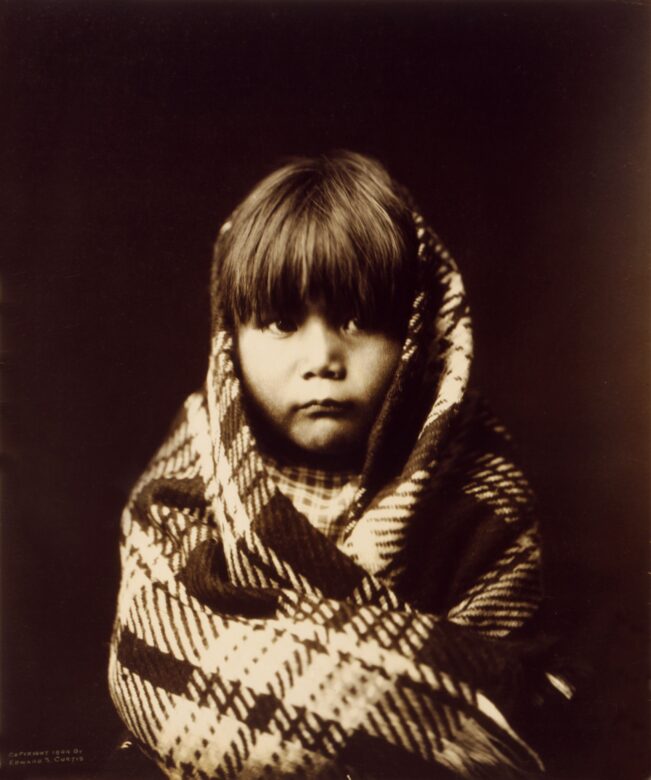
Among the evocative images captured by Edward S. Curtis in his odyssey through Native American life, his photographs of the Navajo stand out for their vivid portrayal of a tribe deeply rooted in its surroundings. In this poignant image of a Navajo child, Curtis’s lens captures more than a face; it mirrors the essence of a civilization.
Image Credit: Wikipedia.
2. Canyon de Chelly, Navajo

The Navajo, or Diné as they referred to themselves, were not of the Plains or Pueblo lineage, but a distinct tribe primarily settled in the expansive deserts of the American Southwest, especially Arizona, New Mexico, and Utah. Theirs was a landscape of vast canyons and mesas, stark yet beautiful in its solitude.
Image Credit: Wikipedia.
3. A ‘Yebichai Sweat’ Navajo medicine ceremony
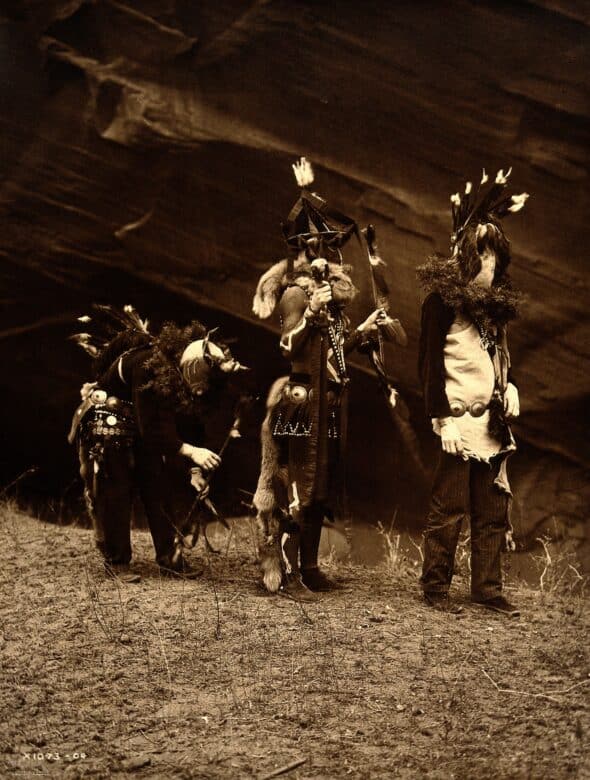
The spiritual essence of the Navajo truly comes alive in Curtis’s depictions of their ceremonies and medicine men. These sacred rituals, led by revered medicine men, bridge the divide between the physical and spiritual realms.
Image Credit: Wikipedia.
4. Navajo medicine man
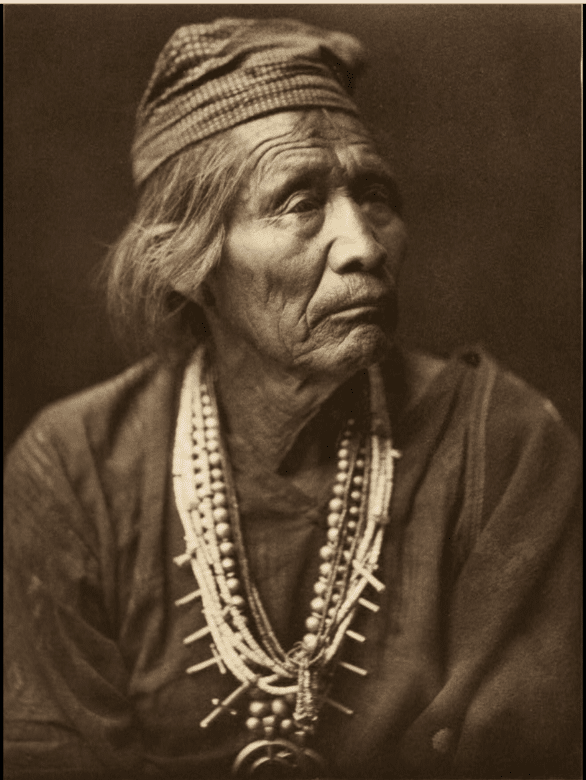
For the Navajo, healing is more than just treating an ailment; it’s restoring harmony, or hózhǫǫgi, in one’s life. In capturing these moments, Curtis gives us a rare glimpse into a world where every chant, dance, and herb carries profound meaning.
Image Credit: Wikipedia.
5. Yurok canoe on Trinity River

The Yurok tribe, primarily settled along the Klamath River in northern California, was deeply intertwined with the waterways that marked their territory. Fishing, especially salmon fishing, was both an economic activity and a ceremonial rite, central to the Yurok way of life. The river’s ebb and flow, and the sacred salmon runs, shaped the rhythm of Yurok existence.
Curtis, in his characteristic style, delved deep into Yurok culture. His images of the tribe were more than mere portraits; they were windows into a world where nature and man were deeply connected. He captured the Yurok in their daily activities, their ceremonies, and their interactions with the land and water.
Image Credit: SmithsonianInstitution/Flickr.
6. Wishram woman in bridal garb, 1910

The Wishham tribe, who resided along the Columbia River in the Pacific Northwest, celebrated marriage with grandeur and ritualistic fervor. A bride’s ensemble, meticulously prepared, spoke volumes about her family’s status and the tribe’s rich cultural tapestry. The headdress, often made with intricate layers and embellishments, was particularly significant. It was not merely an accessory but a sym
Image Credit: Wikipedia.
7. Wedding party, Qagyuhl
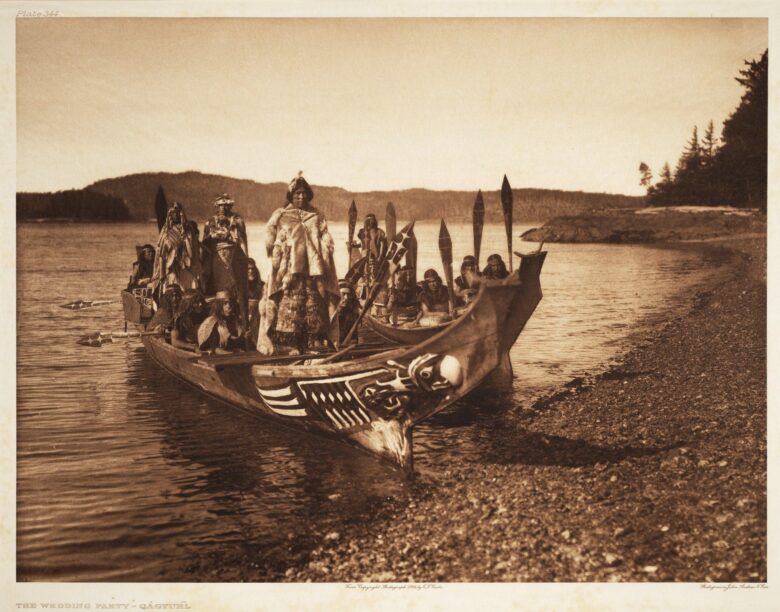
Curtis’s mission to capture the essence and traditions of North American indigenous tribes took him to the far reaches of the continent. Among the tribes he delved into, the Qagyuhl (often spelled Kwakiutl or Kwakwaka’wakw) of the Pacific Northwest stands out prominently. Their vivid and intricate ceremonies, often involving elaborate masks and dramatic dances, provided Curtis with some of his most iconic images.
Image Credit: SmithsonianInstitution/Flickr.
8. Masked dancers, Qagyuhl
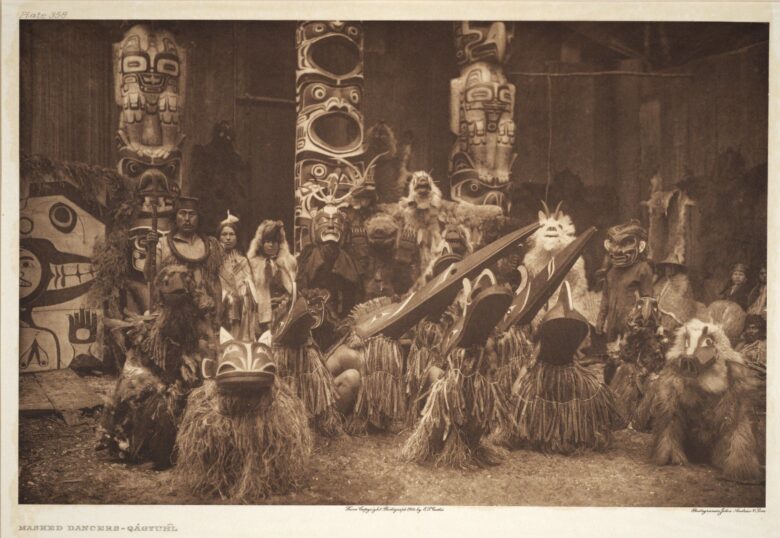
Curtis was particularly captivated by the Qagyuhl’s winter ceremonials, a series of dances and performances that lasted for days. These ceremonies showcased the tribe’s spiritual beliefs, hierarchical structures, and stories passed down through generations.
Image Credit: SmithsonianInstitution/Flickr.
9. Kwakwakawakw potlatch with dancers and singers
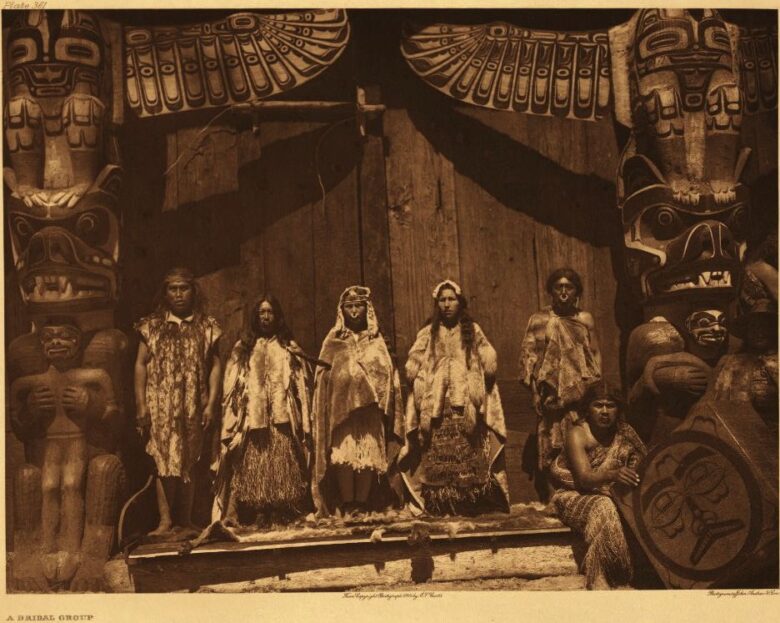
One of Curtis’s most famous photographs from this tribe depicts a Qagyuhl man dressed in a fringed outfit, wearing a transformative mask. Such masks, often with movable parts, were a pivotal part of their ceremonies, allowing wearers to embody different characters or spirits.
Image Credit: Wikipedia.
10. Vash Gon, Jicarilla
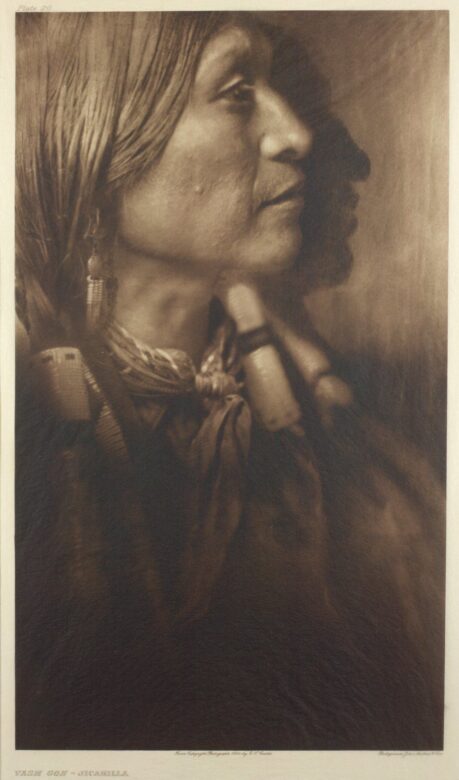
The Jicarilla Apache historically roamed the territories of present-day northern New Mexico and southern Colorado. Their name, “Jicarilla”, stems from the Spanish word for “little basket”, a nod to their exquisite basket-weaving skills.
Image Credit: SmithsonianInstitution/Flickr.
11. Jicarilla maiden

In his interactions with the Jicarilla, Curtis was likely captivated by the tribe’s adaptability and their harmonious relationship with the landscape. The high desert plains, with its sprawling vistas, punctuated by rugged mountains and deep canyons, served as the backdrop to many of his photographs.
Image Credit: SmithsonianInstitution/Flickr.
12. Uwat, Comanche
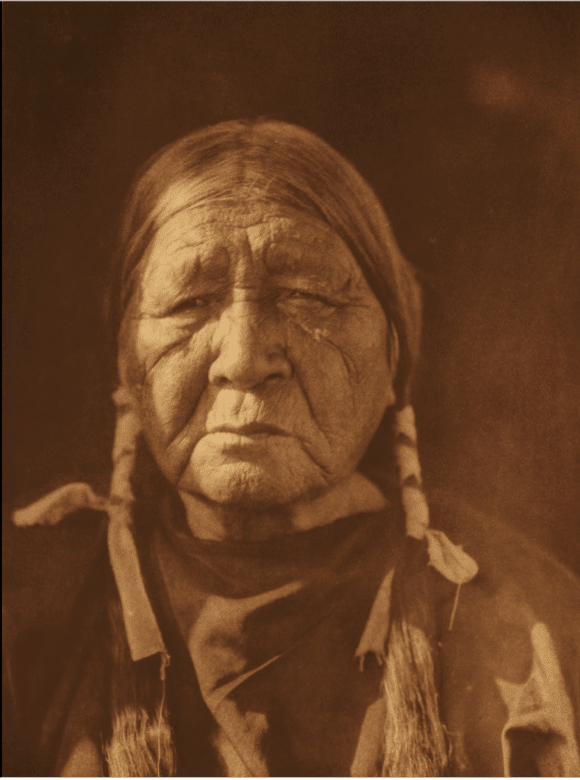
Curtis turned his lens toward the Comanche, the once-dominant “Lords of the Plains.” Noted for their unparalleled horsemanship and expansive territory, the Comanche were adept buffalo hunters and traders.
Image Credit: SmithsonianInstitution/Flickr.
13. Three chiefs
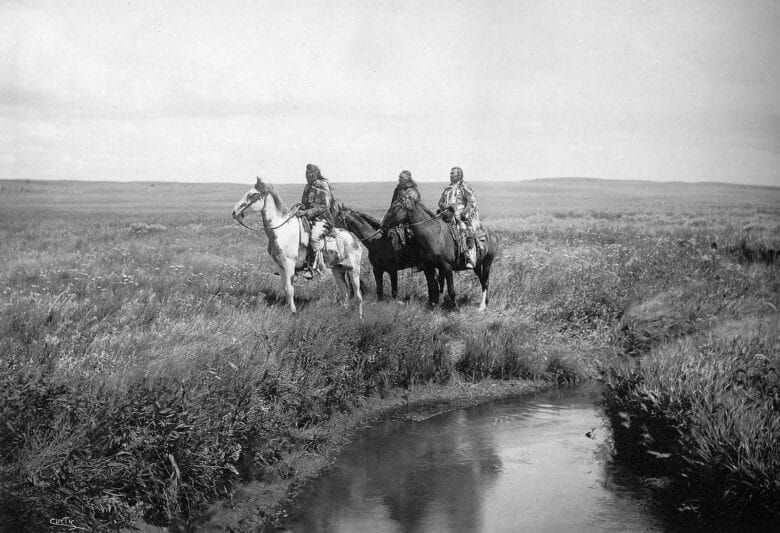
Curtis’s “Three Chiefs” stands as one of his iconic photographs, embodying the essence of Native American leadership and the proud legacy of the Plains tribes.
“Three Chiefs” showcases three mounted leaders, their imposing presence accentuated against the vastness of the Montana landscape. Their regal bearing, combined with traditional attire, speaks to the profound respect accorded to tribal leadership and the weight of responsibility they shouldered.
Image Credit: Wikipedia.
14. Princess Angeline, Duwamish, 1896
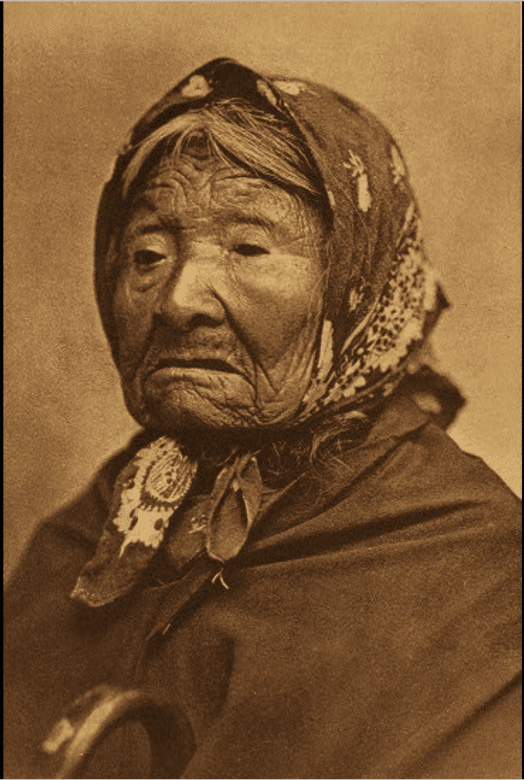
In 1896, Edward S. Curtis captured a haunting portrait titled “Princess Angeline,” spotlighting the eldest daughter of Chief Seattle, leader of the Duwamish Tribe. This image is emblematic of Curtis’s early work, revealing the intimate character and soul of his subjects. Princess Angeline, or Kikisoblu, is depicted with deep-set eyes reflecting both wisdom and melancholy, a countenance etched with the story of her people. Her traditional attire and the simplicity of her surroundings underline the Duwamish’s enduring connection to their ancestral lands and traditions. By the time of this photograph, Angeline, living in Seattle, had witnessed profound shifts as urbanization encroached upon Duwamish territories. Curtis’s portrayal serves not only as a tribute to Angeline’s legacy but also as a poignant commentary on the resilience of indigenous identities amidst societal transformations.
Image Credit: Wikipedia.
15. Planing a raid, 1907
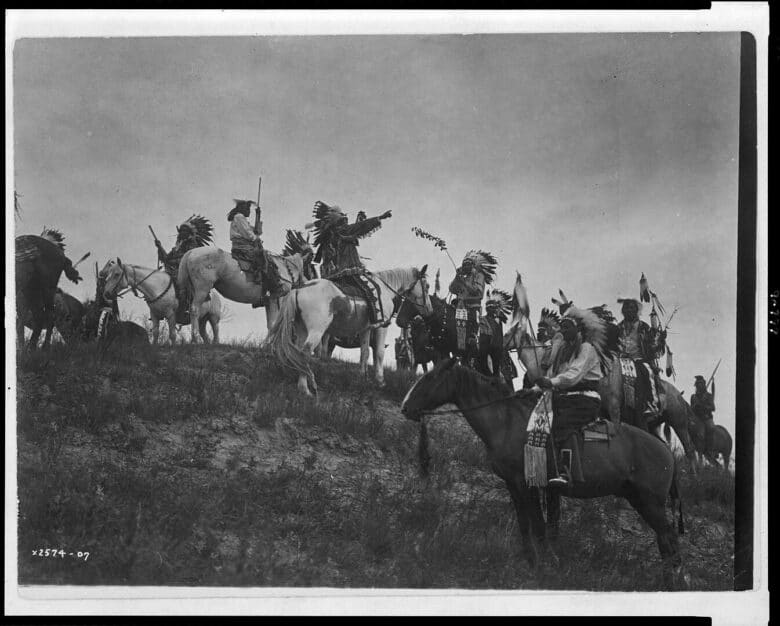
While his collection holds serene moments of daily routines and rituals, photographs like “Planning a Raid” provide a glimpse into the more tense and strategic undertakings of tribes. The image echoes the gravity of decisions tribes had to make to defend their territories, resources, or honor.
Image Credit: Library of Congress.
16. Piegan Blackfeet encampment. Tepees with mountains in background
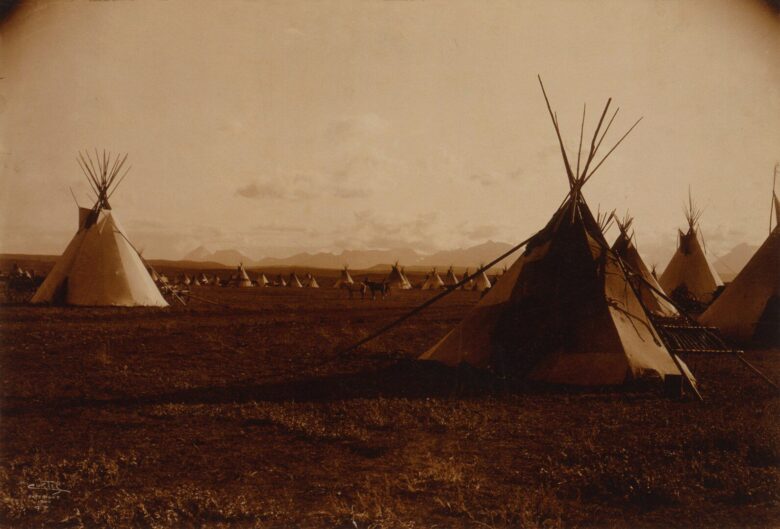
The tepees, conical structures tailored for nomadic lifestyles, not only served as shelters but also symbolized familial units, traditions, and tribal identity. Set against the towering majesty of the mountains, these tepees underscore the deep-rooted connection tribes maintained with the land.
Image Credit: Wikipedia.
17. Luqaiot, Kittitas
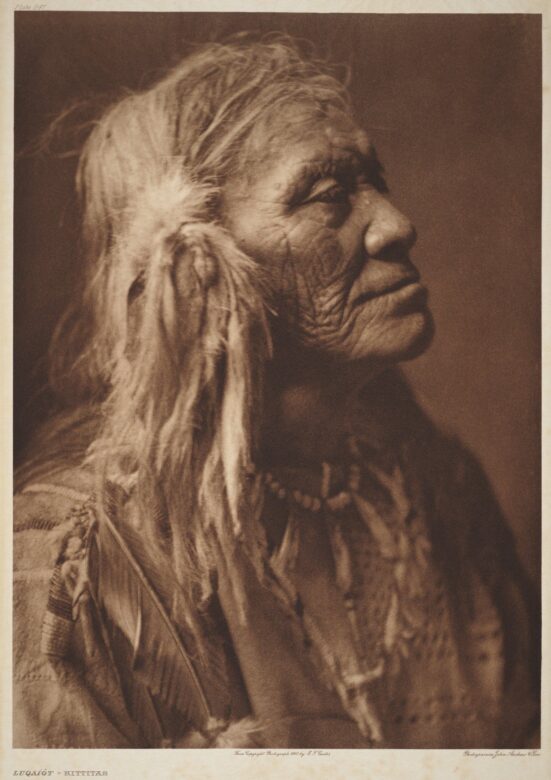
In the Pacific Northwest, Curtis encountered the Kittitas, a tribe deeply intertwined with the waterways of Washington. Their profound connection to rivers became evident in his shots, which often highlighted their adept salmon fishing techniques and the vital role these waters played in their culture.
Image Credit: SmithsonianInstitution/Flickr.
18. Kotsuis and Hohhuq, Nakoaktok

Venturing further, Curtis met the Nakoaktok of the Pacific Northwest Coast. His photographs spotlighted their rich potlatch ceremonies, where stories were shared, and status asserted through the gifting of valuable items.
Image Credit: SmithsonianInstitution/Flickr.
19. In the land of the Sioux
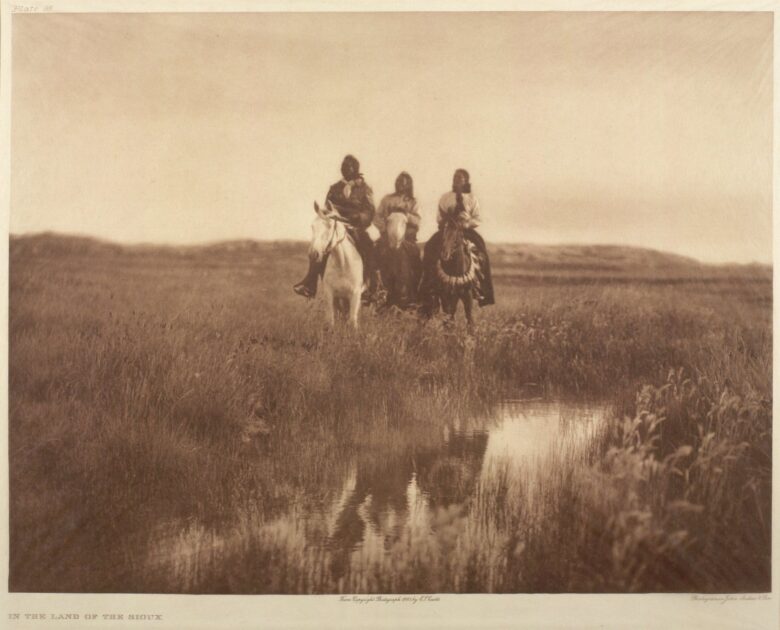
Journeying to the Great Plains, Curtis chronicled the Sioux, a tribe whose name became synonymous with the spirit of resistance and pride. Through his lens, the grandeur of their ceremonial dances, the intensity of their warriors, and the sacredness of their rituals like the Sun Dance were immortalized.
Image Credit: SmithsonianInstitution/Flickr.
20. Hopi women preparing a meal
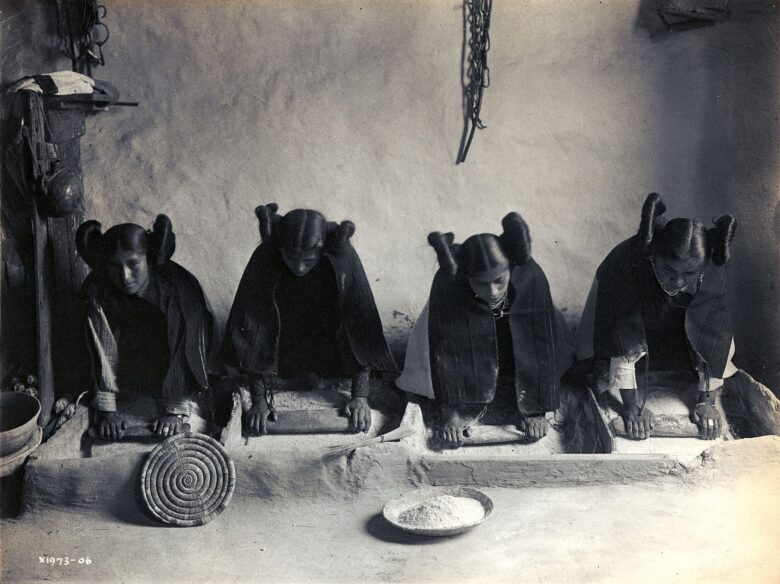
In the arid landscapes of the Southwest, Curtis was introduced to the Hopi. One of the most iconic images Curtis captured of the Hopi is of a young woman, exemplifying the unique “squash blossom” hairstyle, a coiffure traditionally worn by Hopi maidens.
Image Credit: Wikipedia.
21. Eskadi, Apache

The fierce and nomadic Apache, known for their warrior culture and resistance against encroachments, were also subjects of Curtis’s attention. His photos captured not just their confrontations, but also moments of tenderness and tradition, revealing the multifaceted nature of their society.
Image Credit: SmithsonianInstitution/Flickr.
22. Apsaroke

The Apsaroke, or Crow tribe, of the Yellowstone River valley greeted Curtis with their renowned horse culture. His images of them often reflected the bond between the Apsaroke people and their equine companions, highlighting their status as skilled horsemen.
Image Credit: Wikipedia.
23. Dancing to restore an eclipsed moon, Qagychl
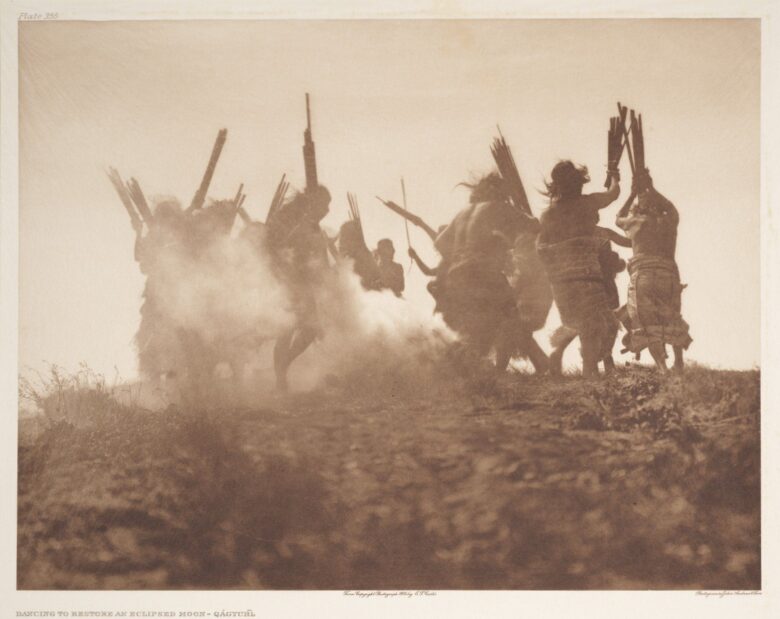
With the Qagyuhl, Curtis bore witness to a rare event: “Dancing to Restore an Eclipsed Moon.” This dance, steeped in ritual and belief, was performed to save the world from darkness, a testament to the tribe’s profound cosmological beliefs.
Image Credit: SmithsonianInstitution/Flickr.
24. Crows Heart Mandan, c. 1908
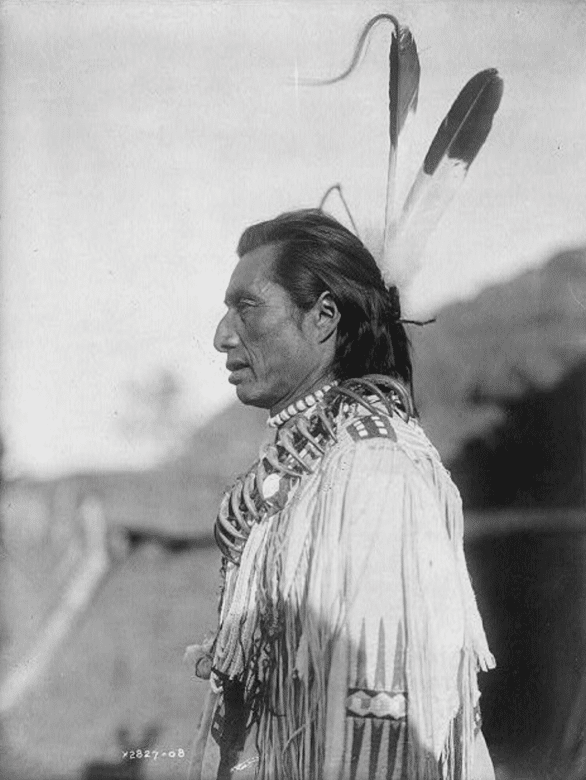
In “Crow’s Heart, Mandan, c. 1908,” Curtis encapsulated the dignity and stature of a Mandan warrior. The Mandan, known for their earth lodges and vibrant trade hubs along the Missouri River, found a place in history through Curtis’s meticulous documentation.
Image Credit: Wikipedia.
25. Cheyenne maiden

The Cheyenne, renowned warriors of the Plains, have a rich tapestry of traditions and rituals that stretch far beyond their prowess in battle. Amidst this backdrop, Edward S. Curtis, with his discerning eye, was drawn to the quieter, yet equally profound aspects of Cheyenne culture.
One such photograph captures a Cheyenne maiden, a figure embodying grace, resilience, and the quiet strength of her people.
This article was produced and syndicated by MediaFeed.
Image Credit: SmithsonianInstitution/Flickr.
More from MediaFeed
Captivating, rare photos of Japan’s last Samurai
- Rare photos of Bonnie & Clyde reveal the love between America’s most notorious criminal couple
- 10 of the wildest UFO stories we’ve ever heard
Like MediaFeed’s content? Be sure to follow us.
Image Credit: Wikipedia.