If you received student loan forgiveness in 2022, you won’t have to pay federal income tax on your forgiven debt, but your state might consider it taxable income.
Filing your taxes can be complex, and it differs for each filer. Understanding whether you might be impacted by a student loan forgiveness tax is important for knowing what you may owe. Keep reading to learn more about student loan forgiveness and tax.
Image Credit: visualspace/istockphoto.
Is Student Loan Forgiveness Taxable?

Typically, when you file your income taxes, you need to determine whether you owe federal and state taxes on your earnings. The same consideration applies to any student loan cancellation amount you received because it’s considered income. Here’s what you need to know about paying taxes on student loan forgiveness at the federal and state level.
Image Credit: Andrii Dodonov/istockphoto.
Federal Taxes and Forgiveness
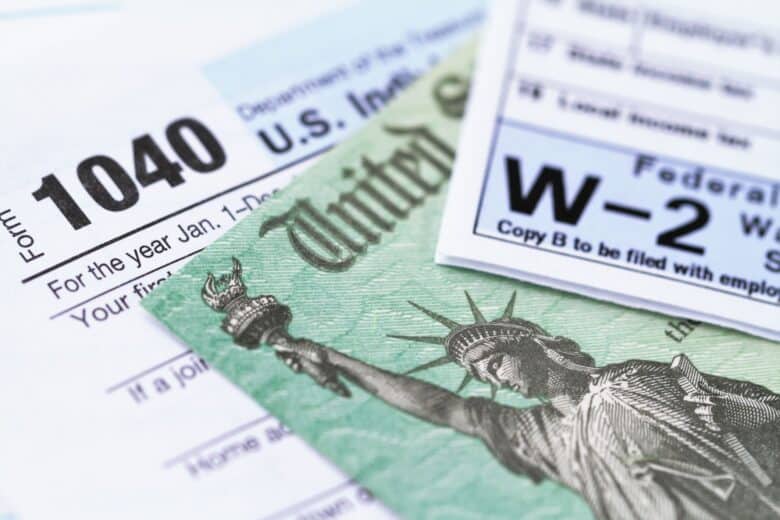
When it comes to paying federal taxes on student loan forgiveness, the IRS code is clearer than state rules. Thanks to the American Rescue Plan Act of 2021 (ARPA) enacted during the pandemic, borrowers who receive student loan forgiveness under any program from 2021 to 2025 are not required to pay federal taxes on student loan forgiveness.
This rule applies whether the canceled debt was granted through a long-standing forgiveness program like an income-driven repayment plan, or under the Biden Administration’s ongoing efforts to cancel $10,000 of student loan debt or up to $20,000 for Pell Grant recipients.
Image Credit: NoDerog/istockphoto.
State Taxes and Forgiveness

At the state level, whether student loan forgiveness is taxable isn’t as straightforward. States have varying definitions of what’s considered taxable income, and certain states (such as Alaska, Florida, Tennessee, and Texas, to name a few) don’t impose an income tax at all.
Whether or not you may have to pay taxes on student loan forgiveness depends on whether your state conforms to the federal tax code. In states that practice conformity with federal treatment of forgiven student loans, you might not be required to pay taxes on your discharged debt.
However, the type of conformity differs between states. Some adopt what’s called “static conformity,” implementing the federal code during a specific time. Other states practice “rolling conformity” which means they use the federal tax code as their basis each tax year. And still other states adopt only certain sections of the tax code.
What this means is that you might have to pay taxes on student loan forgiveness if your state doesn’t conform to the Internal Revenue Code. But it also depends on the type of student loan forgiveness you received. For example, most states generally adhere to the federal treatment for forgiveness under the Public Service Loan Forgiveness (PSLF) program, so you would not be taxed on canceled PSLF debt.
Image Credit: hobo_018/istockphoto.
Who May Be Taxed on Their Student Loan Forgiveness

Under the standard Internal Revenue Code, canceled personal debt, such as forgiven student loans, are taxable events.
However, there’s usually an exception for loan forgiveness that was granted under a forgiveness program that requires a service contract in exchange for cancellation, like PSLF, federal Teacher Loan Forgiveness, and the Loan Repayment Programs under the National Health Services Corps Loan Repayment Program.
Borrowers who received forgiveness under another discharge program, like Closed School Loan Cancellation, also typically won’t incur federal taxes on the forgiven amount.
Normally, individuals who were granted student loan forgiveness under certain programs, like through an income-driven repayment plan, might face additional income taxes under standard tax code. However, thanks to ARPA, higher education loans that are forgiven through 2025 are not considered taxable on federal returns.
Image Credit: Hero Images/istockphoto.
How Is Student Loan Forgiveness Taxed?
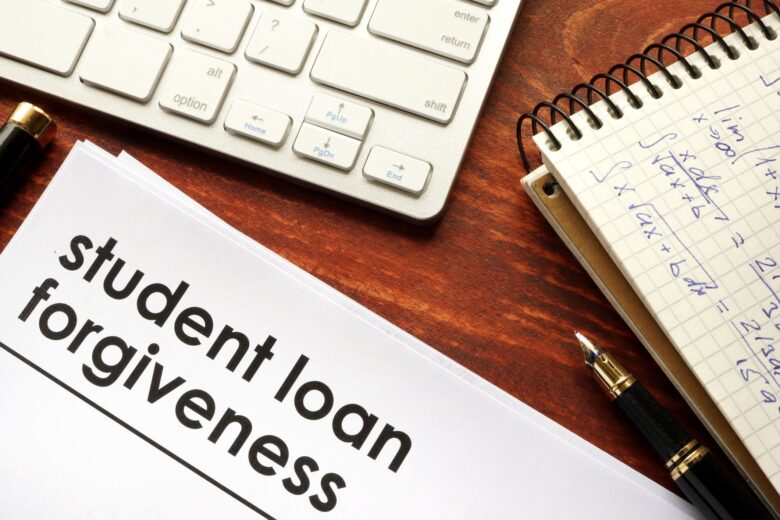
Student loan forgiveness is technically considered a cancellation of debt. As such, it’s typically taxable as personal income. However, the IRS tax code exempts forgiven student loan debt that’s discharged between 2021 to 2025 — meaning the amount that’s forgiven isn’t included in your federal income tax calculation.
If you owe state taxes on your forgiven debt, the calculation can vary between states. Some apply a flat income tax rate which makes the calculation for your student loan forgiveness tax, if applicable, simpler to determine. However, states that apply a graduated income tax rate system use a tiered rate based on income brackets. You should check to see how the calculation is done in your state.
Is student loan forgiveness taxable? Ultimately, whether you’re liable for taxes on discharged student debt and how much you’ll pay depends on 1) the program that granted the discharge (for instance, PSLF doesn’t incur federal taxes, and most states don’t tax forgiveness under this program), 2) whether your state chooses to include the canceled debt as taxable income, 3) how much student loan debt of yours was forgiven, and 4) your state income tax rate(s).
Image Credit: designer491/istockphoto.
Do You Have to Report Student Loan Forgiveness on Tax Returns?
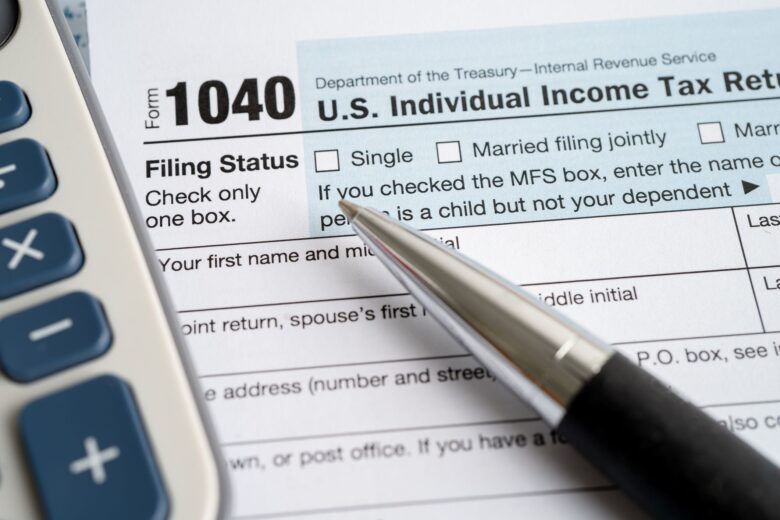
In terms of your federal tax return, the IRS states that, generally, canceled debt must be reported as income. However, if the forgiven debt isn’t taxable — which is currently the case under federal code for forgiven student loans — you can exclude it from your gross income calculation.
However, when calculating your gross income for state taxes, refer to your state’s income tax rules and consider consulting a certified tax professional to confirm your state’s tax requirements regarding student loan forgiveness.
Image Credit: sasirin pamai/istockphoto.
The Takeaway

Although you don’t have to pay federal income tax on forgiven student loans through 2025, you might owe state taxes on the discharged amount, depending on the specific rules in your state. Check your state’s income tax regulations. It might also be wise to discuss your student loan forgiveness tax liability with a certified tax expert.
If you don’t qualify for student loan forgiveness, but you’re considering an alternative repayment option, consider whether refinancing your student loans might be a good fit. Refinancing may help you access competitive interest rates and favorable terms. But be aware that refinancing federal loans makes you ineligible for federal benefits, like student loan deferment and student loan forbearance, as well as future student loan forgiveness programs.
Learn More:
This article originally appeared on SoFi.com and was syndicated by MediaFeed.org.
Please understand that this information provided is general in nature and shouldn’t be construed as a recommendation or solicitation of any products offered by SoFi’s affiliates and subsidiaries. In addition, this information is by no means meant to provide investment or financial advice, nor is it intended to serve as the basis for any investment decision or recommendation to buy or sell any asset. Keep in mind that investing involves risk, and past performance of an asset never guarantees future results or returns. It’s important for investors to consider their specific financial needs, goals, and risk profile before making an investment decision.
The information and analysis provided through hyperlinks to third party websites, while believed to be accurate, cannot be guaranteed by SoFi. These links are provided for informational purposes and should not be viewed as an endorsement. No brands or products mentioned are affiliated with SoFi, nor do they endorse or sponsor this content.
Communication of SoFi Wealth LLC an SEC Registered Investment Advisor
SoFi isn’t recommending and is not affiliated with the brands or companies displayed. Brands displayed neither endorse or sponsor this article. Third party trademarks and service marks referenced are property of their respective owners.
Communication of SoFi Wealth LLC an SEC Registered Investment Adviser. Information about SoFi Wealth’s advisory operations, services, and fees is set forth in SoFi Wealth’s current Form ADV Part 2 (Brochure), a copy of which is available upon request and at www.adviserinfo.sec.gov. Liz Young is a Registered Representative of SoFi Securities and Investment Advisor Representative of SoFi Wealth. Her ADV 2B is available at www.sofi.com/legal/adv.
Image Credit: PeopleImages/istockphoto.
More from Mediafeed

Will my federal student loan payment change in 2023?
Image Credit: hobo_018/istockphoto.