Increasing Food Costs
Conventional personal finance wisdom will tell you cooking meals at home, instead of eating out, is one of the best ways to save money. But, seeing as the cost of groceries increased 11.3% last month, this may no longer be the case.
This sharp price spike is around 5% higher than the overall rate of inflation, and it’s causing some consumers to make tradeoffs when shopping. To compensate for higher food prices, many are cutting back on purchases of other items. In turn, this is forcing retailers to find other strategies to drive those purchases back up.
Walmart’s Data
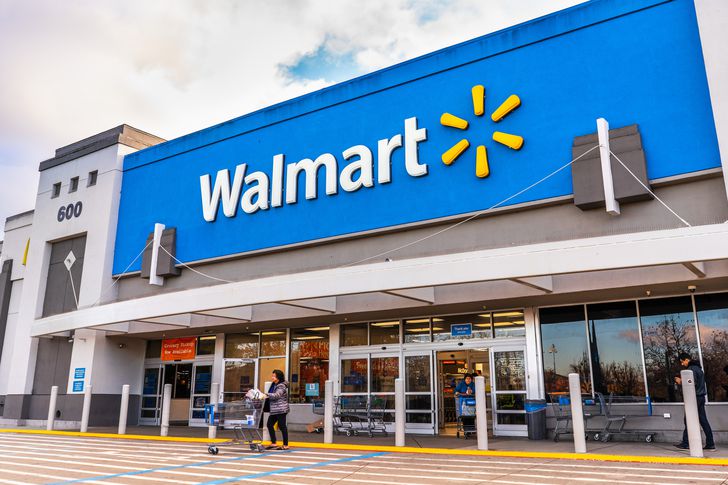
As the world’s largest retailer by revenue, Walmart’s (WMT) sales can act as a microcosm of the American economy and often yield key insights into how consumers are shopping.
On that note, CEO Doug McMillon recently stated that the retail giant is seeing increased food prices lead to softer sales of electronics, toys, apparel, and home goods. Executives also noticed that Americans are making “choiceful, discerning, thoughtful” decisions about what they buy, and they are going above and beyond to hunt for bargains.
Discounts Coming Your Way?
Elevated food prices put pressure on sales in other categories, which in turn can impact retailers’ bottom lines. In fact, Walmart, where groceries comprise 56% of sales, is far better protected from the trend than, for example, Target (TGT), where groceries account for only 20% of sales, or Home Depot (HD), where they aren’t sold at all.
Although diminished consumer spending is driving the trend, it could wind up being a good thing for shoppers. With profit under pressure, retailers will look to other ways to clear out inventory of non-food items — including offering discounts. In other words, while food prices continue to rise, discounts on everything from electronics to apparel to toys could well be on the horizon.
Learn More:
This article originally appeared on SoFi.com and was syndicated by MediaFeed.org.
Please understand that this information provided is general in nature and shouldn’t be construed as a recommendation or solicitation of any products offered by SoFi’s affiliates and subsidiaries. In addition, this information is by no means meant to provide investment or financial advice, nor is it intended to serve as the basis for any investment decision or recommendation to buy or sell any asset. Keep in mind that investing involves risk, and past performance of an asset never guarantees future results or returns. It’s important for investors to consider their specific financial needs, goals, and risk profile before making an investment decision.
The information and analysis provided through hyperlinks to third party websites, while believed to be accurate, cannot be guaranteed by SoFi. These links are provided for informational purposes and should not be viewed as an endorsement. No brands or products mentioned are affiliated with SoFi, nor do they endorse or sponsor this content.
Communication of SoFi Wealth LLC an SEC Registered Investment Advisor
SoFi isn’t recommending and is not affiliated with the brands or companies displayed. Brands displayed neither endorse or sponsor this article. Third party trademarks and service marks referenced are property of their respective owners.
Communication of SoFi Wealth LLC an SEC Registered Investment Adviser. Information about SoFi Wealth’s advisory operations, services, and fees is set forth in SoFi Wealth’s current Form ADV Part 2 (Brochure), a copy of which is available upon request and at www.adviserinfo.sec.gov. Liz Young is a Registered Representative of SoFi Securities and Investment Advisor Representative of SoFi Wealth. Her ADV 2B is available at www.sofi.com/legal/adv.
More from MediaFeed:
How to invest and profit during inflation

The inflation rate, or the rate at which prices are increasing, is going up in 2021, with the core U.S. inflation rate up to 5.4% in mid-2021. That’s a fairly big number, given the U.S. inflation rate stood at 1.4% only last January.
That has an impact on both consumers and investors. When inflation rises, consumer prices rise with it. Common goods like lumber, gasoline, semiconductors and grocery items like bacon and bananas have seen prices soar this year as a result of rising inflation, meaning that consumers’ paychecks might not go as far. If wages are rising at the same time as inflation, the impact on consumers is much less severe.
Rising inflation can also affect the stock market. Traditionally, rising inflation has tempered stock market growth, as consumers have less money to spend and the Federal Reserve may step in to check rising inflation by making loans and credit more expensive with higher interest rates.
What’s an investor to do when inflation is on the upswing? Often, it means adjusting investment portfolios to protect assets against rising prices and an uncertain economy.
Related: How can I invest $1,000?
fotopoly/istock

Inflation is largely defined as a continuing rise in prices. Some inflation is OK– historically, economic booms have come with an inflation rate at about 1.0%-to-2.0%, a range that reflects solid consumer sentiment amidst a growing economy. An inflation rate of 5% or more can be a different story, with higher rate levels associated with an overheated economy.
Inflation rates often correlate to economic growth, which is not always bad for consumers. When economic growth occurs, consumers and businesses have more money and tend to spend it. When cash is flowing through the economy, demand for goods and services grows and that leads food and services producers to raise prices. That triggers a rise in inflation, with the inflation rate growing even more as demand for goods and services outpaces supply.
Conversely, when demand slides and supply is in abundance, prices fall and the inflation rate tumbles as economic growth wanes. In 2021, however, the US economy is heating up after muted growth in 2020, and the inflation rate is on a significant upward trajectory.
In the United States, the main barometer of inflation is the Consumer Price Index (CPI). The CPI encompasses the retail price of goods and services in common sectors such as housing, healthcare, transportation, food and beverage, and education, among other economic sectors.
The Federal Reserve uses a similar index, the Personal Consumption Expenditures Price Index (PCE) in its inflation-related measurements. Economists and investors track inflation on both a monthly and an annual basis.
marchmeena29 / istockphoto

Historically there are two types of inflation: cost-push inflation and demand-pull inflation.
CasPhotography/istock

This type of inflation is an economic condition when goods and services are limited in supply, and where demand “pushes up” prices on those same goods and services. Take the cost of lumber in the first half of 2021, which was up substantially. Any increased price of lumber for building and construction leads to a lower lumber supply. With demand for lumber both sustained and intense, the price of lumber rises – or is “pushed” higher. Cost-push inflation also often occurs following a natural disaster (i.e., like when a hurricane closes oil refineries, leading to a lower supply of oil and gas, which leads to higher prices for both commodities.)
DepositPhotos.com

This type of inflation occurs when prices rise in the consumer economy. When jobs are plentiful and consumer sentiment is high, or the government has pumped a large fiscal stimulus into the economy. People tend to spend more money on goods and services. Yet if the goods consumers are limited (such as smartphones or used cars), competition for those goods rises, and so do the prices for those goods.
Demand-driven inflation is often referred to as “too many dollars chasing too few goods,” meaning the competition among consumers for specific goods and services drives prices significantly higher.
DepositPhotos.com

Inflation impacts both stock and bond markets but in different ways.
HAKINMHAN/istockphoto
Inflation has an indirect impact on stocks, primarily reflecting consumer purchasing power. When inflation rises, that puts pressure on stock market returns to keep up with the inflation rate. Consider a stock portfolio that earns 5% before inflation. Add the 5.4% inflation rate U.S. investors have seen (on average) over the past year, and the portfolio actually loses 0.4% on an inflation-adjusted basis. Plus, as prices rise, retail investors may have less money to put into the stock market, reducing market growth.
Conversely, some inflation stocks can perform well in periods of high inflation. When inflation hits the consumer economy, companies boost the prices of their goods and services to keep profits rolling, as their cost of doing business rises at the same time. Consequently, rising prices contribute to higher revenues, which helps boost the price of a company’s stock price. Investors, after all, want to be in business with companies that have strong revenues.
Overall, however, rising inflation raises the investment risk of an economic slowdown. That scenario doesn’t bode well for strong stock market performance, as uncertainty about the overall economy tends to curb market growth, thus reducing company earnings which leads to sliding equity prices.
DepositPhotos.com

Inflation can crimp bond market performance, as well. Most bonds like US Treasury, corporate, or municipal bonds offer a fixed rate of return, paid in the form of interest or coupon payments. As fixed-income securities offer stable, but fixed, investment returns, rising inflation can eat it those returns, further reducing the purchasing power of bond market investors
Depositphotos

Investors can take several action steps to protect and potentially outperform with their portfolios during periods of high inflation. You don’t have to worry about choosing the best investments during hyperinflation, because it’s highly unlikely that runaway inflation will occur in the United States.
Choosing inflation investments is like selecting investments at any other time – you’ll need to evaluate the security itself, and how it fits into your overall portfolio strategy both now and in the future.
nortonrsx

For instance, investors might consider stocks where the underlying company can boost prices in times of rising inflation. Consider a big box store with a global brand and a massive customer base. In that scenario, the retailer could raise prices and not only cover the cost of rising inflation, but also continue to earn profits in a high inflation period.
DepositPhotos.com

Think of a consumer goods manufacturer that already has a healthy portion of the toothpaste or shampoo market, and doesn’t need excess capital as it’s already well-invested in its own business. Companies with low capital needs tend to do better in inflationary periods, as they don’t have to invest more cash into the business just to keep up with competitors – they already have a solid market position and already have the means to produce and market their products.
DepositPhotos.com

Treasury Inflation-Protected Securities can be a good hedge against inflation. By design, TIPS are like most bonds that pay investors a fixed rate twice annually. They’re also protected against inflation as the principal amount of the securities is adjusted for inflation, based on Consumer Price Index levels.
webking / istockphoto

Precious metals, oil and gas and orange juice can all be good inflation hedges as well. Most commodities are tied to the rate of inflation and can capitalize in high inflationary periods. Take the price of gasoline, which rises as inflation heats up. Businesses and consumers are highly reliant on oil and gas, and will likely keep filling up the tank and heating their homes, even if they have to pay higher prices to do so. That makes oil – and other commodities – a good portfolio component when inflation is on the move.
DepositPhotos.com
By investing in short-term bonds and bonds funds, you’re not locked into today’s low rates for the long term. When interest rates rise, you can purchase new investments that reflect more favorable rates.
DepositPhotos.com
Investors should proceed with caution when inflation rises. While low inflation can indicate a healthy economy, high inflation can be a precursor to a recession. Massive changes to a well-planned portfolio may do more harm than good, and you shouldn’t toss out a long-term investment plan shouldn’t be deep-sixed just because inflation is moving upward.
Learn more:
This article originally appeared on SoFi.comand was syndicated by MediaFeed.org.
SoFi Invest
The information provided is not meant to provide investment or financial advice. Investment decisions should be based on an individual’s specific financial needs, goals and risk profile. SoFi can’t guarantee future financial performance. Advisory services offered through SoFi Wealth, LLC. SoFi Securities, LLC, member FINRA/SIPC. SoFi Invest refers to the three investment and trading platforms operated by Social Finance, Inc. and its affiliates (described below). Individual customer accounts may be subject to the terms applicable to one or more of the platforms below.
1) Automated Investing—The Automated Investing platform is owned by SoFi Wealth LLC, an SEC Registered Investment Advisor (“Sofi Wealth“). Brokerage services are provided to SoFi Wealth LLC by SoFi Securities LLC, an affiliated SEC registered broker dealer and member FINRA/SIPC, (“Sofi Securities).
2) Active Investing—The Active Investing platform is owned by SoFi Securities LLC. Clearing and custody of all securities are provided by APEX Clearing Corporation.
3) Cryptocurrency is offered by SoFi Digital Assets, LLC, a FinCEN registered Money Service Business.
For additional disclosures related to the SoFi Invest platforms described above, including state licensure of Sofi Digital Assets, LLC, please visit www.sofi.com/legal. Neither the Investment Advisor Representatives of SoFi Wealth, nor the Registered Representatives of SoFi Securities are compensated for the sale of any product or service sold through any SoFi Invest platform. Information related to lending products contained herein should not be construed as an offer or pre-qualification for any loan product offered by SoFi Lending Corp and/or its affiliates.
DepositPhotos.com
Featured Image Credit: Sundry Photography/istockphoto.