
The amount of money you need to start a business can seem intimidating. Even though you may have a great idea, nothing will ever come of it, if you don’t have the funding to capitalize on that idea. This is one reason why crowdfunding has really taken off in recent years. It enables businesses to access the money they need without working through the hurdles of a traditional lender. Loan crowdfunding (also known as debt crowdfunding or peer-to-peer lending) is another alternative source of capital for small businesses.
Loan crowdfunding is when a number of investors (a.k.a. the “crowd”) lend money to early-stage businesses or individuals through a regulated platform. In some cases, crowdfunded loans can be easier to get and offer better terms, as
well as lower interest rates, than traditional bank loans. Read on to learn more about how debt crowdfunding works, plus how it compares to other startup funding options for small businesses.
Related: A guide to crowdfunding for business
What is Loan Crowdfunding?
Loan, or debt-based, crowdfunding is a crowdfunding model used to raise capital by taking loans from several investors (lenders) who expect to be repaid for their loan with added interest over the period that the loan was used. The entire process takes place through a crowdfunding platform. In removing many of the middlemen that would be involved if the transaction happened through a bank, debt crowdfunding can keep the costs down for borrowers while potentially giving the lenders improved rates of return. Loan crowdfunding differs from other forms of crowdfunding. Equity crowdfunding, for example, gives investors partial ownership of a company if they invest in the equity crowdfunding campaign. With reward crowdfunding, on the other hand, a business provides investors with a reward, such as early access to the new product, but doesn’t offer any repayment in the future.
What Are the Different Types of Loan Crowdfunding?
There are three main types of loan crowdfunding: P2P Lending Also known as peer-to-peer lending, this is when potential investors are matched with borrowers in search of raising capital. Depending on the loan amount, a borrower may receive funds from a single investor or a group of investors. While borrowers are able to gain access to needed capital without having to meet a lender’s credit requirements, credit scores may be taken into account when calculating interest. Micro Lending Much like P2P lending, micro loans involve individuals issuing loans directly to borrowers. The difference is that these loans are often utilized to support non-profit organizations or underserved communities, but in the U.S. and in developing countries.
Another difference is that the amounts tend to be smaller. According to the U.S. Small Business Association (SBA), a microloan is anything under $50,000. However, many micro loan platforms like Kiva typically provide much smaller loans. Invoice Financing This allows a business to borrow against unpaid invoices owed by clients. It’s essentially a line of credit that makes up for any hiccups in cash flow because of delinquent payments. Instead of harassing customers for money, a company that takes advantage of invoice financing can remain on good terms with all of its clients. However, the investors keep a percentage of the invoice once it’s paid.
How Do You Find Investors?
The best place to start is online. To raise the money you need to start a business or grow an existing business using this lending model, you’ll first need to register on a crowdfunding or peer-to-peer lending platform. Some debt-based crowdfunding platforms you may want to check out include:
Once you register with a platform, you will likely need to draft a pitch with the details of the loan you are looking for, such as how much you are looking to raise, the type of investors you’re looking for, how many investors you’re looking for, what your business plan is, and how you think you will accomplish it, and what the funds will be used for. Typically, the platform will then conduct a background check of your company and its principals to prove your credibility. If your offering is accepted, the platform will offer you a rate of return and applicable fees that correlate with the type of business you have, and overall risk involved in the business being successful. You may also need to provide some form of security, such as personal guarantee or a business asset. Once this is complete, the platform can then promote your venture to investors through its online channels.
What Are the Benefits of Loan Crowdfunding?
Debt crowdfunding often comes with better terms than traditional loans. For many borrowers, the loans are greenlit faster than they would with a bank or online lender. Standard SBA loans can take a few months to process, but loan crowdfunding can often take place in just a matter of days. The interest rates are often lower, too. As with other forms of crowdfunding for small businesses, the process of applying for debt crowdfunding gets your name out there, can help to create some buzz around your business, and builds a community that supports your business. Unlike other crowdfunding models, however, you don’t have to share equity of your company with the investors. This means that they have less of a say in how you run your day-to-day business. As long as you repay the interest on time and there is no fear that the principal of the loan
runs any risk, you are generally able to run your business as you see fit.
Loan Crowdfunding vs Traditional Small Business Loans
It can be easier to qualify for loan crowdfunding than it is for traditional small business loans. For example, many traditional lenders want to see a strong credit score, financial statements, and tax returns that illustrate multiple years of positive cash flow. To get an SBA loan through a bank can take anywhere from 30 to 90 days. A P2P loan, on the other hand, often only takes a few days. While crowdfunding loans also have requirements, those requirements differ with each platform. If one is too stringent, borrowers can simply try another knowing that the application process will be different with each company. Bank requirements, on the other hand, tend to be the same no matter what institution you’re working with. Similar to a loan from a bank, your debt interest paid to investors can likely be deducted as a business expense under your company’s tax return.
What Risks Are Involved With Loan Crowdfunding?
Like any loan, you have to repay the crowdfunded loan, with the agreed-upon fixed interest and within the agreed-upon time — regardless of how your business is performing. If your business can’t repay the debts, you may be forced to sell off your assets and close your business. If you provided a personal guarantee for the loan, you might also be held accountable for all or some of the debts that your business has amassed. Your assets could be in jeopardy and your personal credit score could drop.
What Are Some Alternatives to Crowdfunding Loans?
Many peer-to-peer lending platforms have maximum loan amounts around only $40,000, so debt crowdfunding loans may not be high enough to meet the demands of many small business owners’ needs. In addition, loan crowdfunding may not be ideal for startups, since investors often prefer investing in businesses that already has a good track record. Fortunately, crowdfunding loans are just one of the many types of financing options small businesses have these days. Other options
include:
SBA loans The U.S. Small Business Administration (SBA) partners with lenders such as banks and micro-lending institutions to provide loans to startups and small businesses. Instead of directly lending to the businesses, the SBA guarantees a portion of the loan, which lets startup businesses access loans with more competitive rates and repayment terms. Personal loans Personal loans are typically unsecured and based on your personal credit history (not business
credit). This can be a versatile financing option, but keep in mind that some personal lenders do not allow funds to be used for business purposes. Small business loans from online lenders
Some online lenders offer similar loan options as a traditional bank, but typically have a faster approval process and may offer more options (though usually at higher interest rates) for people with lower credit scores. Business line of credit This is a short-term financing option that can be revolving or non-revolving in which you pay interest on unpaid balances. Merchant cash advance This financing option offers cash up front in return for a portion of a business’s future sales. Since they aren’t loans, MCAs do not require collateral and merchant cash advance companies typically won’t look at your credit scores to determine approval. Grants These are awards given by a government agency, foundation, nonprofit, or other entity, that typically don’t have to be repaid. Grants may be sector- or demographic-specific in their focus. For federal grant opportunities, Grants.gov and Challenge.gov are good places to begin searching.
The Takeaway
Loan, or debt-based, crowdfunding provides an alternative avenue to traditional bankloans. With this type of crowdfunding, offered by ma ny peer-to-peer lending platforms, you are responsible for paying back the money from investors that funded your campaign, typically with interest. Loan crowdfunding may have more favorable terms, lower interest rates, and quicker approval times than traditional loans, but the amount you can borrow may be limited, and qualification requirements vary from one platform to the next.
Learn more:
This article originally appeared on lanterncredit.com and was syndicated by MediaFeed.org.
Lantern by
SoFi:
This Lantern
website is owned by SoFi Lending Corp., a lender licensed by the Department of
Financial Protection and Innovation under the California Financing Law, license
number 6054612; NMLS number 1121636. (www.nmlsconsumeraccess.org)
All rates,
fees, and terms are presented without guarantee and are subject to change
pursuant to each provider’s discretion. There is no guarantee you will be
approved or qualify for the advertised rates, fees, or terms presented. The
actual terms you may receive depends on the things like benefits requested,
your credit score, usage, history and other factors.
*Check your
rate: To check the rates and terms you qualify for; Lantern conducts a soft credit
pull that will not affect your credit score. However, if you choose a product
and continue your application, the lender(s) you choose will request your full
credit report from one or more consumer reporting agencies, which is considered
a hard credit pull and may affect your credit.
All loan
terms, including interest rate, and Annual Percentage Rate (APR), and monthly
payments shown on this website are from lenders and are estimates based upon
the limited information you provided and are for information purposes only.
Estimated APR includes all applicable fees as required under the Truth in
Lending Act. The actual loan terms you receive, including APR, will depend on
the lender you select, their underwriting criteria, and your personal financial
factors. The loan terms and rates presented are provided by the lenders and not
by SoFi Lending Corp. or Lantern. Please review each lender’s Terms and
Conditions for additional details.
Personal
Loan:
SoFi Lending
Corp. (“SoFi”) operates this Personal Loan product in cooperation
with Even Financial Corp. (“Even”). If you submit a loan inquiry,
SoFi will deliver your information to Even, and Even will deliver to its
network of lenders/partners to review to determine if you are eligible for
pre-qualified or pre-approved offers. The lenders/partners receiving your
information will also obtain your credit information from a credit reporting
agency. If you meet one or more lender’s and/or partner’s conditions for
eligibility, pre-qualified and pre-approved offers from one or more
lenders/partners will be presented to you here on the Lantern website. More
information about Even, the process, and its lenders/partners is described on
the loan inquiry form you will reach by visiting our Personal Loans page as
well as our Student Loan Refinance page. Click to learn more about Even’s Licenses and Disclosures, Terms
of Service, and Privacy Policy.
Student Loan
Refinance:
SoFi Lending
Corp. (“SoFi”) operates this Student Loan Refinance product in cooperation
with Even Financial Corp. (“Even”). If you submit a loan inquiry,
SoFi will deliver your information to Even, and Even will deliver to its
network of lenders/partners to review to determine if you are eligible for
pre-qualified or pre-approved offers.
The lender’s
receiving your information will also obtain your credit information from a
credit reporting agency. If you meet one or more lender’s and/or partner’s
conditions for eligibility, pre-qualified and pre-approved offers from one or
more lenders/partners will be presented to you here on the Lantern website.
More information about Even, the process, and its lenders/partners is described
on the loan inquiry form you will reach by visiting our Personal Loans page as
well as our Student Loan Refinance page. Click to learn more about Even’s Licenses and Disclosures, Terms
of Service, and Privacy Policy.
Student loan
refinance loans offered through Lantern are private loans and do not have the
debt forgiveness or repayment options that the federal loan program offers, or
that may become available, including Income Based Repayment or Income
Contingent Repayment or Pay as you Earn (PAYE).
Notice:
Recent legislative changes have suspended all federal student loan payments and
waived interest charges on federally held loans until 01/31/22. Please carefully
consider these changes before refinancing federally held loans, as in doing so
you will no longer qualify for these changes or other future benefits
applicable to federally held loans.
Auto Loan
Refinance:
Automobile
refinancing loan information presented on this Lantern website is from Caribou.
Auto loan refinance information presented on this Lantern site is indicative
and subject to you fulfilling the lender’s requirements, including: you must
meet the lender’s credit standards, the loan amount must be at least $10,000,
and the vehicle is no more than 10 years old with odometer reading of no more
than 125,000 miles. Loan rates and terms as presented on this Lantern site are
subject to change when you reach the lender and may depend on your creditworthiness.
Additional terms and conditions may apply, and all terms may vary by your state
of residence.
Secured
Lending Disclosure:
Terms,
conditions, state restrictions, and minimum loan amounts apply. Before you
apply for a secured loan, we encourage you to carefully consider whether this
loan type is the right choice for you. If you can’t make your payments on a
secured personal loan, you could end up losing the assets you provided for
collateral. Not all applicants will qualify for larger loan amounts or most
favorable loan terms. Loan approval and actual loan terms depend on the ability
to meet underwriting requirements (including, but not limited to, a responsible
credit history, sufficient income after monthly expenses, and availability of
collateral) that will vary by lender.
Life
Insurance:
Information
about insurance is provided on Lantern by SoFi Life Insurance Agency, LLC
More from MediaFeed:
How to set up a college fund

It’s no secret that college tuition is growing at exorbitant rates in the U.S., and it seems as if there is a near-constant stream of headlines shouting the latest updates in the rising cost (and debt) facing Americans.
The average cost of tuition varies depending on whether the school is private or public. According to the College Board, these were the average inflation-adjusted costs across school types since 1971, including both tuition costs and fees for room and board:
• $48,510 at private, four-year, nonprofit schools
• $37,430 at public, four-year, state schools for out-of-state students
• $20,790 at public, four-year, state schools for in-state students
• $12,320 at public, two-year schools
And typically, tuition costs and room and board aren’t the only expenses college students will usually need to cover. There are textbooks and other school supplies, the cost of traveling to and from school for breaks and any additional living expenses.
As a parent, sometimes just thinking about the cost of college for your kid (or kids) can feel bleak. Thankfully, there’s no time like a bad time to start thinking about ways to save for your child’s education.
designer491 / istockphoto

The common advice is: there’s no time like the present to start saving. Even starting with a small amount each paycheck could make a dent when you’re looking at a tuition bill 10 or 18 years down the line. If you are in the early stages of parenthood, college may feel far off now, but time can fly.
There are a few savings plans and investment accounts that are specifically designed to help people save for their child’s education expenses.
As you get serious about saving for your children’s education, which some suggest starting within the first six months of your child’s life, one of these accounts may be worth considering.
marchmeena29 / istockphoto

These accounts are named after an IRS code section and give parents the option to save for college in the name of a child while providing certain tax advantages. There are two kinds of 529 Plans, prepaid tuition plans and education savings plans.
Prepaid tuition plans let individuals buy future credits or course units at participating colleges or universities. These credits are used to help cover the cost of tuition for the beneficiary. Most prepaid tuition plans have residency requirements and are often sponsored by state governments.
Education savings plans are investment accounts that can be used to save for the beneficiary’s qualified education expenses. The funds can be used to pay for higher education or private elementary or high schools. Money is taxed when it is contributed to the account, but it can then grow tax-free.
You can’t contribute more money than necessary to cover education expenses, and there are no annual contribution limits set by individual states. There are, however, aggregate limits to 529 plan balances, which vary depending on the state.
California has the highest aggregate limit, at $529,000, and Georgia and Mississippi have the lowest, at $235,000. While there are no contribution limits, it is important to note that in certain circumstances there may be additional taxes involved if contributions to a single beneficiary are more than $15,000 during the year.
If the child decides not to go to school, the account can be rolled over into the name of another family member. If the funds aren’t used for education-related expenses, there may be taxes and penalties.
Generous family and friends can also contribute to a child’s college savings plan. They may choose to make deposits to an existing 529 account or set up one themselves, naming a beneficiary of their choosing.
DepositPhotos.com

This account has more limitations but may offer more features for some. Individuals who have a modified gross adjusted income (MAGI) that falls below $110,000 ($220,000 if filing jointly) may be eligible to save for college using a Coverdell Education Savings Account.
There can be up to $2,000 in contributions for a single beneficiary in a given year. Contributions are made after taxes and must be made in cash. Typically, the funds can be withdrawn without a fee to be used for qualified education expenses.
designer491 / istockphoto

This custodial account allows your child to own stocks (just like an adult) and mutual funds. The custodian still controls the account until the minor reaches legal age. Note that it’s not tax-free. It also may reduce the amount of financial aid eligibility.
smolaw11 / istockphoto

Although generally used for retirement savings, IRAs can at times be used to pay for the cost of college. There are two types of IRAs: Traditional and Roth. The main difference between the two:
• Roth IRA: The taxes on the account are paid up front and money withdrawn in retirement is generally tax-free.
• Traditional IRA: Taxes are paid when the money is withdrawn.
Generally, to make fee-free withdrawals from an IRA, the account holder needs to be at least 59 ½ years old. But Roth IRAs can be used to pay for qualified education expenses including tuition, books and supplies. Individuals can generally avoid the 10% early withdrawal fee if the account has been open for at least five years or if it is used for qualified education expenses.
Keep in mind that while there may not be an early withdrawal fee, the earnings withdrawn will still be subject to income tax.
designer491 / istockphoto

Even after years of diligent saving, paying the full cost of college tuition isn’t an option for some families. There are a few options to fill the gaps and help students pay for college.
Students getting ready to start college or those who are already enrolled could look into options like scholarships, grants, or private student loans.
Consider filling out the Free Application for Federal Student Aid (FAFSA). This is the first step in qualifying for federal aid including scholarships and grants, work study and federal student loans.
istockphoto/jacoblund

These can be a powerful asset when paying for college since it’s money that doesn’t have to be paid back.
Scholarships are typically merit-based and can be offered through a variety of different types of organizations like local nonprofits, corporations, or even sometimes directly from universities. There are a number of searchable databases that compile different scholarship opportunities.
Picsguru / istockphoto

These are also sources of funding that don’t need to be repaid. Unlike scholarships, grants are typically need-based.
The US Department of Education offers federal grants to students, including Pell Grants, Teacher Education Assistance for College and Higher Education (TEACH) and even Iraq and Afghanistan Service Grants.
DepositPhotos.com

The federal work-study program provides part-time jobs for undergraduate, graduate and professional students with financial need. These jobs allow them to earn money to help pay education expenses.
Trish233 / istockphoto

There are two types of student loans: federal and private. Federal student loans are awarded as a part of your financial aid package and can either be subsidized or unsubsidized.
Subsidized student loans are awarded to eligible undergraduate students based on need. The federal government covers the interest on these loans during the time the student is in school at least half-time, during the six-month grace period after leaving school and during deferment periods.
Unsubsidized student loans are not awarded based on financial need, and are available to both undergraduate and graduate students. The borrower is responsible for paying the interest on a Direct Unsubsidized Loan from the time of disbursement. If the borrower chooses not to pay the interest while in school, during grace periods, or while in deferment, the interest will accrue and be added to the loan principal.
Private student loans are borrowed from a privately owned lending institution. Typically, to get a private student loan, lenders will evaluate the borrower’s credit history, which isn’t the case with most federal student loans. This is why some borrowers rely on a co-signer to secure private student loans.
Typically, borrowers will be required to begin making payments on private student loans right away, even while they are currently attending school.
DepositPhotos.com
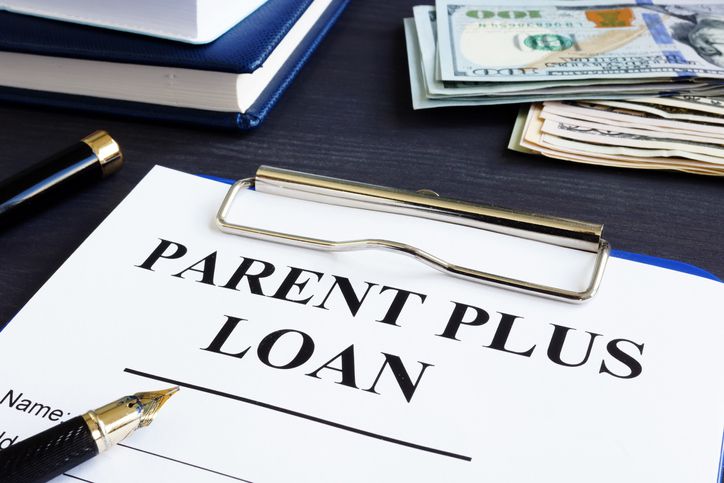
Some parents might consider taking out a parent student loan to help their kids pay for college. The federal government makes Direct PLUS loans available to parents and graduate students. The current interest rate on a Direct PLUS loan is 7.08% and it’s fixed for the life of the loan. It’s recommended to exhaust all federal benefits first.
designer491 / istockphoto

Saving for your child’s education is important, but so are your other financial goals and priorities like setting up an emergency fund and saving for retirement. A realistic financial plan and budget could be a useful tool to help you as you work toward each of your goals.
Learn more:
This article originally appeared on SoFi.com and was syndicated by MediaFeed.org.
SoFi Private Student Loans
Please borrow responsibly. SoFi Private Student Loans are not a substitute for federal loans, grants, and work-study programs. You should exhaust all your federal student aid options before you consider any private loans, including ours. Read our FAQs. SoFi Private Student Loans are subject to program terms and restrictions, and applicants must meet SoFi’s eligibility and underwriting requirements. See SoFi.com/eligibility for more information. To view payment examples, click here undergraduate student loans rates. SoFi reserves the right to modify eligibility criteria at any time. This information is subject to change.
Tax Information: This article provides general background information only and is not intended to serve as legal or tax advice or as a substitute for legal counsel. You should consult your own attorney and/or tax advisor if you have a question requiring legal or tax advice.
External Websites: The information and analysis provided through hyperlinks to third party websites, while believed to be accurate, cannot be guaranteed by SoFi. Links are provided for informational purposes and should not be viewed as an endorsement.
SoFi Invest
The information provided is not meant to provide investment or financial advice. Investment decisions should be based on an individual’s specific financial needs, goals and risk profile. SoFi can’t guarantee future financial performance. Advisory services offered through SoFi Wealth, LLC. SoFi Securities, LLC, member FINRA/SIPC. The umbrella term “SoFi Invest” refers to the three investment and trading platforms operated by Social Finance, Inc. and its affiliates (described below). Individual customer accounts may be subject to the terms applicable to one or more of the platforms below.
SoFi Loan Products
SoFi loans are originated by SoFi Lending Corp (dba SoFi), a lender licensed by the Department of Business Oversight under the California Financing Law, license # 6054612; NMLS # 1121636. For additional product-specific legal and licensing information, see SoFi.com/legal.
DepositPhotos.com
Featured Image Credit: AndreyPopov / istockphoto.