
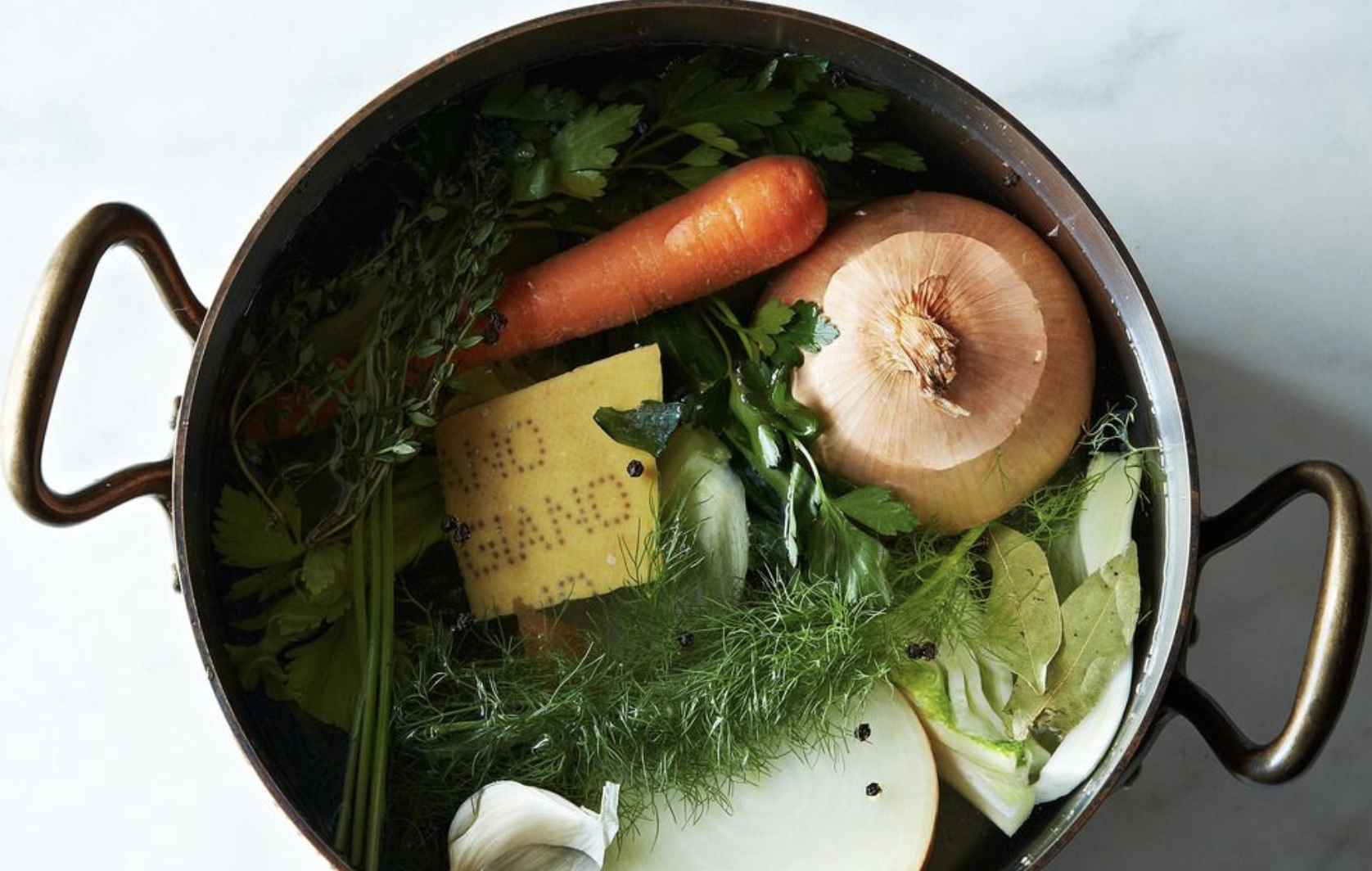
In “Kitchen Confidential,” Anthony Bourdain famously said that stock is one of the biggest differences between restaurant cooking and home cooking. It’s the secret ingredient that adds depth, intensity, and structure to any dish. Don’t take his word for it, though.
Image Credit: ImperfectProduce.com.
Why should I make stock?

Stock not only brings tremendously concentrated flavor to any dish, it is also the way to turn scraps that might otherwise go to waste into a delicious, versatile, and long-lasting super ingredient.
Image Credit: Depositphotos.
What qualifies as scraps?

Stock is a great way to use up excess aromatic vegetables or vegetables that are on their last legs like celery cores, slightly wilted carrots, or that random half an onion that your roommate stashed in the fridge and never finished.
Stock is also a great way to use parts of vegetables that you don’t normally cook with, like leek greens, scallion roots, and fennel fronds. We do not recommend using things like onion skins and carrot peels in stock as they don’t add a ton of flavor, but the final call is up to you!
Image Credit: DepositPhotos.com.
Which vegetables are great for stock?
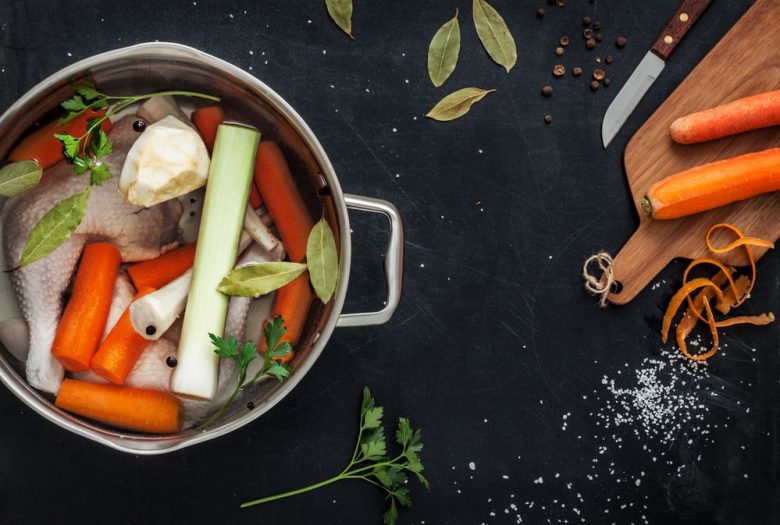
Onions, carrots, celery, garlic, leeks, fennel, mushrooms, thyme, parsley.
Note: Avoid cruciferous veggies like cabbage or brussels sprouts as they can result in a bitter stock.
Image Credit: Depositphotos.
Which other ingredients are fun to add?

Fresh herbs like thyme and parsley are lovely in stock but be careful of intense/woody herbs like rosemary as they can overpower it. Double concentrated tomato paste adds a nice combo of sweetness, acidity, and savoriness.
A parmesan cheese rind (too often thrown out!) in stock adds a wonderful savory flavor. If you’ve got a splash of wine left over, it can be a great way to round out your stock, too.
Image Credit: Depositphotos.
Some tips for making your stock more delicious

Try roasting or sautéeing your vegetables ahead of time to deepen their flavor.
If you’re using meat, save the bones/meat scraps from your roast chicken or choose cuts like shanks and oxtails as they are cheaper and make for a more flavorful stock with more body.
Image Credit: Depositphotos.
How to incorporate stock into your routine

Save your veggie and meat scraps in your freezer and once you’ve got enough to make stock, make a big batch on a Sunday. The great thing about stock is once you put it on a simmer, you can start cooking other food, go for a hike, or just chill until it’s done. Once you’ve strained and cooled your stock, label and date it and keep it in the freezer!
Image Credit: Depositphotos.
How to use stock

In addition to being the perfect base for a restorative fall soup, you can use your stock as a braising liquid for meat or vegetables, as a medium for cooking rice or grains, and as the ultimate flavorful punch for your next sauce!
This article originally appeared on ImperfectProduce.com and was syndicated by MediaFeed.org.
Image Credit: Depositphotos.


