With the market roller coaster ride that the COVID-19 pandemic ushered in, you could be forgiven for seeking solid ground. You know, reliable assets you can count on to deliver returns, even in market downturns.
And as an alternative investor, you’re in the right boat to invest for stability.
Here’s a look at when and why you need a stable alternative asset and how to identify one.
Investment Stability vs. Volatility
First, it’s important to understand the basics of stability and volatility and why they matter when choosing investments.
We often speak about market volatility, which is the frequency and magnitude of price movements. The bigger and more frequent the price movements, the more volatile the market. Conversely, a stable market is one where price fluctuations are few or smaller in size.
Assets work the same way.
In investing, volatility is a statistical measure of the dispersion of returns for a given security, typically measured as a standard deviation or variance between returns on the same security. In plain English, volatility measures how much an asset’s price swings around the mean, though it can also measure the statistical consistency of your returns. Greater dispersion means more volatility, and more volatility translates to a riskier asset.
Think you can’t afford to invest in art? Think again. Learn more at Masterworks.
Why Stability Matters
The inverse of volatility is stability. The more consistent an asset’s pricing and returns, the more stable it is. That means more than just peace of mind.
When we talk about stability in investment, we’re talking about how consistently you can rely on your asset to deliver returns. Volatile assets are considered risky assets because they don’t deliver returns as consistently as more stable assets. That means you may not be able to count on them for results.
While no investment is guaranteed to deliver, there is something to be said for having a high level of confidence that you’ll get results. In fact, stability becomes increasingly important as you reach the deadline of any financial goal. Investors have to increase their stability the closer they get to the deadline or they risk losing their investment without time to recuperate the loss.
When you save for retirement, for example, your investments get increasingly low-risk (and more stable) as you approach your retirement age. If you plan to retire at 70 and you’re currently 20, you have 50 years to recover a loss. But if you’re 60, you don’t have very much time left, and may not be able to afford to lose the gains you’ve already made.
Plus, stability is critical for building long-term wealth over time. Every portfolio requires some risk for growth, but it doesn’t do you much good if you lose everything when the market swings. A percentage of stable assets in your portfolio can insulate you against losses.
Tradeoffs of Stability
However, risk and return are highly correlated—two sides of the same coin. This is why investors are taught that you need to take bigger risks to see bigger returns.
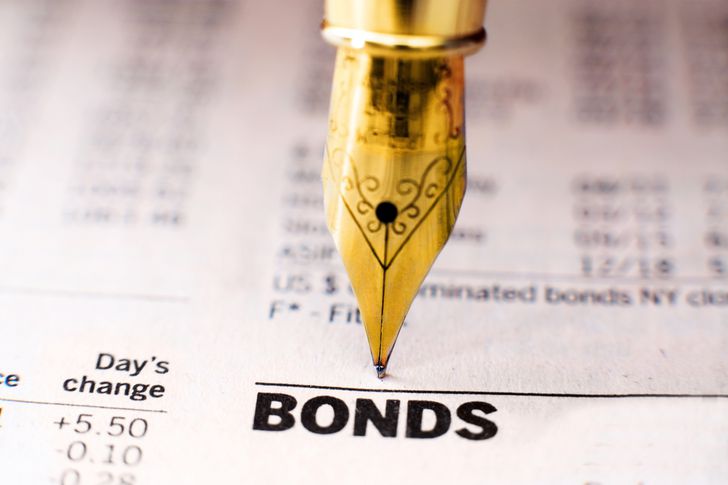
Some of the most stable assets are the safest assets, but this also makes them the least profitable. Take bonds, for example. You more or less know what you’ll get back when the bond reaches maturity, barring a serious drop in bond prices. However, because the return is almost guaranteed, it isn’t in the bond issuer’s interest to hand over a huge return—otherwise, they lose too much money to sustain operations.
Basically, if you associate stability with safety, you should also associate extreme stability with lower returns. That isn’t to say that you should only reach for volatile assets. Quite the opposite. It’s to say that you need the right balance of stability, and you need to think about what you need that stability to achieve.
Are Alternative Assets More Stable?
This brings us to alternative investments.
One of the major benefits of alternative investments is their usefulness as a hedge—because alternative assets have low stock market correlation, they’re quite useful as a hedge against market volatility. This does not necessarily mean that an alternative asset is inherently more stable than a conventional one. It just means that the asset’s volatility drivers work differently.
Think you can’t afford to invest in art? Think again. Learn more at Masterworks.
Signs of Stability in an Alternative Investment
Like other assets, the stability of an alternative asset can be observed in its price fluctuations. You can calculate the stability of an alternative investment using the same calculations—namely, the variance and the standard deviation (the square root of the variance).
To do this, start by finding the mean of the data set (in this case, the previous prices) by adding each data point and dividing by the total number of data points. Next, calculate the difference between each value and the mean (this is calculating variance) by subtracting the mean from each data point. Negative numbers are allowed. You’ll probably have a lot of data points, so use a spreadsheet. You’ll then square the deviations, which eliminates any negative numbers. Finally, you’ll add the squared deviations together, divide by the total number of deviations, and take the square root of the resulting number.
This will give you the standard deviation you can expect from the price. The higher the standard deviation, the greater the price swings and the more volatile the asset.
The one challenge for an alternative asset is that price history is often difficult to acquire. If you wanted to calculate the variance and standard deviation on a piece of blue-chip art, for example, you would need the work’s complete transaction history and provenance, at which point you would have to work with a licensed dealer and an attorney to verify the piece’s paper trail.
This article originally appeared on MasterWorks.com and was syndicated by MediaFeed.org.
This material is provided for informational and educational purposes only. It is not intended to be investment advice and should not be relied on to form the basis of an investment decision. See important Reg A disclosures: Masterworks.com/cd
More from MediaFeed:
This art is garbage. Literally

Washed Ashore is hoping to teach people about marine debris and plastic pollution through epic, giant artworks of sea creatures … all of which are made from, you guessed it, ocean garbage.
According to Washed Ashore’s website, the organization works with artists and scientists to educate the public on how consumer habits can cost sea creatures their habits, homes and even their lives. They hope to teach exhibit-goers that “every action counts.” The traveling exhibit has been on display at the U.S. State Department, United Nations, The Smithsonian National Museum’s Ocean Hall and more. You can learn more about Washed Ashore’s mission online.
Check out some of Washed Ashore out-of-this-world, large-scale sculptures and wall pieces below!
WashedAshore.org

This great white shark seems even more, well, great, when you remember it’s made from debris from the ocean!
WashedAshore.org

The detail on this giant penguin named Gertrude is stunning!
WashedAshore.org
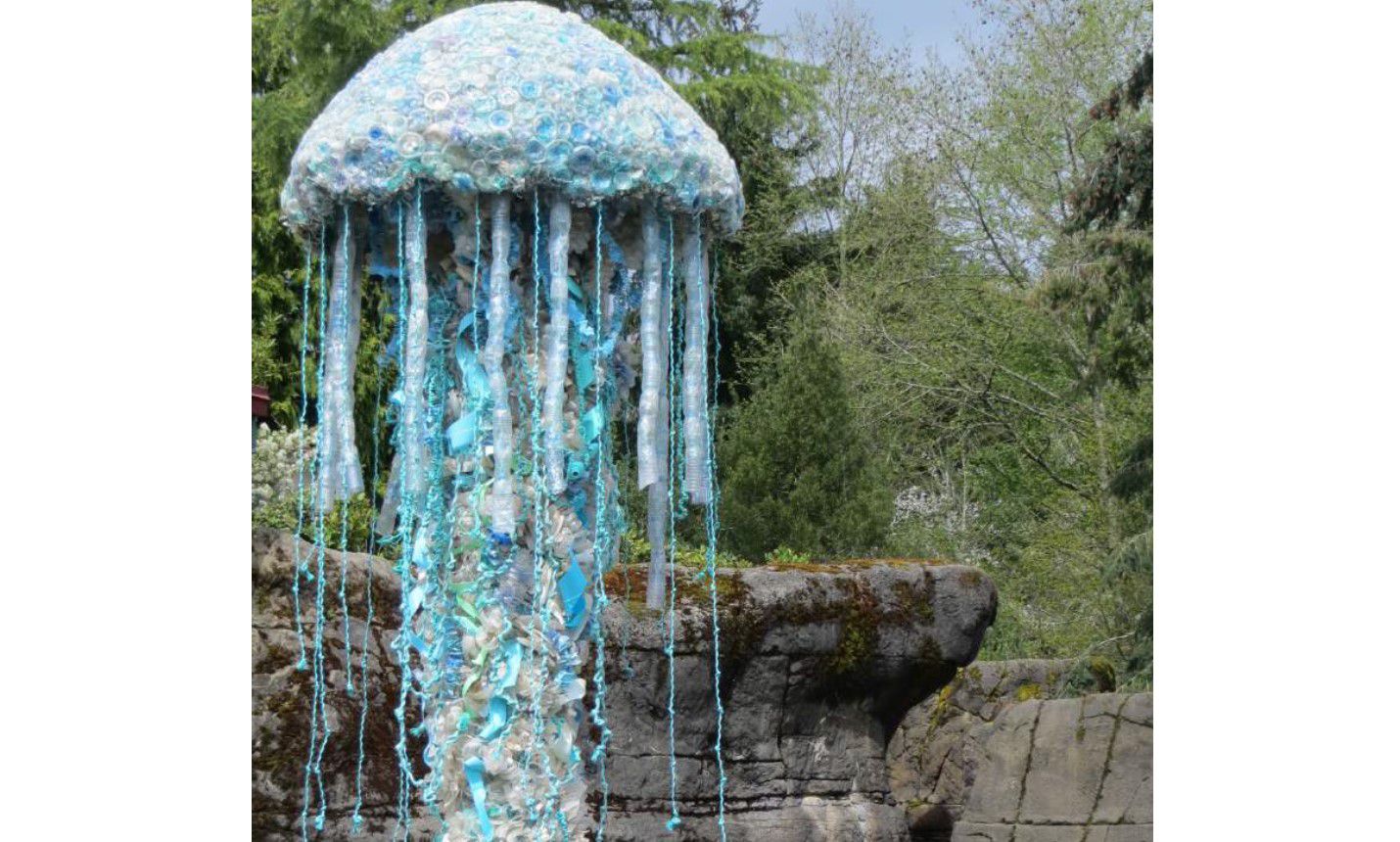
This gigantic jellyfish is larger than life!
WashedAshore.org

This colorful turtle was created against the backdrop of its very own ocean, complete with algae and a jellyfish friend!
WashedAshore.org

The Whale Ribs arch is a popular attraction since visitors can walk through it and marvel and the craftsmanship from both inside and outside the arch.
WashedAshore.org

Priscilla the Parrot is a colorful feat that will surely capture your attention.
WashedAshore.org

SeeMore offers viewers a rather realistic depiction of a sea lion, considering it’s made completely from sea rubbish.
WashedAshore.org
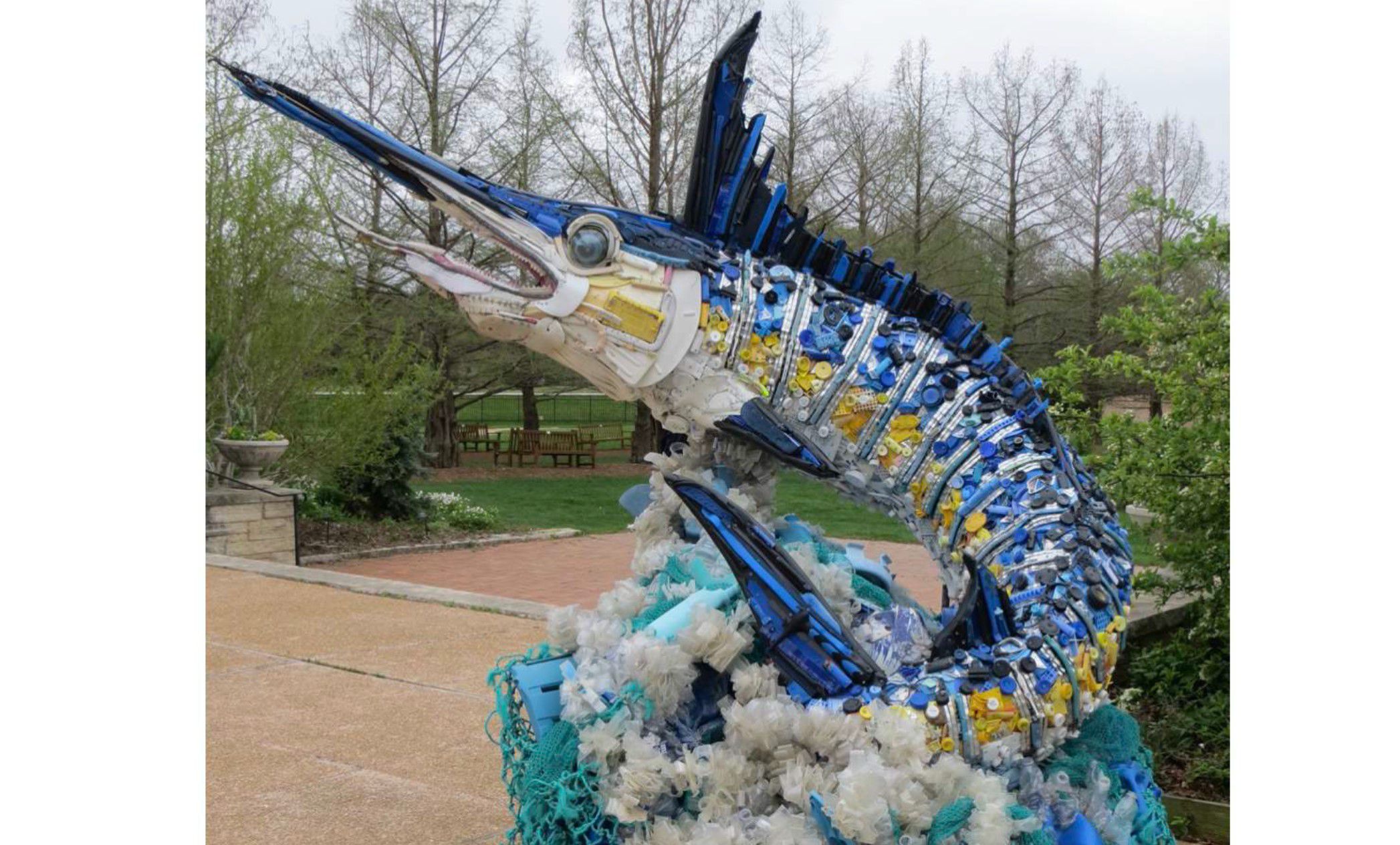
This blue marlin artwork is one of many from Washed Ashore that is sturdy enough to be displayed outside!
WashedAshore.org

The magnificent red octopus truly shows off how garbage can be turned into a work of art.
WashedAshore.org

This giant shark comes with its own patch of sea algae, coral and more!
WashedAshore.org

You almost won’t believe this sturgeon is made from garbage; it looks so realistic and life-like!
WashedAshore.org

This patriotic bald eagle stands tall with its wings outstretched to the sky.
WashedAshore.org
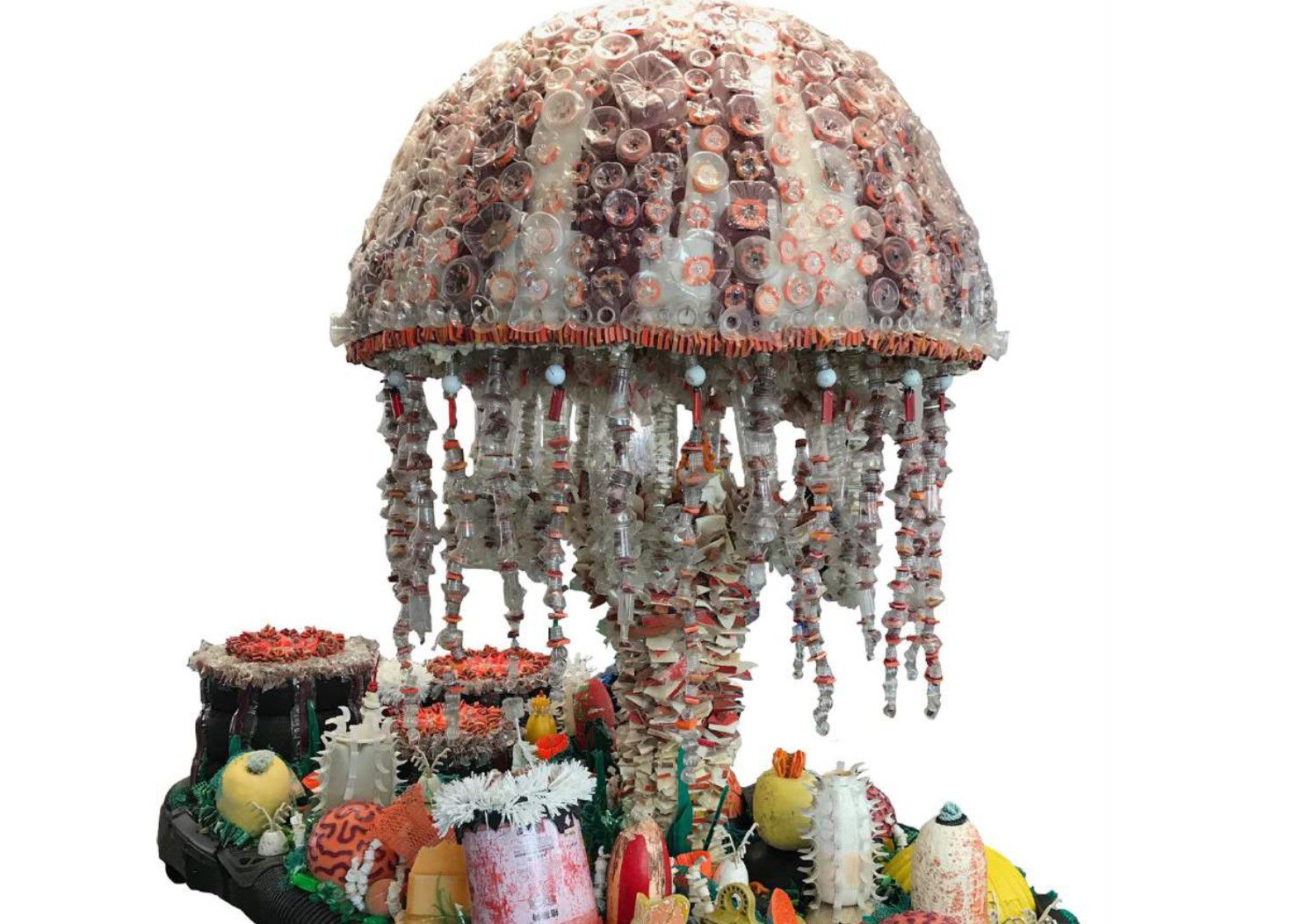
One of many jellyfish made through Washed Ashore, this gumdrop jellyfish stands tall over a bed of colorful sea coral.
WashedAshore.org
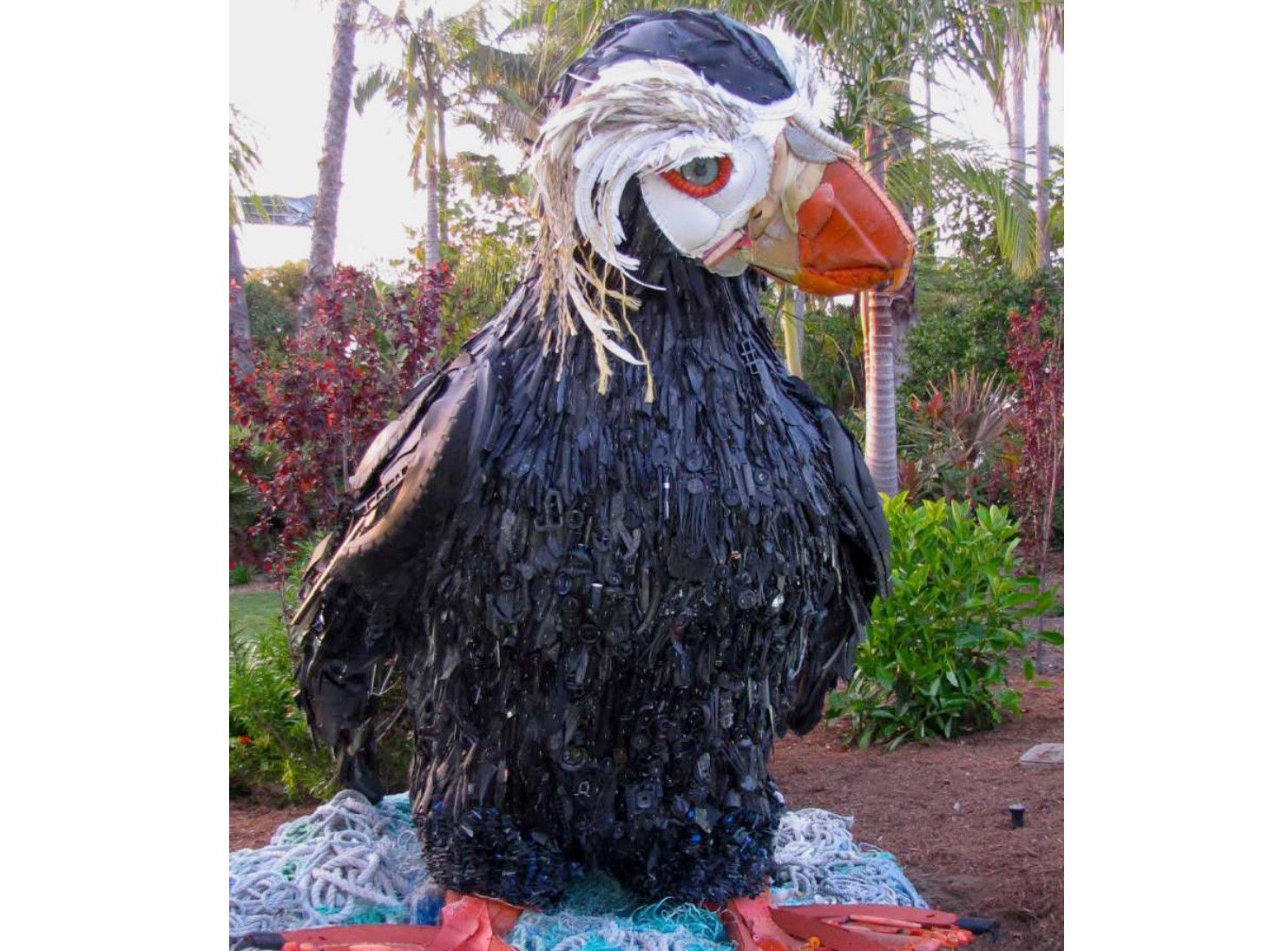
The tufted penguin’s hair truly does look like, well, hair! And its orange eyes, beak and feet stand out against its black coloring.
WashedAshore.org

The blue and orange trigger fish floats atop some algae and rope.
WashedAshore.org
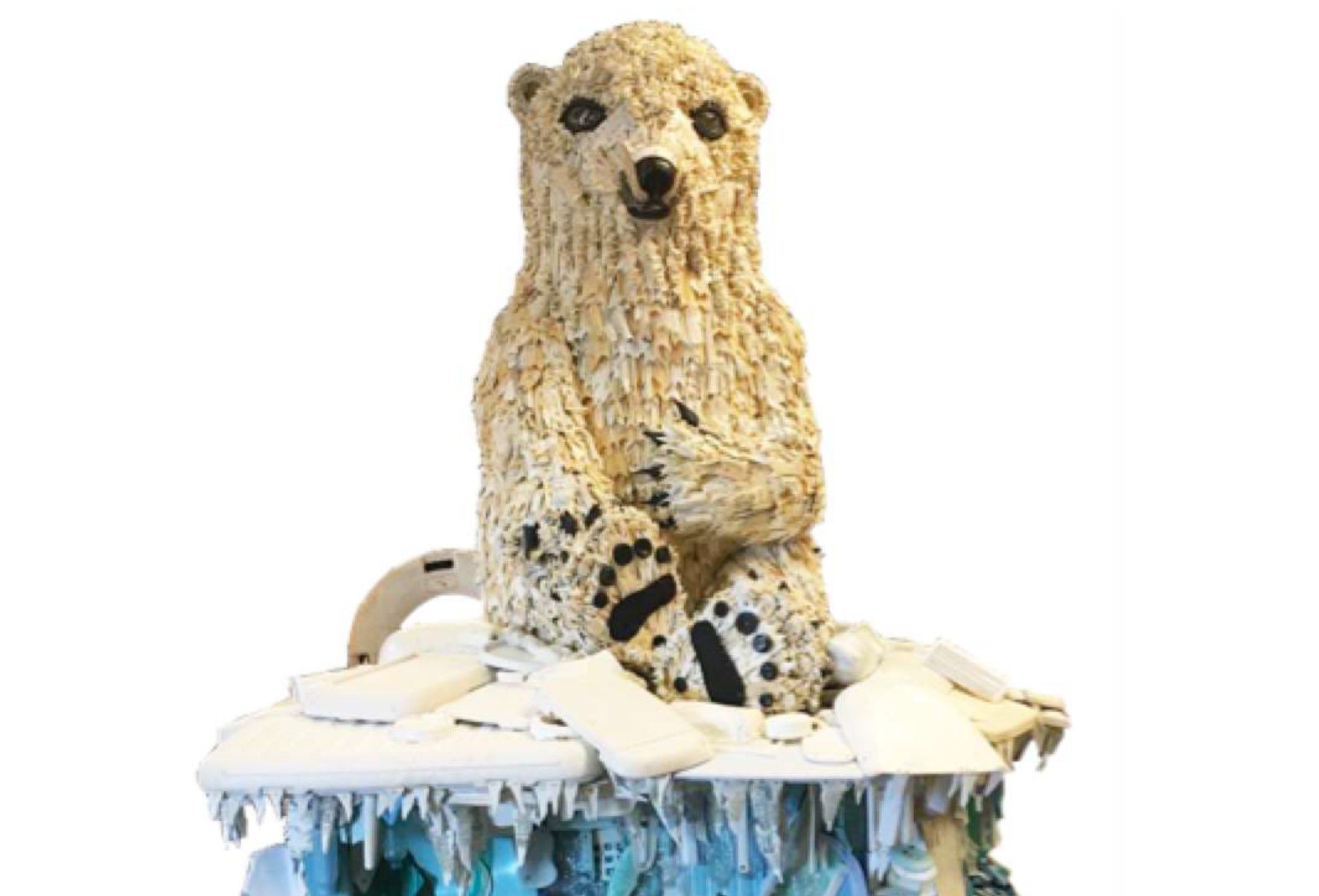
You’ll fall in love with this adorably cute polar bear named Daisy!
WashedAshore.org

This whale tail statue really shows off just how big the whale is!
WashedAshore.org
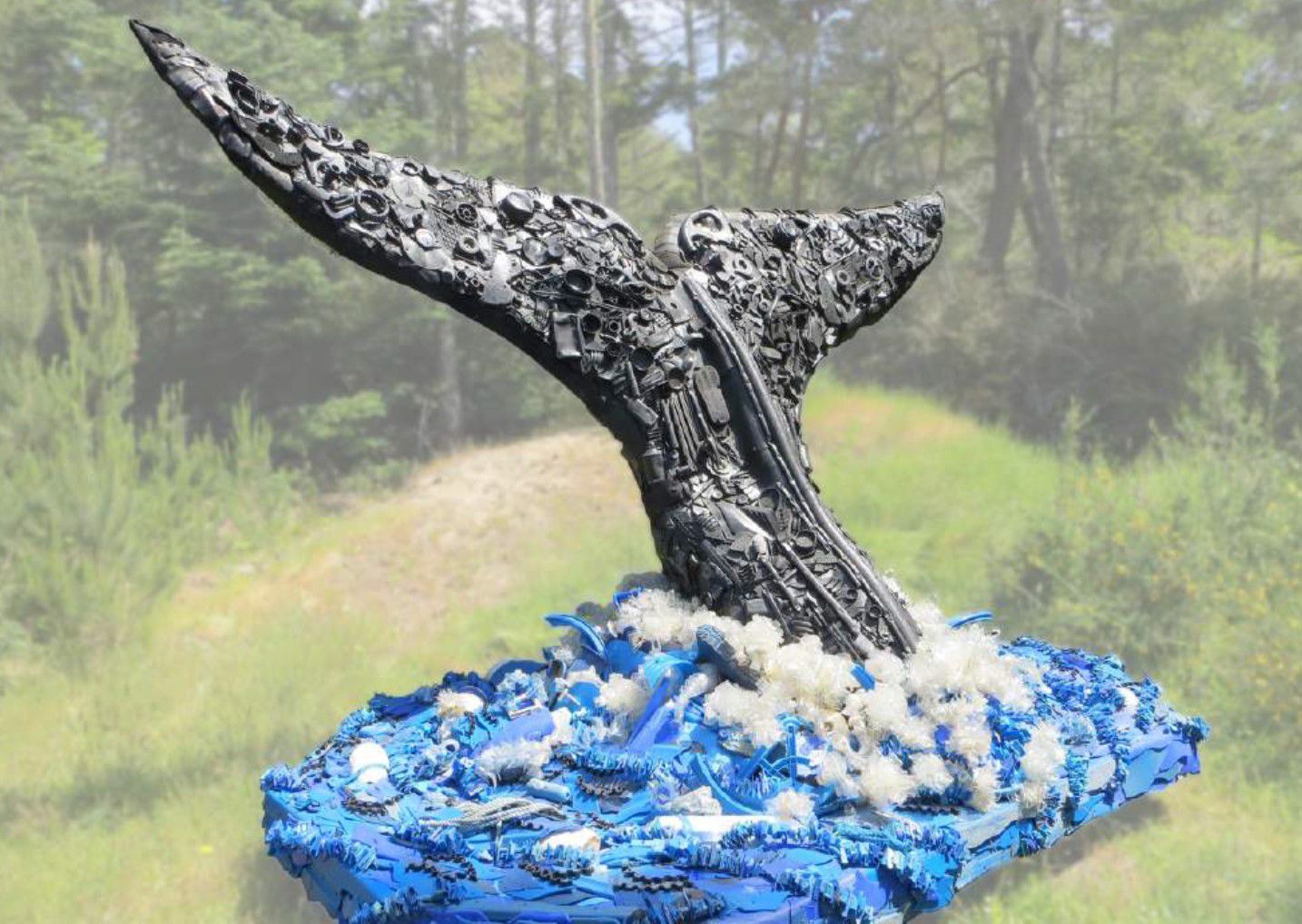
Hugo isn’t the only humpback on display! Meet Grace, who has an equally impressive and artistic tail.
WashedAshore.org

The silvertip shark is showed off through this model made entirely of ocean debris.
WashedAshore.org

This heartwarming depiction of two penguins will almost make you forgot about the fact that they’re made from trash found in the ocean.
WashedAshore.org

Edward “swims” with a jellyfish in this colorful ocean display!
WashedAshore.org
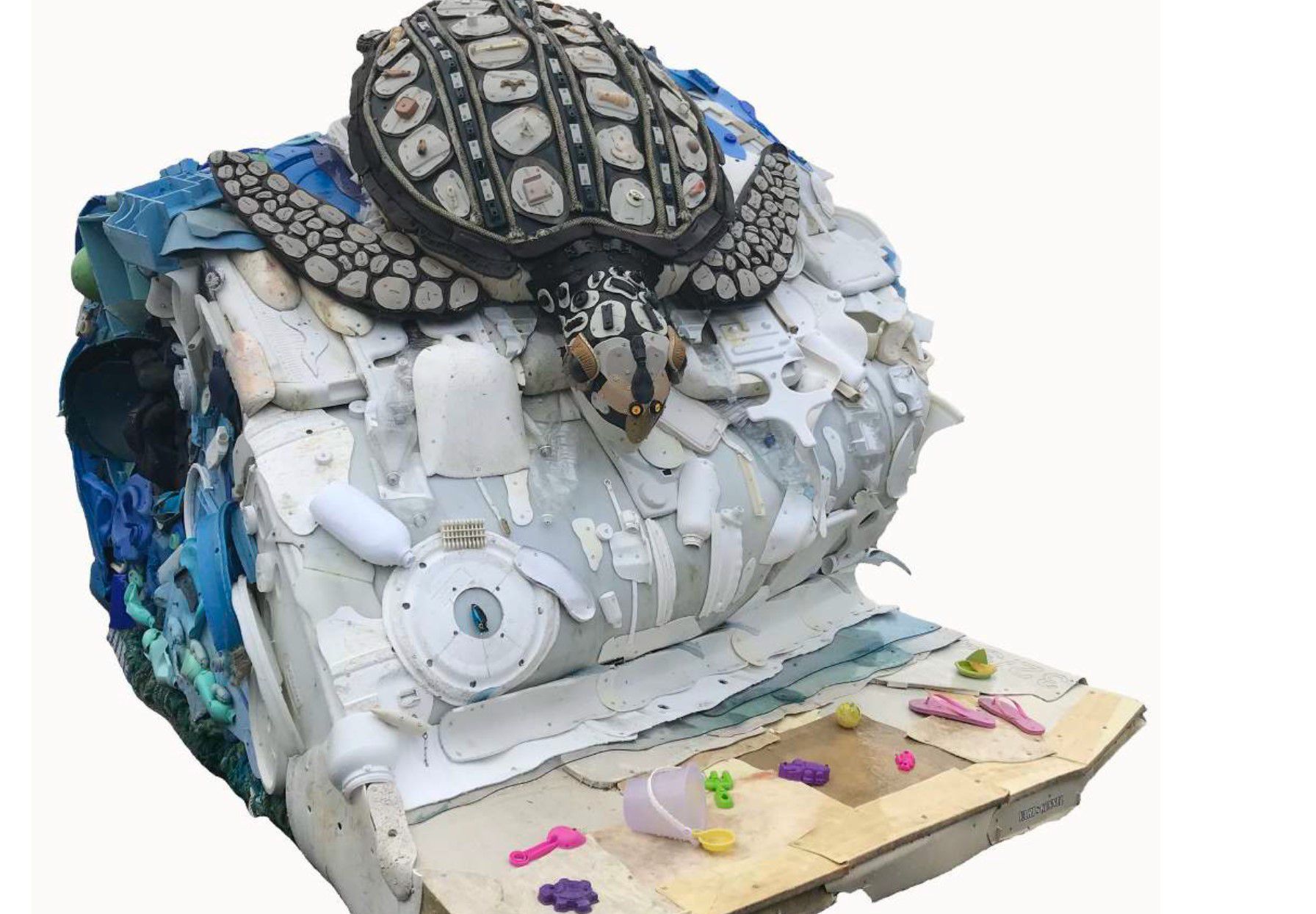
Natasha hopes you think twice about littering as she catches some waves!
WashedAshore.org

With its flippers outstretched, Brody stands tall over visitors.
WashedAshore.org

This happy seal sits on a bed of colorful items found deep beneath the ocean’s surface.
WashedAshore.org

Zorabelle is one of man penguins on display at Washed Ashore’s traveling exhibits.
WashedAshore.org

Finn looks like it’s practically swimming in this extravagant sculpture.
WashedAshore.org

Leo is so tall that we couldn’t even capture its whole body in one photo!
WashedAshore.org

Creamsicle’s tentacles are both impressive and elegant!
WashedAshore.org

Marigold is a colorful jellyfish made with primarily yellow, orange and white debris.
WashedAshore.org

This blackberry jellyfish is another massive sculpture made for Washed Ashore’s traveling exhibits.
WashedAshore.org

This epic salmon swims on a sea of vibrant blue water, complete with white foam on top of the wave it’s swimming on.
WashedAshore.org

This adorable river otter stands on a bed of rock with flowers and algae peeking out of its crevices.
WashedAshore.org

Angus is made out of vibrant yellow debris and floats on top of a bed of algae.
WashedAshore.org
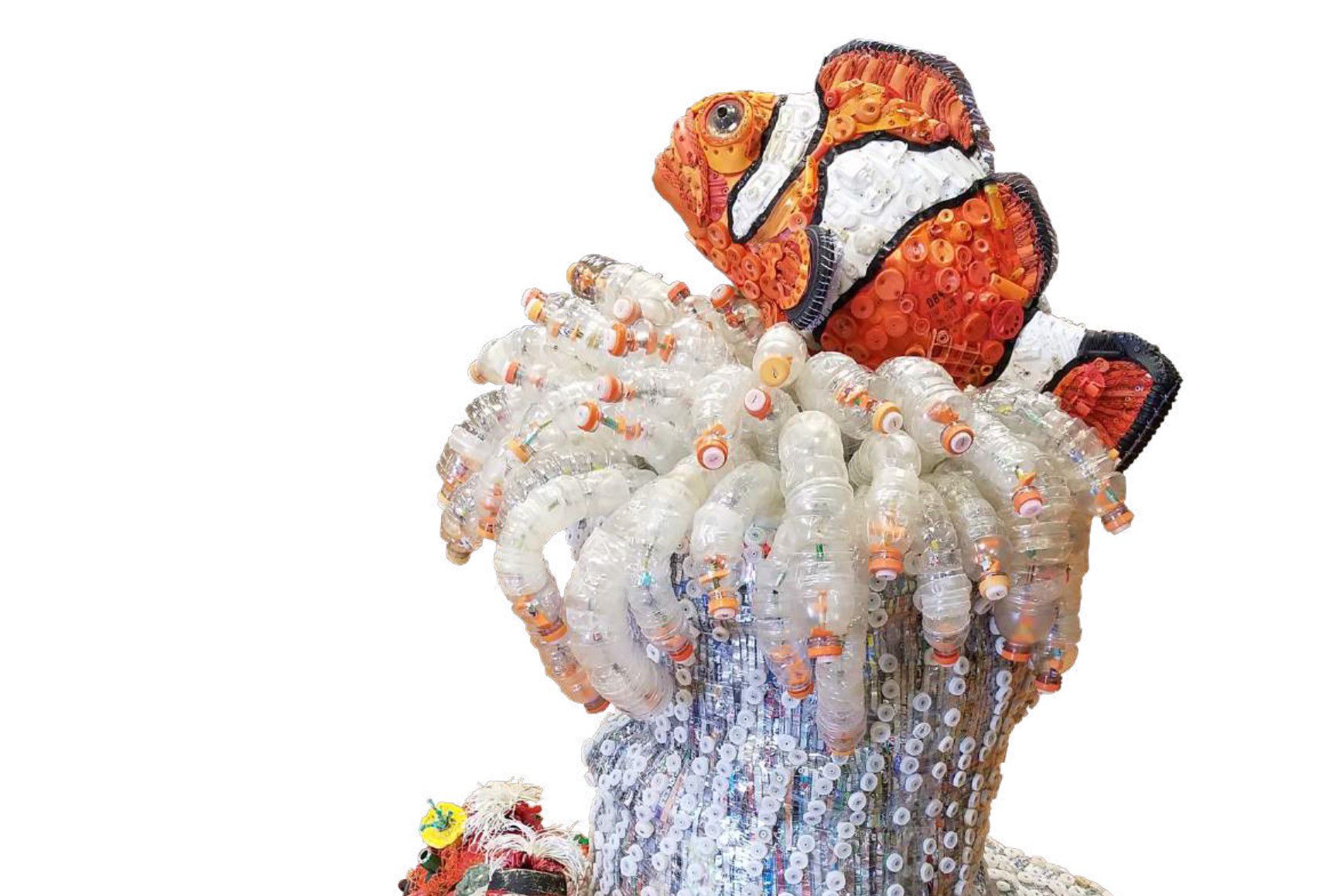
This clownfish stands out against a pastel-colored sea anemone.
WashedAshore.org

Bella the blue angelfish certainly looks angelic on top of this vibrant coral reef!
WashedAshore.org

Flip Flop is one of many artworks designed to be displayed on the walls of Washed Ashore’s exhibit spaces.
WashedAshore.org

Fish Bite is a green and blue artwork displayed on a exhibit space’s wall.
WashedAshore.org

Stella is a green, white and yellow seahorse with features made from various pieces of ocean debris, including brooms, mops and combs.
WashedAshore.org

This patriotic sea star is made out of, you guessed it, pieces of red, white and blue ocean trash.
WashedAshore.org

These incredibly detailed masks almost look like they’re straight out of a museum, but they’re actually straight out of the ocean!
Like what you see? You can learn more about the artwork and where they’re visiting next on WashedAshore.org.
Related:
This article was
produced and syndicated by MediaFeed.org.
WashedAshore.org

shalamov / istockphoto
Featured Image Credit: bashta / iStock.