

How to Get Prescribed Ozempic for Weight Loss
This article was reviewed by Lynn Marie Morski, MD, JD
- Ozempic is FDA-approved for type 2 diabetes but sometimes prescribed off-label for weight loss.
- To get Ozempic online, you’ll complete a health assessment, have your info reviewed by a licensed provider, and (if prescribed) the medication will be delivered to your door.
- Alternatives like Wegovy, Zepbound, and compounded semaglutide may be easier to access for weight loss.
If you’ve been trying to lose weight, you may wonder how to get an Ozempic prescription — and whether you can get it online. Ozempic (semaglutide) is approved by the Food and Drug Administration (FDA) for type 2 diabetes, but some healthcare providers prescribe it off-label for weight loss.
Let’s break down how to get Ozempic for weight loss, how online prescribing works, and what alternatives and costs to expect.

How to Qualify for Ozempic
If you’re trying to figure out how to get on Ozempic and whether you qualify for it — either through your insurance plan or via an off-label prescription for weight loss — here are the basics, broken down into simple steps.

1. Know the FDA-Approved Criteria
Ozempic is FDA-approved to improve blood sugar levels (glucose) in adults with type 2 diabetes and to reduce cardiovascular risk in people with type 2 diabetes and established heart disease. It’s not FDA-approved for weight loss.

2. Understand Off-Label Prescribing
Some healthcare providers may prescribe Ozempic off-label for certain conditions, including weight loss or polycystic ovary syndrome (PCOS).
Off-label use means a medication is prescribed for something other than its FDA-approved purpose.
3. See If You Meet Wegovy Guidelines
Wegovy is approved for obesity and overweight. FDA guidelines state that to be eligible for Wegovy, you must:
- Have a body mass index (BMI) of 30 or greater
- Or have a BMI of at least 27 with at least one weight-related health condition, such as high blood pressure (hypertension), high cholesterol, heart disease, or sleep apnea
If you fall into either category, a provider may determine that semaglutide — possibly in the form of off-label Ozempic — is appropriate.

4. Consider Alternatives
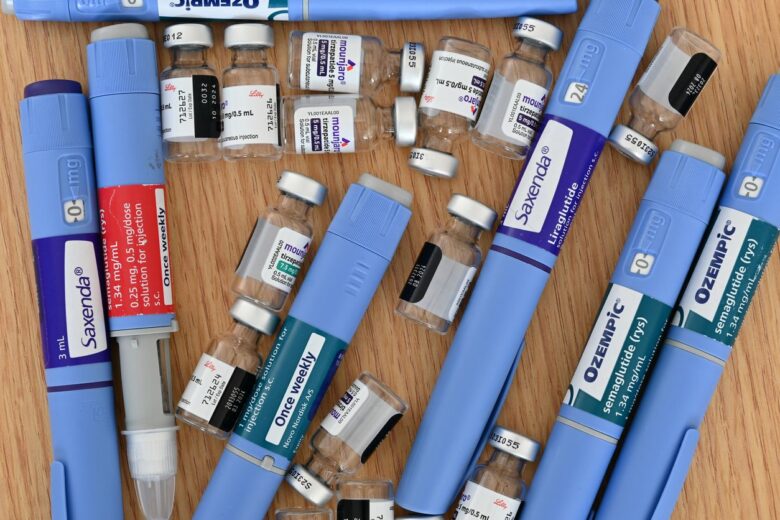
If you don’t have diabetes, you may still qualify for other GLP-1 (glucagon-like peptide-1) receptor agonist medications that are FDA-approved for weight loss. This includes Wegovy (semaglutide) and Zepbound (tirzepatide).
There’s also compounded semaglutide, a personalized, non-FDA-approved alternative.*
These medications might be easier to access for weight-related treatment than off-label Ozempic. To figure out if an alternative treatment is a good fit, a healthcare provider will look at your:
- BMI
- Weight-related conditions
- Current medications
- Overall health history
- Personal goals
Learn How to Get Prescribed Ozempic for Weight Loss
If the provider deems it appropriate for your needs, you might be able to get an off-label prescription for Ozempic for weight loss from a licensed healthcare professional, either online or in person.
How to Get Ozempic Online
Getting Ozempic online is generally a straightforward process. Most telehealth platforms follow a similar set of steps:
- Choose a telehealth provider. Several online services — including Hers, Found, Ro, and Eden — connect patients with licensed healthcare professionals who can evaluate whether a GLP-1 medication is appropriate.
- Complete a medical intake form. You’ll typically start by answering questions about your health history, symptoms, and body weight. This will help determine your BMI for eligibility. Some platforms may also request recent lab work.
- Meet with a licensed provider. Depending on the service and your state, this may be through a video visit, audio call, or secure messaging. The provider will determine whether Ozempic or another GLP-1 medication is clinically appropriate.
- Receive your prescription, if eligible. If prescribed, your provider will send the medication to the pharmacy of your choice or coordinate home delivery through the platform’s partner pharmacies. Availability of brand-name Ozempic may vary based on supply, insurance coverage, and state regulations.
- Access follow-up care. Most platforms offer some form of ongoing support.
Not all platforms prescribe brand-name Ozempic. Some offer alternatives like Wegovy or compounded semaglutide. Availability, pricing, and insurance options differ among telehealth services.
Compare telehealth providers and find out where to get Ozempic online.

Does Insurance Cover Ozempic for Weight Loss?
Health insurance is unlikely to cover the cost of Ozempic if it’s prescribed for weight management because weight loss isn’t its FDA-approved indication.
How Much Does Ozempic Cost?
Ozempic can be expensive, especially without insurance coverage. The list price for one pen, which typically contains two to four doses, is close to $1,000.
It’s also important to factor in long-term costs. GLP-1 receptor agonists like Ozempic are generally taken on an ongoing basis to maintain their effects, so monthly expenses can add up over the course of your weight loss journey.
Your final cost will depend on factors like insurance coverage, pharmacy pricing, dose, and whether your plan covers GLP-1 medications for your specific health needs.

How to Get Ozempic Without Insurance
The process of getting Ozempic is the same whether insurance covers it or not. If you’re paying out of pocket, you’ll still need to consult a healthcare professional in person or through a telehealth platform to get a prescription.
When filling that prescription, you’ll pay for it outright at the pharmacy instead of having them bill your insurance. Or you’ll pay through the telehealth platform.
To get the best price, look into drug coupon codes and other cost-saving options.

Ozempic Alternatives for Weight Loss
Many GLP-1 agonist medications that work similarly to Ozempic are now available to help with weight loss. There are also other medications that can be used for weight management, including weight loss pills.
Here’s a side-by-side look at some of the alternatives and how they work.
Compounded semaglutide
- Compounded version of semaglutide (not FDA-approved)
- Mimics GLP-1 to reduce appetite and increase fullness
Form & Dosing: Once-weekly injection
Wegovy (semaglutide)
- GLP-1
- Higher dose of semaglutide than Ozempic
- FDA-approved for weight loss
- Suppresses appetite and slows gastric emptying
- Average 20% weight loss over 68 weeks in clinical trials
Form & Dosing: Once-weekly injection
Metformin
- Diabetes medication
- Sometimes used off-label for weight loss and PCOS
- May increase natural GLP-1 and help regulate appetite
Form & Dosing: Daily oral tablet
Saxenda (liraglutide)
- GLP-1 agonist
- Can reduce appetite and cravings for fatty foods
- Similar to semaglutide but shorter-acting
Form & Dosing: Once-daily injection’
Zepbound (tirzepatide)
- Dual GIP and GLP-1 agonist
- Activates two appetite-regulating pathways
- FDA-approved for overweight and obesity
Form & Dosing: Once-weekly injection
Mounjaro (tirzepatide)
- Acts on GIP and GLP-1
- Approved for type 2 diabetes
- Prescribed off-label for weight loss
Form & Dosing: Once-weekly injection
Contrave (naltrexone-bupropion)
- Combination medication
- Affects dopamine and opioid pathways
- Controls appetite and reduces food cravings
Form & Dosing: Daily oral tablet
Topiramate
- Anticonvulsant
- Reduces appetite and lowers food reward signals
Form & Dosing: Daily oral tablet

How to Get Ozempic Prescribed for Weight Loss: The Bottom Line
Can Ozempic be prescribed for weight loss? Yes, Ozempic can be prescribed off-label for weight loss, but eligibility depends on your BMI, health history, and a provider’s clinical judgment.
If you don’t qualify for Ozempic, FDA-approved GLP-1s like Wegovy and Zepbound — along with several non-GLP-1 weight-loss medications — might be effective alternatives.
Whether you pursue treatment online or in person, a licensed healthcare provider can help you understand your options and choose the safest, most appropriate approach for your goals.
FAQS
Get answers to frequently asked questions about how to get prescribed Ozempic.
Who can prescribe Ozempic for weight loss?
A licensed healthcare provider — including physicians, nurse practitioners, and physician assistants — can prescribe Ozempic when clinically appropriate. For weight loss, providers may prescribe it off-label after reviewing your BMI, health history, and weight-related conditions. This can be done in person or through a telehealth platform.
What are the most common side effects of Ozempic?
Common side effects of Ozempic include nausea, vomiting, diarrhea, constipation, stomach pain, and heartburn. A Novo Nordisk study found that these gastrointestinal symptoms are usually mild to moderate and tend to improve over time as your body adjusts to the medication.
Who shouldn’t take Ozempic?
Ozempic may not be safe for people with certain medical conditions, including a history of pancreatitis, acute gallbladder disease, diabetic retinopathy, severe kidney problems, or a personal or family history of medullary thyroid carcinoma (MTC). You should also let your provider know if you’re pregnant, trying to conceive, or breastfeeding, as it’s generally not recommended in these cases.
Related:
Like MediaFeed’s content? Be sure to follow us.
This article originally appeared on Forhers.com and was syndicated by MediaFeed.org


