Home security myths debunked: what doesn’t actually deter burglars
Most homeowners operate under well-intentioned but dangerously outdated assumptions about what keeps their properties safe from criminal intrusion. These persistent myths, passed down through generations or perpetuated by Hollywood depictions of crime, create a false sense of security that can leave families and belongings vulnerable to determined intruders. The gap between popular belief and criminal reality often proves costly, as homeowners invest time, money, and confidence in measures that provide little actual protection against modern burglary techniques.
Understanding what criminals actually think and do during the planning and execution of break-ins reveals how many traditional security measures fall short of their intended purpose. Professional burglars and opportunistic thieves alike have evolved their methods to exploit common misconceptions about home security, taking advantage of homeowners who rely on outdated strategies or superficial deterrents. The most dangerous assumption involves believing that good intentions and conventional wisdom automatically translate into adequate protection.
This article distinguishes between proven security facts and persistent misconceptions, revealing which popular deterrents fail to provide meaningful protection while highlighting effective strategies that genuinely reduce the likelihood of criminal targeting. By understanding what doesn’t work and why these methods prove ineffective, homeowners can redirect their security investments toward measures that actually influence criminal decision-making and reduce the risk of victimization.
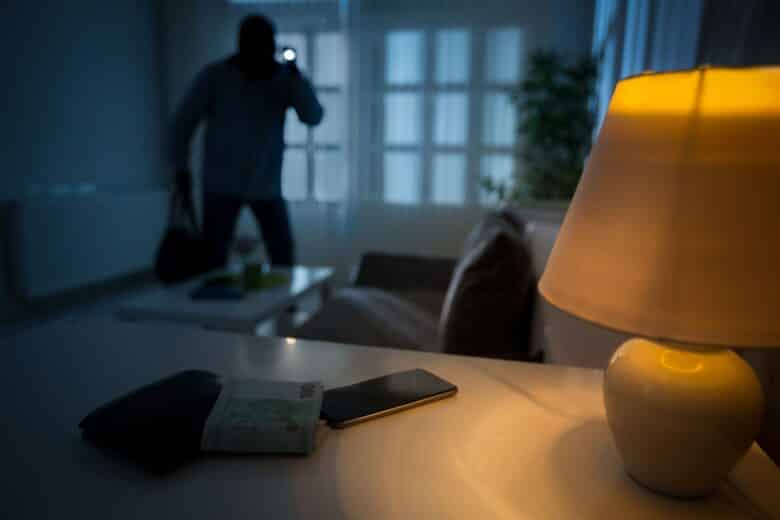
Most burglaries happen at night
The widespread belief that burglars primarily operate under the cover of darkness is largely a result of dramatic portrayals rather than accurate criminal reality. FBI statistics consistently show that most residential burglaries occur during daylight hours, particularly between 10:00 a.m. and 3:00 p.m., when homes are most likely to be unoccupied. This pattern reflects a criminal’s preference for avoiding confrontation rather than seeking out dramatic nighttime scenarios that increase the risk of detection.
Professional burglars understand that darkness provides limited advantage when weighed against the higher probability of encountering residents during evening hours. Daytime operations enable criminals to observe neighborhood patterns, identify homes where residents are away at work or school, and conduct their activities when most people assume criminal activity is unlikely. This timing preference also enables burglars to blend in with legitimate daytime activities, such as delivery services, maintenance workers, or door-to-door sales personnel.

A “beware of dog” sign without a real dog is enough
While genuinely protective dogs can serve as effective deterrents, signs alone rarely fool experienced criminals who understand the difference between authentic and manufactured threats. Security professionals report that most burglars assess potential targets sufficiently to determine whether protective animals actually live on the property, making fake warnings ineffective against anything beyond spontaneous, opportunistic crime.
Even when real dogs are present, criminals have developed methods for dealing with animal obstacles, including distraction techniques, temporary incapacitation through treats or devices, or simply choosing times when dogs are likely to be inside or away from the property. The most effective canine deterrent involves dogs that bark loudly when strangers approach, creating noise that draws attention rather than relying solely on the threat of physical confrontation.

Hiding a spare key is a good idea
The concept of “secret” hiding spots for spare keys represents one of home security’s most common illusions, as criminals are aware of every familiar concealment location homeowners typically choose. Under doormats, inside fake rocks, above door frames, beneath planters, and inside magnetic boxes represent the first places burglars check when seeking easy entry methods. Locksmith associations consistently warn that these hiding spots are so well-known among criminals that they essentially provide free access to anyone willing to spend a few minutes searching.
Even creative hiding spots eventually become predictable, and the presence of any hidden key eliminates the forced entry noise that might alert neighbors or trigger security systems. This silent entry method enables criminals to operate within homes without generating the sounds typically associated with breaking windows, forcing doors, or picking locks, which often draw attention from nearby residents or security monitoring services.

Leaving all lights on while away deters thieves
Static lighting patterns actually signal empty homes rather than creating the impression of occupancy that homeowners intend. Security experts emphasize that lights burning continuously in the same configuration day after day indicate the absence of residents rather than regular household activity, as occupied homes typically show varying patterns of illumination throughout different rooms and times.
Experienced burglars observe target properties over multiple days or weeks, noting lighting patterns that remain unchanged regardless of time or circumstances. Natural household lighting involves people moving between rooms, turning lights on and off based on their activities, and adjusting illumination according to natural daylight levels. Static patterns eliminate these organic variations, making empty homes easily identifiable to anyone conducting surveillance.

High fences and dense landscaping always increase security
While barriers can provide some protection, improperly designed landscaping often helps criminals more than homeowners by creating concealment opportunities that shield illegal activities from public view. Crime prevention experts warn that tall fences, dense shrubs near windows and doors, and overgrown vegetation can inadvertently create ideal working conditions for burglars who prefer operating without witnesses.
The most effective landscaping for security purposes involves maintaining clear sightlines between the street and the home while eliminating hiding spots near entry points. Dense vegetation should be positioned away from windows and doors. Also, any necessary screening should be designed to provide privacy without creating blind spots where criminal activity could occur unobserved by neighbors or passersby.

Burglars only target “bad” neighborhoods
Criminal targeting often focuses on affluent areas where the perceived value of stolen goods justifies the risk of prosecution. At the same time, residents in “safe” neighborhoods usually maintain lower vigilance levels, creating easier opportunities. Department of Justice studies demonstrate that burglary rates correlate more strongly with opportunity factors, such as visibility, access, and resident behavior patterns, than with neighborhood socioeconomic status alone.
Complacency in perceived safe areas often results in residents taking fewer security precautions, leaving doors unlocked, windows open, or valuable items visible through windows. This reduced vigilance, combined with higher concentrations of valuable electronics, jewelry, and other desirable goods, can make affluent neighborhoods particularly attractive to criminals willing to travel outside their immediate areas to find profitable targets.

An unlocked door or window is rare
Statistics consistently show that a substantial percentage of residential burglaries occur through unlocked entry points, with estimates ranging from 30 to 50 percent depending on the study and geographic region. Insurance industry data reveals that many homeowners inadvertently provide easy access by failing to secure doors and windows consistently, particularly during brief absences when they assume locking up is unnecessary.
This pattern reflects criminal preference for the path of least resistance, as unlocked entry points eliminate the time, noise, and skill requirements associated with forced entry. Opportunistic burglars often begin by simply testing door handles and window latches before resorting to more complex entry methods, making basic security habits among the most critical deterrent factors homeowners can control.

Visible and monitored security systems
Professional monitoring services, visible alarm company signs, and obvious security cameras create a genuine deterrent effect because they significantly increase the risk of detection and apprehension for criminals. Security industry research indicates that homes with monitored alarm systems experience burglary rates up to 300% lower than those without, as criminals tend to choose easier targets rather than risk triggering an immediate police response.
The key effectiveness factor involves ensuring that security measures are clearly present and functional, rather than hidden or disguised. Prominent alarm company decals, visible camera housings, and clearly marked monitoring service signs communicate to potential intruders that the property maintains active professional protection, which will likely result in a rapid law enforcement response to any criminal activity.

Reinforced entry points
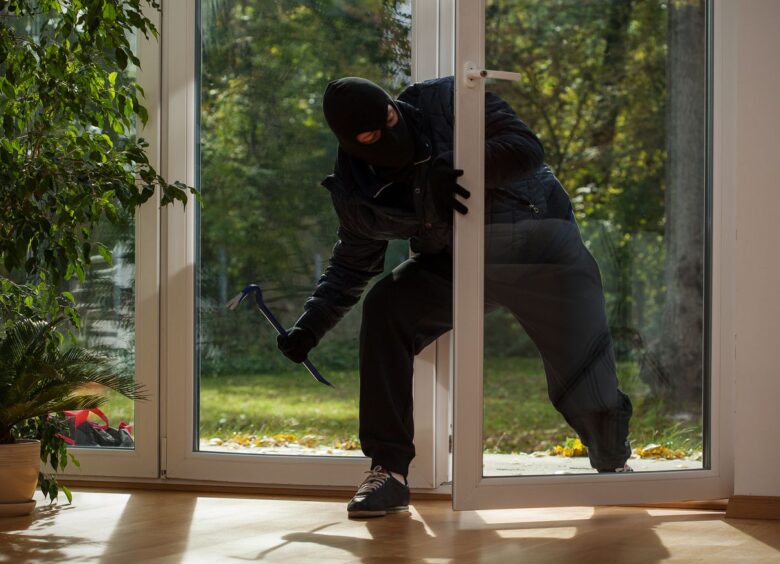
Strong deadbolt locks, reinforced door frames, security strike plates, and impact-resistant glass create genuine physical barriers that require time, noise, and specialized tools to overcome. Law enforcement agencies report that most burglars abandon attempts when faced with entry points that cannot be quickly defeated, as extended breaking-in attempts increase detection risk beyond acceptable levels for most criminals.
Effective reinforcement focuses on the weakest points in typical construction, including areas around strike plates in door frames, window latches and frames, and sliding door tracks. Professional installation ensures that reinforcement measures work together as integrated systems rather than individual components that might fail when stressed by determined entry attempts.

Smart lighting and home automation
Motion-activated exterior lighting and programmable interior lighting systems create realistic patterns of occupancy that adapt to changing conditions rather than maintaining static configurations. Home automation studies show that randomized lighting patterns, automated television and radio activation, and varying routine simulations effectively mimic natural household activity patterns, suggesting genuine occupancy to surveillance systems.
The most effective automated systems learn from actual household patterns when residents are present, then replicate realistic variations when homes are empty. This approach creates convincing occupancy illusions that remain effective even under prolonged criminal surveillance, as the patterns continue to evolve rather than repeating predictable cycles.

Neighborhood watch and engaged community
Active community involvement in mutual security creates the most powerful deterrent effect available to residential areas, as criminals strongly prefer operating in environments where their activities will go unnoticed and unreported. Community policing research consistently demonstrates that neighborhoods with engaged residents who know each other and maintain awareness of standard activity patterns experience significantly lower crime rates than areas where residents remain isolated.
Practical neighborhood cooperation doesn’t require formal watch programs. Instead, it involves residents who recognize regular neighborhood activity, notice unusual behavior, and maintain communication networks that quickly spread information about suspicious incidents. This organic surveillance network creates unpredictable observation patterns that criminals cannot easily monitor or avoid.

Keeping valuables out of sight
Avoiding “advertising” expensive possessions through windows, properly disposing of electronics packaging, and maintaining a discreet home exterior appearance reduces criminal targeting by eliminating obvious indicators of valuable contents. Crime analysis studies indicate that burglars frequently target locations based on visible signs of valuable electronics, jewelry, or other desirable goods that can be quickly converted into cash.
Simple practices, such as closing curtains or blinds, breaking down large electronics boxes before disposal, and avoiding obvious displays of wealth through windows or exterior decorations, significantly reduce the likelihood that criminals will identify homes as profitable targets worthy of surveillance and planning efforts.

Good exterior maintenance
Trimmed landscaping, well-maintained yards, and clear sightlines around entry points eliminate hiding spots while signaling that residents maintain active attention to their property’s condition and security. Environmental criminology research indicates that properties exhibiting signs of neglect or inattention tend to attract criminal activity. Additionally, well-maintained homes suggest vigilant residents who are likely to notice and report suspicious behavior.
Effective maintenance focuses on security-relevant factors rather than purely aesthetic considerations, ensuring that shrubs near windows and doors remain below sightline levels and that outdoor lighting remains functional and unobstructed. That fencing or barriers don’t create concealment opportunities for criminal activity.
Conclusion
Adequate home security requires abandoning comforting myths in favor of evidence-based strategies that address how criminals actually select targets and execute break-ins. The most critical shift involves understanding that determined professional burglars operate systematically rather than spontaneously, conducting surveillance and planning that can identify and exploit security weaknesses that homeowners might not recognize.
Absolute protection comes from implementing multiple overlapping security layers that increase the risk to criminals while reducing the potential rewards, making homes less attractive targets compared to easier alternatives. This approach requires ongoing attention and periodic evaluation rather than single installations that homeowners can forget about, as criminal methods and neighborhood conditions change over time.
Explore our other home security articles here at MediaFeed, where we continue to provide practical guidance for protecting your family and property through proven, practical strategies that address real-world security challenges.
Related:
Like MediaFeed’s content? Be sure to follow us.
This article was syndicated by MediaFeed.org.