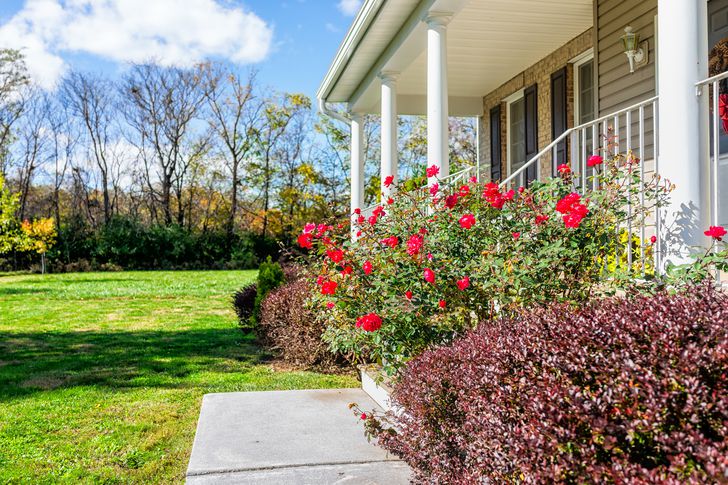
A beautifully landscaped home can improve your day-to-day life while enhancing the curb appeal of your home. Depending upon your needs for landscaping design and whether you plan to do it yourself or hire a professional, landscaping costs can greatly vary.
In this post, we’ll share more about the benefits of quality landscaping, what some current landscaping trends are and typical landscaping costs. Finally, we’ll also share smart strategies on how to budget and pay for a landscaping project.
Related: The top home improvements to increase your home’s value
What Are Some Benefits of Landscaping?
Landscaping can add beauty to a home, and it can also add to the property’s value. According to Homelight’s Q2 2020 Top Agent Insight Report, this is one of the best home improvements to increase a home’s marketability and value to buyers.
When a home has curb appeal, it will likely garner more interest among home buyers, so the investment in a well-landscaped home can be worth the expense. Plus, studies cited by Texas A&M University show remarkable and surprising potential benefits associated with being surrounded by plants, including:
- Improved concentration and memory
- Elevated moods
- Reduced likelihood of stress-related depression
- Accelerated healing
- Improved relationships
- Boosted levels of compassion
- Increased energy
- Boosted performance
- Better learning environment
What Are Some Current Landscaping Trends?
Outdoor home improvements and gardening, in general, have increased in interest and popularity over recent years, with more people taking refuge in personal spaces rather than public ones.
A popular movement in the landscaping world is growing your own food. Blending landscaping and food production, such as planting herbs and edible plants into your existing garden, is possible. Even when space is limited, using containers or trellising plants to grow vertically can make an outdoor space inviting. If you have children, getting them involved in growing their own veggies might even make them more interested in eating healthy foods.
After growing your own food, you might want to dazzle people with your grilling skills, so including a dream outdoor kitchen might be a welcome addition to a landscaping project. Combining hardscaping and softscaping in a yard can make for a balanced landscaping plan.
Using landscaping to enhance nature is another popular trend. For example, creating a pollinator garden or incorporating native plant species can help biodiversity thrive and provide habitat for birds, butterflies and other species. Homeowners in more arid climates can practice good environmental stewardship through xeriscaping, which involves the use of low-water plants.
How Can Landscaping be Budgeted For?
First, give yourself permission to dream, to think big. What does your ideal landscaping look like? Feel like?
Then, create a list of both needs and wants. In your “needs” column, list repairs that must be done for safety’s sake, including drainage challenges, broken fences, toxic plants that need to be removed, tree removal and so forth.
Walk around your property as you make this list and imagine what the property could look like with the stunning new landscaping you’re envisioning. Perhaps some of the ideas listed above have inspired you in an unexpected direction. Have fun and add these ideas to your “wants” column.
Now, prioritize your list and be clear about which items are optional (perhaps a special type of trellis material for climbing roses) and which are not (trip hazards where you plan to add outdoor seating). Be sure to write down your priorities.
Initially, you might wonder if this is time well spent, but once you get into the midst of your project, you may run across new landscaping ideas. When this happens, it’s important to be able to ground yourself by reviewing what you prioritized and why.
According to Houzz, about 60% to 70% of choices that get made impulsively cost more than what was included in the original budget. Sometimes, things are added on the spur of the moment because you discover they’re necessary. Other times, they’re not. So review your priorities and make your decision thoughtfully based upon your original plan.
Next, determine how much you can realistically spend, keeping in mind how quality landscaping can add significant value to your home. Then, it might make sense to talk to several professional landscapers to get estimates. Professionals will also be able to let you know if your plans are realistic for your property. Even if you intend to do some of the work yourself, these professionals will likely share information you hadn’t yet considered. (Hiring them in the off-season might save you money, too.)
Add a cushion of 10% to 20% and then determine if you can fund this out of savings or if you’ll need to finance any part of your landscaping plan.
How Much Does Landscaping Cost?
Now that you’ve done preliminary landscape budget planning, here’s a look at the average cost of landscaping. Small projects — creating an average-sized flower bed or trimming shrubs, for example — might cost around $1,000 on average, while landscaping costs for larger, more complex projects could be $10,000 or more.
If you’re planning a larger project, the American Society of Landscape Architects recommends that you budget your project at 10% to 20% of the value of your home.
If you plan to use a designer for your project, it might cost $50 to $150 per hour for a professional landscape architect to draw up plans, choose the plants and find and purchase materials. For a small yard or garden space, the total cost might be between $400 to $1,800, depending on the complexity of the design.
What Is Landscaping Cost Per Square Foot?
According to HomeAdvisor, the cost of landscaping runs between $4 and $40 per square foot. For basic services and intermediate projects, such as aerating, flower planting and installing garden beds, this range reduces to just $4 to $10 per square foot.
Landscaping costs are influenced by a variety of factors, including geography, type of project and the materials used. Figuring out the dimensions of the project area can help figure out cost estimates.
Landscaping prices can exceed $10 per square foot when the job includes additional time, labor or equipment to tear out and replace greenery or hardscape surfaces.
How Much Does New Landscaping Installation Cost?
Starting from scratch can be challenging, but having a blank slate opens up possibilities for curating your outdoor spaces.
To install landscaping staples, such as grass, walkways, basic shrubs and a handful of trees, you can expect to pay between $3,000 and $15,000, depending on property size and personal preferences. The cost of new landscaping can go up significantly when components like fencing, sprinkler systems and patios are tacked on.
Sometimes, new landscaping is necessary due to a larger construction project like installing a pool or building an addition to your home. Consider how these improvements will impact your home value if using the 10% rule of thumb for budgeting landscaping costs.
What Will It Cost to Maintain Landscaping?
Often, maintaining what you have is less costly than installing new landscaping. The amount of maintenance you need will depend on landscape design, local climate and how much of a DIY approach you’re comfortable with. For basic maintenance needs, budgeting between $100 to $200 per month for an average property is reasonable.
Lawn care is usually the most frequent maintenance task. If your property is a half-acre or smaller, each mowing could run between $25 and $50.
Mulching is another common maintenance job if your property’s landscaping includes younger trees, flower beds or shrubs. Many hardware and garden stores sell mulch by the bag for a few dollars or offer bulk delivery by truck. Spreading the mulch yourself can further cut landscaping maintenance costs.
What Are Some Options to Finance a Landscaping Project?
If you’ve decided to invest in your home’s value through landscaping, but the price point is above what you can afford using savings alone, then it may make sense to weigh the pros and cons of using a home equity line of credit (HELOC) or a personal loan to pay for the landscaping.
Financing a Landscaping Project With a Home Equity Loan
In certain circumstances, a HELOC may make sense. If, for example, you have significant home equity and plan to borrow a large amount to fund landscaping costs, a HELOC may offer a relatively low-interest rate. Plus, the payments could be tax deductible if the use of the funds meets IRS requirements. Something to keep in mind, however, is that with a HELOC, you may need to pay for an appraisal and go through a more detailed application and approval process than you might with an unsecured personal loan.
Financing a Landscaping Project With a Personal Loan
An advantage of using an unsecured personal loan is that it doesn’t tie up any equity in your home. Fees are typically less than a HELOC (in some cases no fees at all) and the application and approval processes are typically pretty fast. One disadvantage is that interest rates for unsecured personal loans can be higher than those for HELOCs because there is no collateral backing the loan.
The Takeaway
Home renovations are one of the most efficient ways to boost home values, and landscaping can be an excellent way to improve both its appearance and value.
Learn More:
This article
originally appeared on SoFi.comand was
syndicated by MediaFeed.org.
SoFi Loan Products
SoFi loans are originated by SoFi Lending Corp. or an affiliate (dba SoFi), a lender licensed by the Department of Financial Protection and Innovation under the California Financing Law, license # 6054612; NMLS # 1121636 Opens A New Window.. For additional product-specific legal and licensing information, see SoFi.com/legal.
Tax Information: This article provides general background information only and is not intended to serve as legal or tax advice or as a substitute for legal counsel. You should consult your own attorney and/or tax advisor if you have a question requiring legal or tax advice.
External Websites: The information and analysis provided through hyperlinks to third party websites, while believed to be accurate, cannot be guaranteed by SoFi. Links are provided for informational purposes and should not be viewed as an endorsement.
Third Party Brand Mentions: No brands or products mentioned are affiliated with SoFi, nor do they endorse or sponsor this article. Third party trademarks referenced herein are property of their respective owners.
More from MediaFeed:
How do home improvement loans work?

Creating a dream home on a budget can be tricky. On one hand, renovating a home can be one of the most efficient ways to grow the value of the property. But on the other hand, the home improvement process can be infectious, leading homeowners to add more and more projects to their list.
However, even relatively small jobs, such as replacing a major appliance like a stove or dishwasher, can easily run $1000 with installation included, and balancing the price of comfort vs. the feeling of a worthwhile investment is subjective, hinging entirely on an individual’s financial goals, limits, and flexibility—not to mention funds—to plan for the future.
Related: Home equity loans vs personal loans for home improvement
DepositPhotos.com

Whether the homeowner plans to hire a professional contractor or go the DIY route, home improvement loans can go a long way towards affording greater flexibility in navigating and managing any planned upgrades or repairs.
There are pros and cons of taking on debt for home improvement projects, and homeowners have options when considering different types of loans.
DepositPhotos.com

Homes are investments, and most homeowners are interested in protecting that investment for their own financial security and in the interest of the value of their neighborhood.
When a neighborhood has properties in disrepair, the overall value of the area tends to decrease. Neighborhoods that have properties in good repair tend to suggest a thriving community.
Paying for home improvements with cash is the thriftiest way to go, but if a homeowner doesn’t have sufficient savings to do this, taking on debt in a responsible way can be an acceptable way to improve their home.
danchooalex/istockphoto
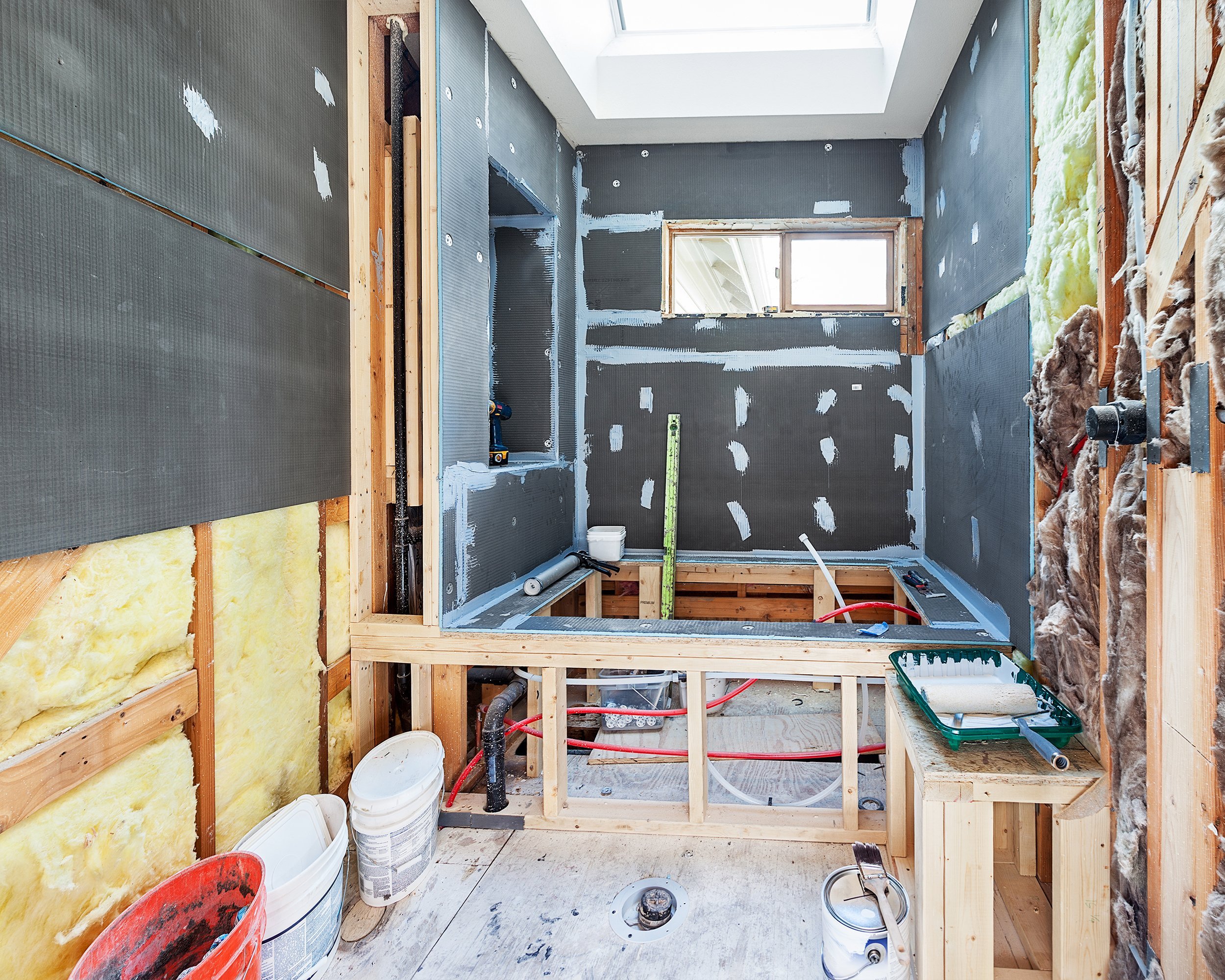
Home improvement loans are personal loans used to pay for home repairs or renovation projects. These are unsecured loans—meaning the house isn’t used as collateral to secure the loan. Approval is based on creditworthiness and other personal financial factors that will vary from lender to lender.
As always, it’s worth doing some research and shopping around for these types of loans, as there can be a fair amount of variability in terms and rates, depending on the amount of the loan and underwriting criteria.
Jo Ann Snover/shutterstock

Homeowners who feel comfortable offering their home as collateral on a secured loan have a few options.
djiledesign/ istockphoto

Home equity is the amount a home is worth compared to how much is owed on it. For example, a home valued at $100,000 with a remaining debt of $75,000 would have $25,000 in equity. As the debt is paid down, the amount of equity will increase.
Homeowners may be able to borrow against the equity they have in their home. Home equity loans are funded in a lump sum and generally have a fixed interest rate, which means a fixed monthly payment. The interest paid on this type of loan may be tax deductible as long as the funds are used to substantially improve a main residence or second home and are secured by the same.
Depositphotos

A HELOC is similar to a home equity loan, except that the funds are not distributed in a lump sum. The amount of money that can be borrowed is still tied to the amount of equity in the home, but the borrower accesses the funds as needed.
There is generally a limited amount of time during which the funds can be accessed—this is called the draw period and is typically 10-15 years. During the draw period, only interest payments are required. After the draw period, monthly payments on the total debt will include principal and interest.
Interest rates on HELOCs are usually variable, so monthly payments will not always be the same. Tax deductibility is the same as for home equity loans.
This type of loan may be useful for those who don’t know exactly how much they’ll need for a home renovation. Funds can be drawn on as needed and can be replenished by making payments.
DepositPhotos.com

A cash-out refinance is a new mortgage taken out on an existing property for more than what is owed. This new mortgage replaces the existing one, part of the funds paying off the existing debt and the remainder disbursed in cash to the borrower. The new mortgage may have different terms than the old mortgage.
Homeowners may have a better financial situation then when they originally took out their mortgage, so might have some room for negotiating a better rate when refinancing. Lenders typically look at an applicant’s financial history, as well as the appraised value of the home and how long the existing mortgage has been in place.
jat306 / istockphoto

A construction loan may be an option for more substantial home renovations, but a lender may need to be convinced that the value of the property is worth the investment.
There will be more paperwork involved in this type of loan because in addition to the borrower’s own financial documentation, a lender will probably want to see renovation plans, a budget, and construction schedule.
Having a reputable contractor may go a long way towards getting approval for a construction loan, as the lender may want to see the contractor’s references, proof of insurance, project specifications, and a signed contract.
Since these financing options are secured—typically the property is used as collateral—the interest rates are often lower than personal loan interest rates.
Homeowners may want to consider their current mortgage lender for loans that are tied to the equity they have in their home. Some lenders may offer lower rates for current borrowers. But shopping around to compare rates and fees is recommended.
Imgorthand

For homeowners who may not qualify for a home improvement loan, there might still be alternatives that serve the same purpose. Some examples are home improvement grants and loans offered by the US Department of Housing and Urban Development (HUD) and funding options offered through the USDA’s Rural Housing Service.
Both of these federal agencies provide detailed information on their websites. While they are federal programs, there may also be requirements for individual states or communities.
Something to consider when looking at different types of loans is whether the rate is fixed or variable. Personal loans and home equity loans are generally fixed-rate loans, while HELOCs usually have variable rates.
A cash-out refinance can be either fixed or variable, depending on the type of mortgage loan a borrower desires. Payments on a fixed-rate loan will be the same month-to-month, while payments on a variable-rate loan will change occasionally according to the current interest rate.
SomeMeans/istockphoto

For applicants whose financial history shows responsible use of credit, the process is typically straightforward: apply for the loan, receive the funds, and then get to work on those home improvements.
But that’s assuming the borrower has a solid financial picture that conforms to a lender’s standards. Approval for a loan may be affected by factors like debt-to-income ratio, credit history, and other factors.
BartekSzewczyk

A nice benefit to home improvement loans is that they can often be assessed and subsequently approved quickly, with minimal hoops to jump through in the process—which is usually quite unlike a mortgage application experience or with a secured loan.
Before applying for any loan, a practical first step for the potential borrower might be to review their credit report, checking for mistakes or discrepancies that might negatively impact a loan application. Because personal loans are unsecured loans, an applicant’s credit rating will be a large part of what determines the interest rate they may qualify for.
Applicants who don’t have a strong credit rating or lack a credit history may want to consider applying with a co-signer or co-borrower.
StockLite/shutterstock

Just like buying a home, taking out a loan to improve that home should be considered from many angles. No matter what decision is made in the end, it’s wise to consider the trade-offs and responsibilities with each possible option.
Learn More:
This article
originally appeared on SoFi.com and was
syndicated by MediaFeed.org.
SoFi Loan Products
SoFi loans are originated by SoFi Lending Corp (dba SoFi), a lender licensed by the Department of Financial Protection and Innovation under the California Financing Law, license # 6054612; NMLS # 1121636 . For additional product-specific legal and licensing information, see SoFi.com/legal.
Checking Your Rates: To check the rates and terms you may qualify for, SoFi conducts a soft credit pull that will not affect your credit score. A hard credit pull, which may impact your credit score, is required if you apply for a SoFi product after being pre-qualified.
Third Party Trademarks: Certified Financial Planner Board of Standards Inc. (CFP Board) owns the certification marks CFP®, CERTIFIED FINANCIAL PLANNER, CFP (with plaque design), and CFP® (with flame design) in the U.S., which it awards to individuals who successfully complete CFP Board’s initial and ongoing certification requirements.
Tax Information: This article provides general background information only and is not intended to serve as legal or tax advice or as a substitute for legal counsel. You should consult your own attorney and/or tax advisor if you have a question requiring legal or tax advice.
External Websites: The information and analysis provided through hyperlinks to third party websites, while believed to be accurate, cannot be guaranteed by SoFi. Links are provided for informational purposes and should not be viewed as an endorsement.
Phovoir/shutterstock
Featured Image Credit: krblokhin/istockphoto.