America is witnessing a concerning resurgence in child labor. The U.S. Labor Department’s recent report of a 37% increase in child labor violations serves as a stark reminder of an era we thought long behind us. It was during the early 1900s that the grim situation of America’s youngest workers was dragged into the public consciousness, largely due to the tireless work of Lewis Hine.
From 1908 to 1924, Hine, a sociologist turned photographer, traversed the length and breadth of the country to capture the haunting realities of children toiling in factories, coal mines, cotton mills, and even on city streets. Hired by the National Child Labor Committee, Hine often operated undercover, posing as a fire inspector, Bible salesman, or postcard vendor, to gain access to workplaces and document the cruel conditions inside. His photographs, with their stark and uncompromising portrayal of child labor, became instrumental tools for advocates pressing for labor reforms.
Here, we’ve handpicked 18 of the most poignant photographs that cast light on the grim reality of that era — and a glimpse into what could be happening today.
Image Credit: Library of Congress.
Vance, a trapper boy, 15 years old, $.75 a day for 10 hours work in 1905
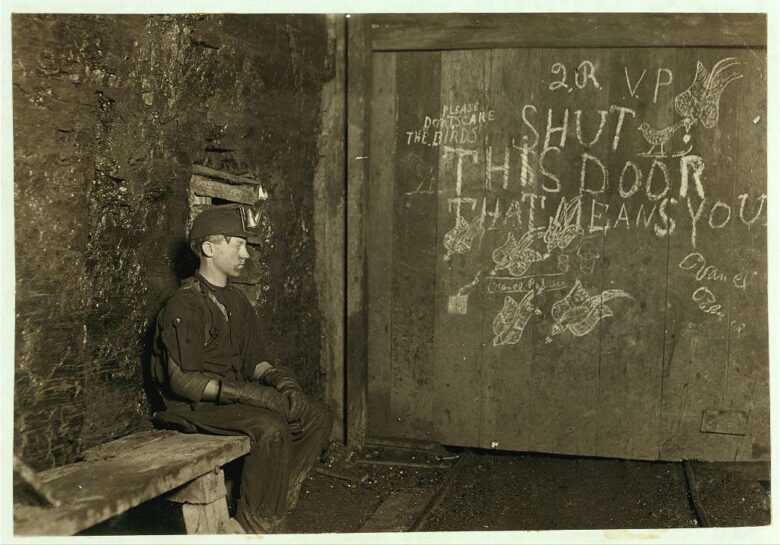
In a compelling photograph taken in 1905 by Lewis Hine, Vance, a 15-year-old trapper boy, was captured working in a West Virginia coal mine. He earned just 75 cents for a 10-hour workday, with his primary responsibility being to open and shut a door for passing mining cars.
Trapper boys, like Vance, were young workers employed in coal mines during the late 19th and early 20th centuries. Their primary role was to operate the trap doors that controlled ventilation in the mines. Often working in conditions of extreme darkness for up to 10 hours a day, these boys were a crucial part of the mining operation, ensuring the efficient flow of coal carts through the labyrinthine underground tunnels.
Image Credit: Library of Congress.
Glass workers, 1908
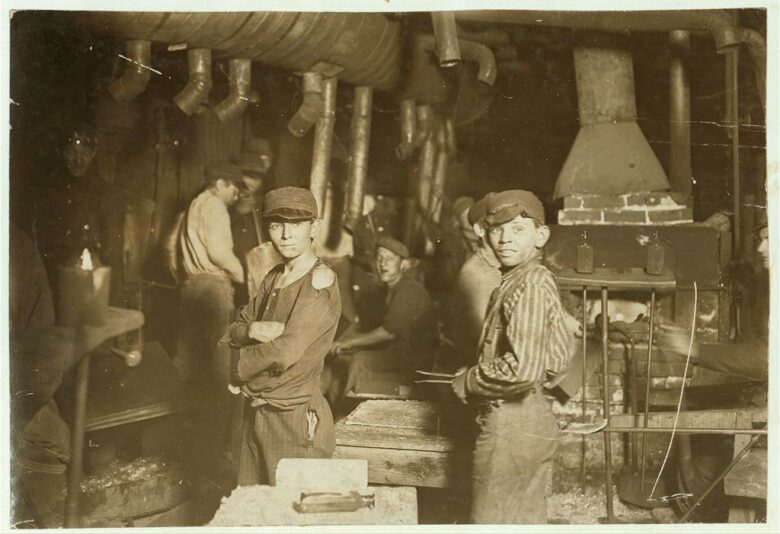
Glass workers in the late 19th and early 20th centuries often faced dangerous and difficult working conditions, similar to those in other industrial sectors like coal mining. Children were not uncommon in these settings and were subjected to similar hazards—intense heat, risk of injury from machinery, and exposure to toxic substances. They were tasked with roles like carrying molten glass and assisting skilled workers in various processes such as blowing, pressing, and finishing.
Image Credit: Library of Congress.
A little ‘shaver,’ Indianapolis newsboy, 6 years old
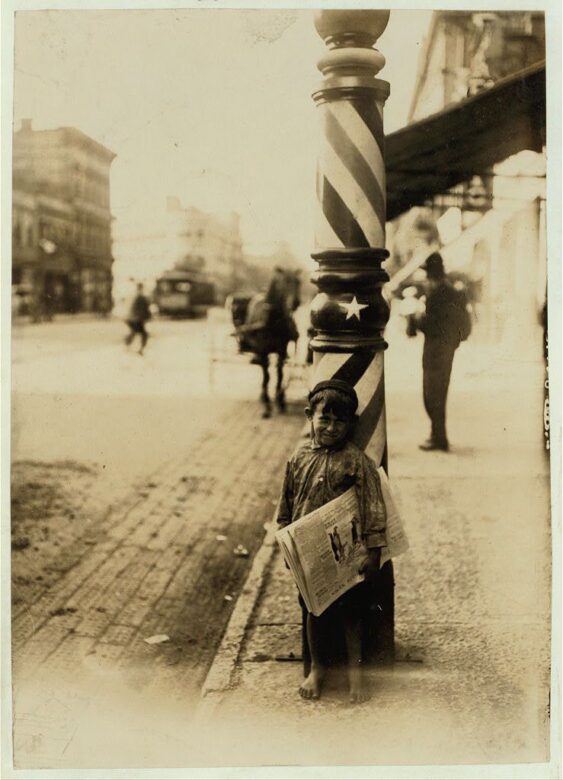
Contrary to popular romanticized views, being a newsboy was far from an easy job. These children worked long hours, sometimes late into the night, braving the elements to sell papers and earn a meager income.
It’s estimated that tens of thousands of children were employed as newsboys during this period. Their cries of “Extra, extra!” were a common sound, but behind this facade was a life of hard work and scant remuneration.
Image Credit: Wikipedia.
Tenjeta Calone, cranberry picker, 10 years old
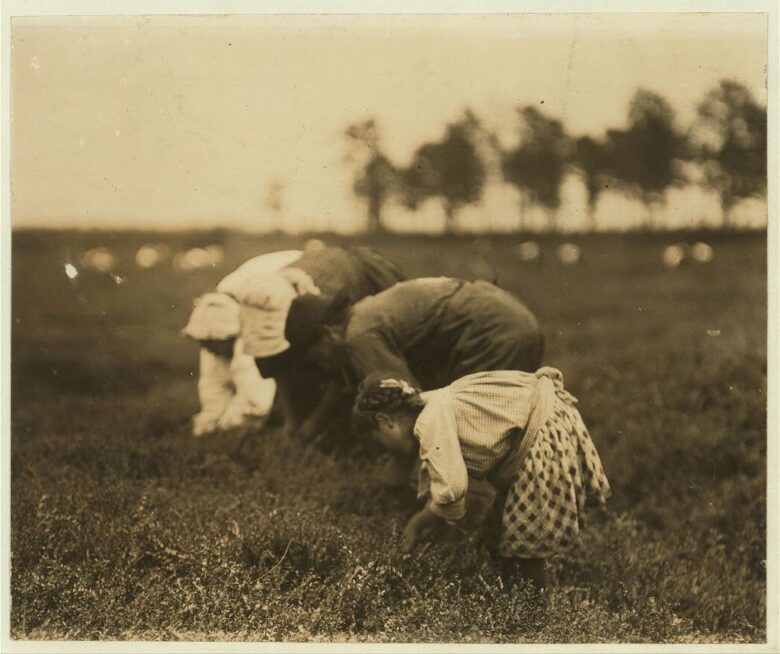
Tenjeta Calone, a 10-year-old from Philadelphia, spent four years picking cranberries at White’s Bog in Browns Mills, New Jersey. Despite being the fourth week of school, people in the area expected to remain working for two more weeks. Cases like Tenjeta’s highlight the extent to which child labor permeated various sectors of the American economy, including fieldwork like fruit and vegetable picking.
Children engaged in agricultural labor were exposed to a host of risks, including long hours in the hot sun, improper or non-existent safety equipment, and physical exhaustion. They often missed critical opportunities for education as work took precedence over school, similar to Tenjeta Calone’s situation.
Child labor in agriculture was especially challenging to address because it often involved family-run operations, making it difficult to separate exploitative practices from family responsibilities
Image Credit: Library of Congress.
Mary, 4-year-old oystershucker, $1.50 a day in1911
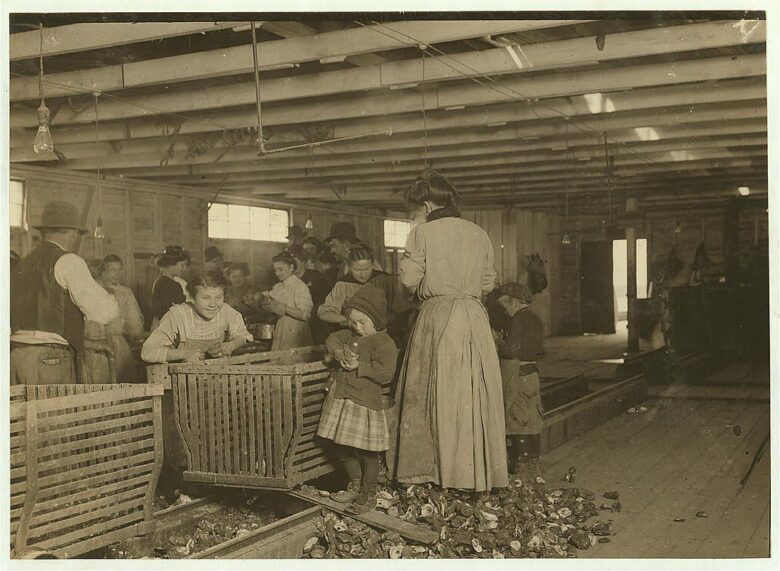
This compelling photograph shows four-year-old Mary is shown shucking oysters in Dunbar, Louisiana.Mary, at her tender age, was responsible for shucking two pots of oysters a day and caring for a baby when not working. The employer even told Hine that the next year, Mary would be working as steadily as the rest of the laborers.
Many factory owners preferred child labor because children were easier to manage, less likely to strike, and could be paid far less than adult workers. Additionally, the small and nimble fingers of children were seen as better suited for delicate tasks, such as threading needles in textile mills or sorting small objects.
Image Credit: Library of Congress.
Boys picking over garbage 1909
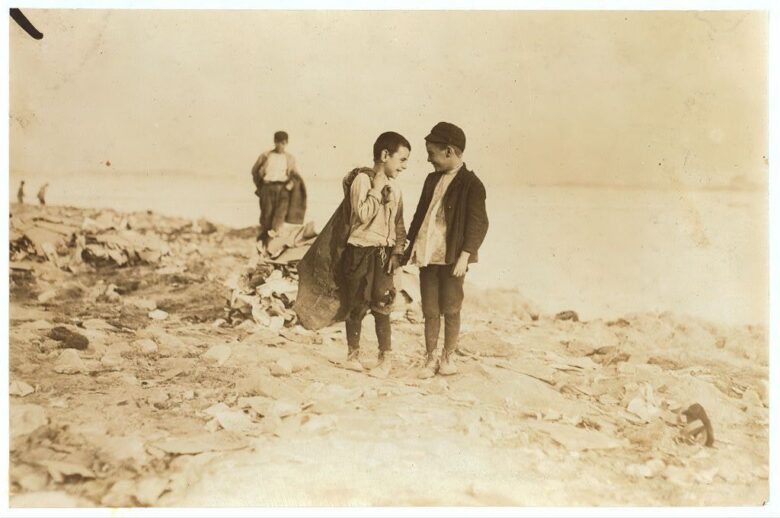
Child laborers were a common sight at waste dumps around the country during the early 20th century. Captured by Hine, these images revealed the perilous conditions under which these young workers operated. Lacking any protective gear, the children were exposed to a multitude of hazards, including rotting food, broken glass, and potentially toxic substances.
The work was not only physically strenuous but also came with severe health risks. Despite the dangerous and unsanitary conditions, these children sorted through waste materials to retrieve items of value, such as scrap metal or reusable refuse.
Image Credit: Library of Congress.
Pin boys in Les Miserables Alleys in Lowell, Mass., 1911
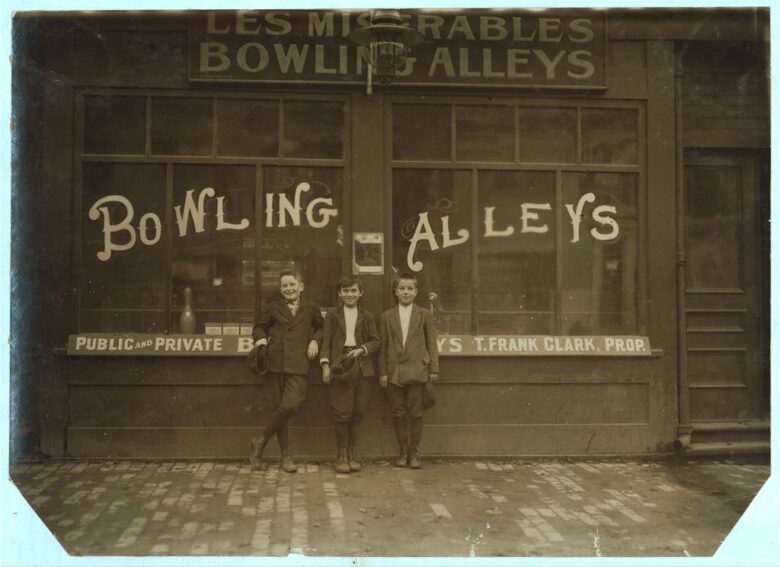
The image features young pin boys, children tasked with resetting bowling pins, working arduous hours into the night. Frank Jarose, an 11-year-old, had earned $3.72 in just one week. Joseph Philip, another 11-year-old, worked until midnight every weekday and made $2.25 one week and $1.75 the week before. Willie Payton, also 11, earned over $2 in a single week. These wages, modest even for that era, underscore the exploitation of child laborers, who often worked under difficult and hazardous conditions.
Image Credit: Library of Congress.
Young cigar makers in Tampa, Fla.
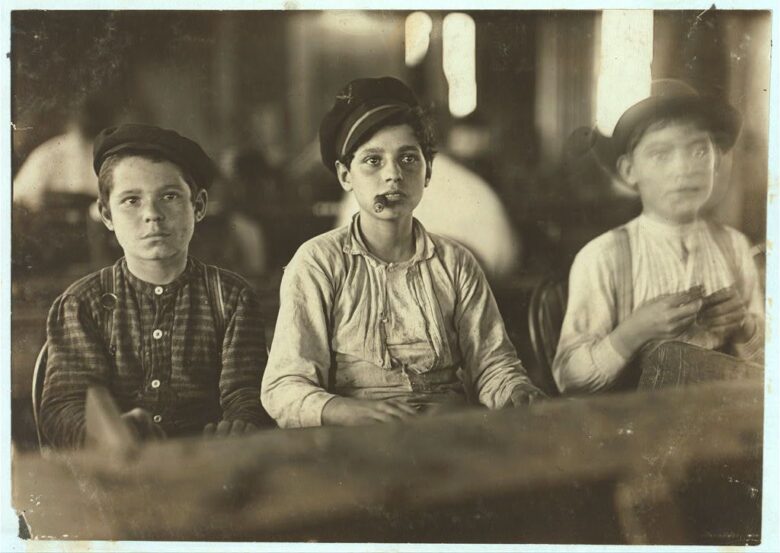
This photograph taken at Englahardt & Co. featured young boys who appeared to be under the age of 14, working as cigarmakers. During slack periods, fewer children were employed, but sources indicated that when demand spiked, many small boys and girls were hired to fill the labor gaps.
In those times, the health implications of tobacco were not widely understood. Children not only worked in environments filled with tobacco fumes but also often smoked cigars themselves. It was common practice and not considered hazardous for children to be surrounded by, and even consuming, toxic tobacco.
Image Credit: Library of Congress.
Manuel, a 5-year-old shrimp-picker, 1911
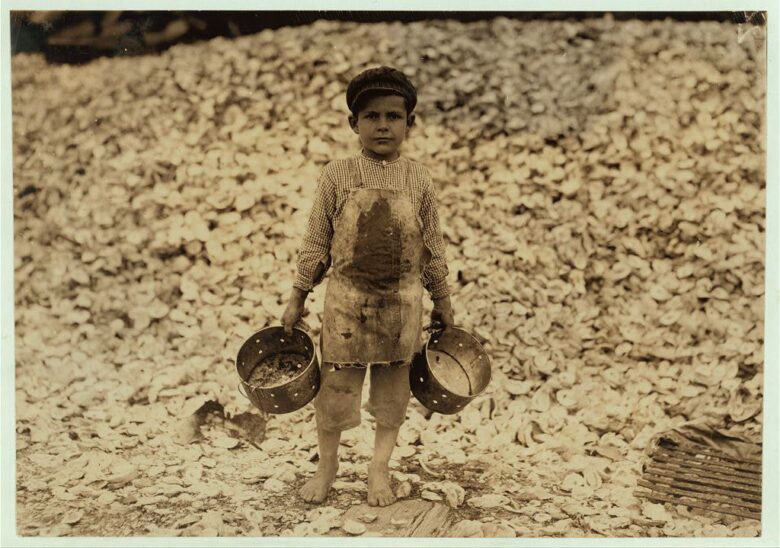
Captured in 1911 by photographer Lewis Hine, the image of Manuel, a five-year-old shrimp-picker, is particularly poignant. Standing in front of a mountain of oyster shells, Manuel, who spoke no English, embodies the grim realities of child labor in the seafood industry. His young age and immigrant status highlight how immigrant children were disproportionately pushed into laborious roles.
In the early 20th century, children like Manuel were commonly employed in the shrimp-picking and oyster-shucking industries. These young workers were responsible for tedious and often physically demanding tasks, such as sorting shrimp and prying open oyster shells. The work was not only monotonous but also carried the risk of injury from sharp shells and tools.
Image Credit: Library of Congress.
Breaker boys, 1911
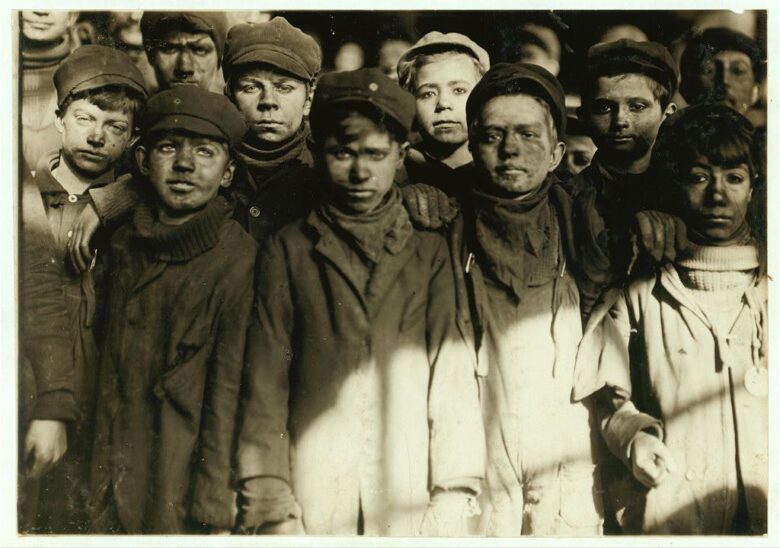
The photo by Hine, featuring young boys in tattered clothes surrounded by coal dust, was one of the most poigant ones that caught the attention of many and brought to light the dire conditions these children faced.
Breaker boys were young coal miners tasked with separating impurities from coal by hand—a dirty, dangerous, and monotonous job. These children sat along a coal conveyor belt, picking out slate and other impurities from the coal as it passed by them. They were often exposed to coal dust, leading to a high risk of lung diseases, and they worked in perilous conditions, subject to the dangers of machinery and the weight of the coal itself.
Image Credit: Library of Congress.
Young girls in a tobacco shed
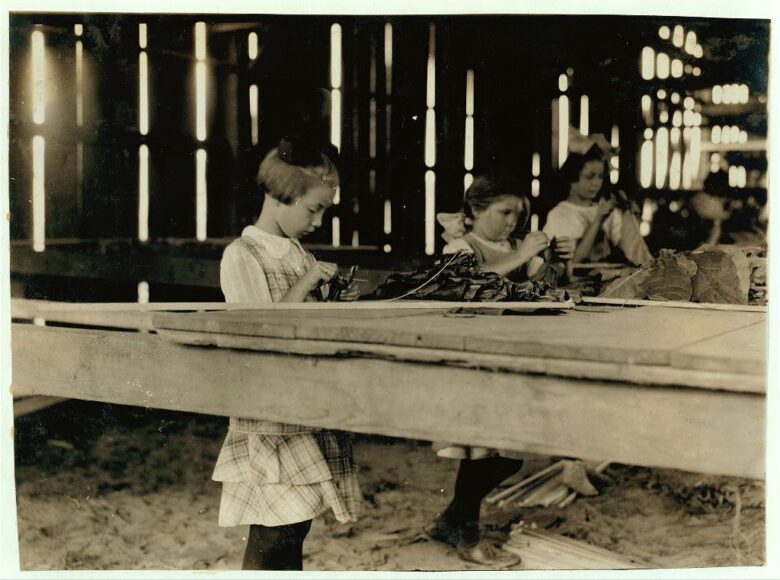
This image captures young girls, ages ranging from 8 to 10 years old, working diligently in a tobacco shed. The eldest among them earns a mere 50 cents a day for her labor. It’s a setting engulfed in the heavy, intoxicating aroma of tobacco leaves, a place where young hands are set to work instead of holding school books.
These young workers, some as young as 8, were a part of a larger workforce at Hawthorn Farm, where about 12 workers were between the ages of 8 and 14, and approximately 15 were over the age of 15. What’s both startling and heart-wrenching is that these children were exposed to the toxic environment of tobacco processing at such a vulnerable age. In an era where child labor laws were either non-existent or poorly enforced, the exploitation of children in hazardous industries like tobacco was not uncommon.
Tobacco farming and processing was a labor-intensive task that often used child labor to keep costs down. The children were expected to handle the leaves that contained nicotine, a substance we now know is addictive and harmful. But back then, the dangers of being surrounded by tobacco all day were not
Image Credit: Library of Congress.
Young girl working in a hosiery mill, 1911
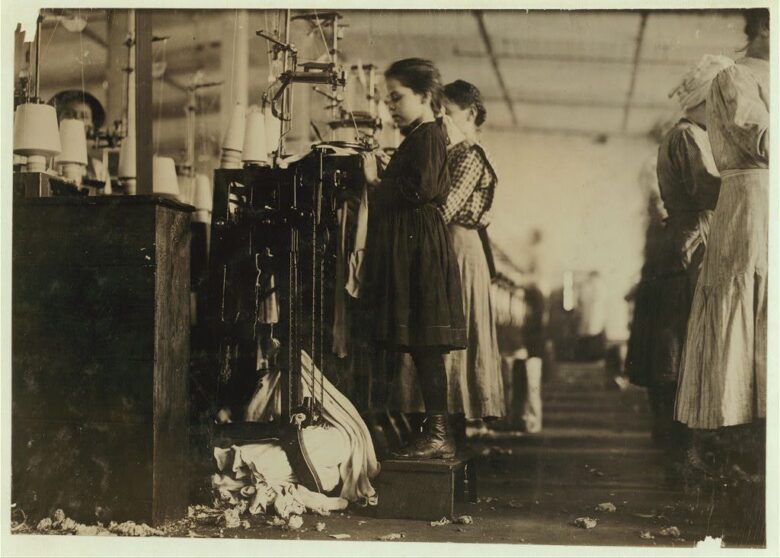
The little girl in this photo is seen standing on a wooden box just to reach her machine. The image speaks volumes about the conditions young factory workers faced in the early 20th century. Such scenes were not uncommon, where children, far too small for the machinery they operated, were part of the labor force.
Image Credit: Library of Congress.
A young oyster fisher
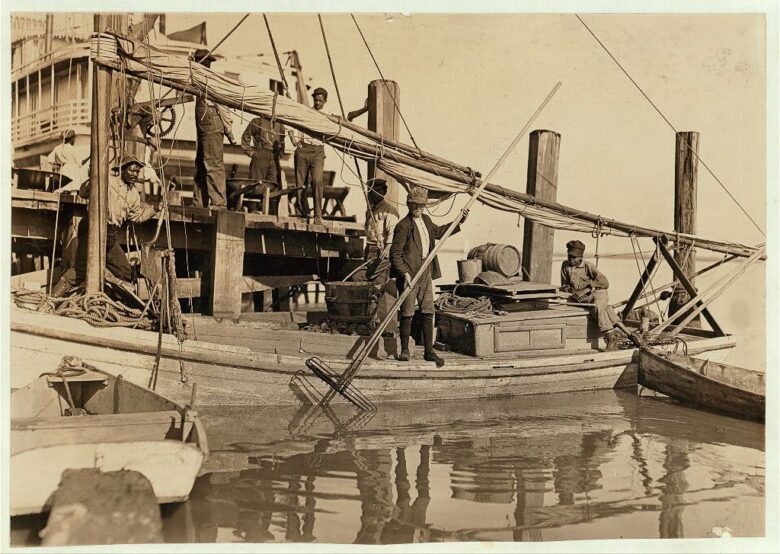
This photograph shows Randsey Summerford working as a young oyster fishers in Apalachicola, Florida, during the early 20th century. According to Summerford, who was 16 at the time, he had been engaged in this labor-intensive work for four years. His routine involved starting his day at 4 A.M., spending an entire night at sea in a small oyster boat, and returning sometime the following day.
Image Credit: Library of Congress.
Fruit vendors, Indianapolis Market, 1908
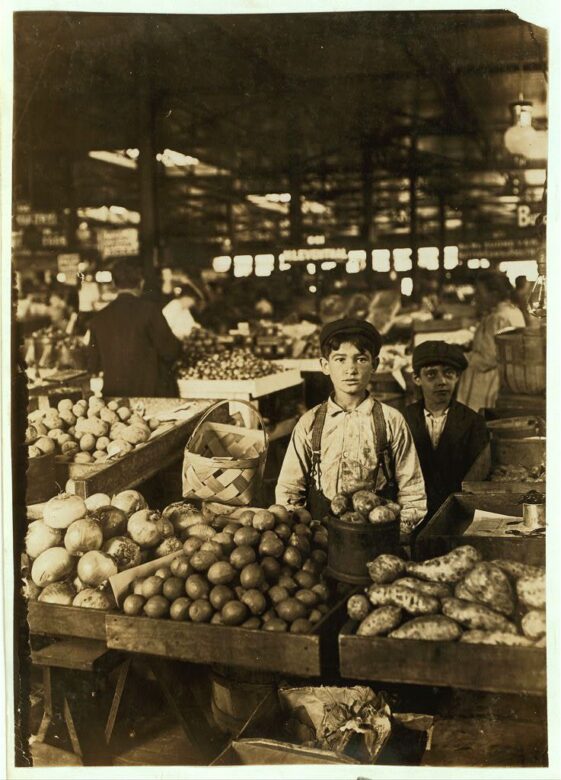
Unlike the young miners or factory workers of the era, these children worked in the open air, selling fruit to passersby. While the work might appear less arduous compared to the jobs undertaken by their peers in mines and factories, it came with its own set of challenges.
These young vendors often had to manage the business aspects of their stalls, negotiate prices, and interact with a wide range of customers from an early age. They were also exposed to the elements and had to maintain long hours to make a sale, which could adversely affect their health and well-being.
Image Credit: Library of Congress.
Jewel and Harold Walker, 6 and 5 years old, cotton pickers
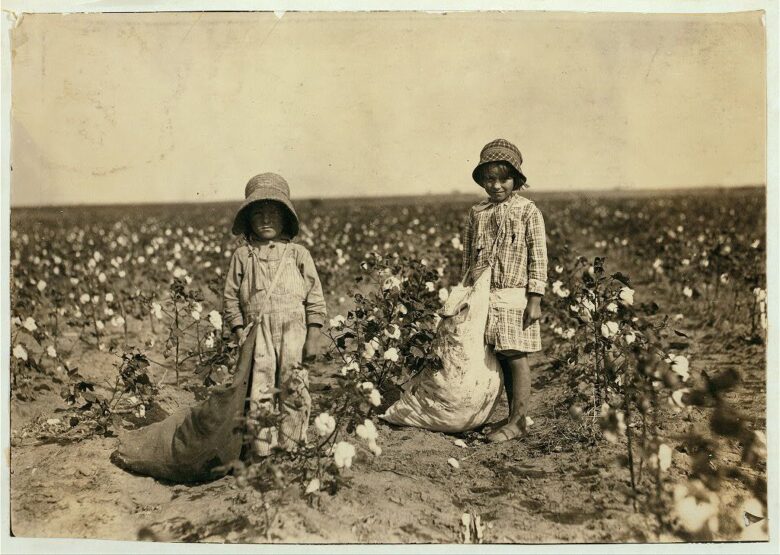
In this photograph Jewel and Harold Walker, ages 6 and 5 respectively, are seen picking cotton. Their father is quoted as promising them a little wagon if they maintained a steady pace, highlighting how even the youngest members of families were encouraged to contribute to household income. In just a short amount of time, the children managed to collect half a bagful of cotton, picking between 20 to 25 pounds a day.
Image Credit: Library of Congress.
Tobacco field laborers Amos, 6, and Horace, 4, in 1916
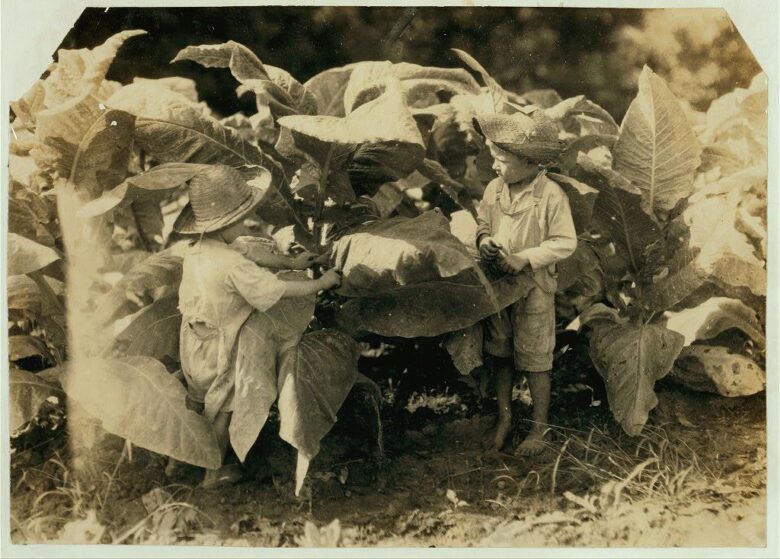
Amos and Horace, then ages 6 and 4, were shown laboring in tobacco fields from “sun-up to sun-down.” Their father, John Neal, who was a renter and grew tobacco, stated at the time—and was corroborated by the landowner—that his young sons were as steady in their work as adults. They were involved in the meticulous and time-consuming tasks of worming and suckering tobacco plants.
This historical photograph offers a stark glimpse into the laborious roles that children were expected to undertake in the early 20th century. While many children of their age today would be in school or at play, Amos and Horace were already accustomed to long, hard workdays.
Image Credit: Library of Congress.
Tipple boy, 1908
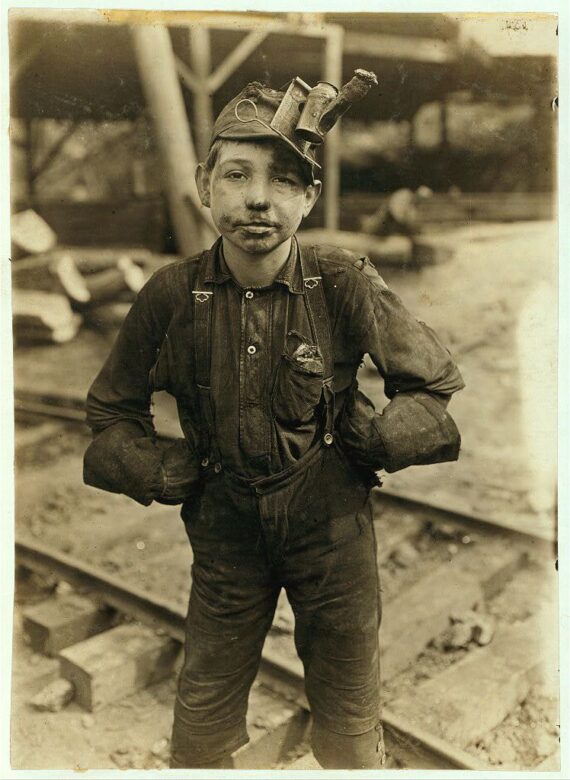
Tipple boys were young workers employed at coal tipples, the structures used for sorting and loading coal. Tipple boys worked physically demanding and dangerous work, often for long hours. They were responsible for various tasks such as separating slate and other impurities from the coal as it was loaded onto cars or trucks. Working at a tipple exposed these young boys to dust, grime, and the elements, and they faced significant risks, including accidents caused by moving machinery.
Image Credit: Library of Congress.
Bundle boy, 1910
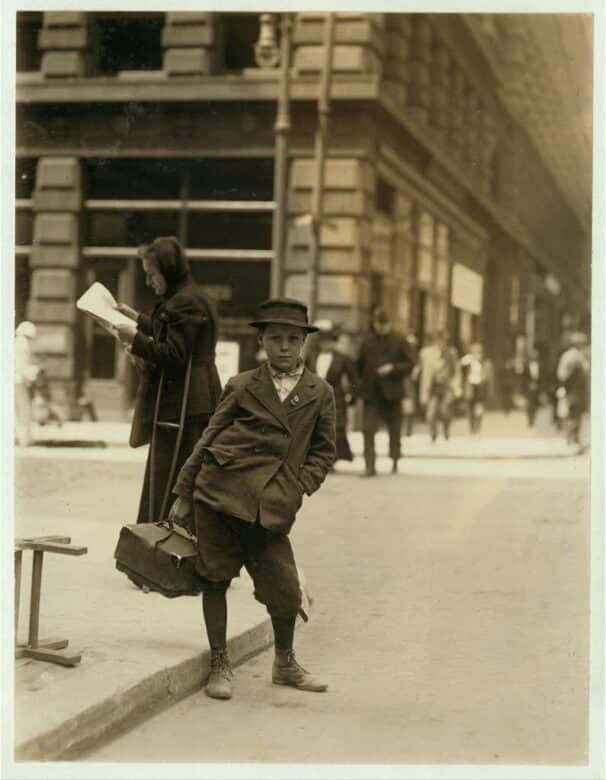
Much like other forms of child labor during this time period, the work of bundle boys raised concerns about the safety and well-being of young workers. They were often subject to long hours, poor working conditions, and minimal wages. The physical demands of carrying heavy bundles also posed a risk to their health and development.
This article was produced and syndicated by MediaFeed.
Image Credit: Library of Congress.
More from MediaFeed

Captivating, rare photos of Japan’s last Samurai
- Rare photos of Bonnie & Clyde reveal the love between America’s most notorious criminal couple
https://www.msn.com/en-us/entertainment/news/rare-photos-of-bonnie-clyde-reveal-the-love-between-america-s-most-infamous-criminal-couple/ss-AA1gWlm7
- 10 of the wildest UFO stories we’ve ever heard
Like MediaFeed’s content? Be sure to follow us.
Image Credit: Wikipedia.