Halloween hauntings at famous movie sets
Steve Auer, operations manager at Culver Studios, tells one story on his walking tours. A secretary was working late alone in “The Mansion,” the white Colonial Revival office building Thomas Ince built in 1918. She heard the restroom door open, then hands being washed, then the water shutting off and the door closing. She saw nobody in the hall, and when she checked, the basin was completely dry. Auer says the studio’s presences are friendly.
Culver isn’t alone. A Colorado hotel says officially that it isn’t haunted but runs ghost hunts every night. A San Diego resort has its own book about its resident ghost. A retired ocean liner in Long Beach has a watertight door that appeared in a disaster movie. All of these are real filming locations.
Six places follow. The ghost stories are local lore, and none has been proven. We say where a hotel or studio makes that point itself.
A producer who never left the lot
Thomas Ince founded the Culver lot in 1918 and died on November 19, 1924, after a birthday weekend aboard William Randolph Hearst’s yacht. What happened to him is still debated. Studio workers have since reported seeing Ince walk through the Mansion, along with a woman in a long, flowing dress.
The lot later became David O. Selznick’s. On December 10, 1938, the back lot’s old sets burned during the Atlanta fire in “Gone with the Wind.” Selznick watched from an observation tower, and his brother Myron walked up with Vivien Leigh. “I’d like you to meet your Scarlett O’Hara,” he said, according to Seeing Stars.
Room 217, in a hotel that says it isn’t haunted
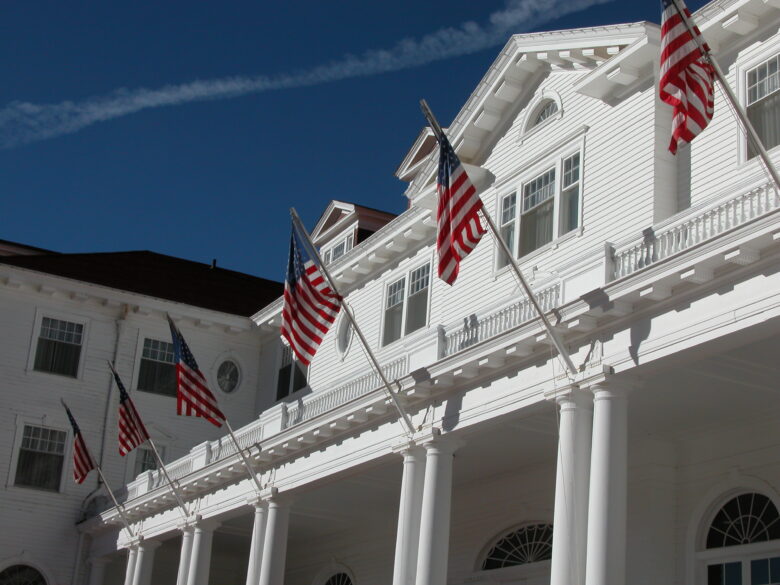
In late September 1974, Stephen King and his wife Tabitha spent a night at the Stanley Hotel in Estes Park, Colorado. It was the night before the hotel closed for winter, and they were the only guests. King later wrote that they “spent a night at a grand old hotel” there.
Kubrick’s 1980 film wasn’t shot at the Stanley. For example, the Gold Room bar scene was built on a set at England’s Elstree Studios. King’s 1997 miniseries was filmed at the hotel, and so was “Dumb and Dumber” (1994), which used the Hotel Danbury as the Hotel Danbury.
Room 217 is rumored to be haunted by a maid hurt in a 1911 gas explosion. A tour guide told one visitor that Jim Carrey asked to move to another hotel after spending a night there during filming, a story the visitor repeated. The hotel says it isn’t haunted. It still runs several ghost hunts every night, and Room 217 books out about six months in advance.
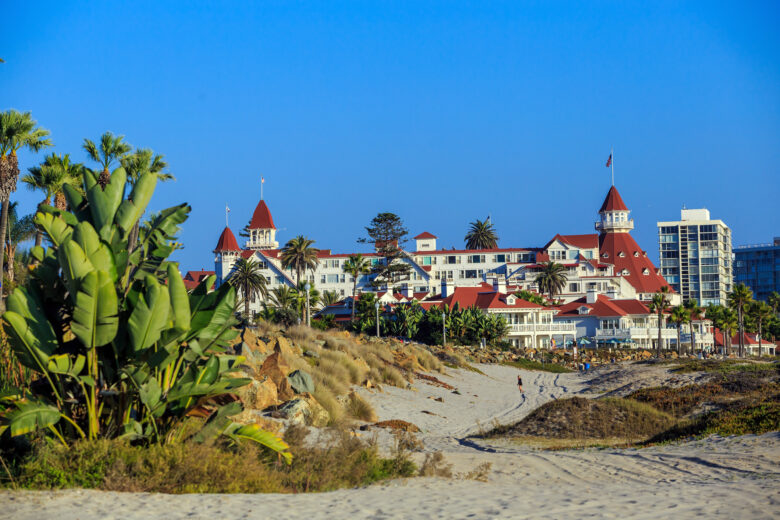
Room 3327 and 47 takes
Billy Wilder shot “Some Like It Hot” at the Hotel del Coronado in 1958, using the hotel and beach as a Florida resort. A cast and crew of 175 arrived, and Marilyn Monroe reportedly needed 47 takes to deliver one line: “It’s me, Sugar.”
Kate Morgan checked into the hotel on Thanksgiving Day 1892 under an assumed name. Five days later, she was found dead on a beach staircase, and the circumstances remain disputed. Guests in her room, 3327, report flickering lights and cold drafts. Hotel historian Gina Petrone has told Forbes about the guest who kept asking for her brother, and the hotel published its own book on Kate.
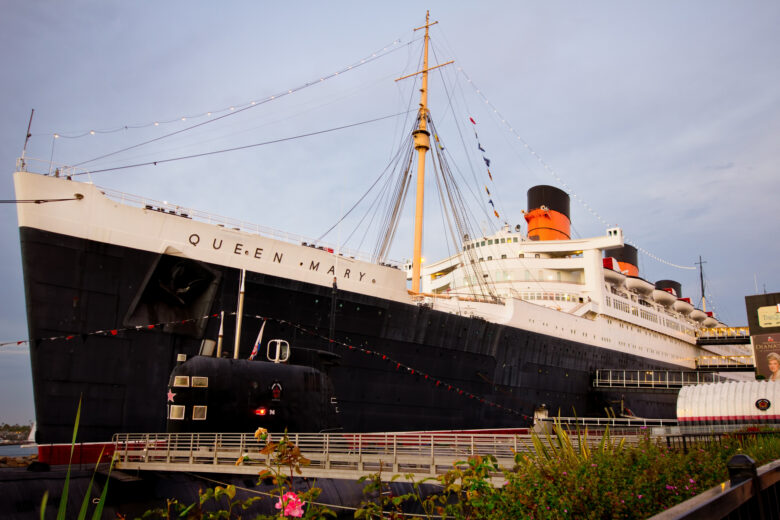
Door 13
The closing credits of “The Poseidon Adventure” say portions were filmed aboard the Queen Mary in Long Beach, per the AFI catalog. The ship has been dry-docked there since 1967, and dozens of movies and shows have shot aboard, including The Aviator and Pearl Harbor.
Deep in the engine room, in a passage called Shaft Alley, hangs a watertight door numbered 13. It was used to film Poseidon. Ship lore says a young crew member died in a door drill there in 1966, and that he’s been seen in blue coveralls walking toward it.
One account comes from John Smith, a marine engineer who checked the ship over when it first docked in Long Beach. He said he didn’t believe in ghosts. Over two months, he reported hearing metal tearing, water rushing, and men’s voices in the bow.
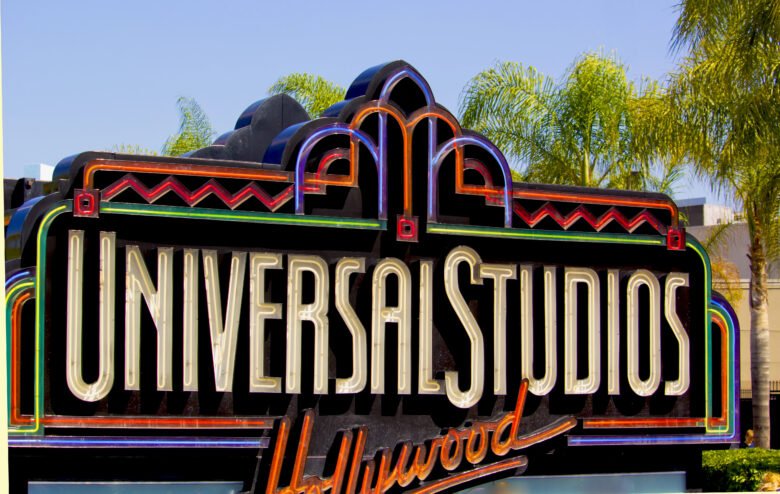
Who’s up on the catwalk at Stage 28?
Universal’s Stage 28 was known as the Phantom Stage. From 1925 until 2014, the opera house sets from the original “Phantom of the Opera” stood at one end of it, according to the Studio Tour.
Tour lore says a caped figure runs along the catwalks above the stage, said to be Lon Chaney, who played the Phantom and died in 1930. The story goes that the lights flicker and the doors open and close. In 2014, they demolished the stage, and the opera house facades went into storage. Nobody says where the caped figure went afterward.
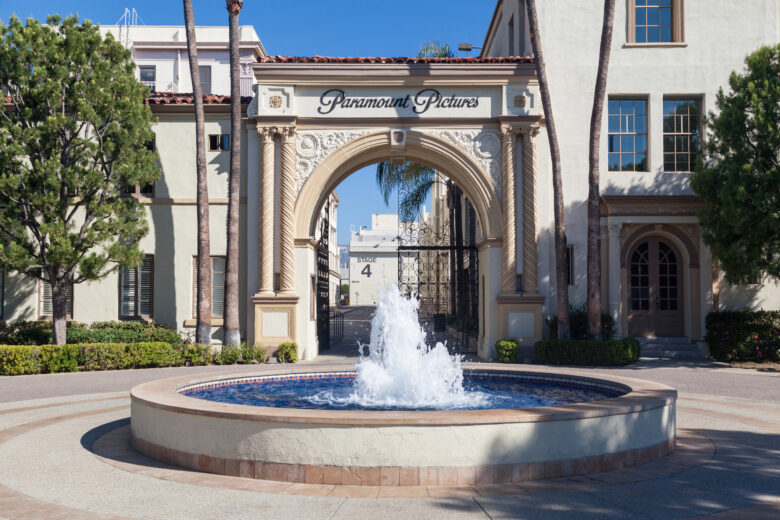
The guards at the Lemon Grove Gate
Paramount built Bronson Gate in 1926. A studio guide says Rudolph Valentino fans added the extra ironwork on top after climbing over the original, and Charles Bronson took his stage name from the gate itself. Valentino is buried at Hollywood Forever Cemetery.
The cemetery sits on the other side of the studio’s Lemon Grove Gate wall. A former lot employee wrote in a 2012 review that if you get a friendly security guard there, they’ll tell you ghost stories.
The bottom line
Stage 28 is gone, but its ghost story outlived the demolition. The Stanley still says it isn’t haunted and still books Room 217 about six months ahead.
Ask us! What questions do you have about content, strategy, pop culture, lifestyle, wellness, history or more? We may use your question in an upcoming article!
Related:
- Your cozy (or spooky!) Halloween movie, according to your horoscope
- Some of the most surprising record deals in music history
Like MediaFeed’s content? Be sure to follow us.
This article was syndicated by MediaFeed.co.