
Gun calibers that experts say are a total waste of money
The firearms industry operates on a constant cycle of introducing new calibers that promise revolutionary performance improvements, superior ballistics, and enhanced effectiveness for hunting, self-defense, or target shooting applications. Marketing campaigns promote these new cartridges as solving problems that existing calibers supposedly cannot address, creating enthusiasm among shooters seeking the latest technological advantages. However, ballistics experts, professional shooters, and experienced hunters frequently find that many new calibers fail to deliver meaningful improvements over established alternatives while introducing significant disadvantages, including higher costs, limited ammunition availability, and unnecessary complexity.
This article examines specific calibers that professional shooters, hunters, and ballistics experts consider poor investments due to redundancy with existing cartridges, excessive costs relative to performance gains, or limited real-world utility that fails to justify their premium pricing. These cartridges are not necessarily poor performers in absolute terms, but they solve problems that do not exist or offer marginal improvements at substantial cost increases compared to proven alternatives. Understanding which calibers represent poor value helps shooters make informed purchasing decisions based on practical performance rather than marketing claims.

The 10mm Auto
The 10mm Auto gained a reputation as a powerful handgun cartridge that delivers rifle-like energy in a semi-automatic pistol platform, appealing to shooters seeking maximum power for hunting or self-defense applications. The cartridge’s high velocity and energy levels create impressive ballistics tables that suggest superior performance compared to more common handgun calibers. However, the excessive recoil makes fast, accurate follow-up shots extremely difficult for most shooters, negating the theoretical advantages in practical shooting scenarios where multiple shots may be necessary.
Modern 9mm ammunition loaded with high-quality projectiles delivers terminal performance that closely matches that of 10mm ammunition for self-defense applications, at a significantly lower cost and with much more manageable recoil characteristics. The capacity advantages of 9mm platforms, combined with faster target reacquisition and reduced shooter fatigue, make the 9mm Parabellum or .45 ACP a better choice for most applications where the 10mm might be considered. The 10mm’s reputation for power creates appeal among some shooters, but practical performance advantages rarely justify the increased cost and reduced controllability.
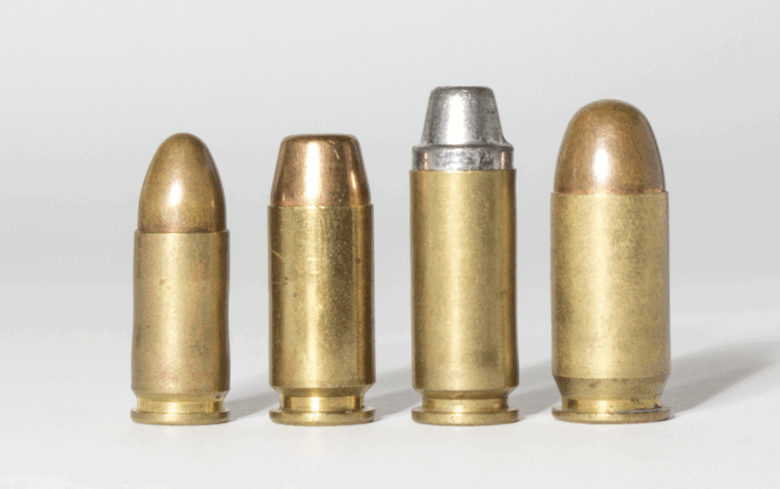
The .40 S&W
The .40 Smith & Wesson was developed as a compromise between the 9mm capacity and the 10mm power, following the FBI’s adoption requirements in the 1990s. However, this middle-ground approach creates disadvantages without delivering significant benefits over either alternative. The cartridge produces more recoil than 9mm while offering only marginal improvements in terminal performance that modern 9mm ammunition has largely eliminated through advanced projectile design. Law enforcement agencies, including the FBI have mainly abandoned .40 S&W in favor of modern 9mm loads that provide equivalent effectiveness with better controllability and higher capacity.
The .40 S&W earned the derogatory nickname “Short & Weak” among some shooters who recognize its compromise nature and limited advantages over established alternatives. Shooters seeking maximum capacity and controllability should choose 9mm Parabellum, while those requiring maximum power should select 10mm Auto rather than accepting the .40’s middle-ground performance. The declining adoption of the .40 S&W caliber and the reduced variety of ammunition make it increasingly obsolete in contemporary firearms applications.
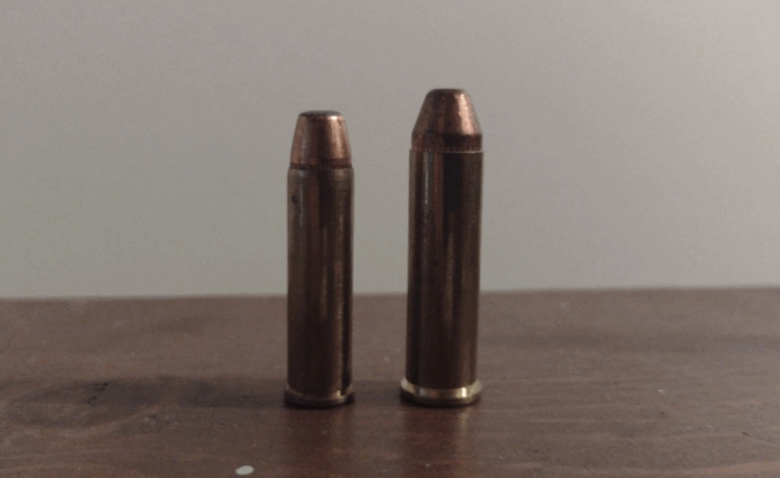
The .327 Federal Magnum
The .327 Federal Magnum represents an attempt to improve revolver performance through higher pressure and velocity; however, the exceptionally high ammunition costs and limited availability provide negligible advantages over the well-established .357 Magnum, which can also fire .38 Special ammunition. The cartridge’s performance improvements over the .357 Magnum are minimal and fail to justify the significantly higher ammunition costs and reduced availability, which limit practical shooting and training opportunities. Additionally, the .357 Magnum’s ability to fire less expensive .38 Special ammunition provides versatility that the .327 Federal lacks.
The .327’s six-shot capacity advantage in some revolvers compared to five-shot .357 Magnum cylinders represents its only meaningful benefit. Still, this minor improvement cannot justify the substantial increases in ammunition costs and the limitations on availability. Shooters seeking revolver performance should opt for the .357 Magnum due to its proven effectiveness, versatile ammunition, and widespread availability at reasonable prices. The .327 Federal Magnum’s niche market appeal and high operating costs make it impractical for most shooting applications.

Winchester Short Magnums
The Winchester Short Magnum series, including the .270 WSM, 7mm WSM, and .300 WSM, was designed to deliver magnum performance in short-action rifles. However, they frequently experience feeding reliability issues and offer ballistics virtually identical to those of existing standard-length magnum cartridges. The theoretical advantages of shorter rifle actions are negated by practical feeding problems and the fact that most hunters and shooters do not require the marginal weight and length savings that short-action rifles provide. Additionally, the higher ammunition costs and reduced availability make these cartridges expensive to shoot compared to their standard-length equivalents.
The performance differences between WSM cartridges and their standard magnum counterparts (.270 Winchester, 7mm Remington Magnum, .300 Winchester Magnum) are negligible in real-world hunting and shooting scenarios, making the additional complexity and cost unjustifiable. Standard-length magnums offer proven reliability, widespread ammunition availability, and lower costs while delivering essentially identical ballistic performance. Shooters seeking magnum performance should opt for established cartridges with proven track records, rather than accepting the compromises inherent in short magnum designs.

The .17 caliber cartridges
The .17 HMR and .17 WSM represent ultra-high-velocity, lightweight projectiles that are susceptible to extreme wind sensitivity and exhibit marginal terminal performance in varmint hunting applications, where clean, humane kills are essential. The hypervelocity projectiles lose energy rapidly and deflect significantly in even minor wind conditions, making accurate shot placement difficult beyond moderate ranges. Additionally, the lightweight projectiles often wound rather than kill small game cleanly, raising ethical concerns for hunters seeking quick and humane harvests.
The .22 Winchester Magnum Rimfire or .223 Remington offers superior stability and terminal performance for varmint hunting applications, providing lower ammunition costs and improved availability. The theoretical velocity advantages of .17 caliber cartridges are meaningless when wind sensitivity prevents accurate shot placement or when inadequate terminal performance fails to achieve clean kills. Shooters seeking effective varmint cartridges should opt for proven alternatives that deliver consistent accuracy and reliable terminal performance, rather than pursuing theoretical velocity benefits.
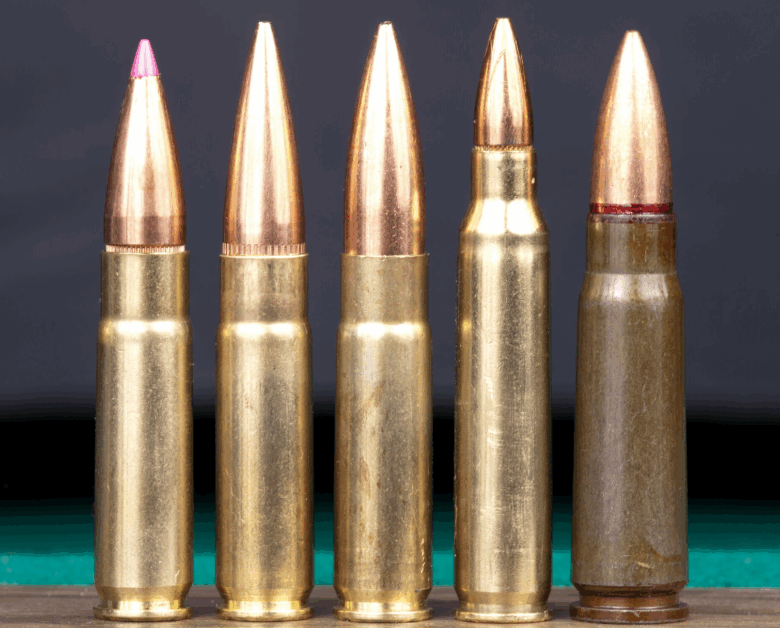
.300 Blackout for supersonic hunting
The .300 Blackout excels in subsonic suppressed applications, where its design parameters optimize performance. However, using it for supersonic hunting applications represents a misapplication, as other AR-15 compatible cartridges deliver superior performance. The 6.5 Grendel and 6mm ARC offer significantly improved range and energy for hunting applications within the same rifle platform, rendering the .300 Blackout’s supersonic hunting use an expensive compromise. The high ammunition costs and limited terminal performance at hunting ranges make .300 Blackout impractical for applications outside its intended subsonic, suppressed role.
Shooters seeking AR-15 hunting performance should opt for the 6.5 Grendel for its superior ballistics and energy retention, or the 5.56 NATO for cost-effective practice and small game applications. The .300 Blackout’s specialized design makes it well-suited for its intended applications. Still, it is poorly suited for general hunting use, where other cartridges offer better performance at a lower cost. Understanding cartridge design intentions helps shooters select the most suitable calibers for specific applications, rather than forcing specialized cartridges into roles for which they are not suited.
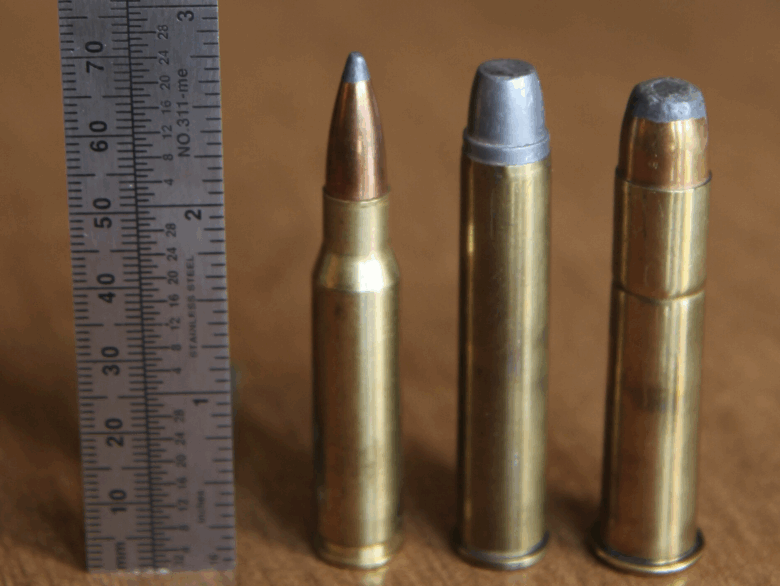
Obsolete and hard-to-find cartridges
Legacy cartridges like .444 Marlin and .35 Remington once enjoyed popularity but now represent expensive, limited-availability options that force owners to handload ammunition or pay premium prices for factory loads. These cartridges were effective in their time but have been superseded by modern alternatives that offer equal or superior performance, along with better ammunition availability and lower costs. The declining popularity makes these cartridges increasingly expensive and difficult to support for regular shooting and hunting activities.
Modern straight-wall cartridges, such as the .350 Legend and .450 Bushmaster, offer lever-action performance with improved ammunition availability and lower costs compared to their obsolete alternatives. For traditional lever-action applications, the .30-30 Winchester remains the practical choice due to its widespread availability and proven effectiveness. Shooters considering rifles in obsolete calibers should evaluate the long-term costs and availability issues before committing to cartridges with declining market support.

Conclusion
Brilliant cartridge selection prioritizes proven performance, reasonable costs, and widespread availability over marketing claims about revolutionary improvements that rarely materialize in practical applications. The most effective calibers strike a balance between versatile performance across multiple applications and reasonable ammunition costs, while also ensuring reliable availability that supports regular practice and training. Commonality, cost-effectiveness, and proven real-world performance represent better investment criteria than theoretical ballistics advantages or novelty appeal.
Consult experienced shooters and ballistics experts to understand your actual needs for target shooting, hunting, or self-defense applications before purchasing firearms or ammunition based on marketing claims about miracle calibers that solve non-existent problems. Check out our other guns and shooting articles here at MediaFeed to discover additional insights into equipment selection, training techniques, and practical shooting applications.
Related:
Like MediaFeed’s content? Be sure to follow us.
This article was syndicated by MediaFeed.org.