Some of the best examples of Portuguese architecture can be found in its stunning palaces. They are known for their grandeur and beauty, with several having been awarded UNESCO World Heritage status.
Many of the palaces in Portugal are influenced by a range of styles; an eclectic mixture from Neo-Manueline to Moorish and Baroque to Neo-Classical.
Besides several historic palaces to be found in Sintra, I’ve included some which are sometimes overlooked and also some palaces where you can actually stay and enjoy the royal treatment, if only for a short time.
So here are some of the best palaces in Portugal, in no particular order.
Image Credit: Depositphotos.com.
1. Pena Palace, Sintra

Perhaps one of the best known palaces in Portugal is the multicoloured icon of Sintra, Palácio da Pena. Its bright colours, turrets and extravagant architectural details are highly photogenic and draw the crowds.
Standing on top of a hill overlooking the town this romanticist palace is a UNESCO World Heritage Site and one of the Seven Wonders of Portugal. It’s still used for state occassions too.
The interiors of the Palace were adapted to serve as the summer residence of the royal family and there’s a real mixture of architectural styles to admire.
The palace is open from 9.30am to 6.30pm. Book your ticket in advance for the palace and park.
Image Credit: Starcevic / iStock.
2. Vidago Palace Hotel
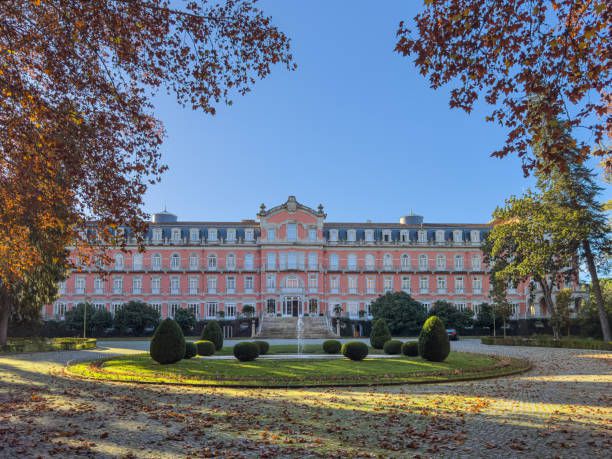
Who wouldn’t like to stay at a palace? This one is particularly special since it was always intended to host guests.
Vidago Palace was commisioned by King Carlos I, who wanted to build a luxury spa resort equal to Europe’s finest. The palace was built to accommodate the royals and elites but only opened the day after the 1910 revolution which overthrew Portugal’s monarchy.
Throughout the 1930’s and ensuing decades it became one of the most prestigious hotels in Europe due to it’s local spa facilities and famous parties!
Mike and I spent a lovely few days relaxing in the spendour for our 10th wedding anniversary.
Image Credit: AnaMOMarques / iStock.
3. Palace of the Dukes of Bragança, Guimarães
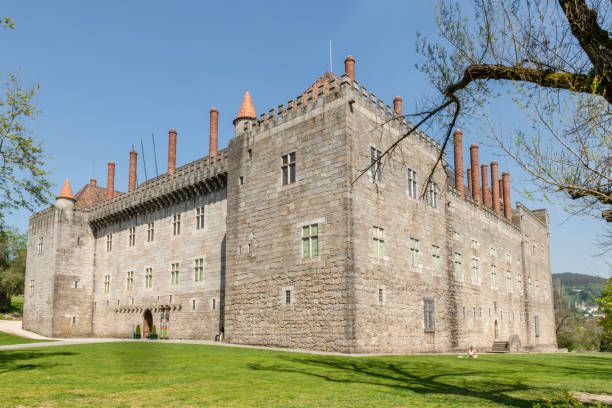
In the northern city of Guimarães you’ll find a palace that almost didn’t survive. Built in the 1420s by the 1st Duke of Bragança it wasn’t too long before it became abandoned.
Due to the French invasion it became a military barracks and later the local population even used it as a quarry. Then came a controversial restoration during the Estado Novo regime when it was used as a presidential residence for the dictator Salazar.
As well as the many chimneys, inside the Palácio dos Duques da Braganza you can see Flemish tapestries and 16th/17th century weaponry. There are often exhibitions of contemporary art, too.
The Ducal palace is open every day from 10am until 6pm. Cost is €5 (but free for everyone on Sunday mornings.)
Image Credit: homydesign / iStock.
4. Monserrate Palace, Sintra
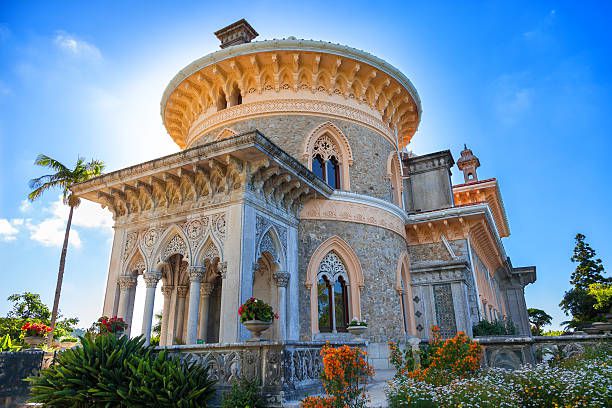
The Palacio de Monserrate in Sintra certainly is a unique building. Inspired by Islamic architecture it was built in 1858 by order of Sir Francis Cook, Viscount of Monserrate. Over the years it has been a source of inspiration for many, including Lord Byron, a leading figure of the Romantic Movement.
The landscaped garden, began in 1793, has elements of a classic English garden with lawns and rose bushes but also includes Japanese and Mexican influences.
Because the palace is situated a little distance from the centre of Sintra it doesn’t get overcrowded like other monuments.
The palace is open daily 9.30am to 6.30pm and the gardens 9am to 7pm. Cost €8.
Image Credit: JoseIgnacioSoto / iStock.
5. The National Palace of Mafra

You cannot fail to be impressed with the imposing façade of Mafra palace, stretching 220m long and built out of local limestone. It boasts towers, a church, a royal palace and one of the most impressive libraries in the world.
The royal apartments are on the second floor and when both the king and queen were in residence they each had their private rooms 200 metres apart. The rooms were linked by a huge corridor and the queen was forewarned of her husbands arrival by the sound of trumpets!
I particularly liked the hospital that’s also part of the palace.
Mafra Palace can be visited daily (except Tuesdays) from 9.30am to 5.30pm. Cost €6.
Image Credit: jmiguel / iStock.
6. Mateus Palace, Vila Real
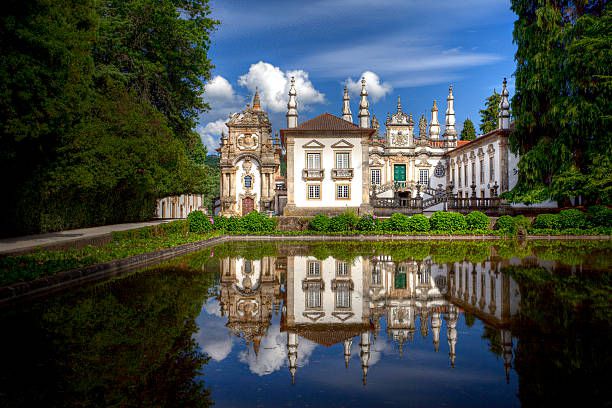
Just outside Vila Real, on the edge of the Douro Wine Region, lies the splendid Palácio de Mateus. It’s an 18th century Baroque building surrounded by beautiful gardens. Part of the estate has a winery and those familiar with a certain Mateus Rosé wine will recognise the palace from the wine labels.
Highlights of the interior are the wonderfully carved wooden ceilings and ornate staircases. There are many portraits of Portuguese kings and the library contains one of the few original editions of a Luís de Camões masterpiece.
Mateus Palace is open Monday to Friday 9am to 6pm and weekends 9am to 6.30pm. A full guided tour costs €20 and is best scheduled in advance.
Image Credit: vanyi / iStock.
7. Quinta da Regaleira, Sintra
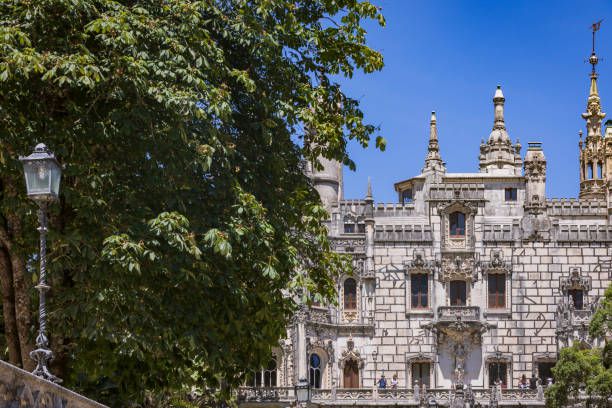
One of the highlights of a trip to Sintra, this romantic palace with it’s fascinating park featuring grottoes, lakes and other delights was often refered to as “The Palace of Monteiro the Millionaire”, the name given to its best known previous owner.
The whole place is an eclectic mixture of all kinds of influences, with amazing attention to detail in the interior and exterior architecture. The park is full of intrigue. There you’ll find underground tunnels and two ‘Initiation Wells’ which were used for ceremonial purposes that included Tarot initiation rites.
From April to September the palace is open from 10am to 7.30pm. Other times it closes at 6.30pm. It is €10 for non-guided entrance and up to €18 for a full tour.
Image Credit: GAPS/ iStock.
8. Ajuda National Palace, Lisbon
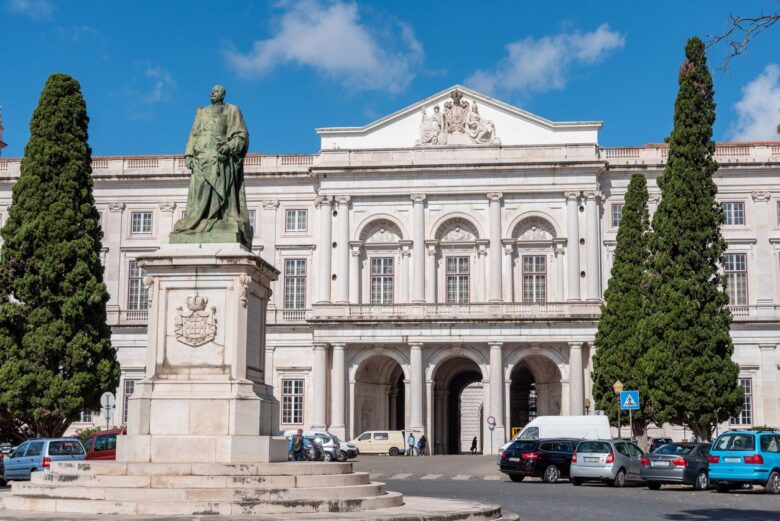
When the royal residence on Lisbon waterfront was destroyed by the earthquake in 1755, the king decided it would be a better idea to build a new palace on a hill. Hence, in 1795, the Palácio da Ajuda was built.
The original grand plans were never fulfilled but, nevertheless, Ajuda National Palace became the last residence of the Portuguese royal family.
Since the overthrowing of the monarchy it has become a museum where you can enjoy the splendour of the ages by visiting many highly decorated rooms such as the Throne, Audience and Banquet rooms.
The western wing now houses the recently-opened Royal Treasure Museum displaying many precious crown jewels.
Admission to the palace costs €5 (free with the Lisbon card) and the Treasury museum is €10. Open daily 10am to 6pm. Closed Thursdays.
Image Credit: imagoDens/Istockphoto.
9. Sintra National Palace

Sintra National Palace is the most intact Portuguese palace built in the Middle Ages still standing. It’s quite a mixture of medieval, Gothic, Manueline, and Renaissance architecture. The two conical chimneys crowning the royal kitchen are an unmissable part of the Sintra landscape.
The palace proved to be a popular place for royalty over the years, mainly due to its proximity to Lisbon, the climate and favourable hunting grounds.
If you’re a ceramics lover, rooms such as Sala dos Brasões and the Arab room will keep you more than satisfied. The kitchen and chapel are well worth spending time in, too.
The palace is open every day from 9.30am to 7pm. Admission is €10 (10% discount with the Lisbon Card).
Image Credit: Artaporn Puthikampol / iStock.
10. Bussaco Palace, Luso
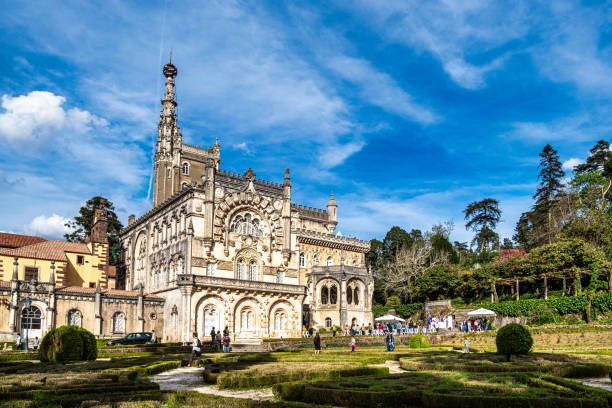
Of the many palaces in Portugal, this is one of my favourites, due to its location, frills and tiles.
In 1888, King Charles I wanted to build a new iconic monument, like Belém Tower but this time surrounded by a huge forest. Carmelite monks had already established 250 acres of woodland near the town of Luso so Italian architect Luigi Manini designed a romantic palace in Neo-Manueline Gothic style. Hence, Bussaco Palace.
Azulejo panels inside depict scenes from the local Battle of Bussaco, love and daring sea voyages. It has been a hotel since 1917.
You can actually stay in this regal hotel, although the rooms could do with a refurbishment.
Image Credit: Rudolf Ernst / iStock.
11. Queluz Palace, Sintra

Queluz is a luxurious 18th century palace adorned with marble and golden stucco, perfectly manicured gardens and ornamental lakes. And a sad tale about a mentally unwell queen.
It was built as a summer retreat by Dom Pedro III, who later married his neice, Maria. However, after the deaths of both her husband and eldest son, she slowly went mad and spent her remaining years locked away in the palace, away from public gaze.
You can see where royalty received guests in the Throne Room and visit other rooms of interest, particularly the Ambassador Hall with it’s frescoed ceiling. There are amazing tiles throughout the palace and the gardens, too.
Queluz Palace is open daily from 9am to 6pm and admission is €10.
Image Credit: diegograndi / iStock.
12. Belém Palace Lisbon

Now the official home of the President of Portugal, Belem Palace provided residence for the Portuguese Royal family until the 5th October 1910 Revolution.
It was the summer home for royalty from 1726 and members of the royal family could be found there when the earthquake struck in 1755. Luckily, the building escaped any major damage.
Decorative highlights include tile panels which depict scenes from Greek mythology. The palace gardens are lovely and there’s a museum which tells the history of the Portuguese Republic.
The palace is only open to visitors on Saturdays from 10.30am to 4.30pm but the museum is open Tuesdays to Sundays from 10am to 6pm.
Image Credit: venemama / iStock.
13. Brejoeira Palace, Monção
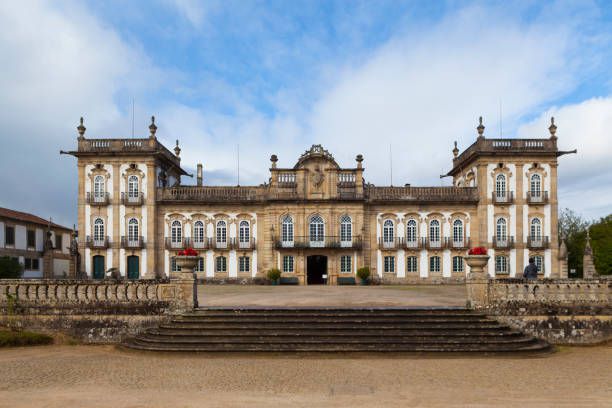
Just a few kms south of Monção is this 19th-century neoclassical palace surrounded by gorgeous grounds and vineyards. There are some beautiful tiles but photos are not allowed so you’ll have to see for yourself.
Visits are by guided tour only but you’ll see several rooms decorated in an empire and oriental style. You can arrange visits to the palace, gardens, old cellar and chapel here.
Or experience this small group Minho tour which not only includes a tour of the palace but a visit to Braga, Ponte de Lima, Viana, a Vinho Verde Winery and lunch.
Image Credit: LuisPortugal / iStock.
14. Ducal Palace of Vila Viçosa
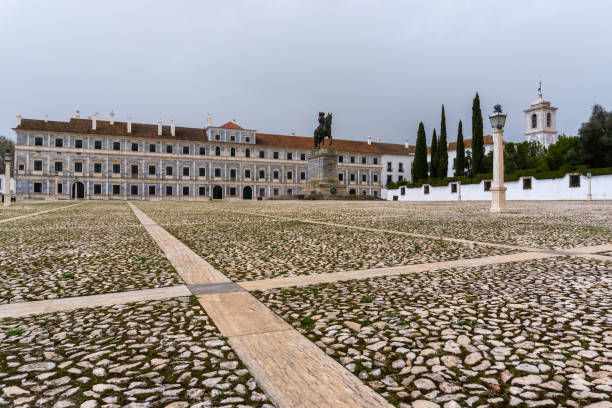
150 km east of Lisbon, in the Alentejo region, stands the royal Ducal Palace. For many centuries it was the seat of the House of Braganza, one of the most important noble houses in Portugal. Later, much of the furniture and other items found their way to Lisbon or Brasil but you can still see some lovely relics such as a huge 16th-century Persian carpet as well as many royal portraits.
There are many things to visit here, including two museums and an armoury.
Opening times are October to May Tuesday afternoons only and Wednesday to Sunday 10am to 1pm and 2pm to 5pm. June to September the same except closing is not until 6pm. Closed Mondays.
Unless you go with your own private guide, you’ll have to join the group guided tours, which are currently only in Portuguese.
Image Credit: makasana / iStock.
15. Palacio da Fronteira, Lisbon
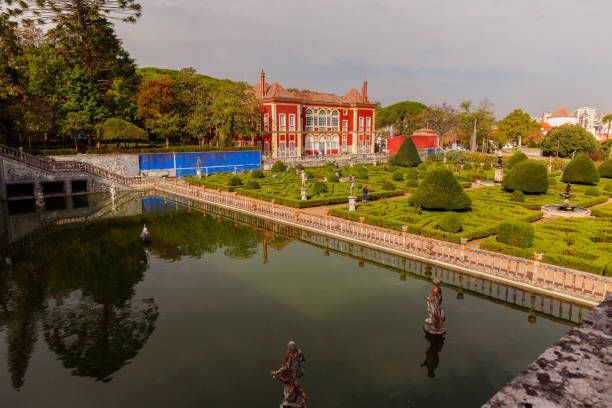
Built around 1670, this lovely palace is surrounded by gardens and woods. It’s eyecatching because it has the largest collection of seventeenth-century azulejos preserved in situ.
There are two choices for visitors; an audio garden tour or a guided tour of the palace. Or both! Twice a month an organised theme tour is offered specifically focusing on the azulejos or a literary person associated with the palace.
Visits to the palace and gardens cost €13. See here for details of tours in English, French and Portuguese.
Image Credit: fsamora / iStock.
16. Palacio do Freixo, Porto
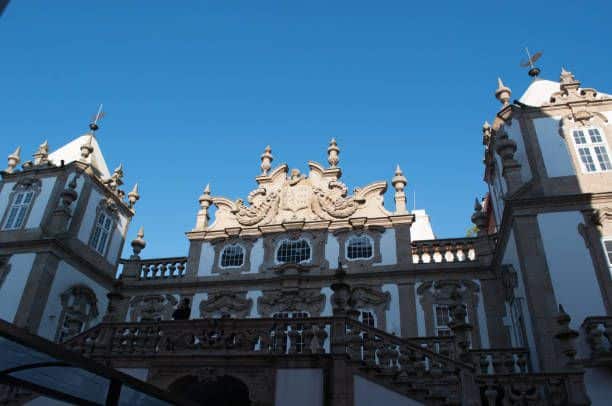
An 18th century Baroque palace which has been a 5-star luxury hotel since 2009. It has undergone extensive remodification, (a previous owner installed a milling factory, which can still be seen, in the grounds), but you can still enjoy grand staircases, internal balconies and lovely murals.
If you’d like to spend some time in this beautiful palace, which offers free shuttles into Porto city centre several times a day.
Image Credit: Naeblys / iStock.
17. Stock Exchange Palace (Palácio da Bolsa), Porto
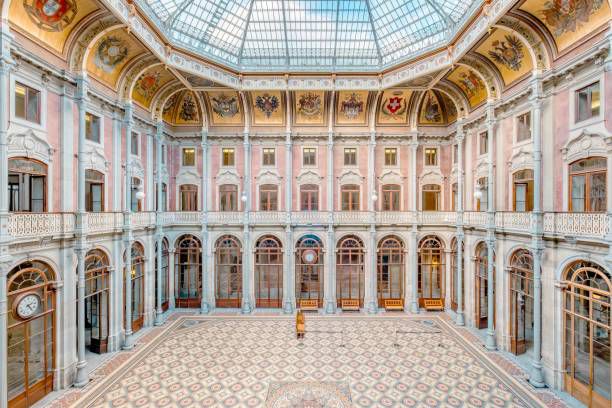
One of the best known palaces in Portugal. Built in the 19th century in Neoclassical style and a stand out feature of Porto. Because of it’s grandeur it’s been declared a national monument and listed as a World Heritage Site by UNESCO. The palace is the main conference and exhibition center of Porto so it is in constant use.
There are so many rooms worthy of a visit, from the Arabian Room to the Library, the Hall of Nations to the Presidents Room.
Visiting times are 9.30am to 1pm and 2pm to 5.30pm. Guided tours last for 30 minutes and cost €10.
Image Credit: Manel Subirats / iStock.
18. Palacio de Estoi, Algarve
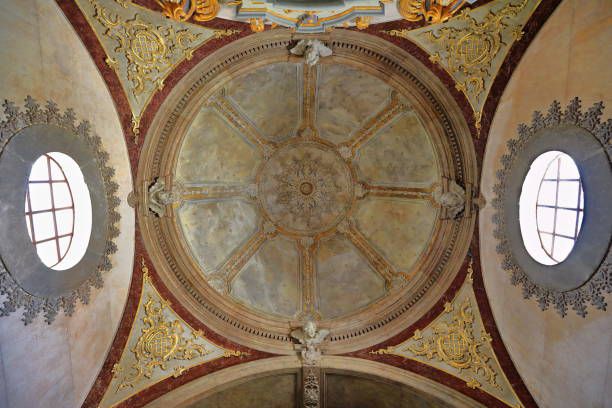
This Rococo palace close to Faro is eye-catching because of its pink facade. Inside you’ll find fine plastered ceilings and outside French-inspired gardens and gorgeous tiles.
Estoi Palace is now a luxury hotel.
- Related: Is the stunning mafra palace worth visiting?
- Related: The best ways to get from Lisbon to Lagos
Like MediaFeed’s content? Be sure to follow us.
This article originally appeared on JulieDawnFox.com and was syndicated by MediaFeed.org.
Image Credit: rweisswald / iStock.